

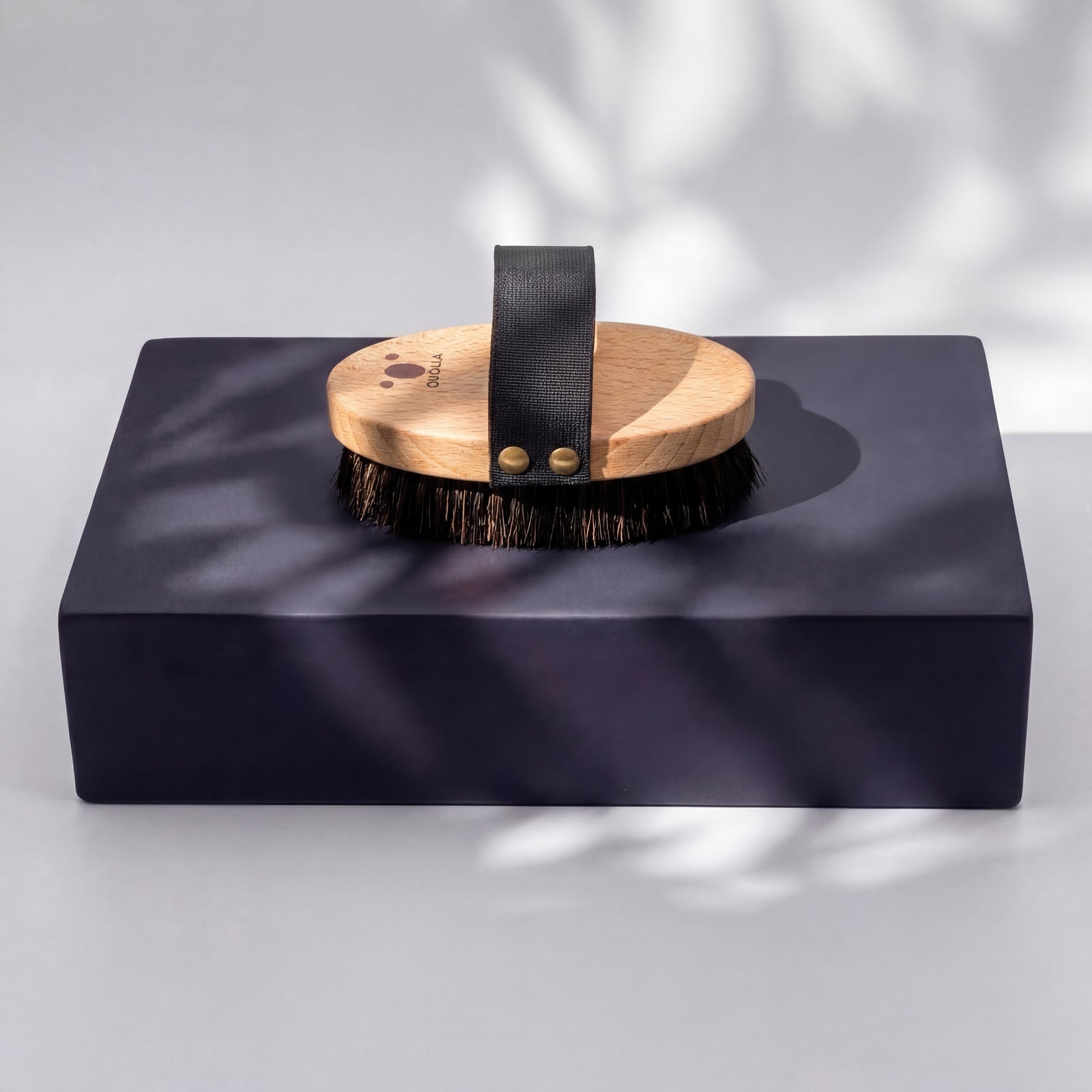

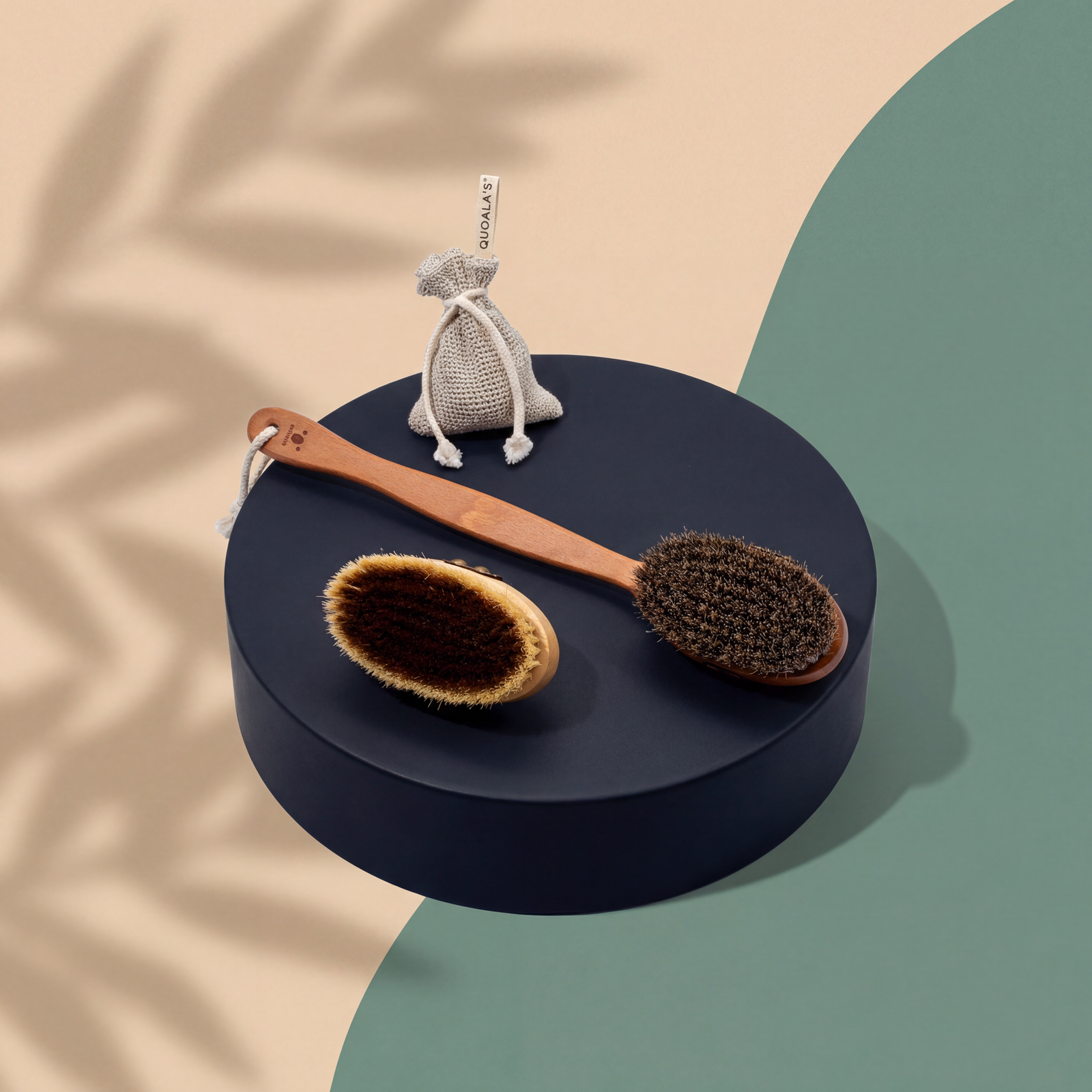

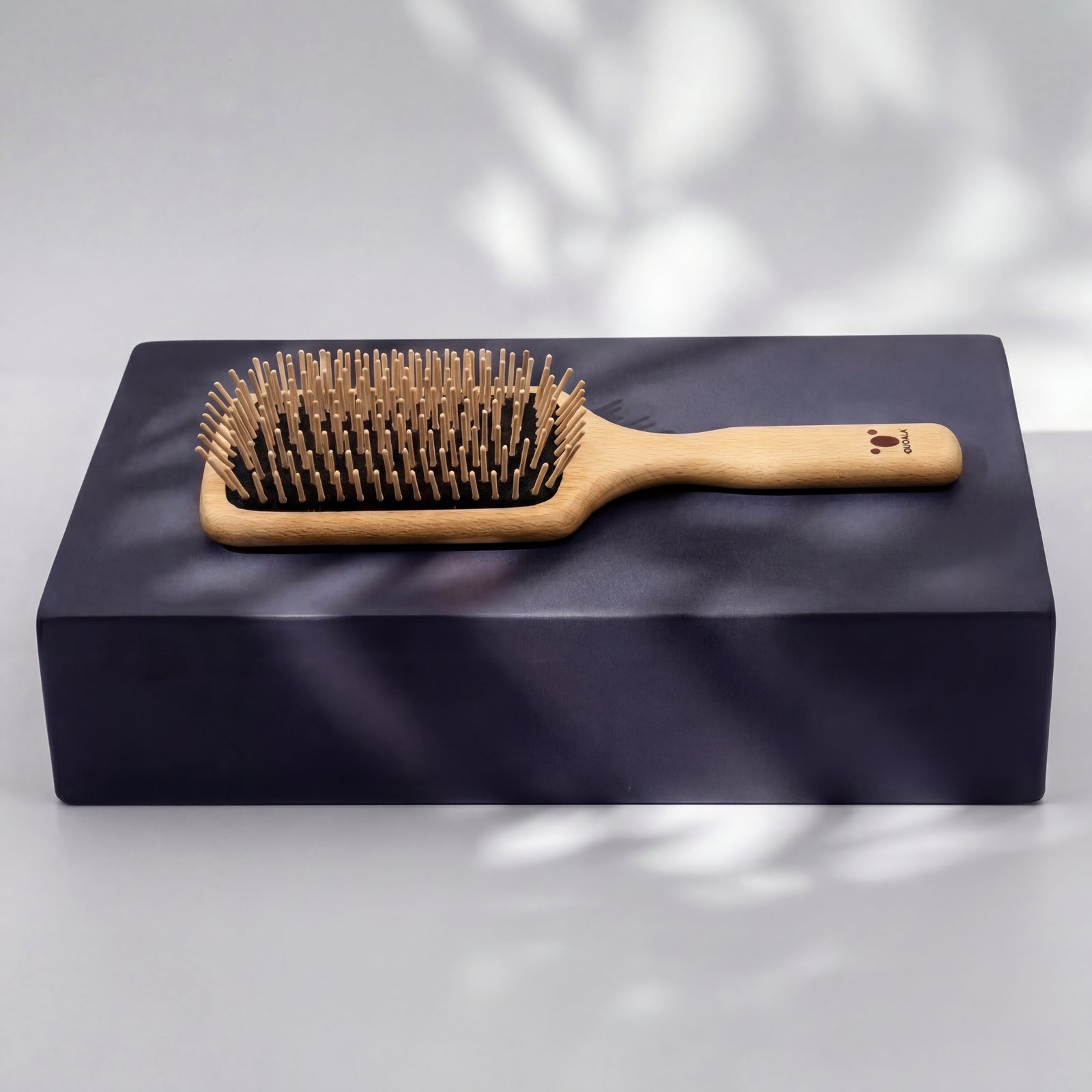

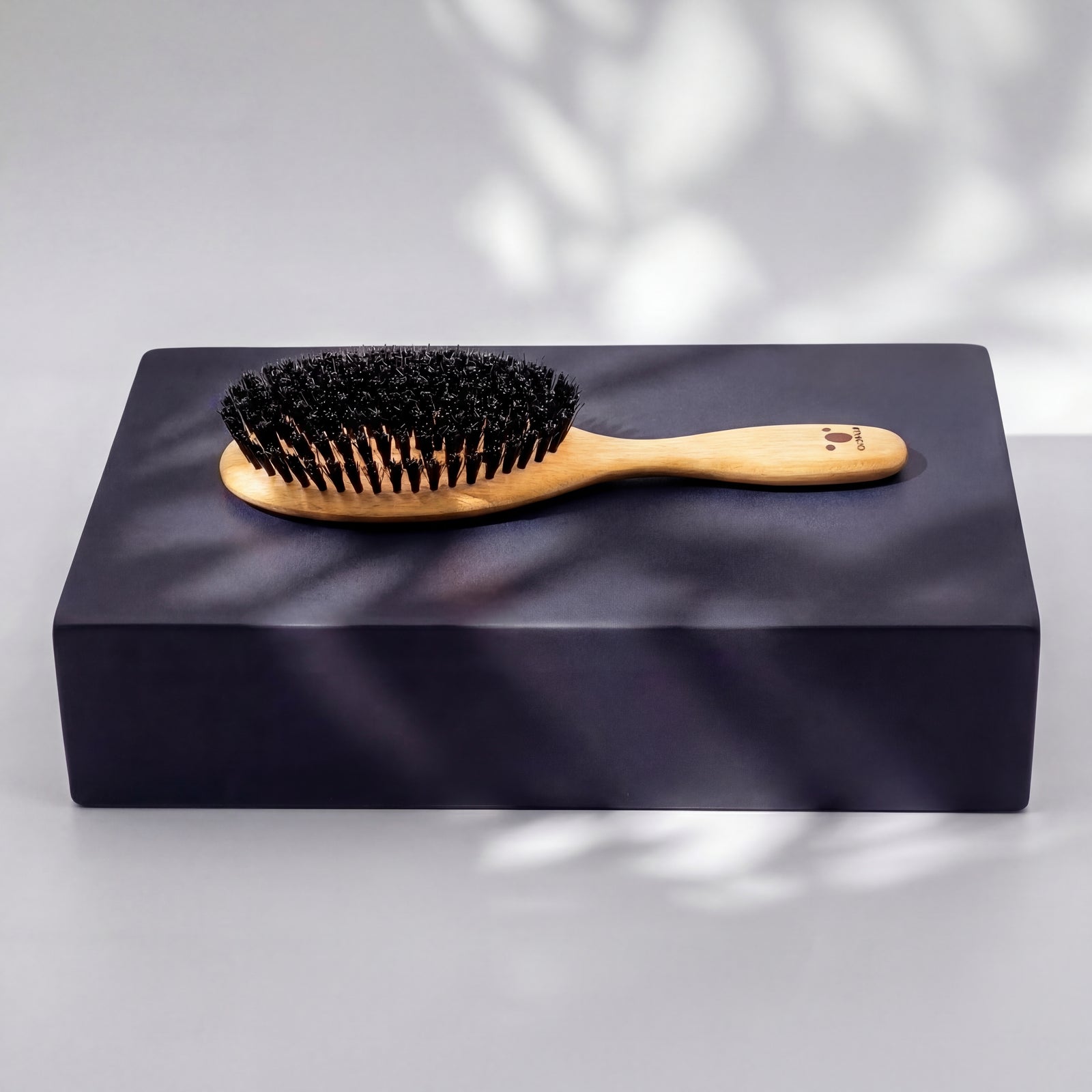

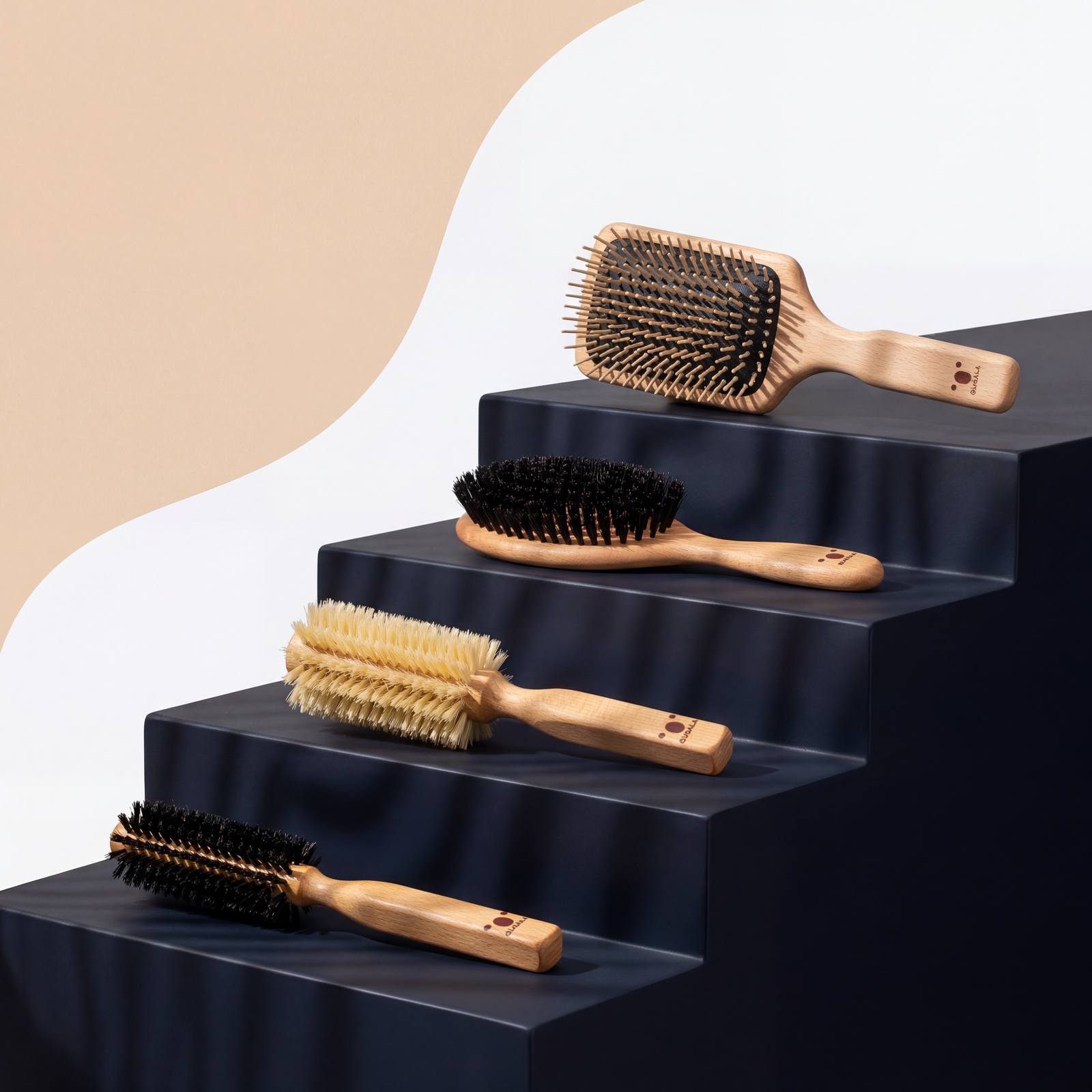

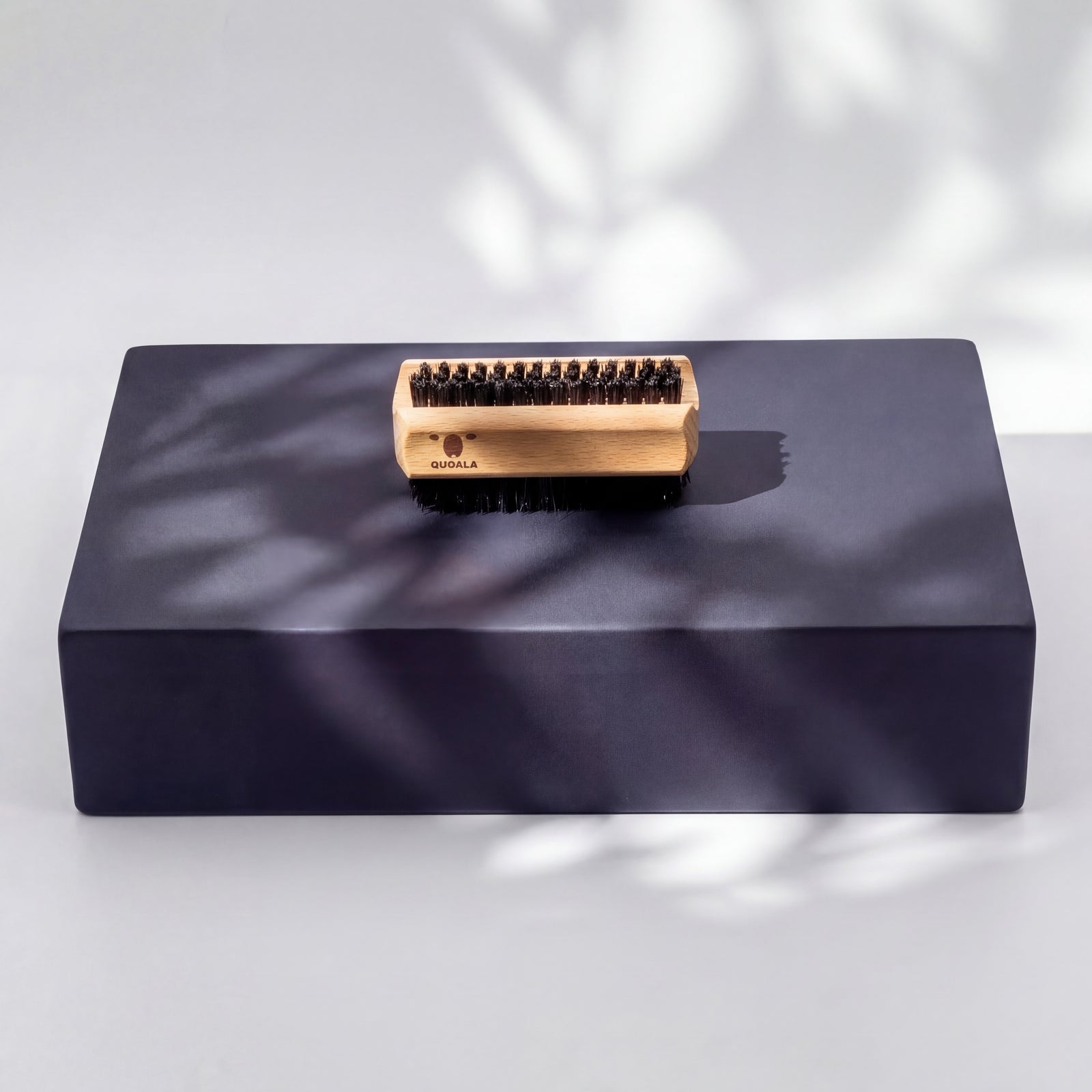


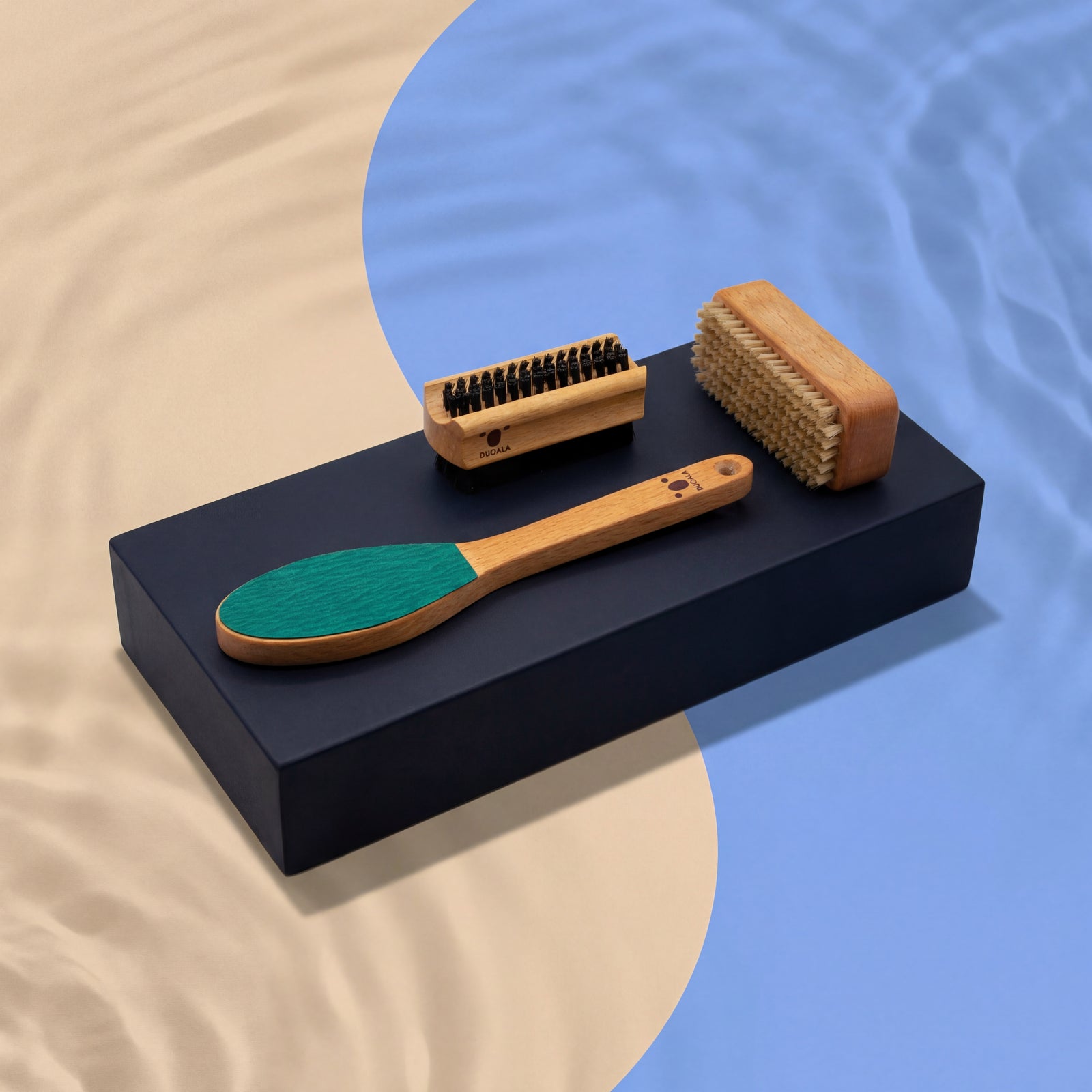

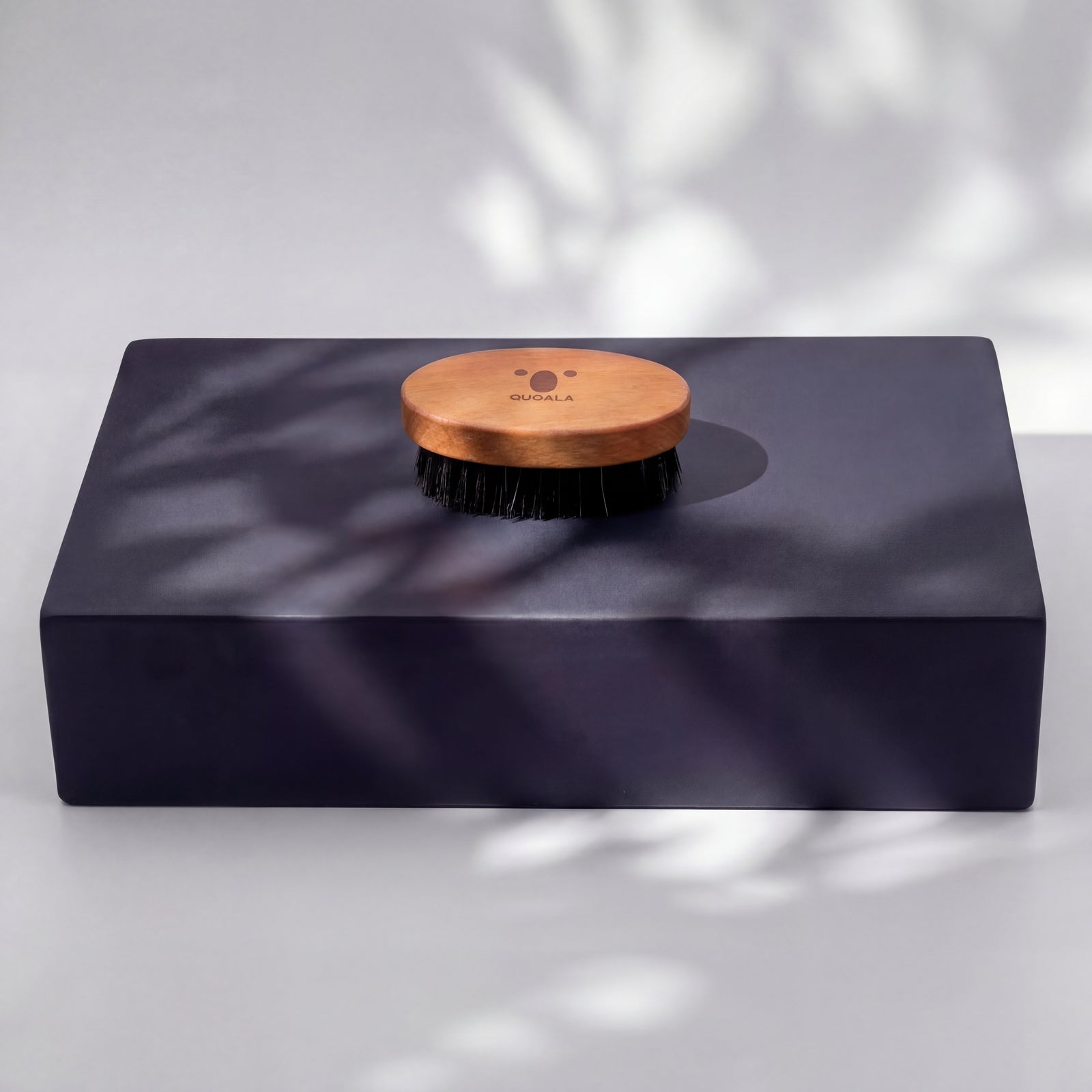

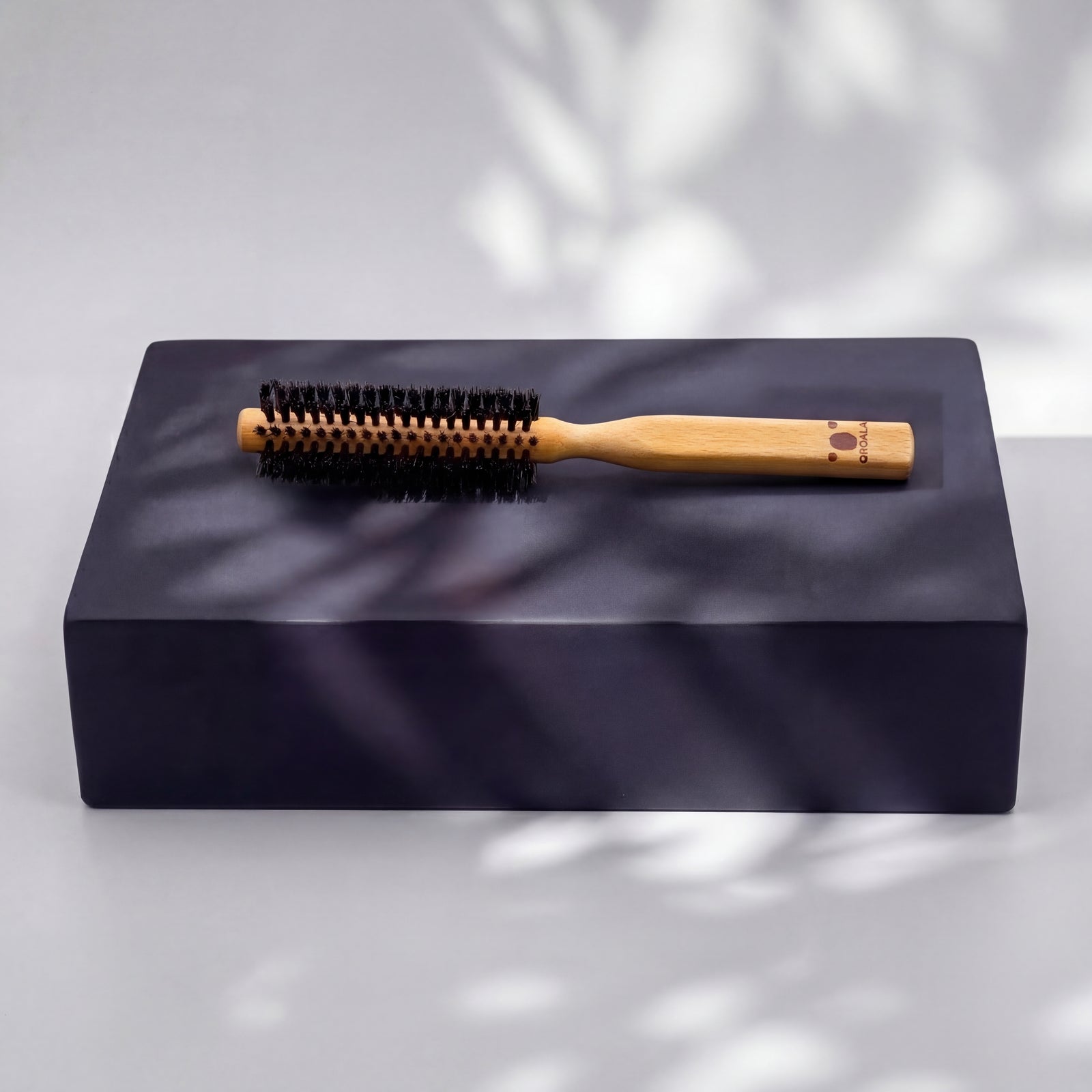

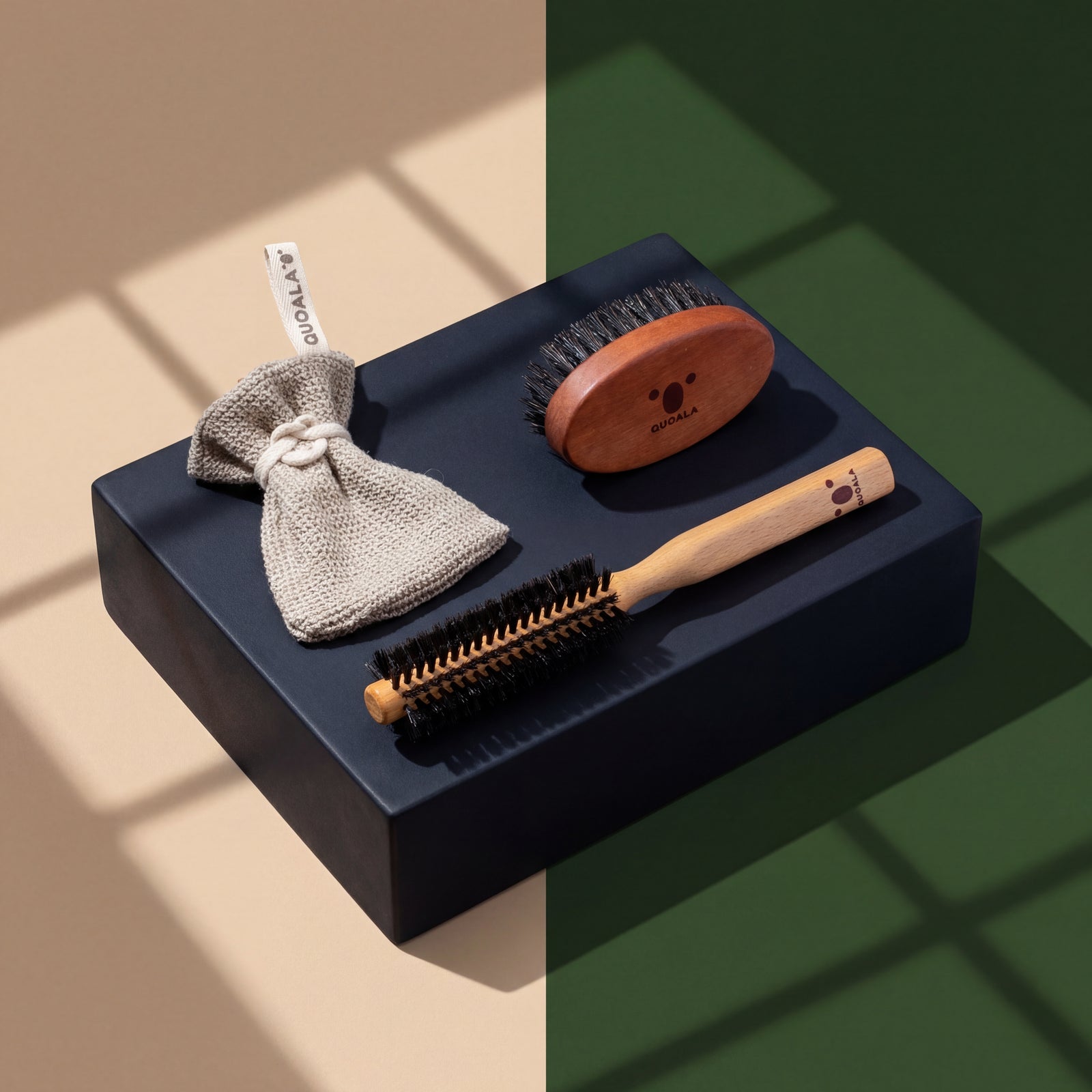

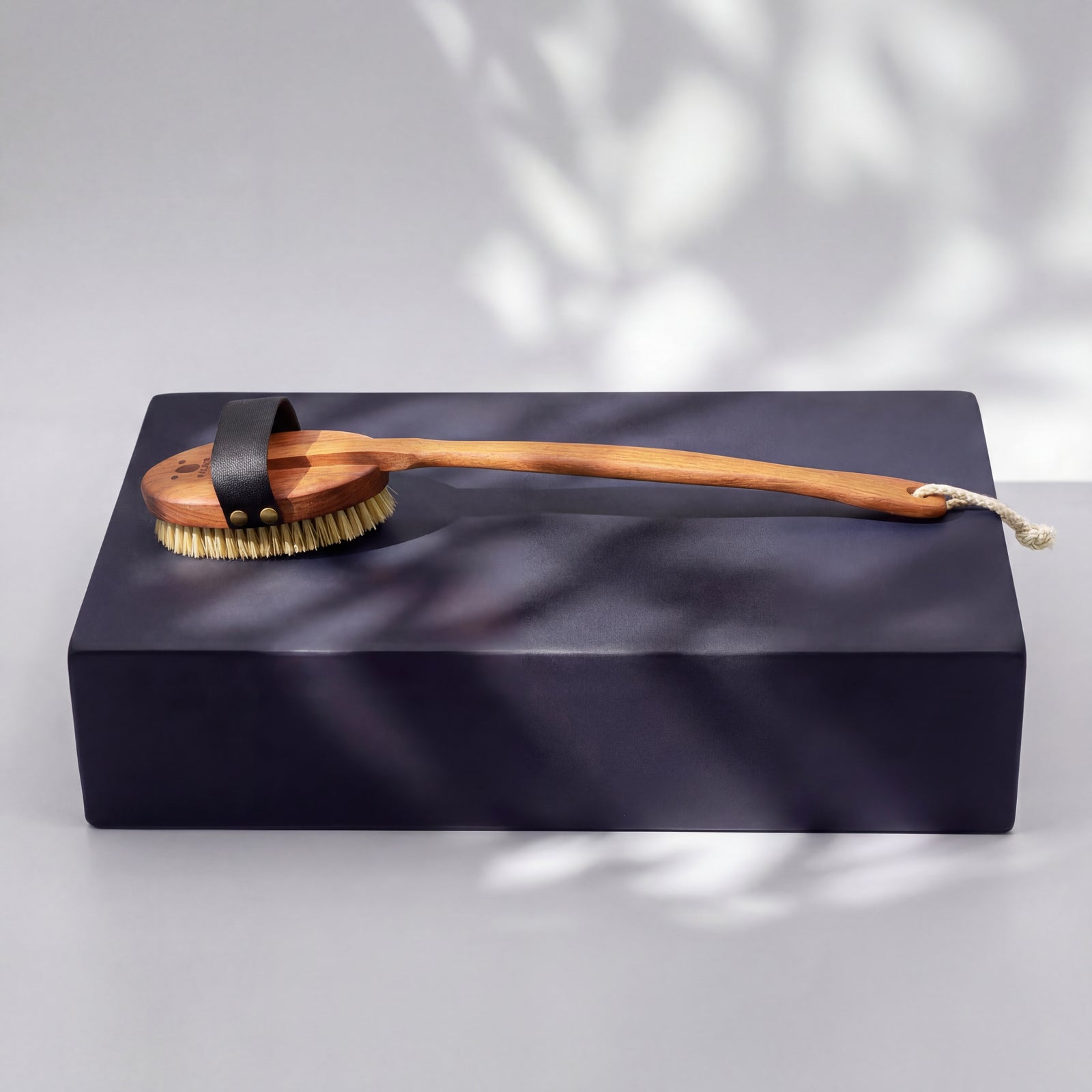

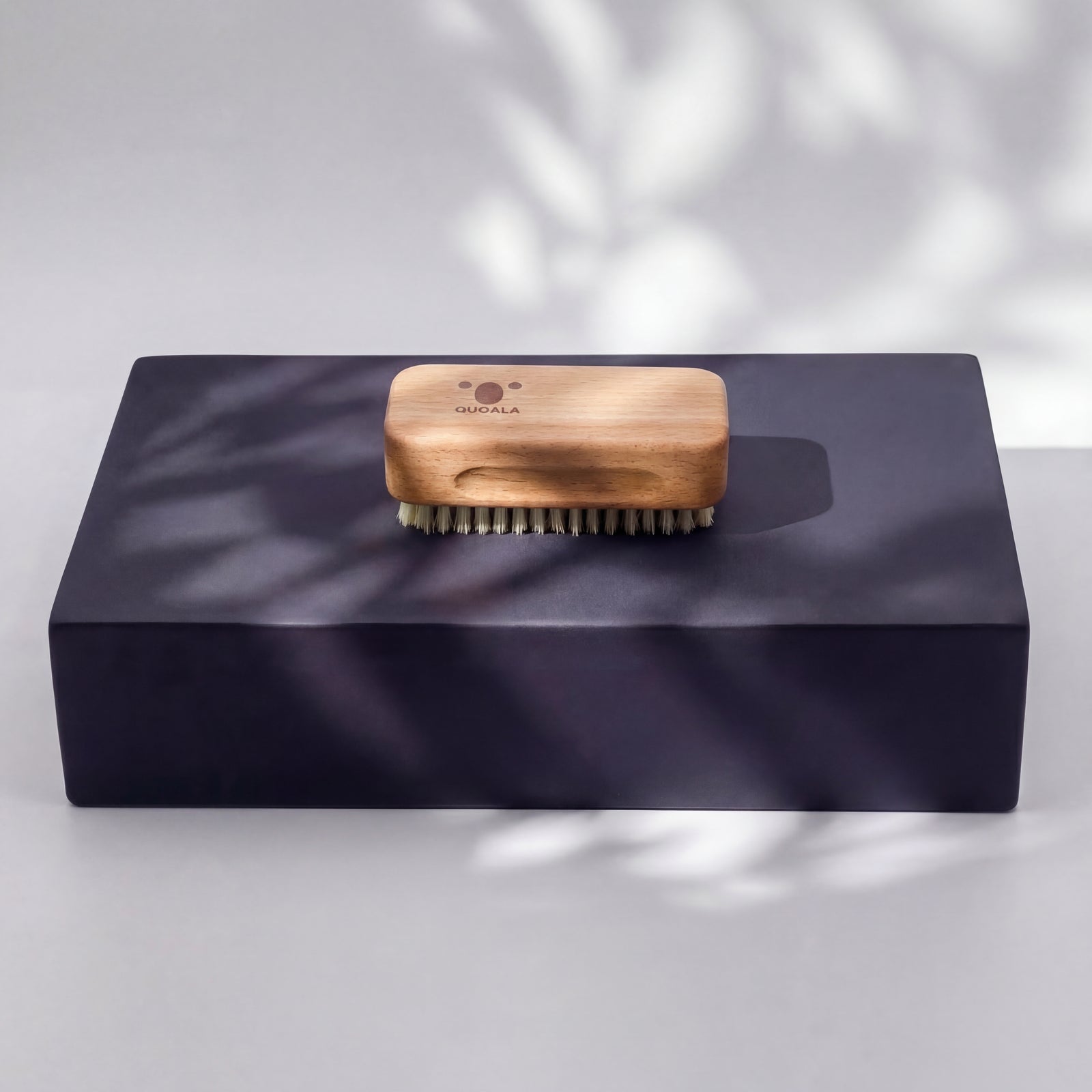

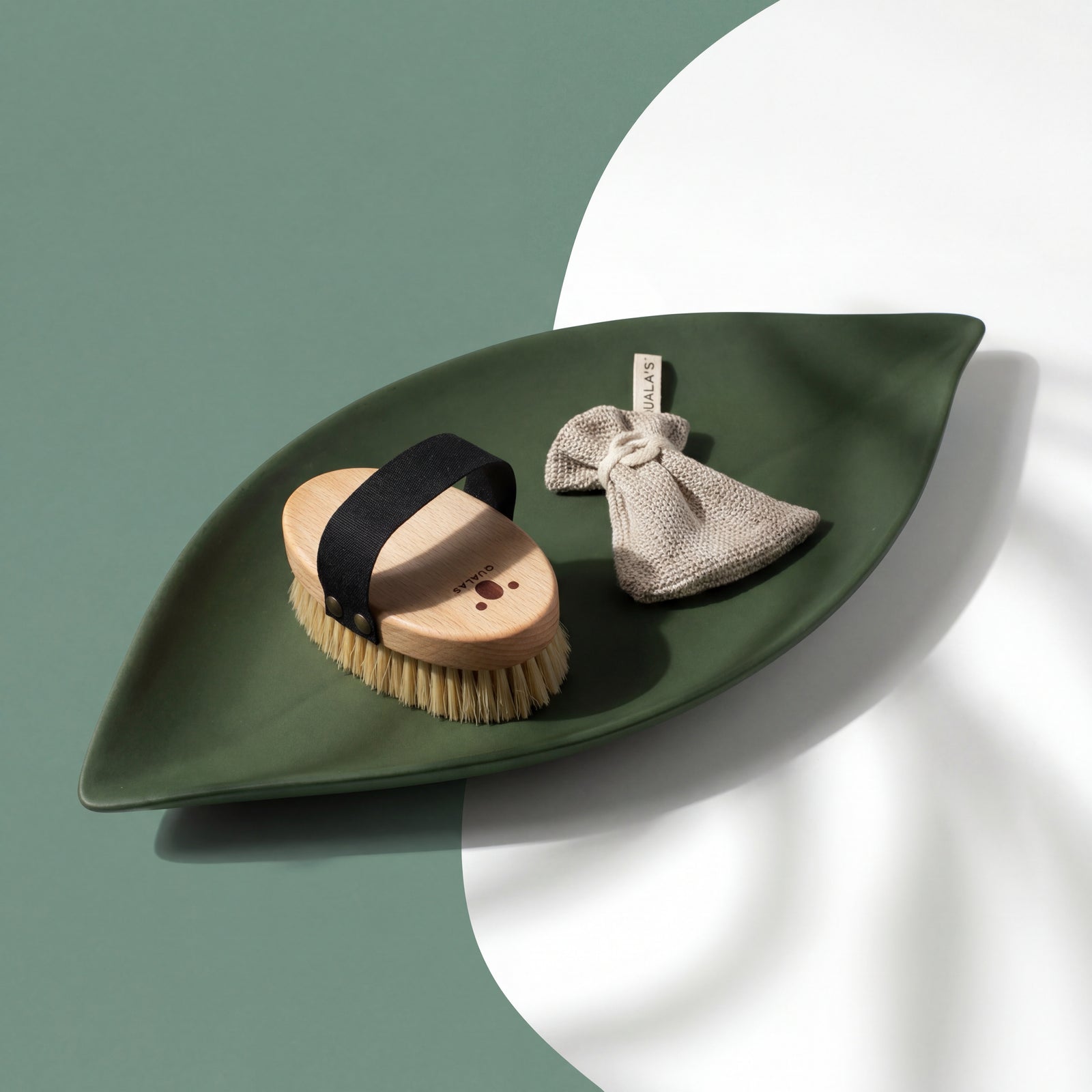

Real wood and natural bristles react to moisture, heat and mechanical stress – that makes them more valuable than plastic, but it calls for targeted care. The key rules: let the brush dry upright after every use, never leave it to soak in water, treat it with oil every 2–3 months. If you follow these principles, your brush will last for several years. This guide explains the material science behind it, gives you a concrete care plan and shows which bristles have which special requirements.
Key points at a glance:
- Tap out or rinse briefly after every use, then hang up to store.
- Wood and bristles are sensitive to constant moisture and direct heat — never soak them or put them on a radiator.
- Care for the wood with a few drops of plant oil every 2–3 months.
- Pig bristle, horsehair and Tampico fibre have different care needs.
- The ionic monastery brush is a special case: never wash it wet — otherwise the bronze wires oxidise.
In this guide:
1. The 5 essential care rules
Wood is a hygroscopic material – it absorbs moisture from its surroundings and releases it again [1]. To prevent the wood from cracking or swelling, the following steps after every use are crucial:
1.1 Store in a dry, well-ventilated place
Constant moisture is the biggest challenge for wooden bath brushes. Let your brush dry well after every use and never leave it lying in water. Ideally, store it hanging or with the bristles facing down in a well-ventilated place, away from damp corners of the shower. This prevents mould and protects the FSC wood and the natural bristles from going soft.
1.2 Use the cord to hang it up
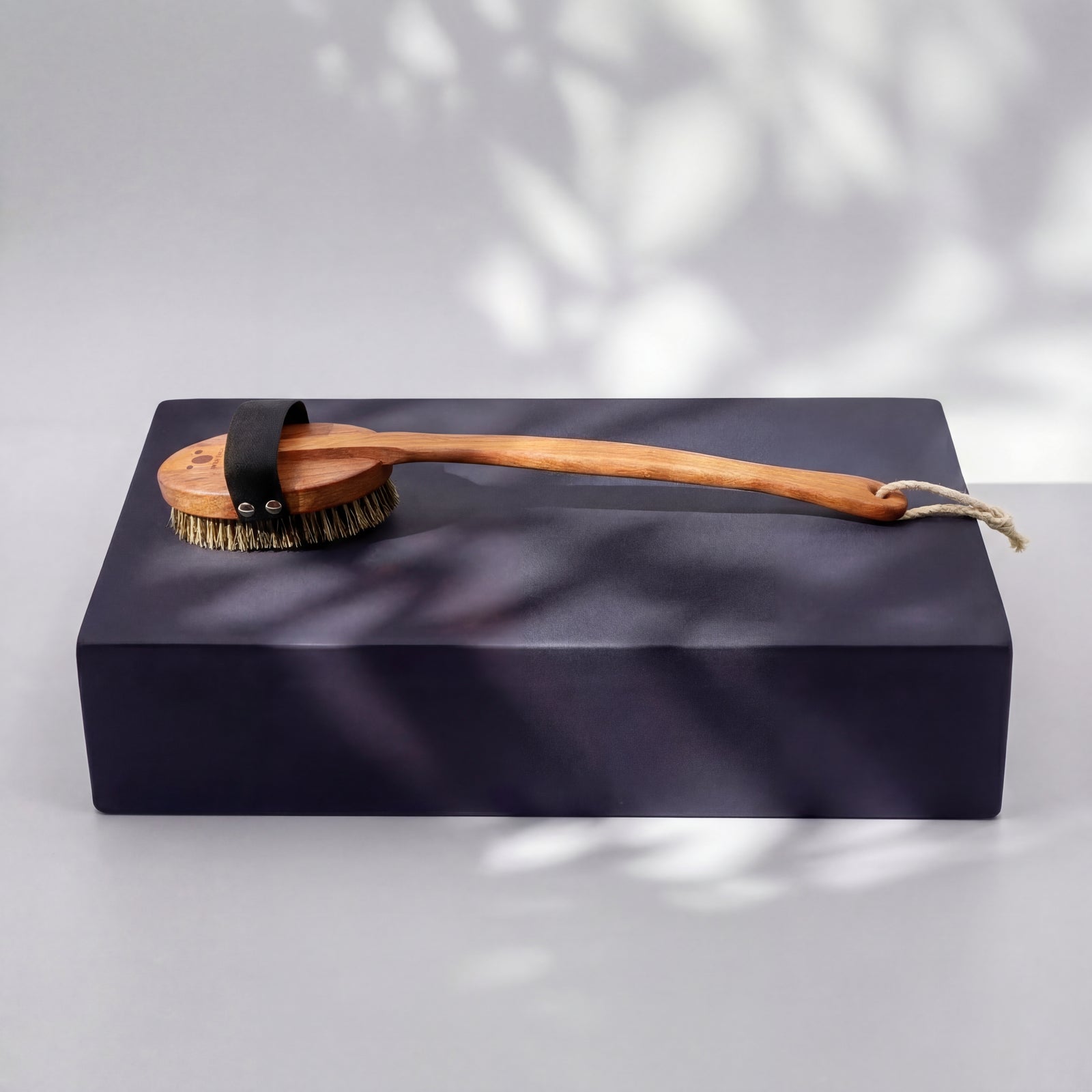
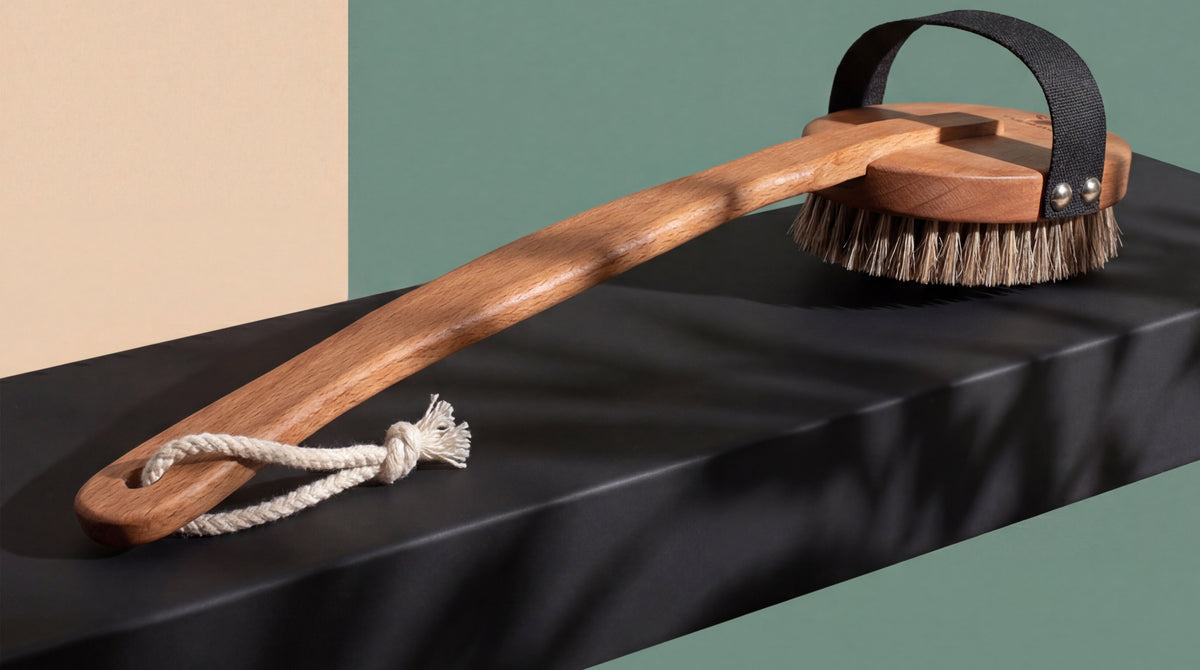
Many of our bath brushes come with a practical cotton cord. It is not just a visual detail but your most important care tool: simply hang the brush up by the cord after use. Remaining water can then drip off with gravity, air circulates freely around the whole wooden body, and the brush dries quickly and hygienically.
1.3 After use: tap out or rinse gently
There are two simple ways to clean your bath brush after use:
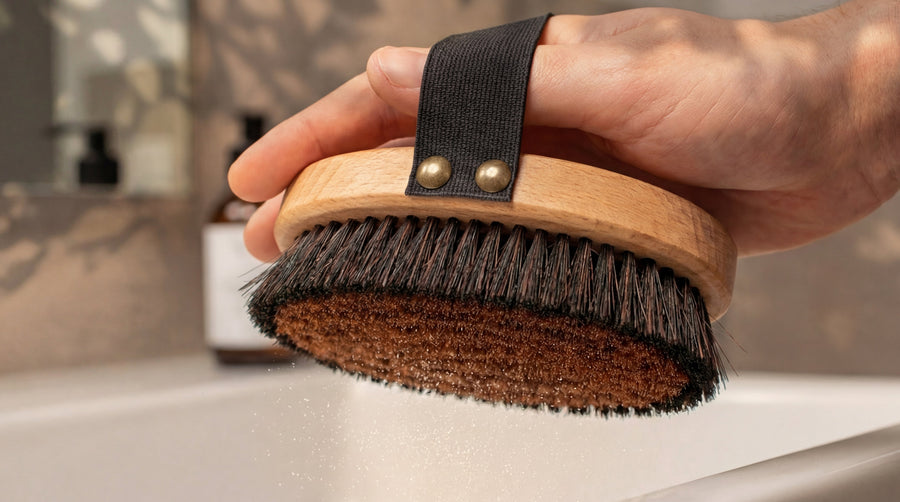
- Tapping out: After dry brushing (dry massage), simply tap the brush gently on the edge of the washbasin to remove skin flakes mechanically.
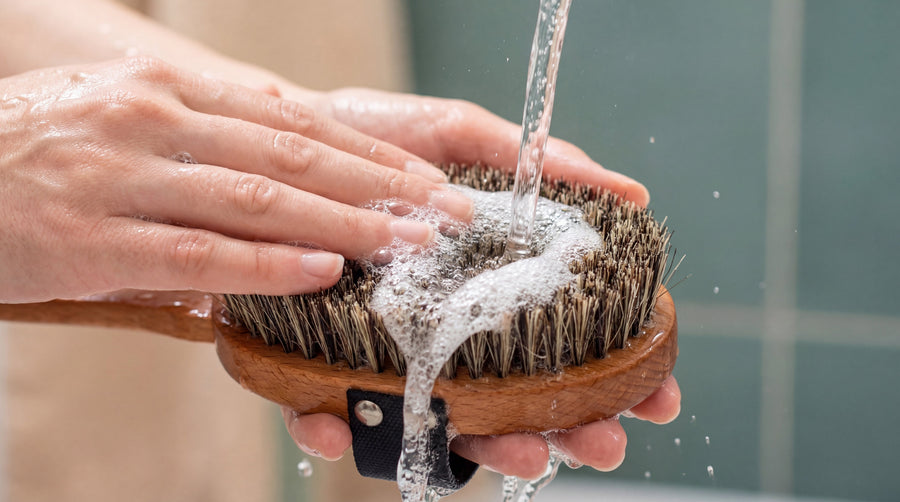
- Rinsing: If you used the brush wet, rinse it thoroughly under warm running water. If needed, you can use a mild natural shampoo to remove soap residue – then rinse very well with clear water.
1.4 Never leave the brush to soak
Submerging the brush (especially the wooden body) completely or soaking it for a long time puts heavy strain on the material. Even a short soak in the bath water can cause the wood to take up too much water, swell, crack or warp. Instead, just let the water run over it briefly and then shake the brush out firmly.
1.5 No radiator: let it dry naturally
It may be tempting to put a wet brush on the radiator to speed things up. But because real pig bristle and horsehair are made of keratin (like human hair), direct, intense heat makes this structure brittle and causes it to break [2]. At the same time, the wood dries out too aggressively. Instead, hang the brush up by its cord or lay it flat on a towel (bristles facing down). Give the room air the time it needs.
Summary: The 5 basic rules come down to one principle: control moisture, avoid heat. If you tap out your brush after every use, hang it up and never leave it in standing water, you solve 90 % of all care problems — with no effort.
2. Wood care & patina: when the material dries out
At QUOALA we deliberately make no "indestructible" promise. We choose uncompromising natural materials over synthetic plastic alternatives. So it is completely normal for the wood to develop a certain natural patina over time, to darken or to become slightly rough.
Wood care tip: If you notice after a few months of use that the wood feels very dry, is slightly rough or has lost its sheen, you can occasionally rub it gently with a few drops of natural plant oil (e.g. linseed oil, walnut oil or a drop of olive oil). The oil soaks into the pores, keeps the wood supple and makes it noticeably more water-repellent again [3]. Important: use only a small amount and let the oil soak in for a few hours before using the brush again. Wipe off excess oil with a dry cloth.
Our fair guarantee: Should your brush show an unexpected material defect (such as deep stress cracks) within the first 3 months despite proper care, our guarantee applies. Simply contact our support team – we will find a quick and straightforward solution.
Summary: A slight patina, a little roughness or darkening of the wood are normal signs of a living surface — not a defect. A few drops of linseed or walnut oil every 2–3 months revive the wood and protect it from drying out in the long term.
3. Bristle types & their special care needs
Not all bristles are the same. QUOALA relies on four main materials — pig bristle, horsehair, Tampico fibre and bronze wire — which differ clearly in their structure and in how they react to moisture. If you know what your brush is fitted with, you can care for it more precisely.
Pig bristle – the robust all-rounder

Macro photo: roof-tile cuticle of the pig bristle – robust alpha-keratin fibres that dry quickly
Pig bristles are the most robust natural bristles in the QUOALA range. Their strength lies in the dense scale structure of the keratin fibre: they do absorb moisture, but dry again relatively quickly — which makes them particularly durable and versatile. For dry brushing before the shower they are ideal, because they hardly come into contact with water.
- Cleaning: Tapping out dry after every use is usually enough.
- Wet use: Rinse briefly under lukewarm water, shake out firmly and let dry completely while hanging.
- Special feature: Copes well with occasional moisture — as long as no water collects at the base of the bristles.
Horsehair – gentle and in need of care

Macro photo: horsehair bristle – smooth, silky-fine fibre, more sensitive to constant moisture
Horsehair bristles are finer and softer than pig bristles. They give a gentler massage and are often preferred for more sensitive areas of skin. Their finer fibre structure means they soften faster when moisture lingers — so they need special attention after wet use.
- Drying: After wet use, shake out actively and dry hanging — make sure no water collects at the base of the bristles.
- Oiling interval: With frequent wet use, shorten it to every 6–8 weeks to keep the bristles supple.
Tampico fibre – plant-based, quick-drying

Macro photo: Tampico agave fibre – cellulose-rich plant fibre that dries faster than animal bristles
Tampico is obtained from the leaves of the agave plant and is naturally stiffer than animal bristles — ideal for a more intensive exfoliation. Plant fibres absorb less moisture and dry faster. With very frequent wet use, Tampico fibres can split at the tips.
- After wet use: Rinse well, shake out and hang up.
- When oiling: Keep Tampico fibres away from oil as far as possible — plant fibres do not need oiling and are weighed down rather than cared for by oil.
Bronze wire – dry only

Macro photo: bronze wire – metal wire weave that oxidises permanently on contact with water
The ionic monastery brush is the only QUOALA product fitted with bronze wires. Bronze is neither keratin nor plant fibre – it is a metal that starts to oxidise on contact with water and permanently builds up a patina. This brush is designed exclusively for dry massage.
- Cleaning: Tap out dry only – never hold it under water or rinse it.
- Avoid oxidation: Store in a dry place straight after use; never leave it hanging in a damp shower.
- No oil: Metal wires need no oiling – oil would only coat the wires.
Summary: Pig bristle is the all-rounder — robust, for dry and wet use. Horsehair needs more care when drying. Tampico dries fastest but should be used wet less often. Bronze wire is the special case: dry only, no water, no oil. The basic rule applies to all: store hanging, never soak.
4. Your care calendar: what to do when
Care sounds like a lot of work – but it isn't. Once you have got used to the steps, they become automatic. The overview below shows which steps make sense daily, weekly and seasonally.
After every use (approx. 2 minutes)
- Dry brush: tap the bristles out on the edge of the washbasin, hang the brush up.
- Wet brush: rinse briefly under warm water, shake out firmly, let dry hanging — never leave it lying flat on the edge of the bath.
- Check: are the bristle tufts still straight? Is soap or product residue sticking? If so, rinse again briefly.
Weekly (approx. 5 minutes)
- Gently fan out the bristles with your thumb: are all tufts intact and upright?
- Check the base of the bristles (where bristle meets wood) for white deposits or slight traces of mould. If there are any: clean gently with a soft toothbrush and mild shampoo, then dry completely.
- Feel the wooden body: does it feel dry or cracked? Then it is time to oil it.
Every 2–3 months (approx. 10 minutes)
- Wood care: Put a few drops of linseed or walnut oil on a cloth and rub it into the wooden body (not the bristles) in circular movements. Let it soak in for 2–3 hours, then wipe off the excess oil.
- Check the cord: is it still firmly sewn on?
- With frequent wet use: shorten the interval to monthly.
Every six months / yearly
- Assess the overall condition: are the bristles frayed or so soft that the massage effect is fading? Then it is time for a fresh start.
- Check the cord and bristle pad: is the pad still firmly seated in the wooden body?
- The QUOALA principle: we build brushes to last. If your brush wears out despite care, ask our support team for advice — sometimes there is a simple solution.
Summary: Hanging it up daily takes 30 seconds. A quick weekly check takes 2 minutes. Oiling every 2–3 months takes 10 minutes. That is all — if you stick to this calendar, you will get years of use out of a QUOALA brush.
5. Does this apply to all QUOALA brushes?
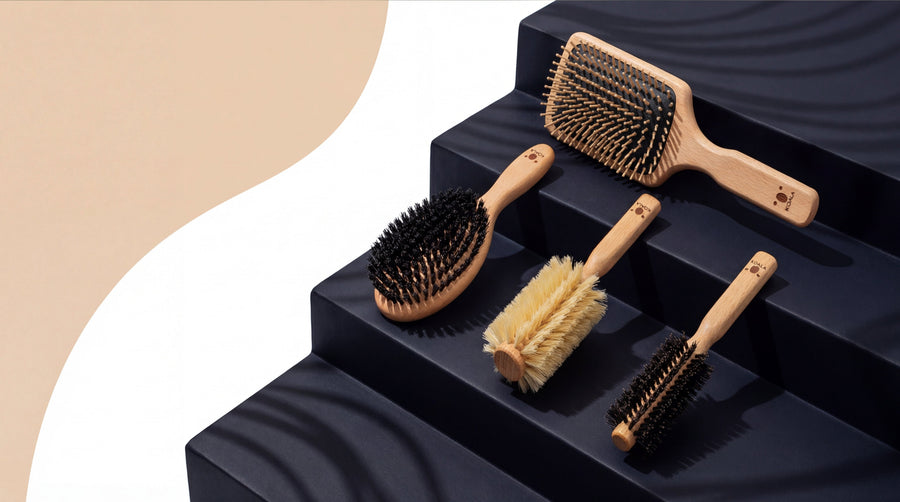
Common basic rules apply to wooden brushes, but the products differ in their use: hairbrushes and blow-dry brushes are used dry, hairs are removed dry with a comb, and the bristles are wiped with a damp cloth only briefly at most. The beard brush is used on a dry beard and cleaned dry with a comb, without shampoo baths as pear wood can swell. Bath brushes are suitable for both wet and dry use and must dry well afterwards.
One important special case: the ionic monastery brush must never be washed wet under any circumstances. It is designed exclusively for dry massage. Its weave of bronze wires reacts to contact with water by oxidising — which permanently damages the metal. Cleaning: tap out dry only.
Summary: All wooden brushes share the same basic rules. The only exception is the ionic monastery brush with bronze wires — it is cared for dry only.
6. Special case: the water-resistant foot file
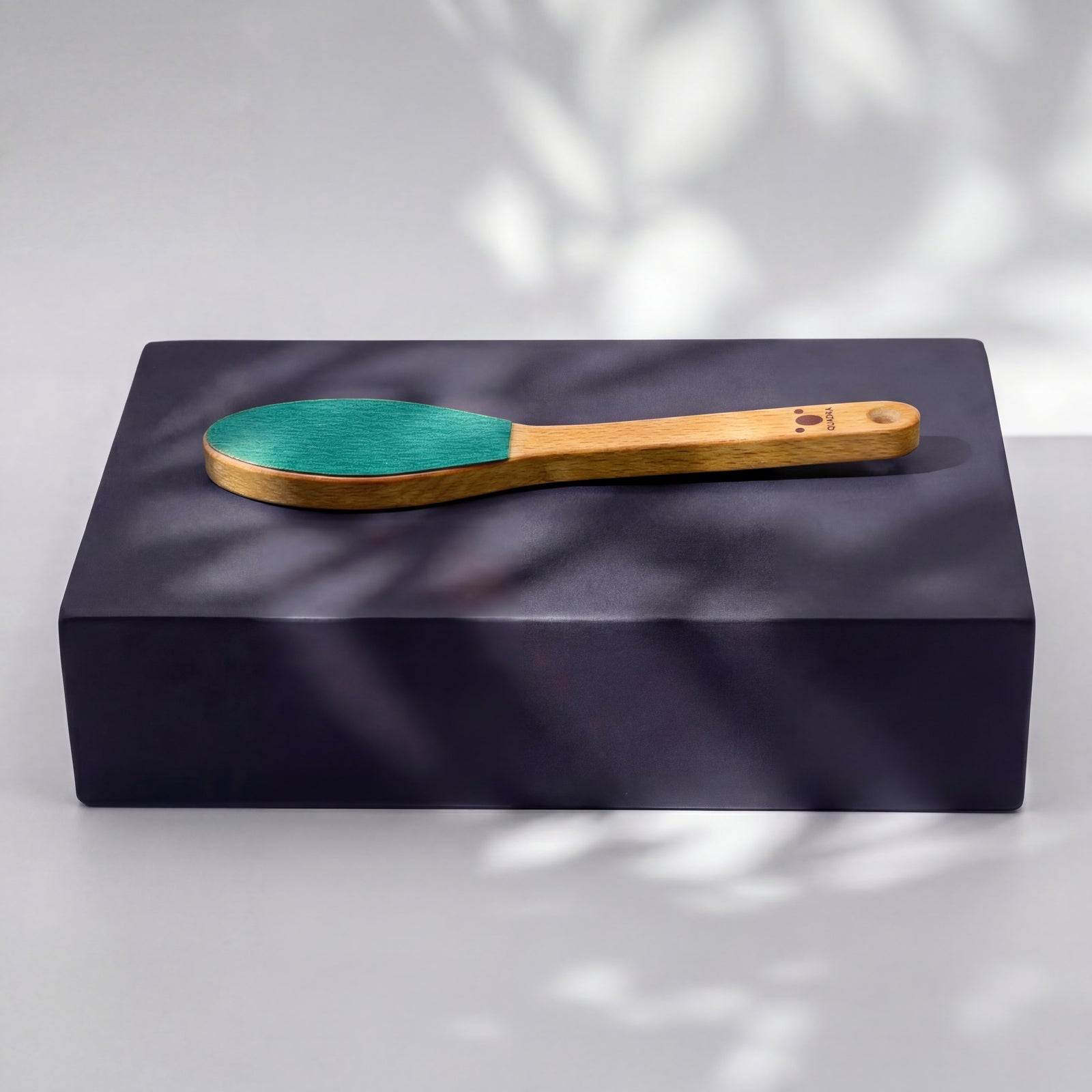
The foot file behaves differently from many of our wooden brushes: its zirconium corundum abrasive (dual grit 100/150) is water-resistant and suitable for both wet and dry use.
Care tips for the foot file
- After the bath: Rinse briefly under running water and let dry hanging – do not leave it hanging in the damp shower.
- No standing water: Water-resistant does not mean invulnerable.
- Abrasive surface: Rinse occasionally with warm water and an old brush. The zirconium corundum surface does not need oiling.
- Wooden handle: Benefits from the same occasional oil treatment as all other QUOALA tools.
7. Frequently asked questions
Why does my natural bristle brush smell when it gets wet?
That is completely normal. Real animal hair (such as pig bristle or horsehair) can give off a slight smell of its own when wet at first. More on this: Why natural bristles can smell.
Can I use disinfectant on the bristles?
No. Harsh alcohols or chemical disinfectants dry out natural bristles immediately and attack the wood finish. A mild natural shampoo and warm water are all you need.
How often should I oil the brush?
With frequent wet use, every 2–3 months. For brushes used only dry, once or twice a year.
Can I clean my brush in the washing machine?
No – never. The washing machine combines everything that harms wood and natural bristles: constant moisture, heat and mechanical stress. The only acceptable method: rinse briefly, air-dry.
My bristles feel stiff and brittle after drying – what should I do?
That is a sign they have dried out. Solution: carefully work in a few drops of argan oil, let it soak in for 30 minutes, then shake out firmly.
When should I replace my brush?
When most of the bristles stay bent, the wood shows deep cracks or the massage effect fades noticeably. A single loose bristle tuft is normal.
How do I clean the wooden handle most thoroughly?
A slightly damp cloth is enough. For stubborn residue: a drop of natural shampoo on the cloth, then wipe dry immediately. Never hold the handle under running water.
How hygienic is a natural bristle brush compared with synthetic fibre?
With proper care — regular tapping out, occasional rinsing, complete drying — natural bristle brushes are hygienically unproblematic. Important: never store them damp for long.

A loyal companion with the right care
Every QUOALA product follows the same principle: function, material quality and pared-back design. If you care for your tools properly, they will accompany you reliably through many routines.
Sources and further reading
Scientific sources
- Wagenführ (2007), Holzatlas (wood atlas), 6th edition, Carl Hanser Verlag. Reference work on wood properties such as density, hardness and shrinkage. Our assessment S58
- McKittrick et al. (2012), The Structure, Functions, and Mechanical Properties of Keratin, JOM. Review: structure and properties of keratin in hair, bristle and horn. Our assessment S27 · Source
- Janesch et al. (2021), Efficient Wood Hydrophobization Exploiting Natural Roughness Using Minimum Amounts of Surfactant-Free Plant Oil Emulsions, ACS Omega. Small amounts of plant oil make wood surfaces water-repellent. Our assessment S35 · Source
- FSC International (2024), What the FSC labels mean, Forest Stewardship Council. What the FSC labels mean and how the chain of custody is controlled. Our assessment S14 · Source