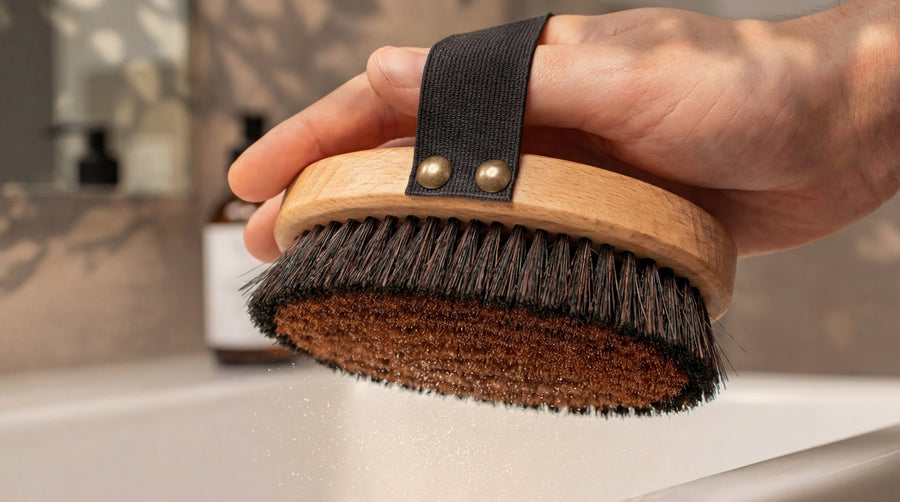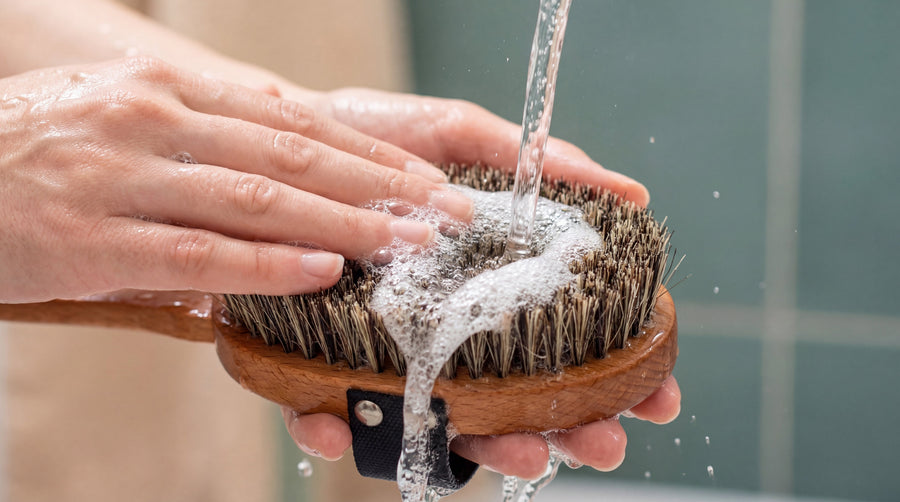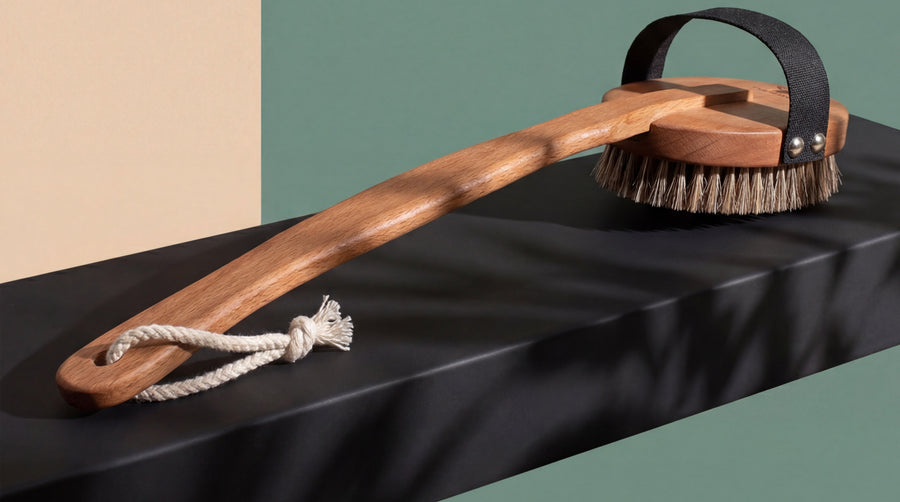

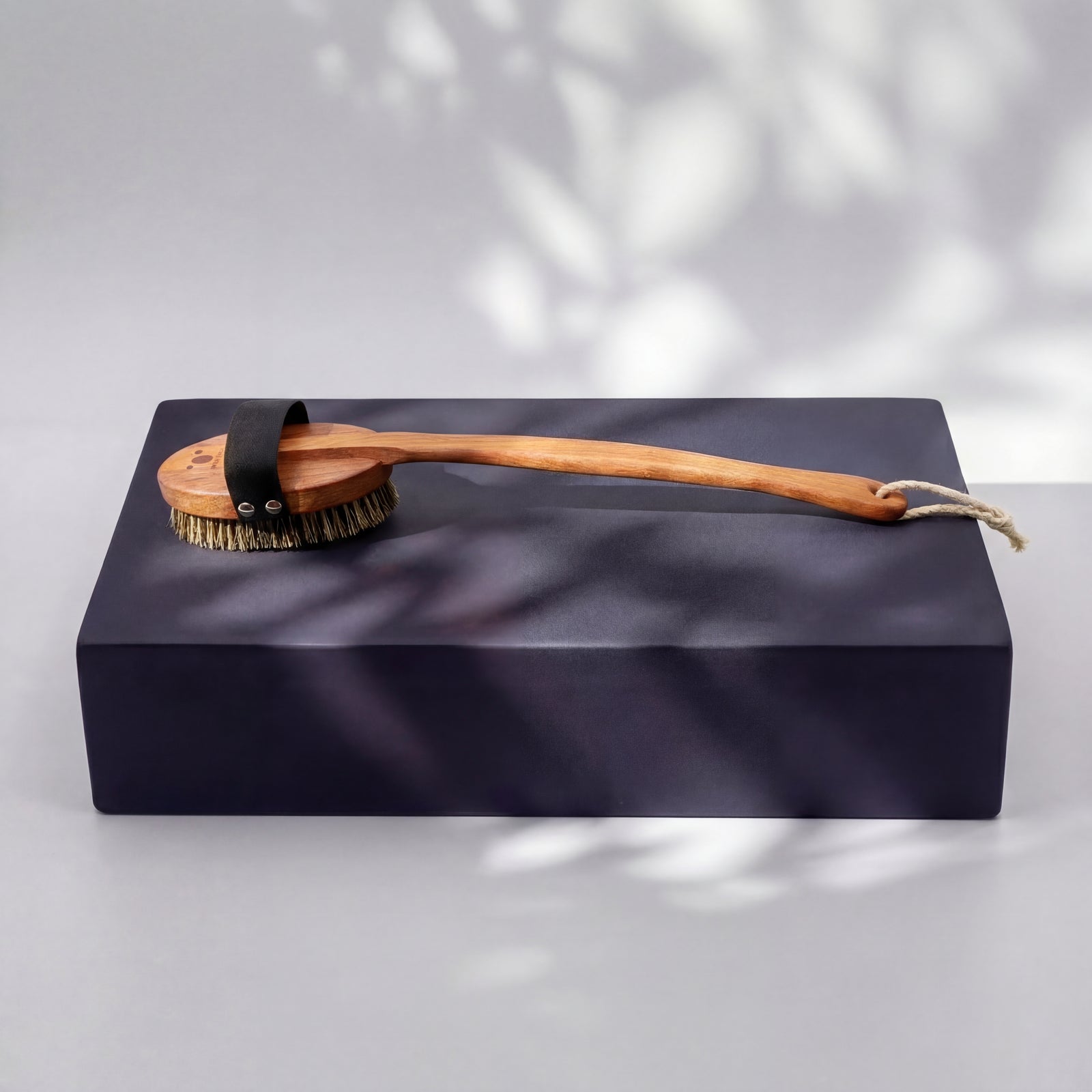

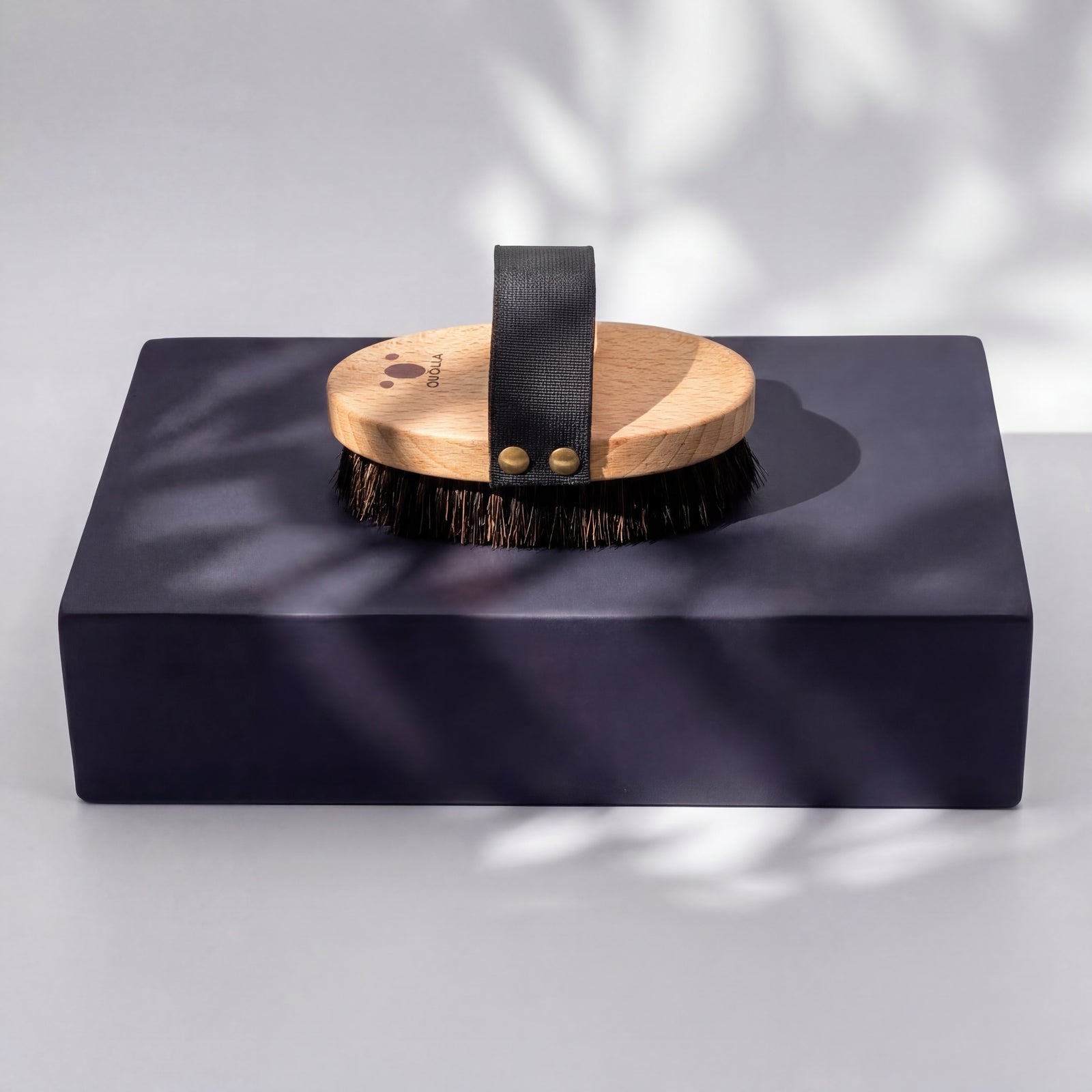

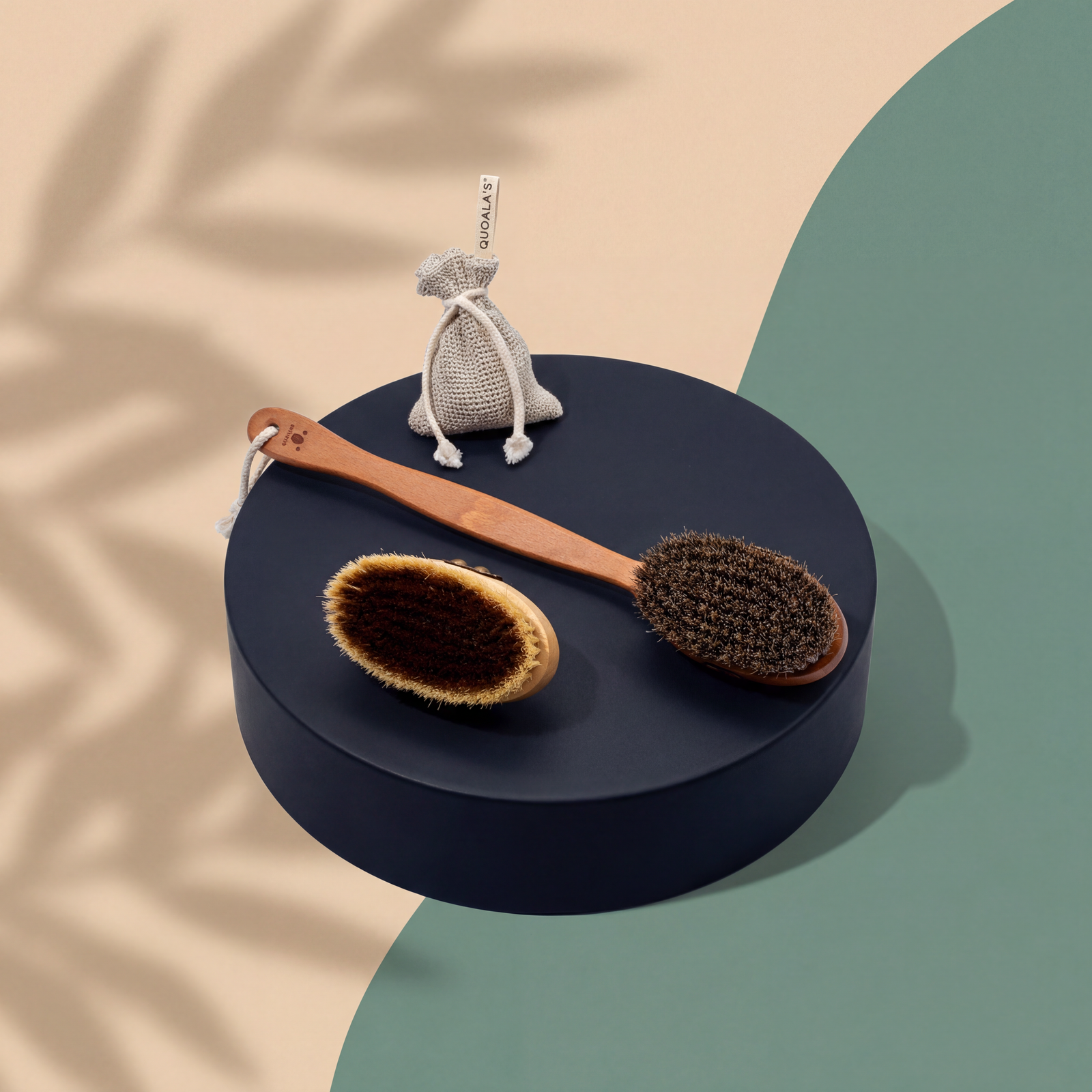

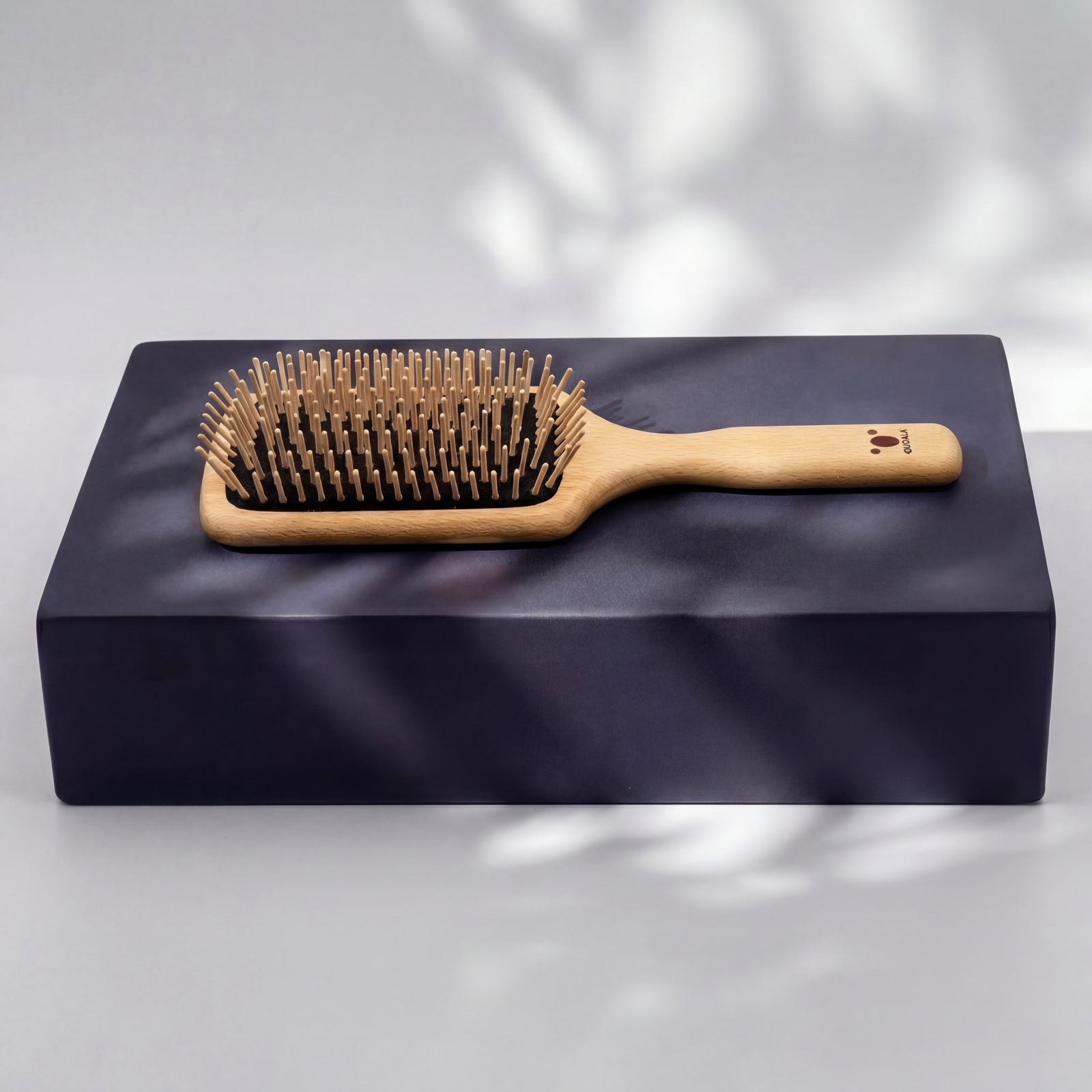

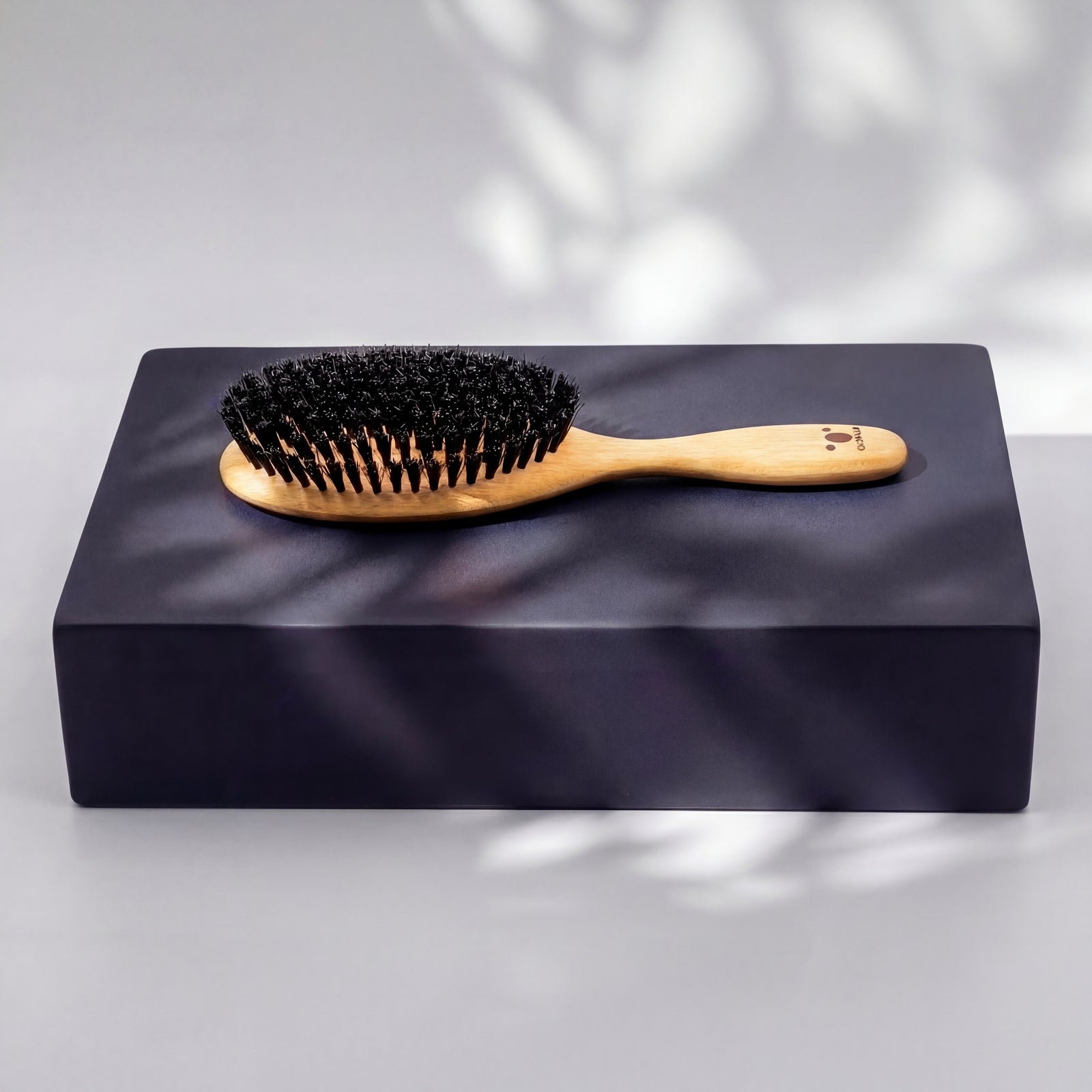

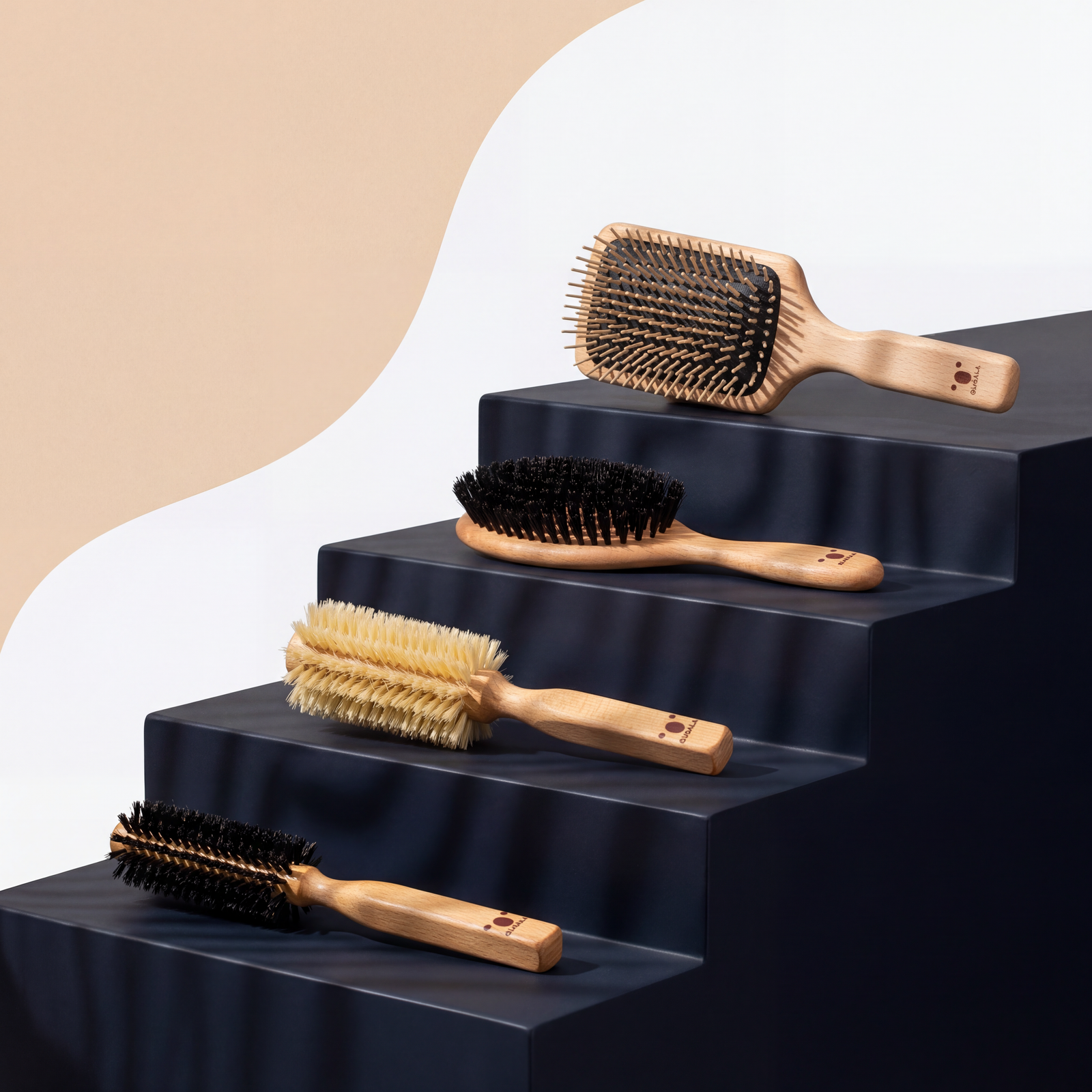

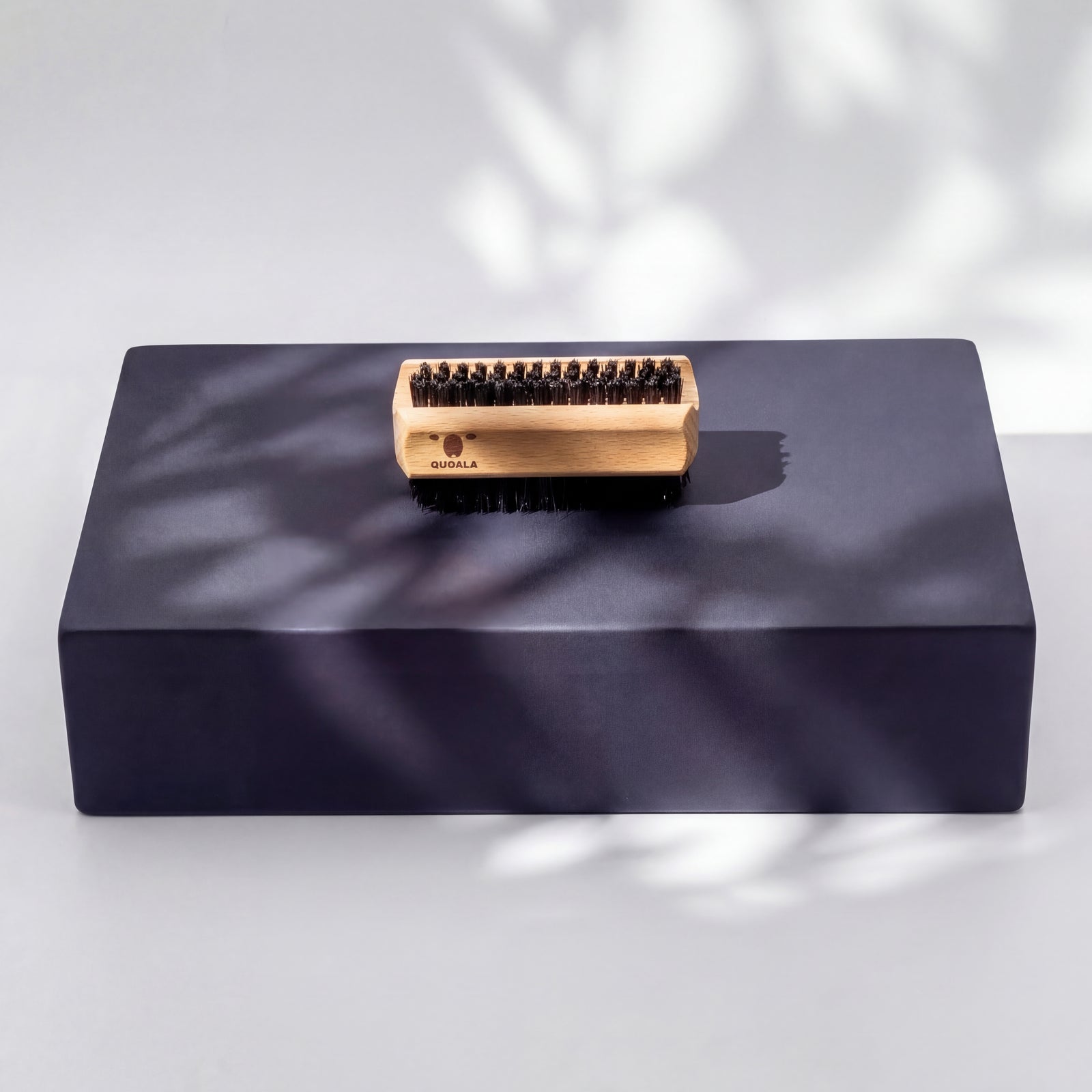

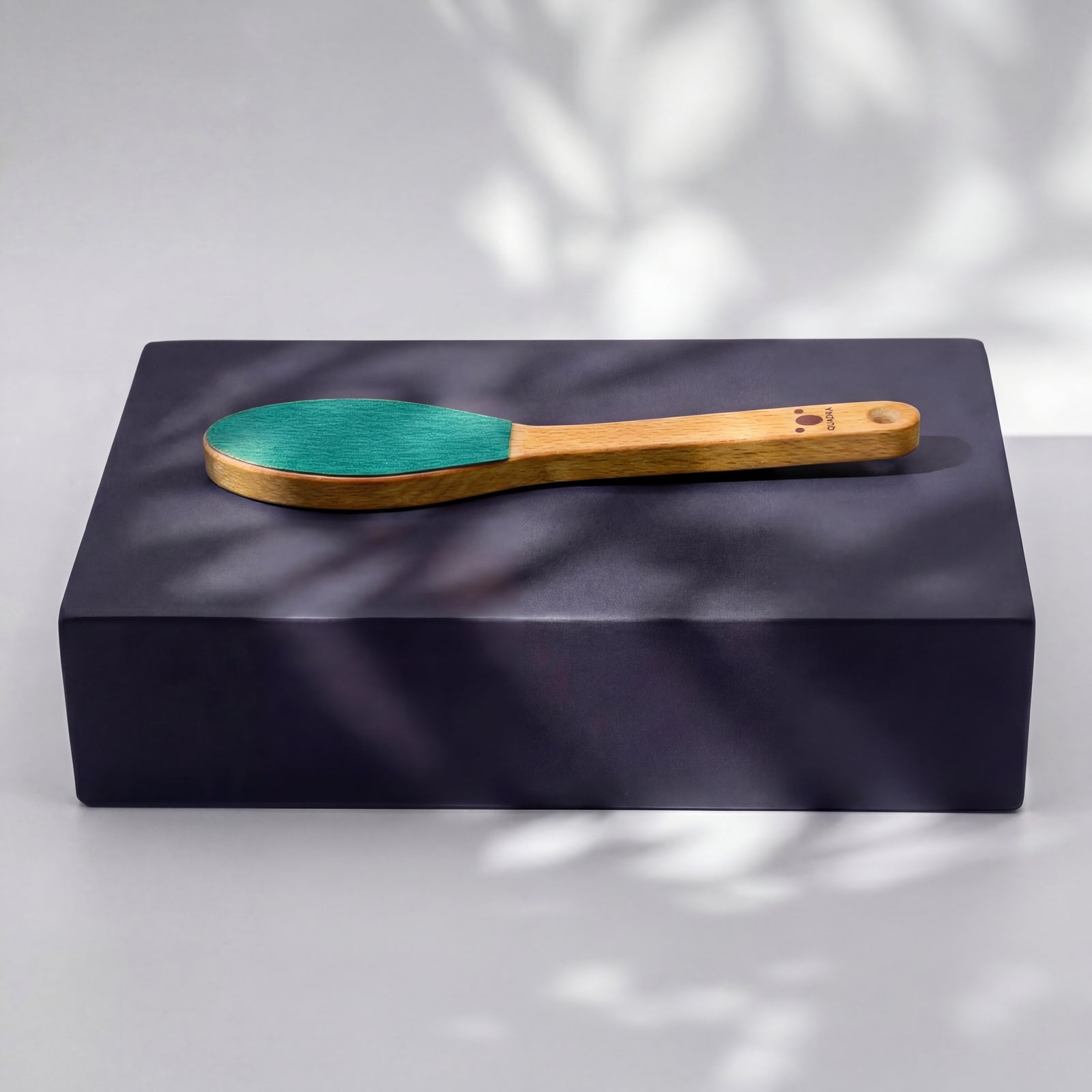

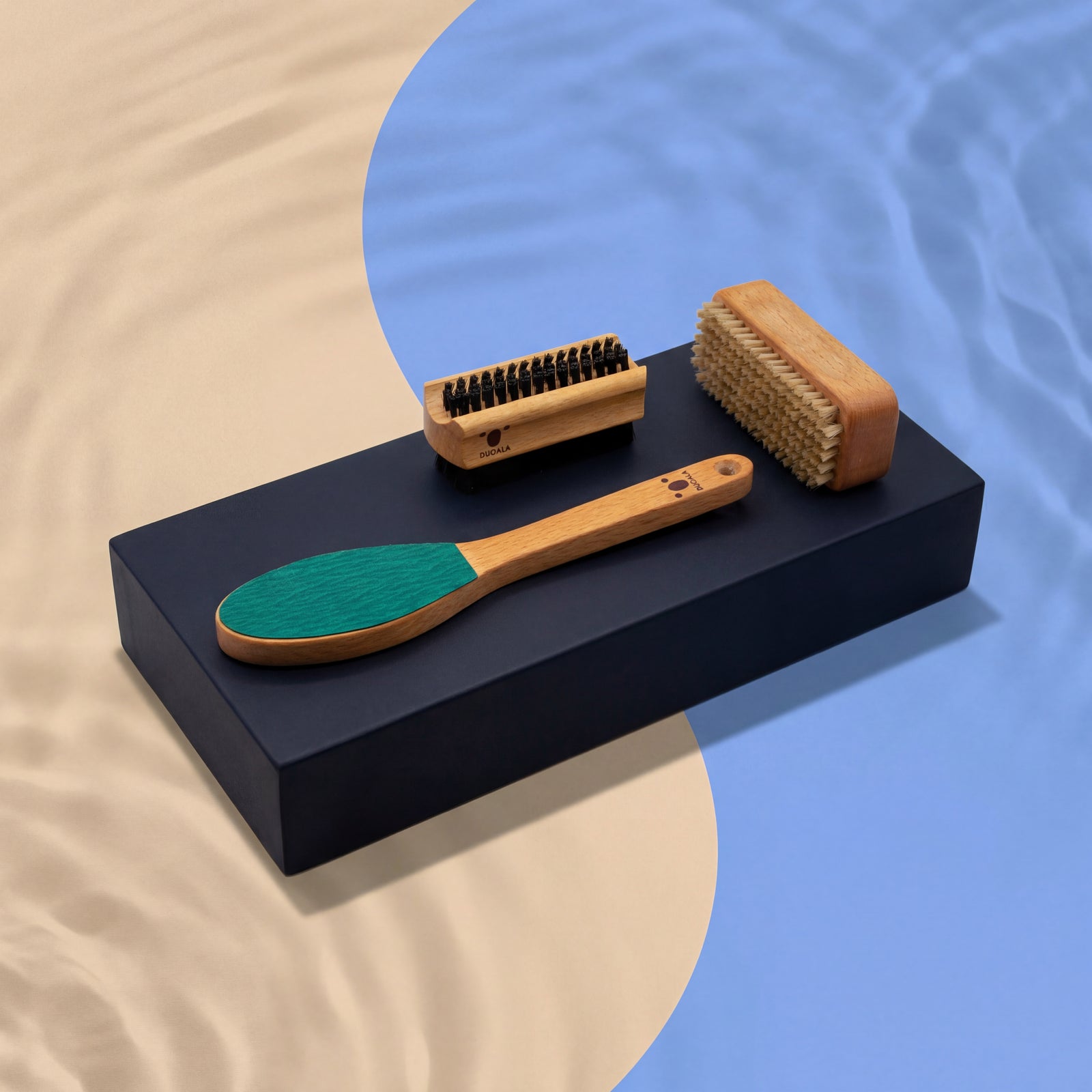

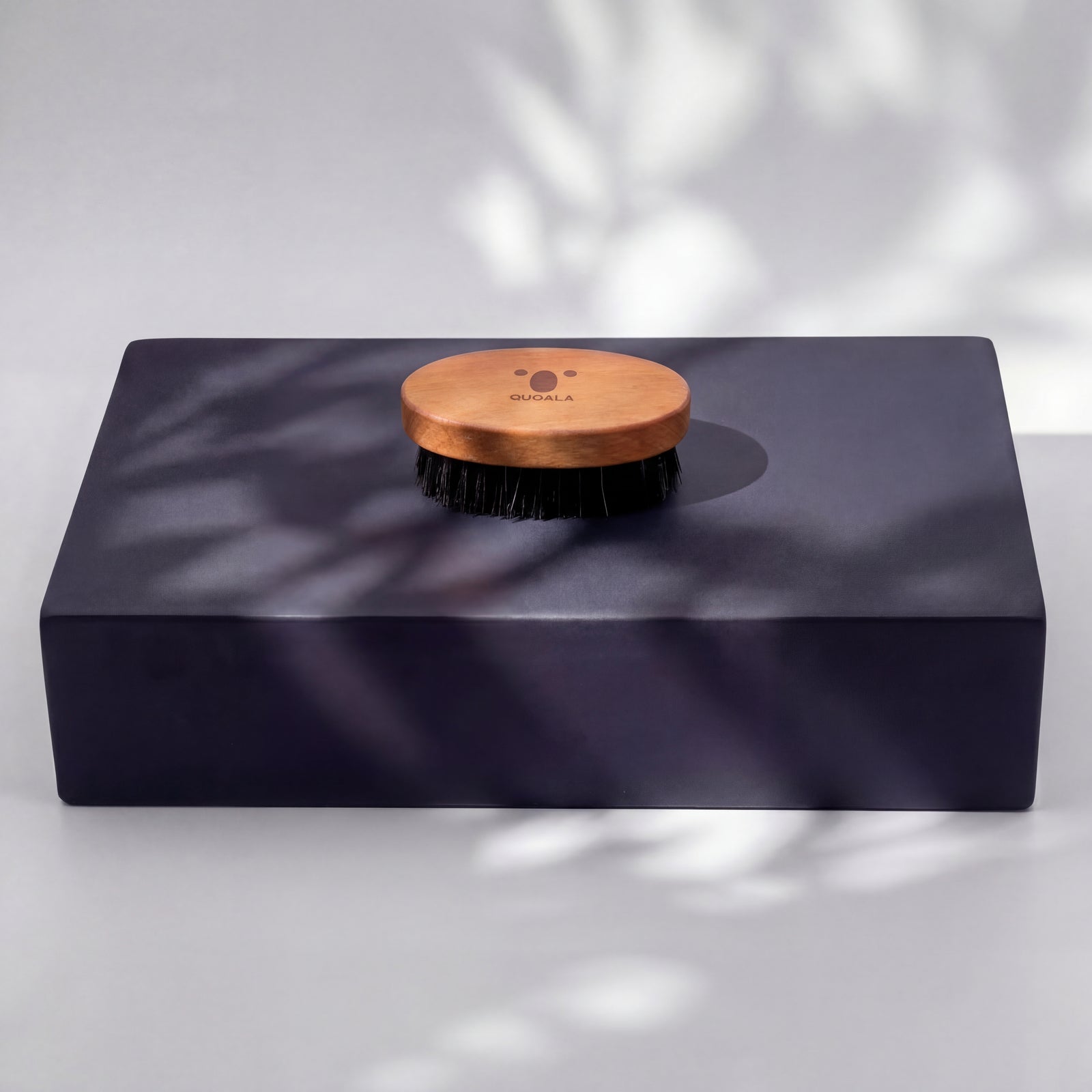

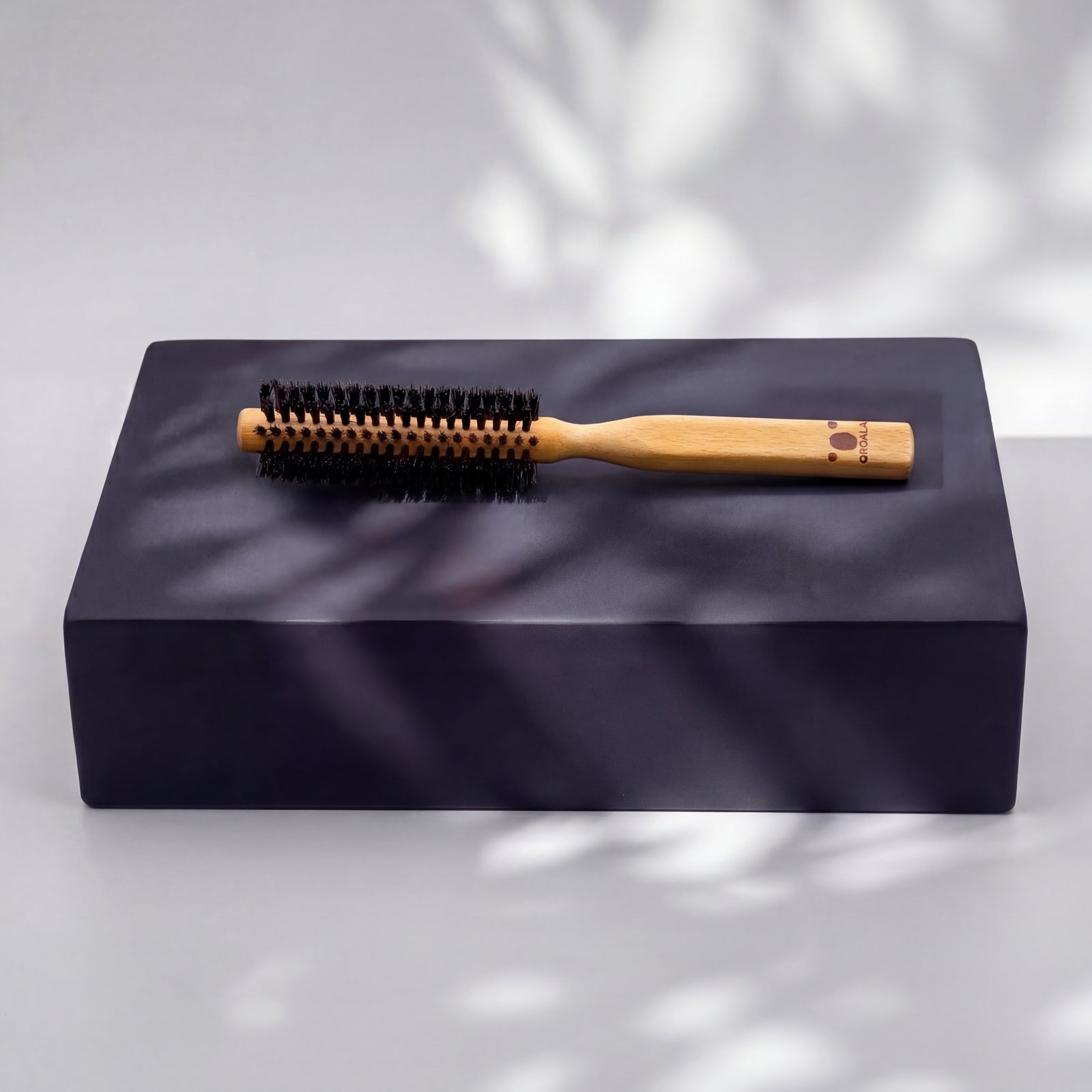

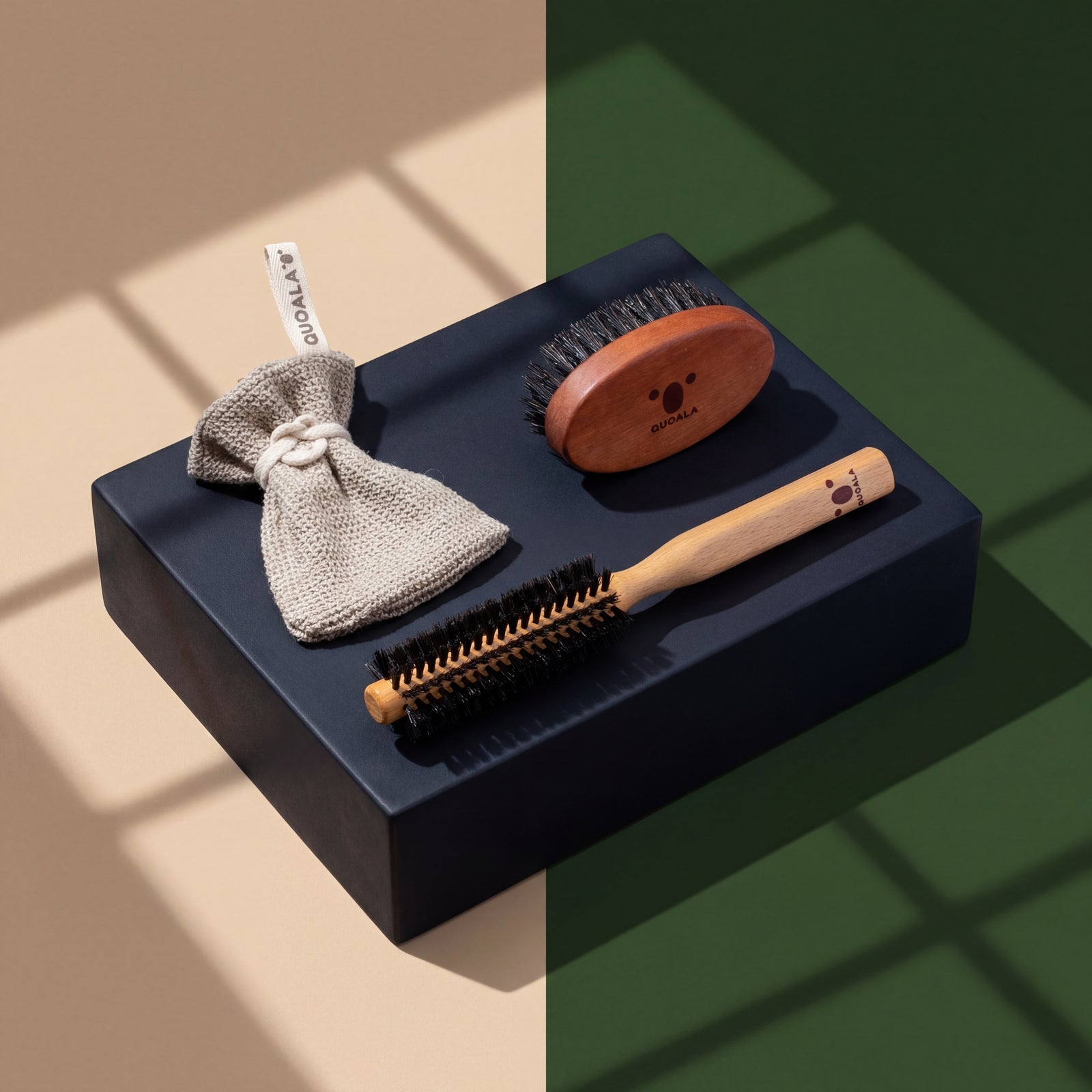

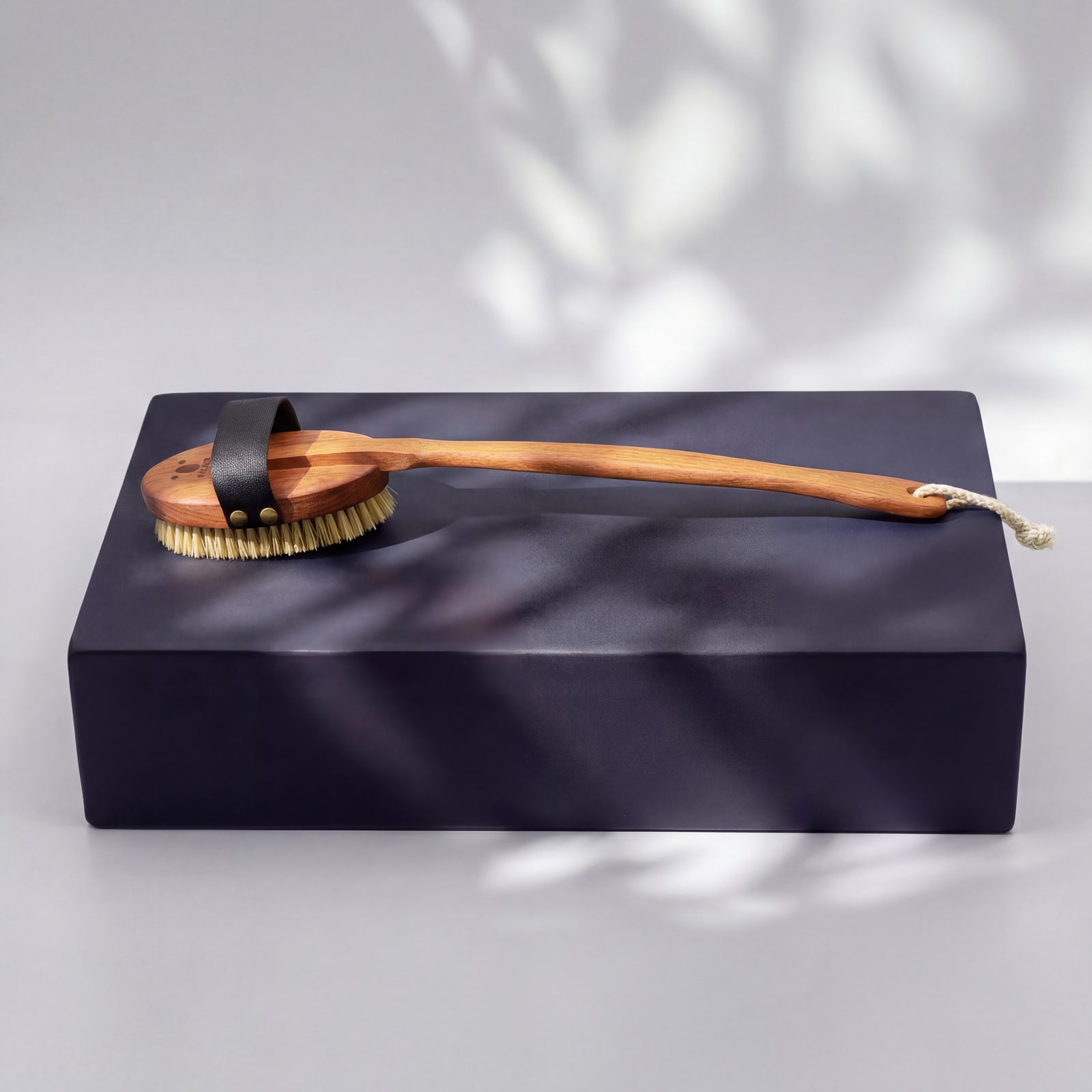

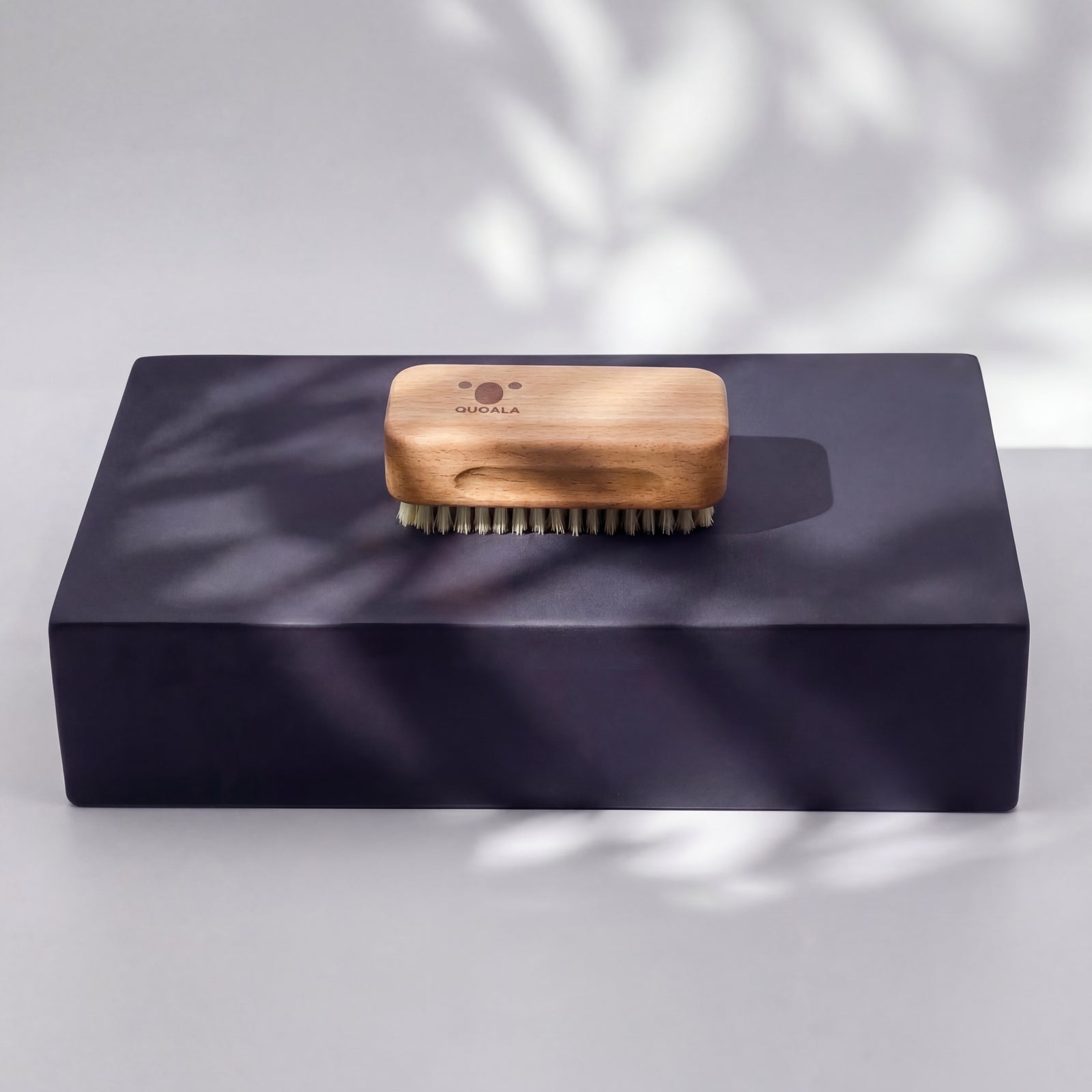

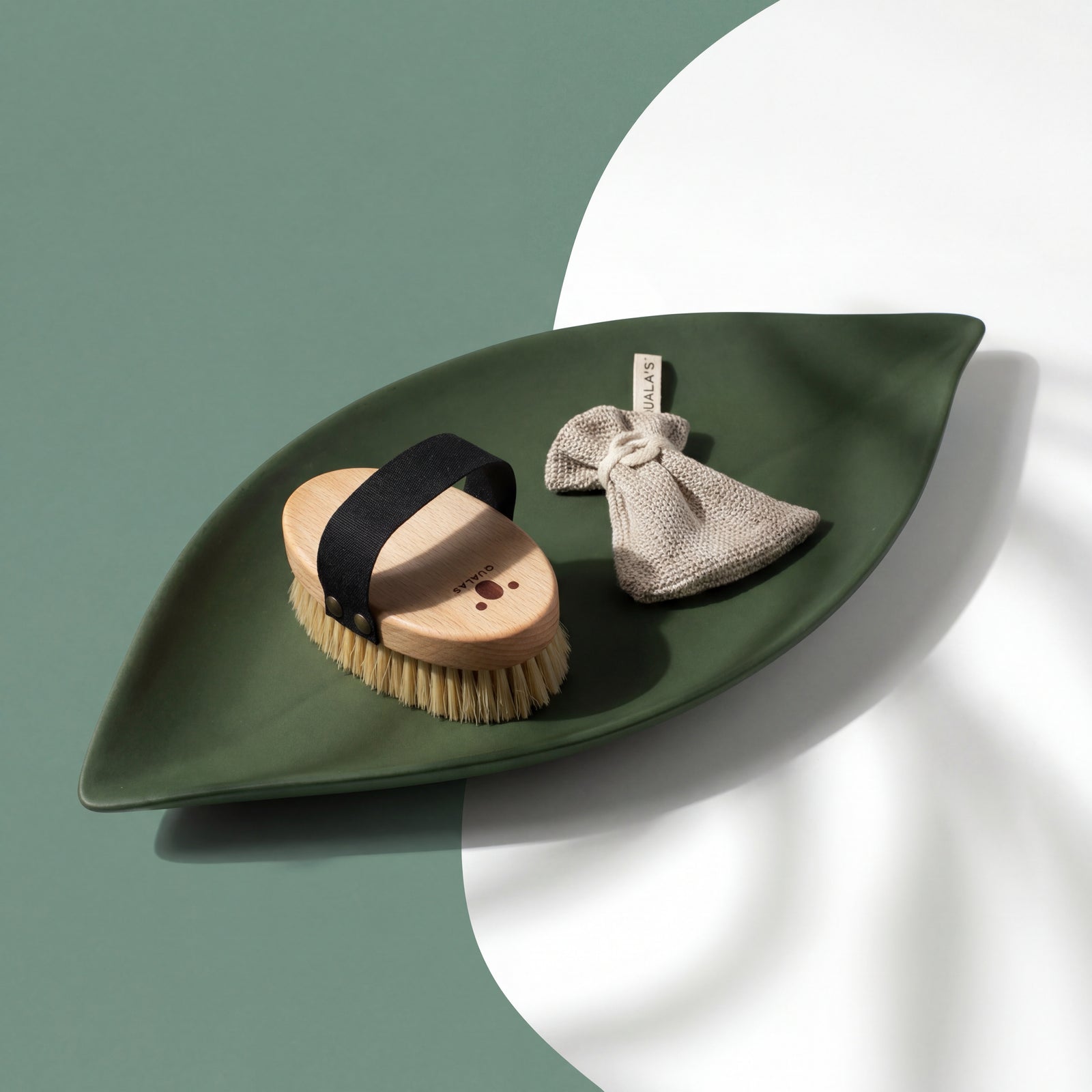


Boar bristles and Tampico fibres pick up sebum, dust and styling residue – and build them up over time. Clogged bristles lose their ability to distribute natural hair oils (proven for boar bristle; Tampico absorbs oils and releases them plausibly, though unmeasured) and to gently massage the scalp. This guide shows you step by step how to clean every QUOALA hairbrush correctly – whether boar bristles, Tampico fibres or hornbeam wooden pins – while protecting the materials.
Key points at a glance
- Clogged bristles lose their ability to distribute sebum (proven for boar bristle) – regular cleaning keeps the brush working; it is not an optional hygiene extra.
- Remove hair weekly, wash monthly, always dry bristles facing down – three simple rules for a brush that keeps working for years.
- No dishwasher, no hairdryer, no prolonged contact with water – keratin and FSC wood are sensitive to heat and constant moisture.
In this guide:
1. The weekly ritual: removing hair
Shed hairs caught in the brush act like a net. They trap dust from the air and stop the bristles or wooden pins from reaching your scalp properly.
How to do it: Use a special brush cleaner or a clean, flat comb. Run it criss-cross through the bristle tufts or over the rubber cushion (pneumatic bed) to gently lift hair and fluff upwards and out. Do not tug hard on the wooden pins, so you don't loosen their anchoring.
In short: Shed hairs act like a net – they trap dust and block the bristles. Removing them once a week is enough to keep the brush fully effective.
2. The monthly deep clean
About once a month, old oils, dead skin flakes and product residue (such as hairspray or dry shampoo) should be washed out completely – partly because germs can adhere to wooden surfaces [1]. This applies to all material types (boar bristle, Tampico and wooden pins):
The right cleanser
A drop of mild, silicone-free shampoo or a mild baby shampoo is ideal. Because boar bristles (just like human hair) are made of keratin, harsh surfactants or aggressive soaps would dry them out and make them brittle over time.
Lather gently
Comb out hair first, then wipe the bristles briefly with a damp cloth if needed – do not soak. For wooden pins, it is enough to wipe the pins and the rubber cushion carefully.
Careful with cushion brushes!
Never fully submerge brushes with a soft rubber cushion (like our Paddle Brush). Water can otherwise get inside the wooden body through the small air hole that provides the cushioning, which could lead to mould or the cushion coming loose.
In short: Comb out hair, briefly wipe bristles with a damp cloth if needed, and never soak – for boar bristle, Tampico and wooden pins. Never submerge completely, especially cushion brushes.
3. Drying the right way (bristles facing down)
The most important step happens after washing. Moisture is the natural enemy of untreated or lightly oiled wood.
- Pressing out: After rinsing, press the brush gently into a dry, lint-free towel to soak up most of the water.
- The position: Always lay the brush to dry with the bristles or wooden pins facing down on a flat, well-ventilated surface (e.g. a towel). Only then can remaining water run out of the holes of the wooden brush instead of soaking deep into the wood.
- No heat: Avoid direct heat sources such as radiators, hairdryers or strong sunlight. Heat makes the FSC wood crack [2] and leaves the keratin structure of the natural hair extremely brittle [3] [4].
In short: Bristles down, let the air circulate, no heat – that is all it takes to keep FSC wood and keratin bristles intact for the long term. Simple and decisive.
Conclusion: A well-cared-for natural hairbrush lasts for many years. Take the five minutes a month – your hair and scalp will thank you for it.
4. Frequently asked questions
How often should I clean my QUOALA hairbrush?
Remove shed hair after every use or at least once a week. A deep clean with mild shampoo is recommended monthly to loosen built-up sebum, dust and product residue.
Can I hold a hairbrush with wooden pins under water?
No. The wooden body and the wooden pins must not be submerged for long, as the wood swells, cracks or warps. When cleaning, wipe the pins and the rubber cushion carefully with a damp cloth, keep the wooden body dry and let the brush dry with the pins facing down.
Which cleanser is suitable for boar bristles?
A drop of mild, silicone-free shampoo or baby shampoo is ideal. Like human hair, boar bristles are made of keratin – aggressive surfactants or soaps would dry them out and make them brittle over time.
How do I remove hair from the brush without damaging the bristles?
A special brush cleaner or a flat comb works best. Run it criss-cross through the bristle tufts to lift the hair upwards and out. Do not pull hard on the bristles or wooden pins, as this can loosen their anchoring in the rubber cushion.
How do I dry the hairbrush properly?
After wet cleaning, lay the brush with the bristles or pins facing down on a clean towel. This lets the water drain without soaking into the wooden body. Avoid direct sunlight and radiators while drying, as both can dry out the wood.

Discover our hair care
Choose quality that lasts. Discover our collection of brushes and tools, made under fair conditions in a family business in Germany.
Sources and further reading
Scientific sources
- Tomičić et al. (2020), Factors influencing adhesion of bacteria Escherichia coli, Pseudomonas aeruginosa, Staphylococcus aureus and yeast Pichia membranifaciens to wooden surfaces, Wood Science and Technology. Germs also adhere to wooden surfaces; lab study. Our assessment S60 · Source
- Wagenführ (2007), Holzatlas (wood atlas), 6th edition, Carl Hanser Verlag. Reference work on wood properties such as density, hardness and shrinkage. Our assessment S58
- Yu et al. (2017), Structure and mechanical behavior of human hair, Materials Science and Engineering C. Wet, warm hair gives way sooner. Our assessment S19 · Source
- American Academy of Dermatology: Tips for healthy hair. Excessive heat can damage hair. Our assessment S83 · Source