











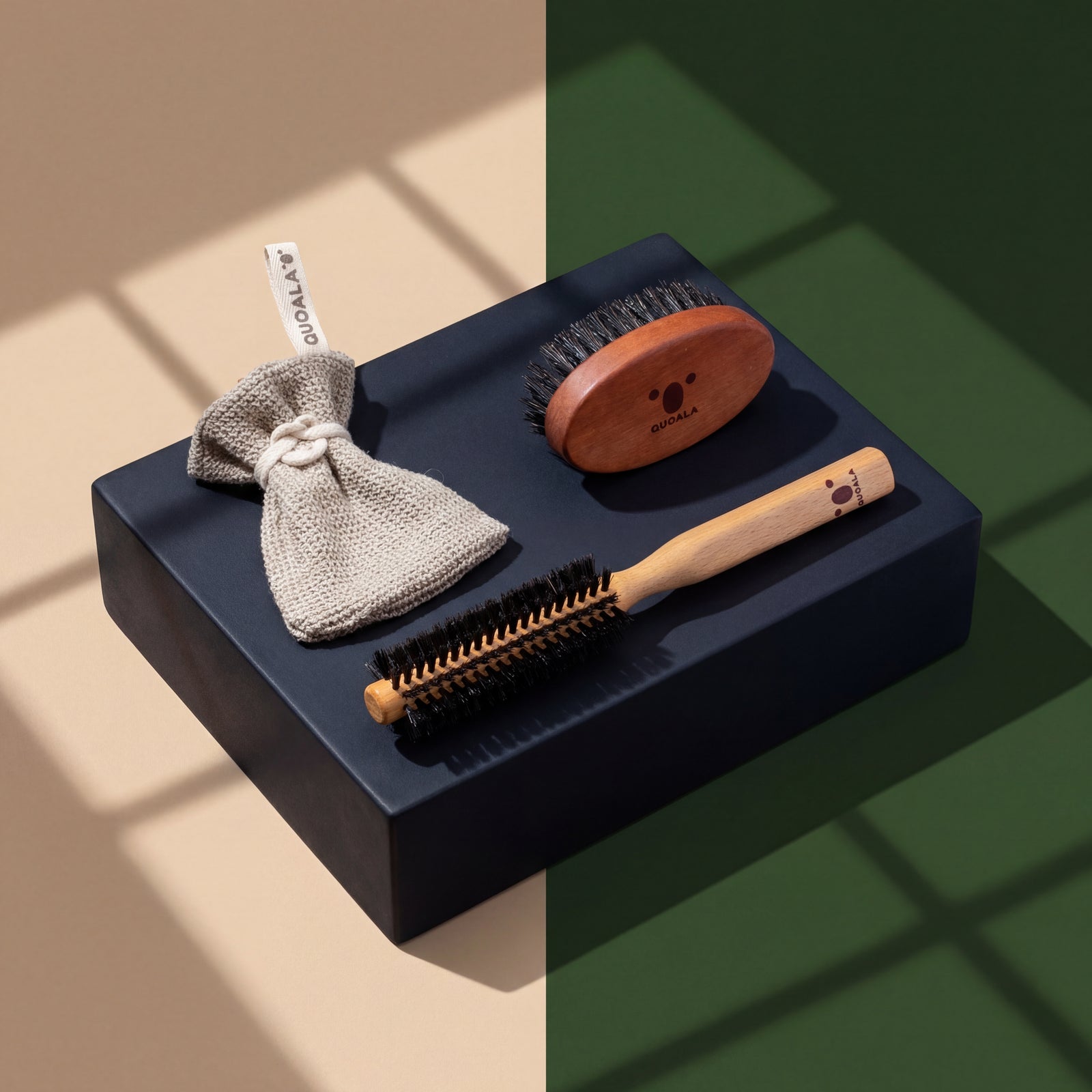

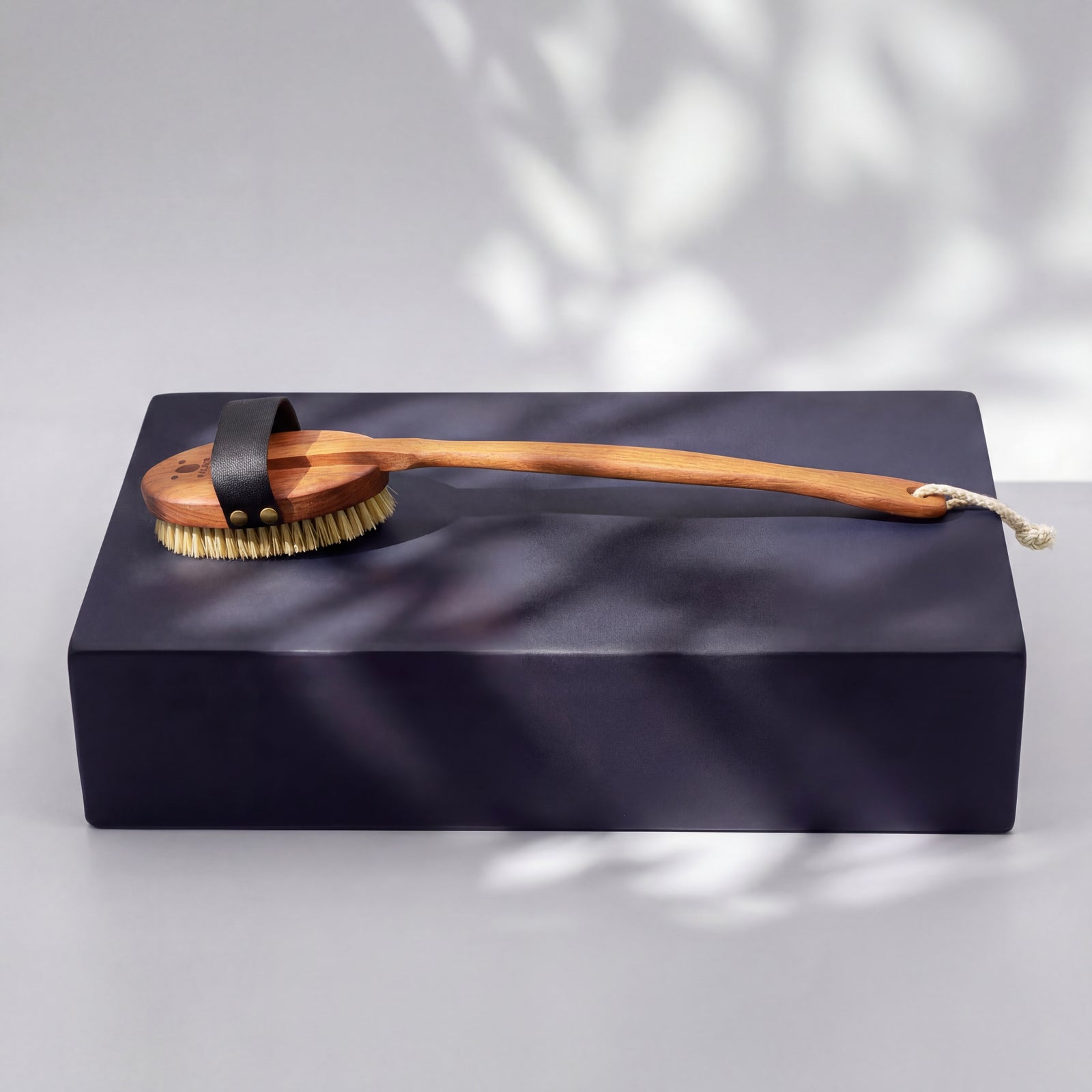

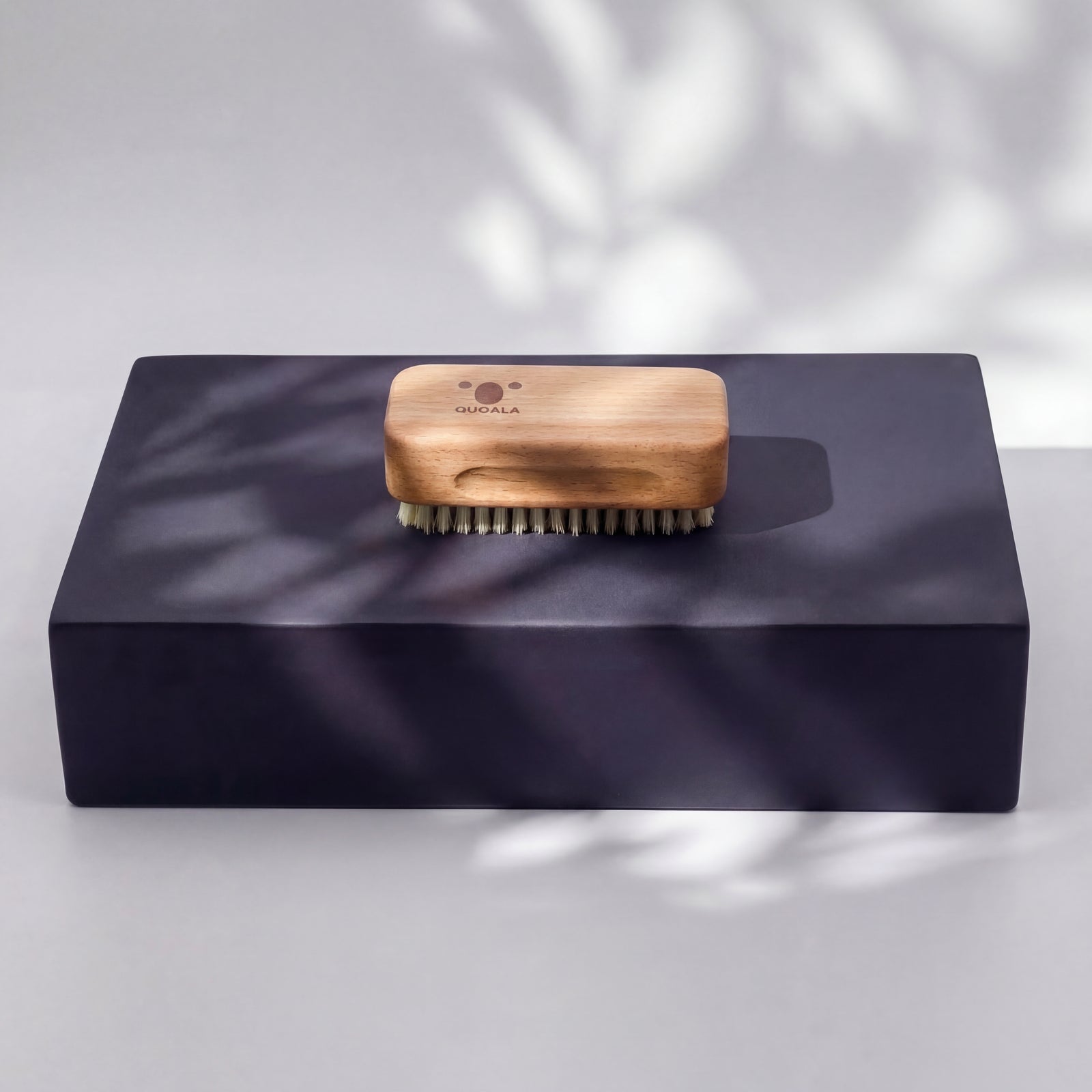

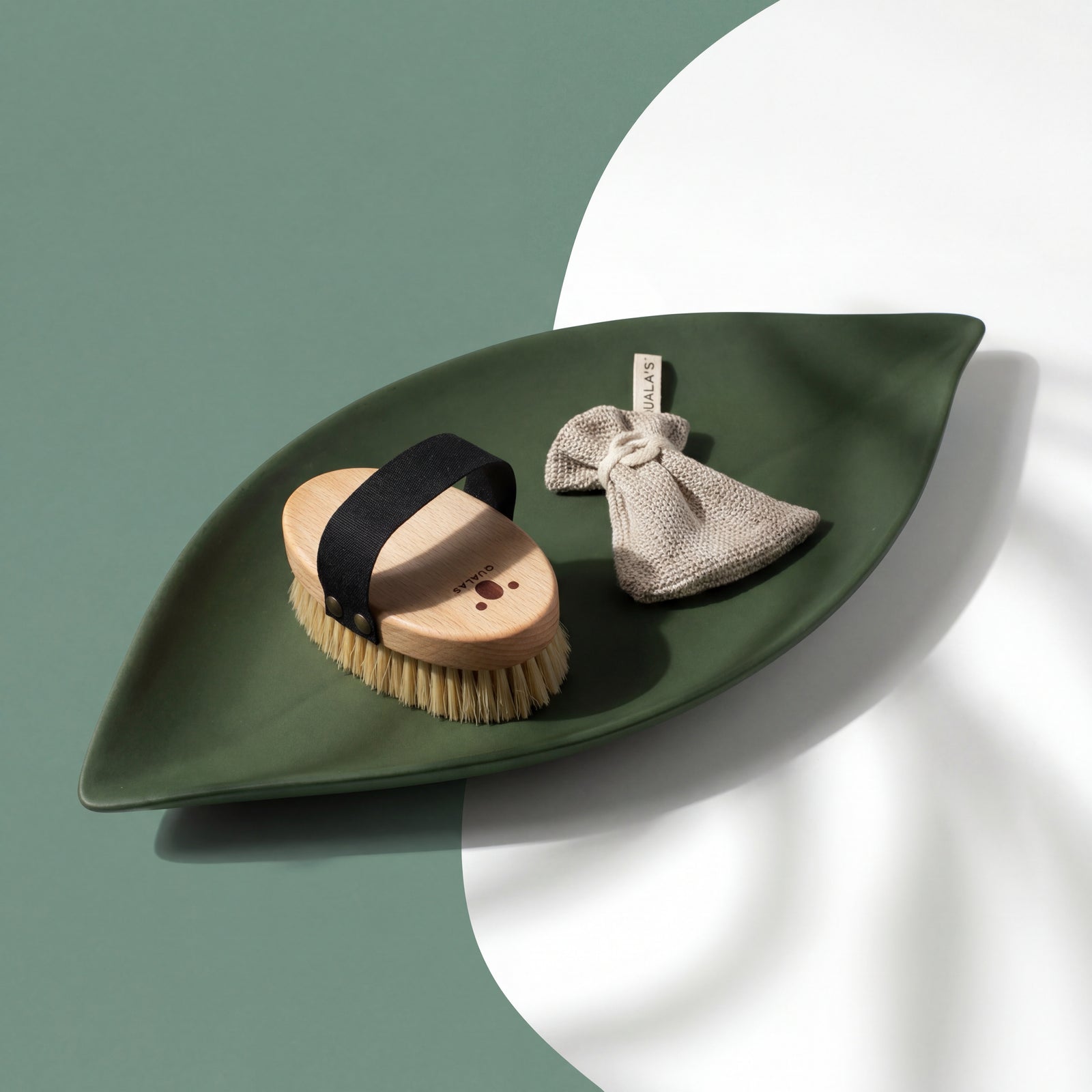


From 17 October 2027, rinse-off cosmetics — all the products you wash off again in the shower or bath — may no longer contain intentionally added microplastics in the EU [1]. That sounds like a technical detail for chemists. In fact it is the biggest regulatory turning point for the body care market in years — and it directly concerns what you hold in your hand every day in the shower: your brush, your soap pouch, your exfoliating product.
What exactly falls under the ban? Which bristle materials are problematic? And what does the logical alternative look like — the one that is already the better choice, not because of a law but because of its properties? We clarify that here, factually and completely. Starting point: the Hamburg consumer advice centre has analysed which everyday products will be affected from 2027 — and the answer is more concrete than most people suspect.
The essentials in brief:
- From 17 October 2027, the EU bans intentionally added microplastics in rinse-off cosmetics (Regulation (EU) 2023/2055 [1]).
- Nylon bristles shed microplastics during brushing – measured on toothbrushes, not on bath or body brushes [8] — and are not yet directly regulated.
- Tampico fibre and natural bristles are the alternatives to nylon bristles, the GOTS-certified soap pouch made of organic linen the alternative to the synthetic mesh — QUOALA has used them from the start.
Good to know: Our GOTS-certified soap pouch made of organic linen, cotton and elastane is the only product in the range that is made in Italy and carries the GOTS label. What that means exactly, and why GOTS is stricter than organic labels, is explained in the article GOTS in detail: the purity law for textiles.
In this article:
- 1. What exactly the EU bans — regulation, timeline, terms
- 2. Which body care products are specifically affected
- 3. The nylon bristle problem: how plastic brushes turn into microplastics
- 4. What research says about microplastics and skin
- 5. QUOALA's answer: tampico, natural bristles, GOTS textile
- 6. Bar soap instead of the plastic bottle: the simplest switch in the bathroom
- 7. Checklist: what really counts when buying a brush without plastic bristles
- 8. Frequently asked questions
1. What exactly the EU bans — regulation, timeline, terms
On 25 September 2023, the European Commission adopted Regulation (EU) 2023/2055, which, on the basis of the REACH chemicals regulation, restricts synthetic polymer particles below 5 mm — better known as intentionally added microplastics [1]. The European Chemicals Agency (ECHA) had already shown scientifically in 2019 that these particles pose a serious environmental threat that cannot be adequately controlled by voluntary measures [3].
The regulation entered into force on 17 October 2023 — but with staggered transition periods that differ by product category.
The timeline at a glance
| Date | Products affected |
|---|---|
| October 2023 | Loose plastic glitter, microbeads in exfoliants |
| 17 October 2027 | Rinse-off cosmetics — shower gels, shampoos, bubble baths and all synthetic particles except exfoliating agents |
| 17 October 2029 | Remaining cosmetics (leave-on) — creams, hair gels, lotions |
| 2031–2035 | Make-up, lip care, nail polish — labelling obligation, then ban |
The term intentionally added microplastics is decisive: the regulation targets particles that are deliberately added to a product — not those that arise from mechanical wear. But that is exactly where a grey area lies that is highly relevant for body care brushes.
2. Which body care products are specifically affected
The EU ban primarily hits liquid and creamy products containing synthetic particles — exfoliants with polyethylene beads, scrubs with nylon powder, shimmering shower gels with plastic glitter. What is discussed less: the issue also concerns body care tools — the brushes, sponges and exfoliating cloths you use every day in contact with water.
Particularly widespread in the mass market: nylon-bristle brushes, nylon soap pouches, PET exfoliating cloths and plastic body brushes.
3. The nylon bristle problem: how plastic brushes turn into microplastics
Nylon is a synthetic polyamide. Nylon bristles shed microplastics during simulated brushing – measured on toothbrushes, not on hair or body brushes [8]. A review summarises how microplastics reach people – through food, air and skin contact [2].
Nylon bristle (synthetic)
Made of polyamide 6 or 6.6, a petroleum derivative. Sheds micro-fragments under mechanical friction. Not compostable, not biodegradable.
Tampico fibre (plant-based, vegan)
Obtained from the leaves of the Mexican agave (Agave lechuguilla). Plant cellulose, biodegradable. Sheds no synthetic particles as it wears.
Animal natural bristles
Boar bristle, horsehair and pig bristle consist of keratin. As they wear they shed biodegradable keratin fragments — no synthetic polymer.
The same applies to soap pouches: a synthetic nylon soap net releases microfibres with every use — a sub-type of microplastics that studies detect particularly often in waterways and marine sediments. This was measured on synthetic textiles during washing, not on soap nets or brushes [4].
4. What research says about microplastics and skin
Health research on microplastics is still in its early days — but the first findings are remarkable enough to be taken seriously [5].
A lab study published in 2024 using 3D human skin models showed that flame retardants from microplastic particles (polyethylene, polypropylene) can pass into the skin: up to 8% of the applied dose became available in the skin, more on sweaty than on dry skin. Measured on a skin model, not on a brush [6]. As ECHA summarised in 2019: an estimated 42,000 tonnes of synthetic particles enter the environment every year through intentionally added microplastics [3].
Important caveat: Direct causal relationships between microplastic exposure from body care brushes and clinical harm to human health have not yet been scientifically established. The precautionary principle nevertheless argues for minimising unnecessary exposure — especially when equivalent natural materials are available.
5. QUOALA's answer: tampico, natural bristles, GOTS textile
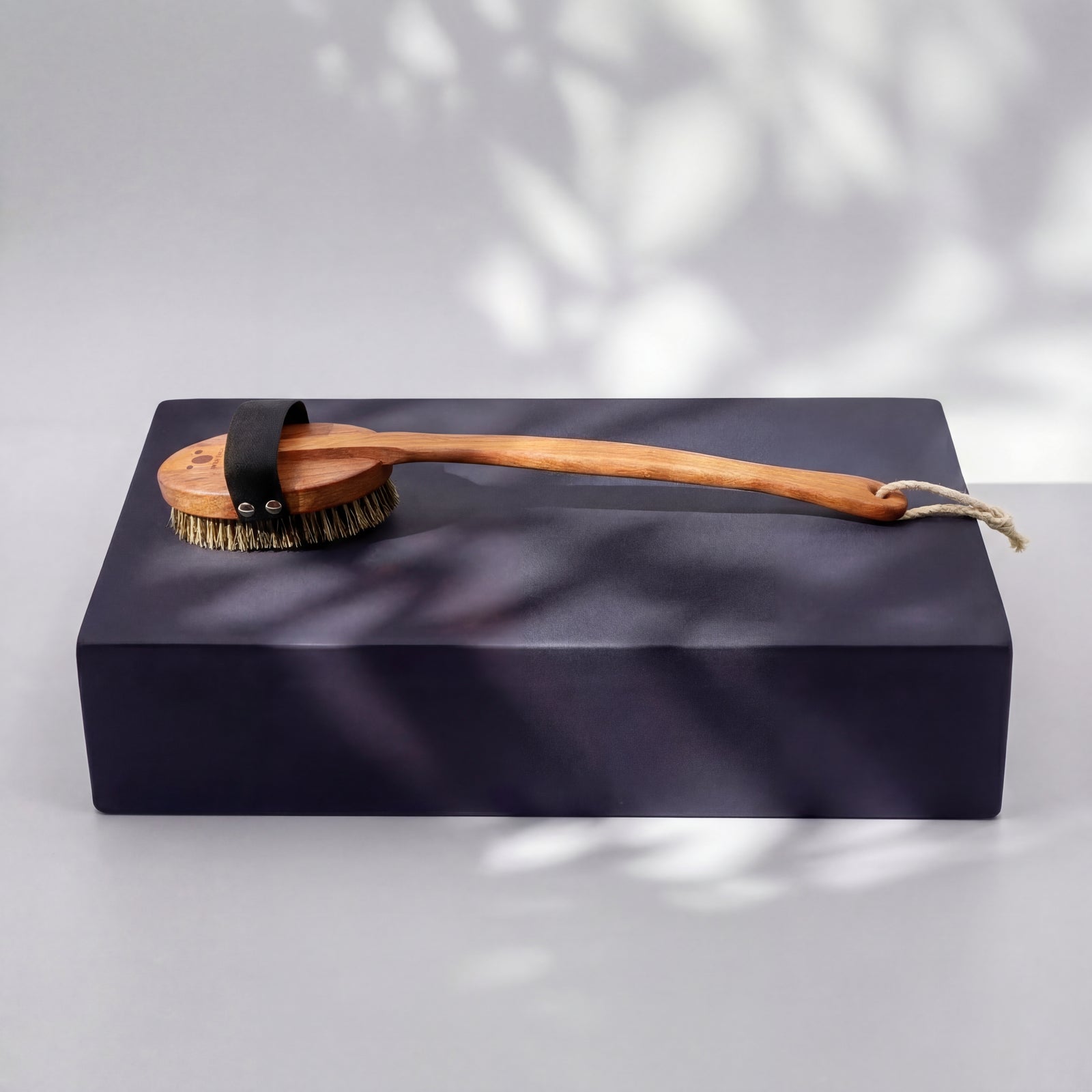
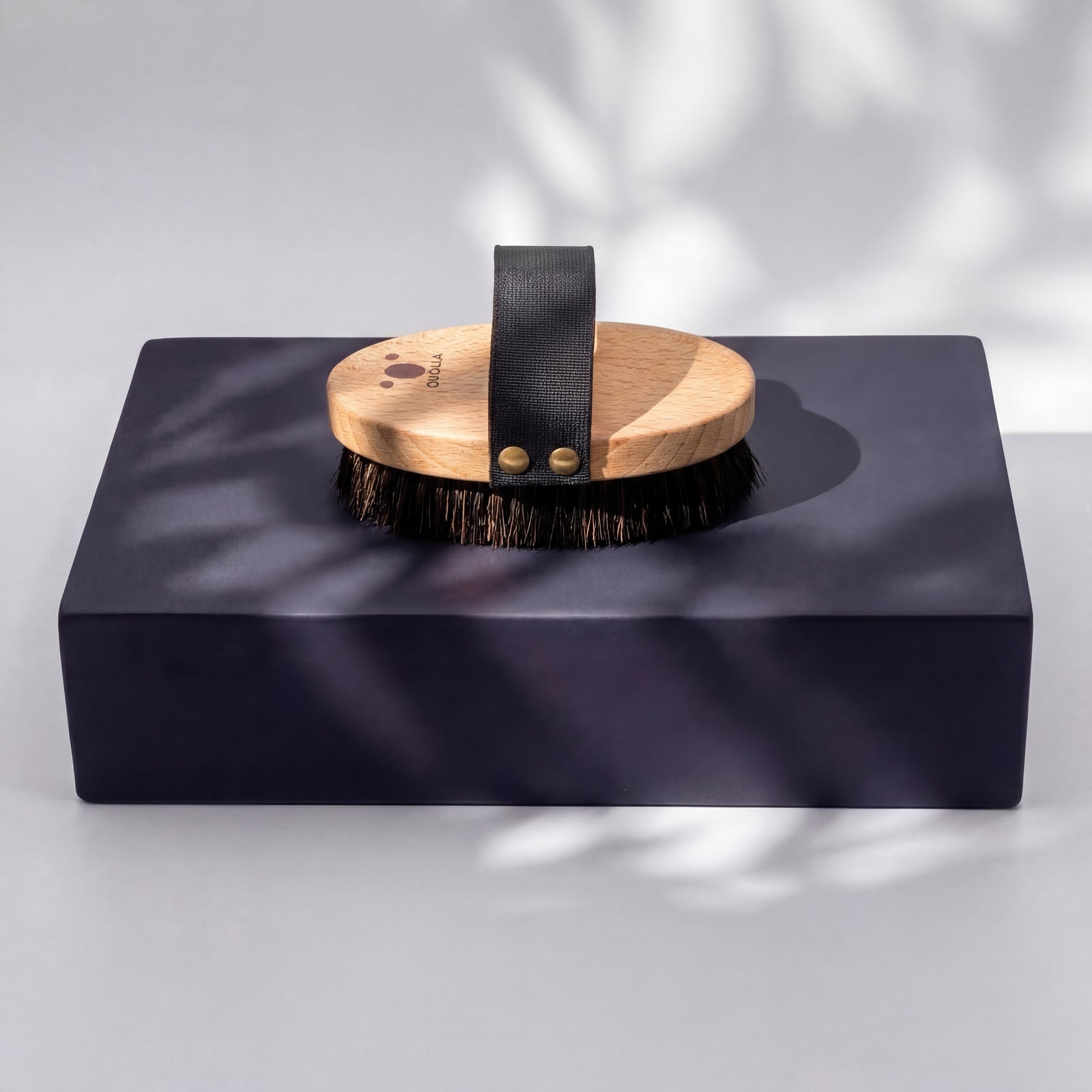
QUOALA has never used synthetic bristles. That was a material decision from the start — not a reaction to the ban. The wooden handle is made of FSC-certified beech wood, crafted in a family-run business in Germany [7].

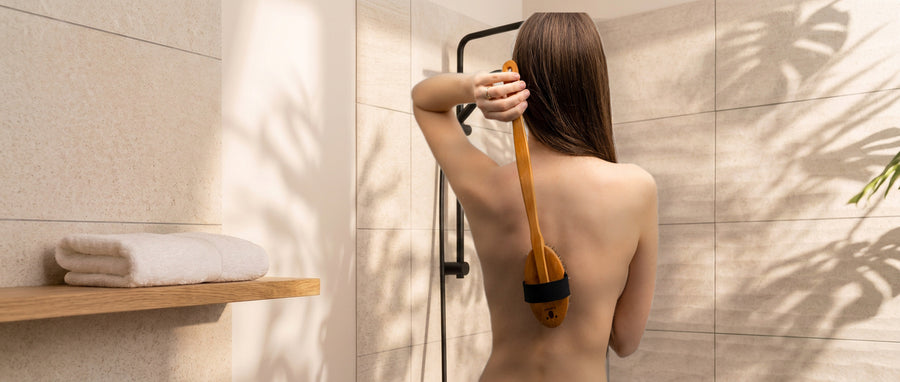
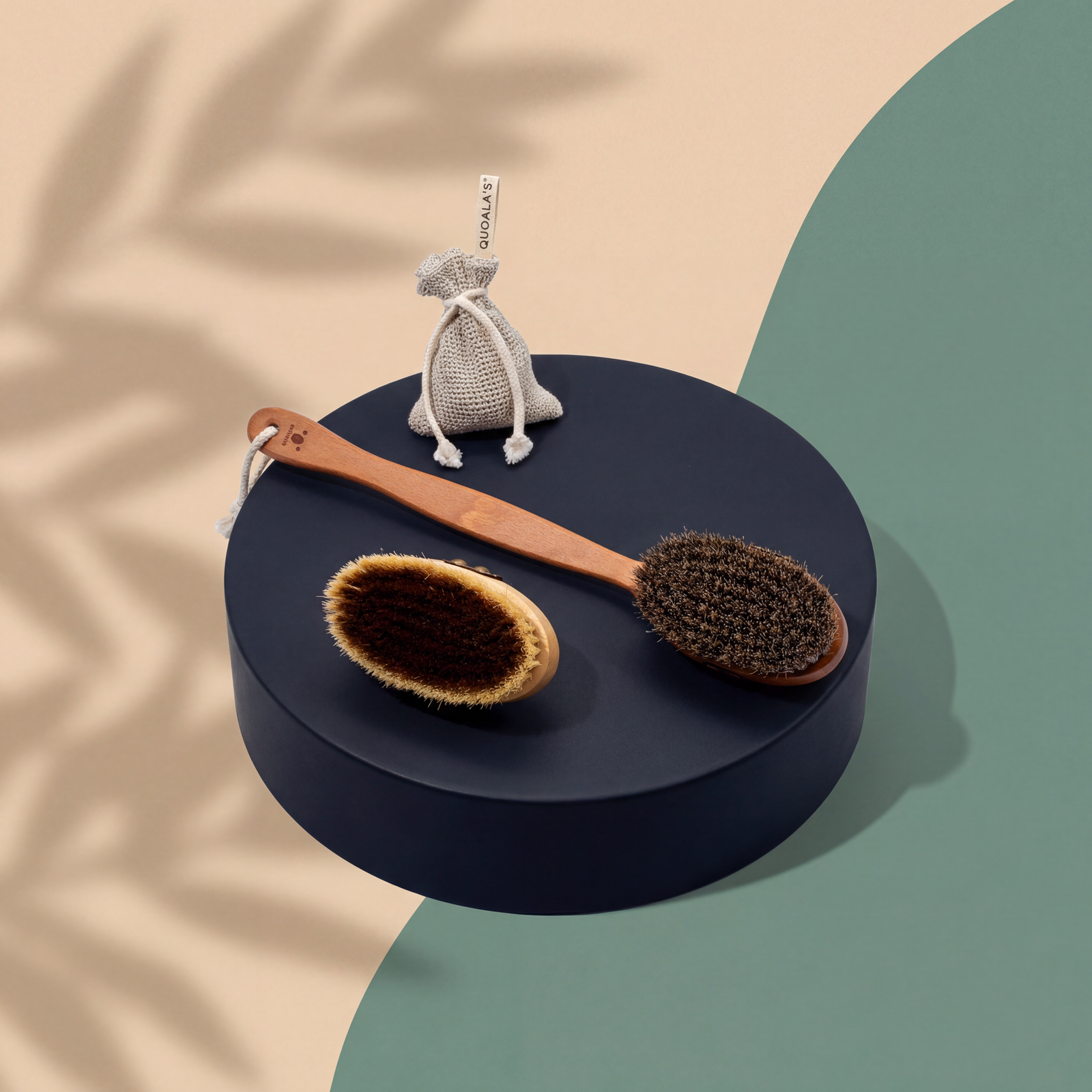
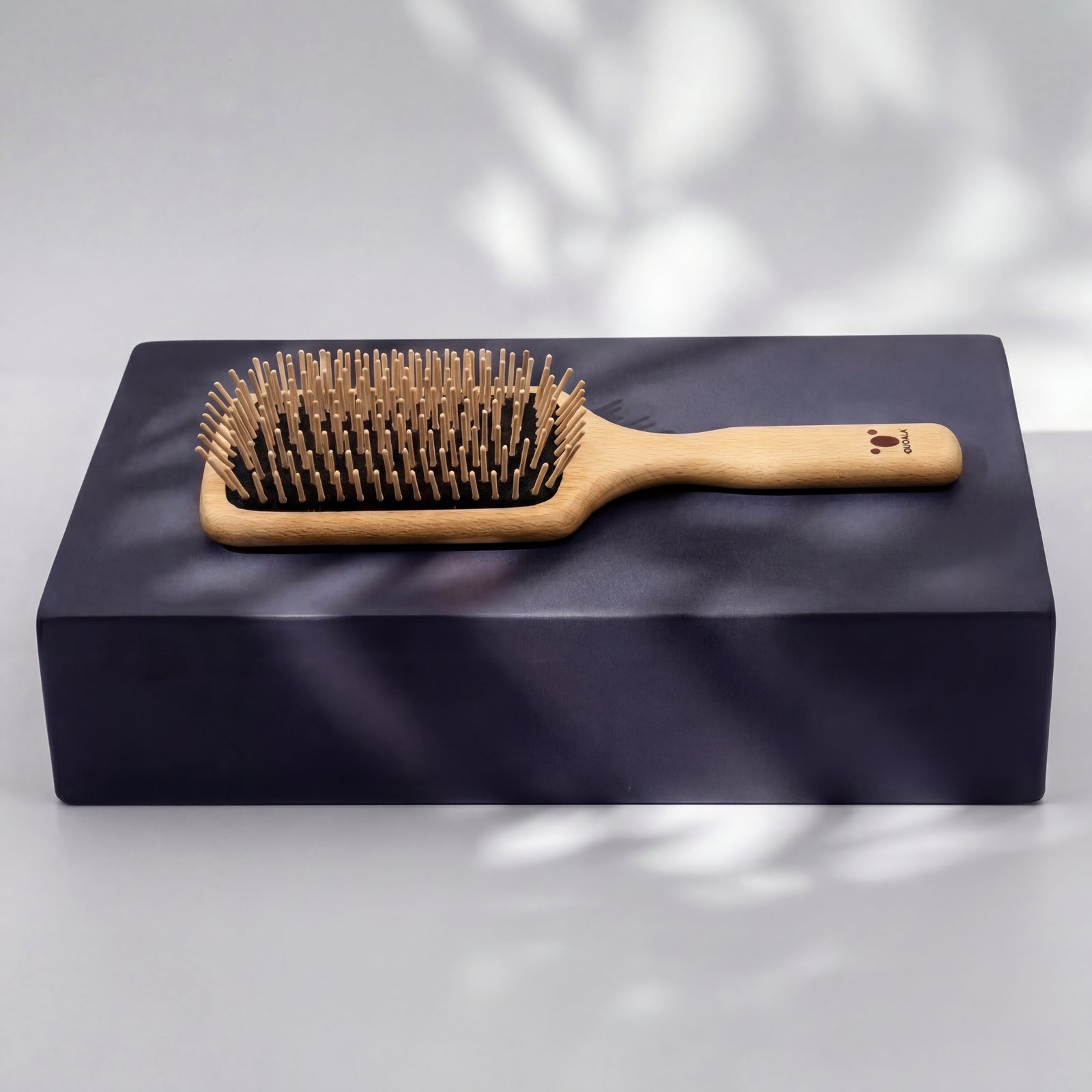
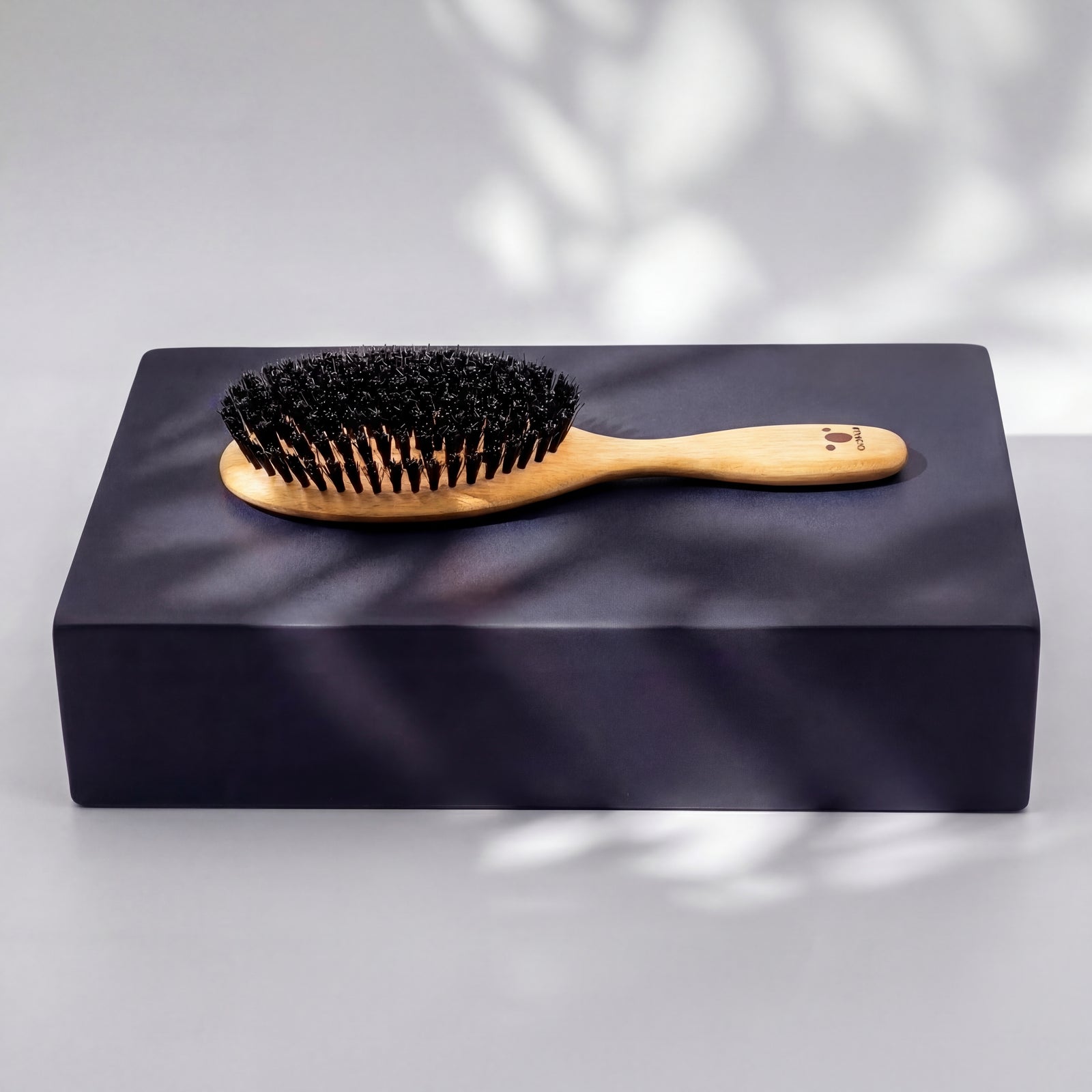
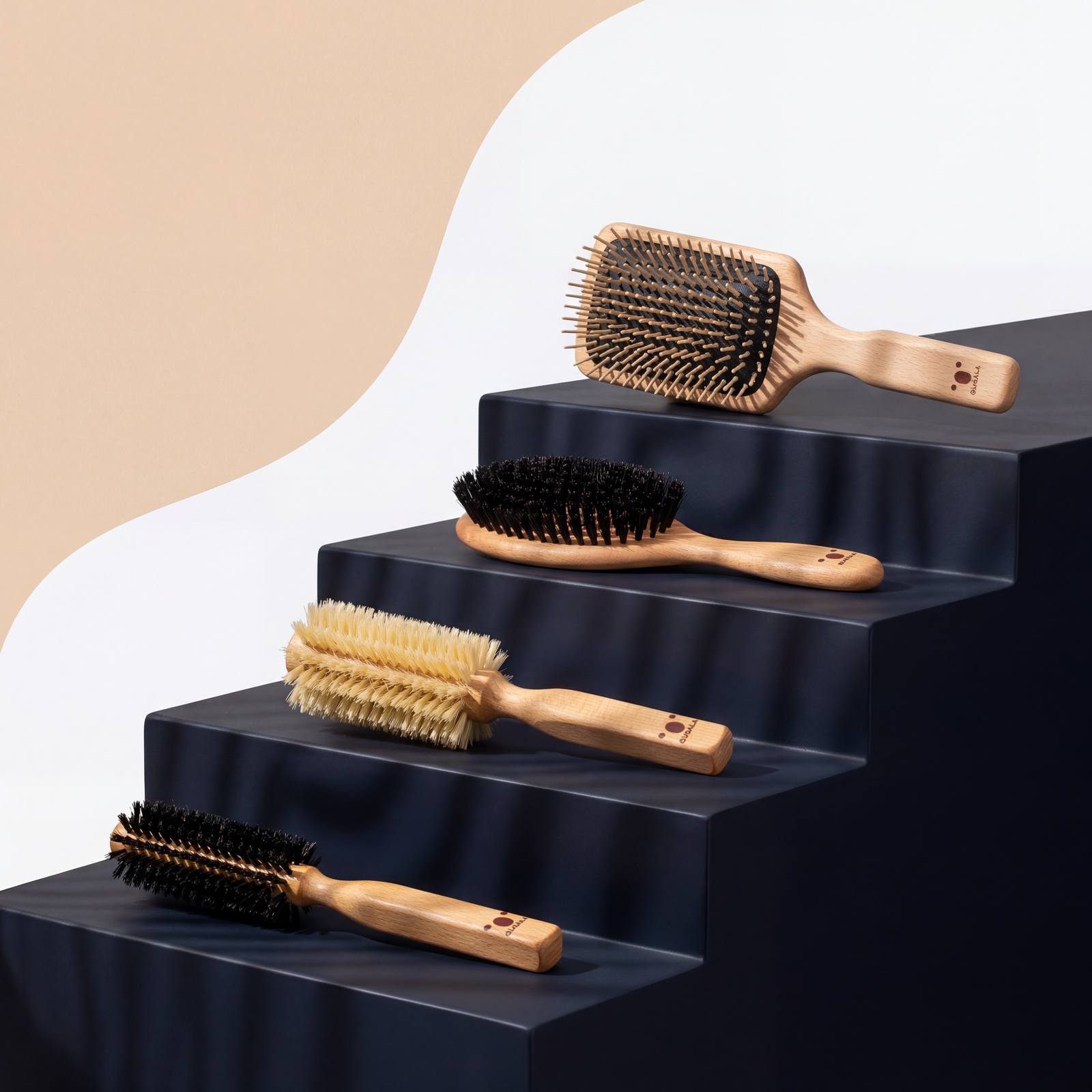
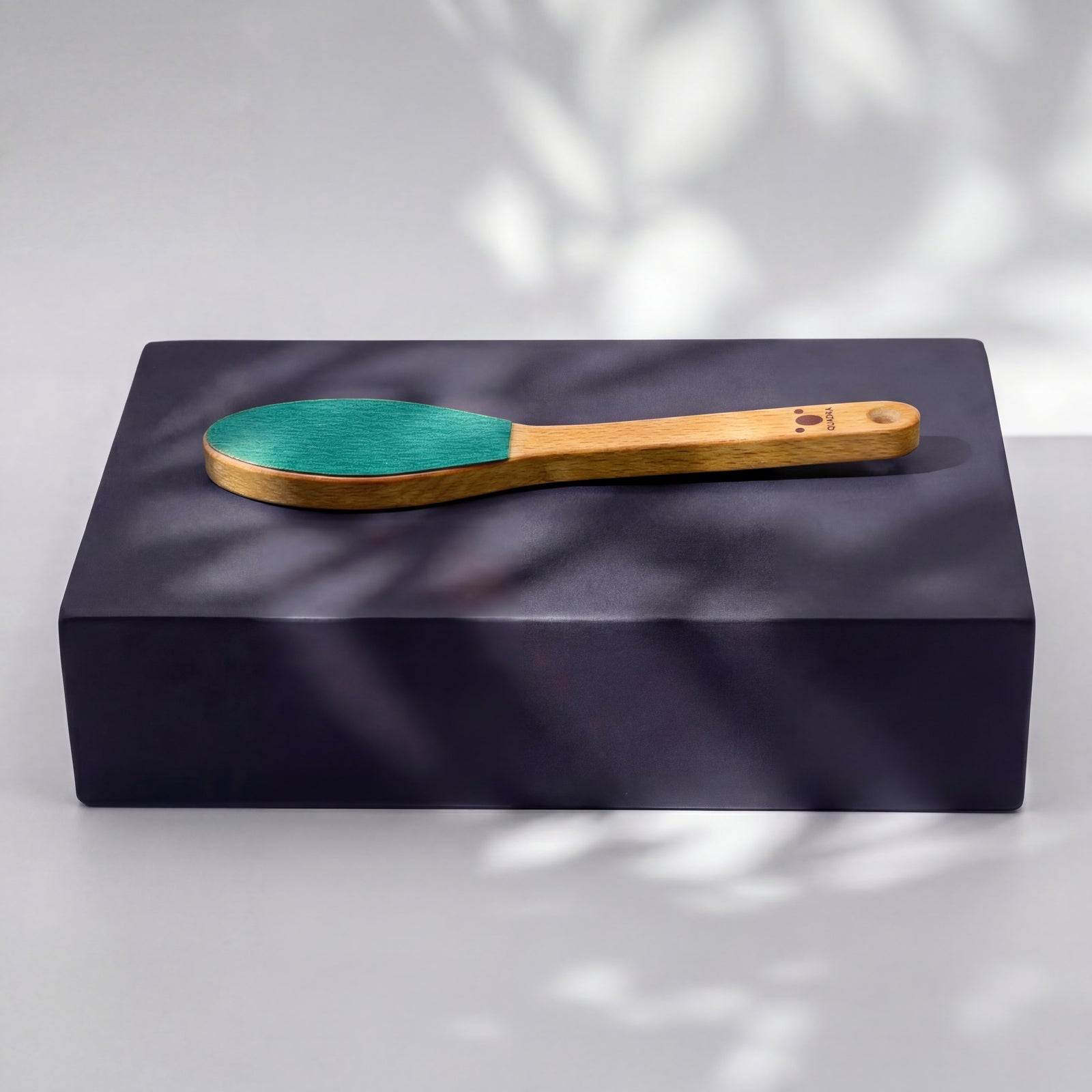
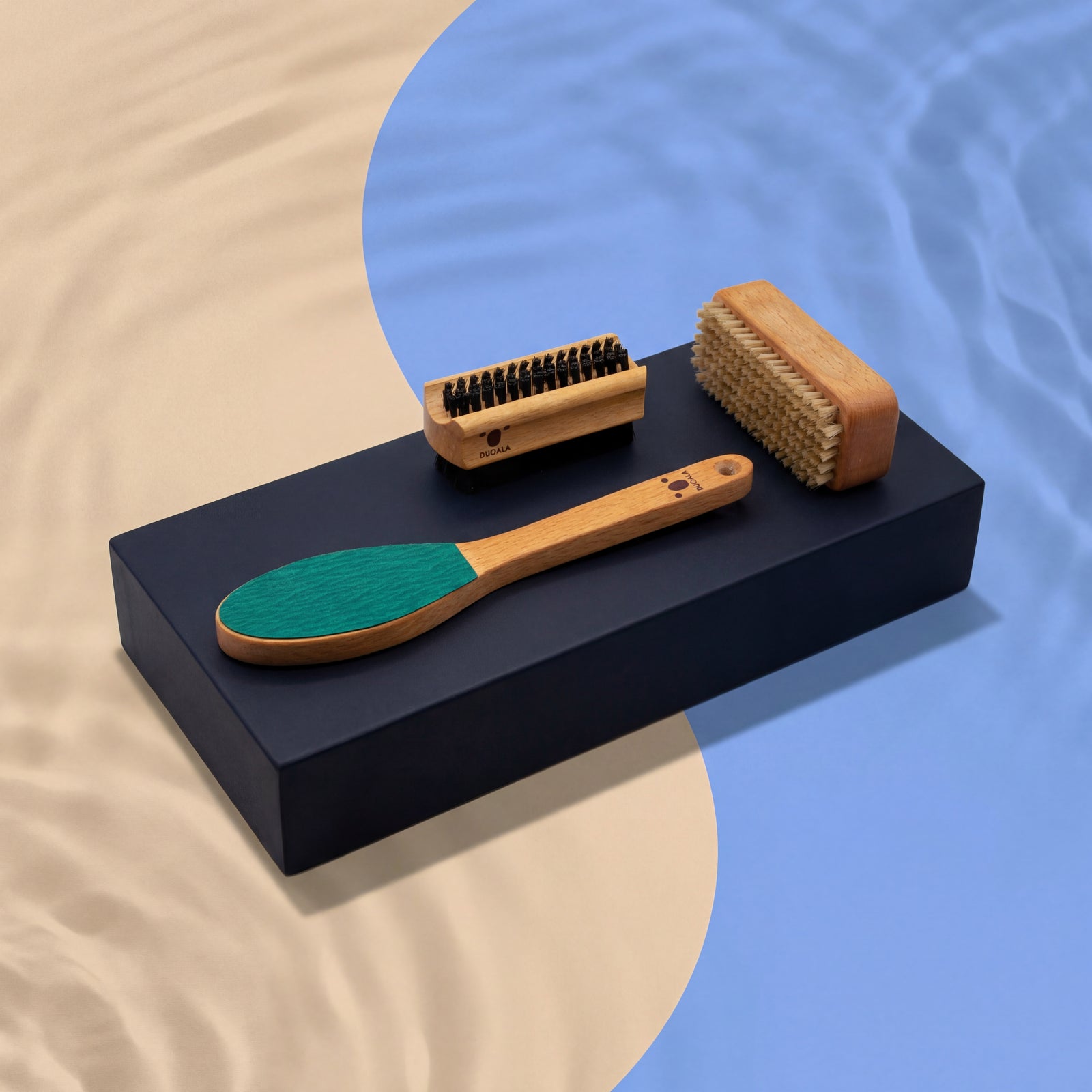
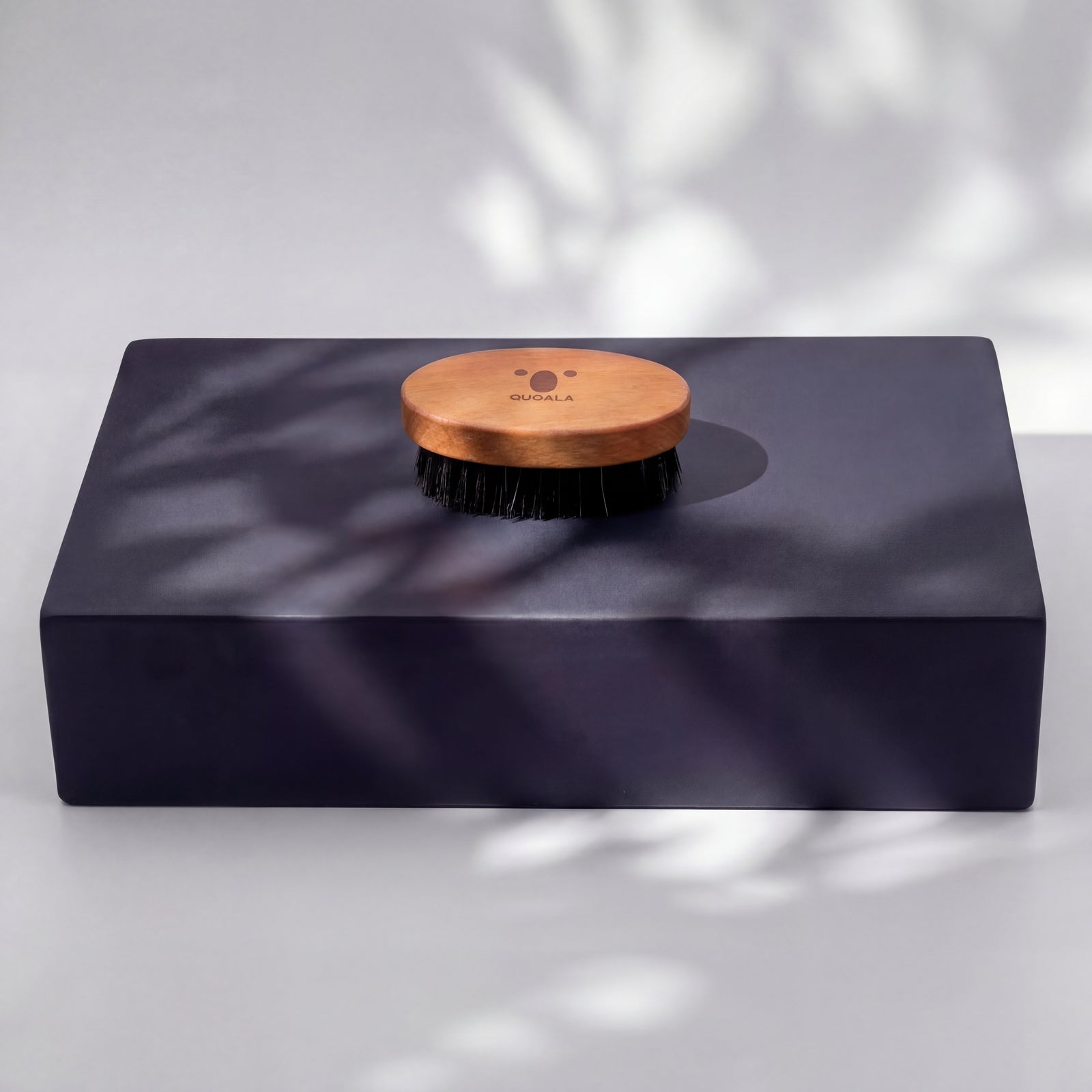
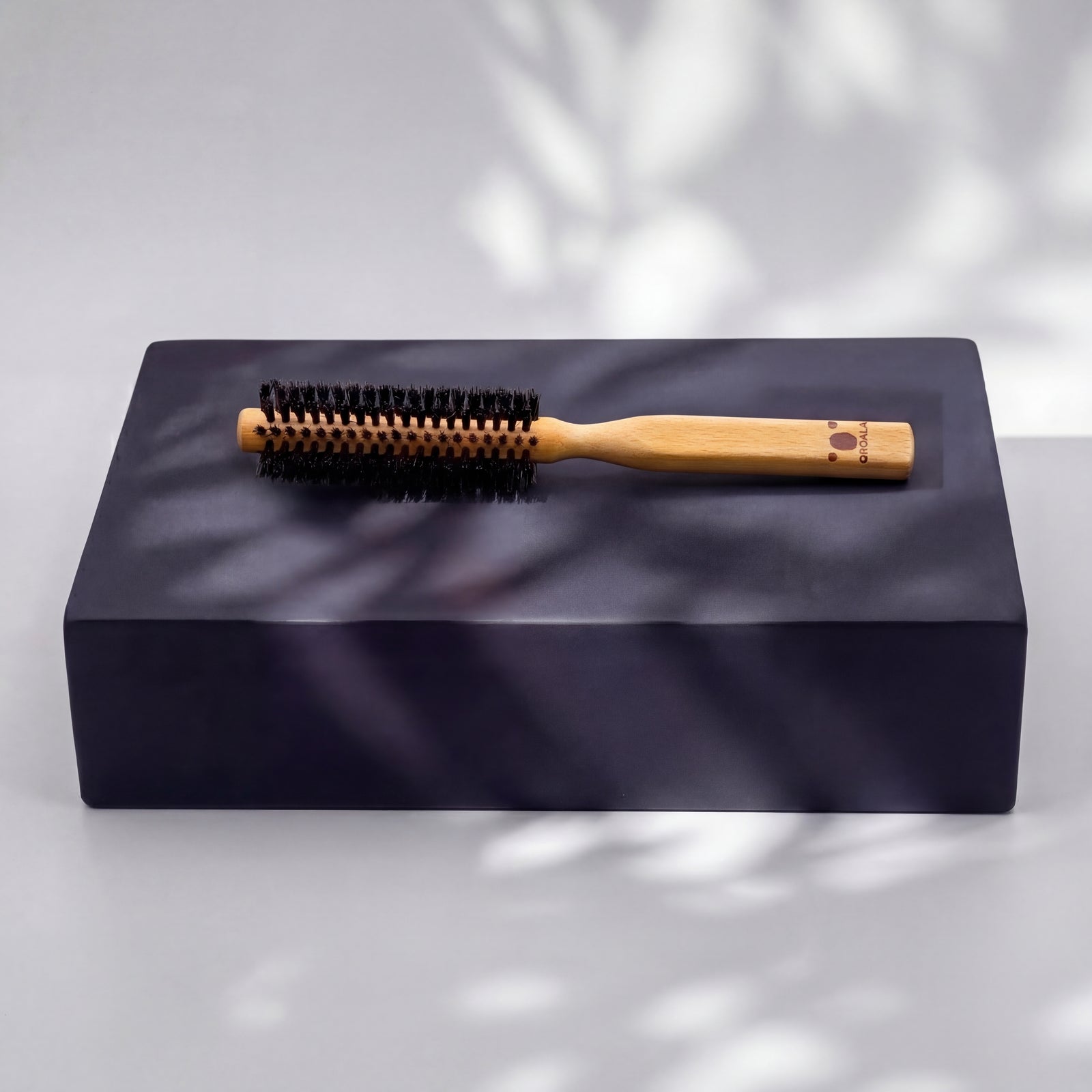
The bath brushes in the range use three bristle materials: tampico fibre (vegan, firm — plant-based agave fibre from Mexico), horsehair + tampico (medium) and pig bristle (soft, for sensitive skin).
No bristles made of polyamide or any other synthetic polymer, but bristle materials that biodegrade as they wear. The FSC beech handle is crafted in a family-run business in Germany — short supply chain, no anonymous mass production.
The soap pouch made of GOTS-certified organic linen / cotton / elastane releases no nylon microfibres into the wastewater.
6. Bar soap instead of the plastic bottle: the simplest switch in the bathroom
The microplastics ban affects liquid soap and shower gel from the plastic bottle twice over: first because of synthetic particles in the formulation, second because of the plastic bottle itself. The cleanest solution is the oldest: the solid bar of soap.
Bar soap is making a strong comeback — not out of nostalgia, but because the arguments are convincing:
- No plastic. No pump dispenser, no bottle, no cap. A bar of soap comes wrapped in paper or with no packaging at all — zero waste in the literal sense.
- Lasts considerably longer. A good bar of soap outlasts the equivalent of a 300 ml bottle of liquid soap. Fewer purchases, less packaging waste.
- No problematic additives. High-quality bar soaps do without the preservatives that liquid formulations need, because a water-free base is more stable.
- The soap pouch makes the difference. Lathering a bar of soap directly in the hand is tedious. In the QUOALA soap pouch made of organic linen, the bar lathers immediately and exfoliates the skin gently at the same time — and between uses the soap dries properly in the pouch instead of lying in a puddle on the soap dish.

The QUOALA soap pouch
Organic linen 70% / cotton 20% / elastane 10%. Made in a GOTS-certified family business in Italy. Fits any standard bar of soap.
The linen lathers the soap efficiently — better than any plastic sponge — and its slightly exfoliating texture cares for the skin at the same time.
7. Checklist: what really counts when buying a brush without plastic bristles
The market for natural body care brushes is large and confusing. These are the points that actually matter:
- Is the bristle material stated explicitly? Tampico, sisal, boar bristle, horsehair and pig bristle are natural materials. “Nylon”, “polyamide” and “synthetic” are plastic.
- Handle made of wood or plastic? FSC-certified wood is the responsible choice.
- Soap pouch: check the material. “Net” or “mesh” usually means polyester or nylon. Organic cotton, linen or GOTS-certified textile is the alternative made of natural fibres.
- Vegan or animal-derived? Tampico and sisal are vegan. Boar bristle, horsehair and pig bristle are animal natural materials — no microplastics, but relevant depending on your personal choice.
The 2023 EU regulation addresses intentionally added microplastics in product formulations. The mechanical wear of body care tools made of synthetic material is not yet regulated. The decision to choose brushes made of natural materials rests with the consumer.
8. Frequently asked questions
What exactly does the EU microplastics regulation 2027 ban?
From October 2027, the EU regulation REACH Annex XVII (entry 78) bans the intentional addition of microplastic particles to rinse-off cosmetics. It covers synthetic polymer particles below 5 mm.
Are nylon bristles in bath brushes directly affected by the ban?
Not directly. The regulation restricts microplastics intentionally added to products; it does not mention brush bristles. Nylon bristles do, however, shed microplastics during brushing – measured on toothbrushes, not on body brushes [8].
What is tampico fibre and why is it an alternative to nylon?
Tampico is a plant fibre from the agave species Agave lechuguilla. It consists of natural cellulose — no synthetic polymers.
Why is a bar of soap better than liquid soap?
No plastic packaging, longer life, less waste. In the QUOALA soap pouch made of organic linen, the bar lathers immediately and cares for the skin at the same time thanks to the exfoliating texture of the linen.
How can I tell when buying whether a brush has plastic bristles?
Three criteria: (1) bristle declaration — does it say tampico, horsehair or pig bristle? (2) FSC wooden handle. (3) certification — FSC or GOTS.

Sources and further reading
Scientific sources
- European Commission (2023), Commission Regulation (EU) 2023/2055 restricting synthetic polymer microparticles, Official Journal of the EU L 238. Restricts microplastics intentionally added to products; transition period for rinse-off cosmetics until 17 October 2027. Our assessment S67 · Source
- Li, Tao, Wang, Wang, Li & Song (2023), Potential Health Impact of Microplastics: A Review of Environmental Distribution, Human Exposure, and Toxic Effects, Environment & Health. Review: microplastics reach people through food, air and skin contact. Our assessment S87 · Source
- ECHA (2019), Annex XV restriction dossier on intentionally added microplastics, cited in Regulation (EU) 2023/2055, recital 8. Estimate: more than 42,000 tonnes of intentionally added microplastics released into the environment per year. Our assessment S67 · Source
- Akyildiz, Fiore, Bruno, Sezgin, Yalcin-Enis, Yalcin & Bellopede (2024), Release of microplastic fibers from synthetic textiles during household washing, Environmental Pollution. Synthetic textiles shed microfibres during washing; measured on textiles, not on brushes. Our assessment S88 · Source
- Han & Kim (2025), Microplastics in Cosmetics: Emerging Risks for Skin Health and the Environment, Cosmetics. Review of possible risks of microplastics in cosmetics for the skin. Our assessment S90 · Source
- Akpojevwe Abafe, Harrad & Abou-Elwafa Abdallah (2024), Assessment of human dermal absorption of flame retardant additives in polyethylene and polypropylene microplastics using 3D human skin equivalent models, Environment International. Flame retardants from PE/PP microplastics passed into a 3D skin model; no brush was studied. Our assessment S89 · Source
- FSC International (2024), FSC standards for certified wood and product labelling. FSC certification for wood from responsibly managed forests. Our assessment S14 · Source
- Öztürk Aytulun et al. (2025), Preliminary results on microplastic release from commercial toothbrushes during simulated brushing, Microchemical Journal. Nylon bristles shed microplastics during simulated brushing; measured on toothbrushes, not on hair or body brushes. Our assessment S68 · Source
External literature (further reading)
- Verbraucherzentrale Hamburg (consumer advice centre), guide to the products in which microplastics will soon be banned (German). Consumer portal, not a study. vzhh.de
- European Chemicals Agency (ECHA), microplastics topic page: background and regulatory status. echa.europa.eu