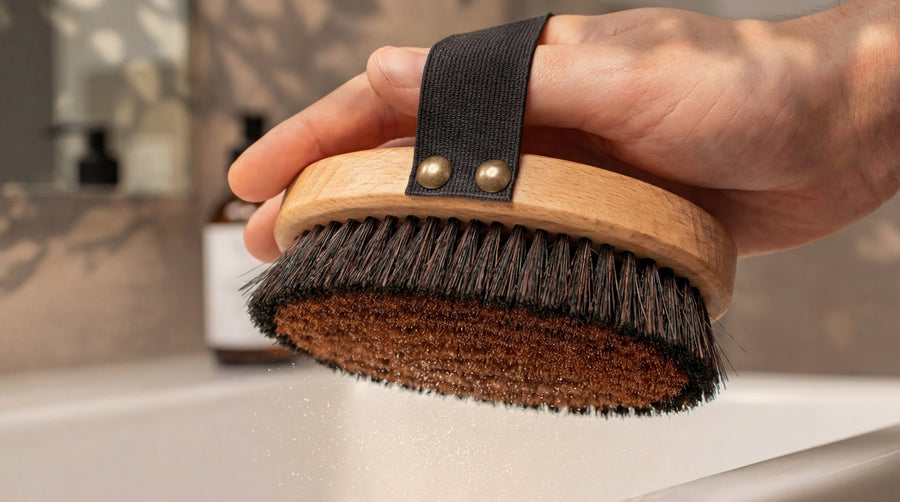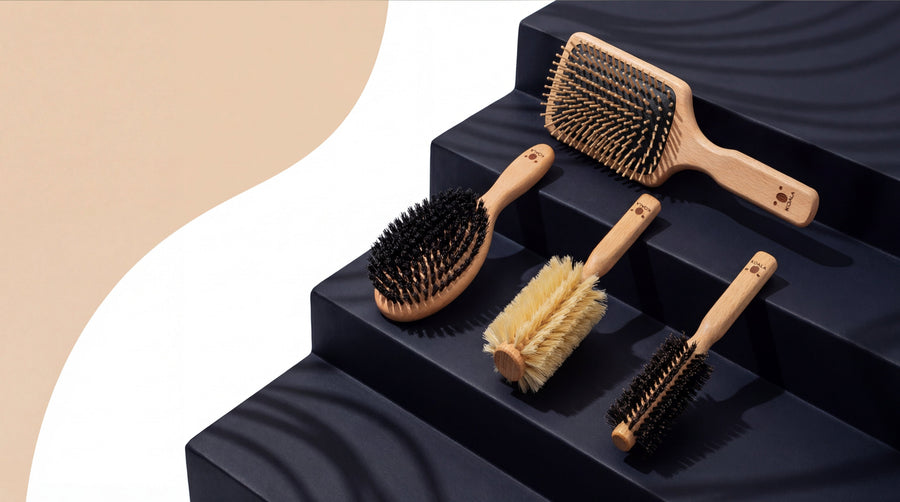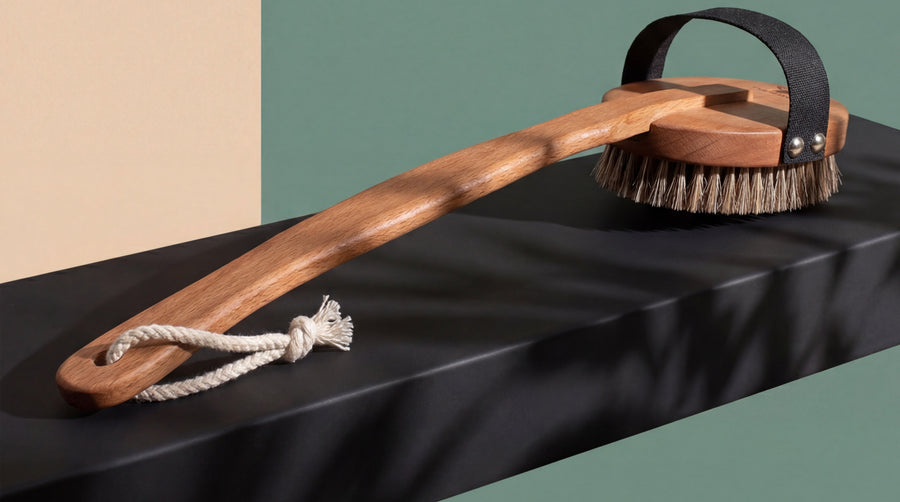

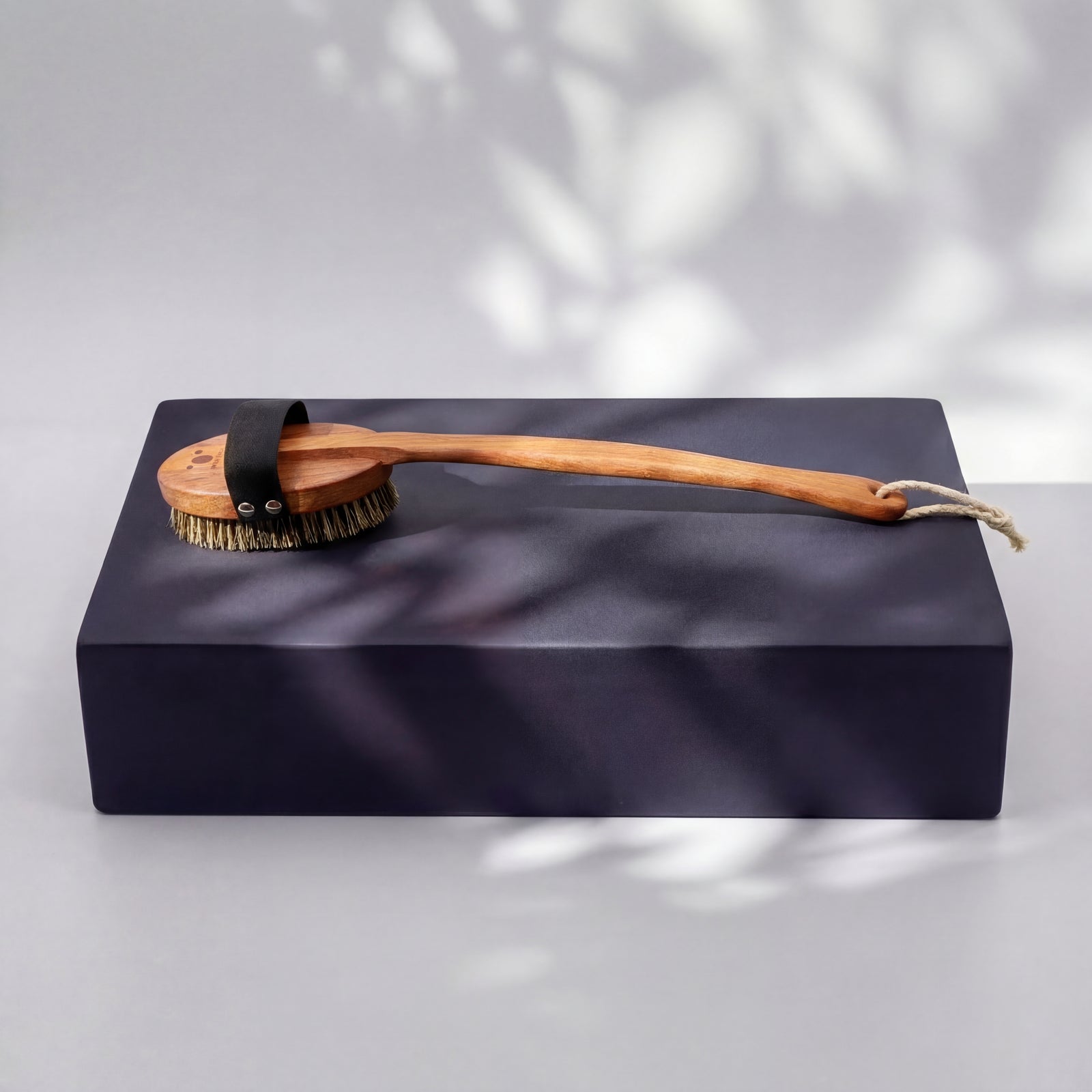

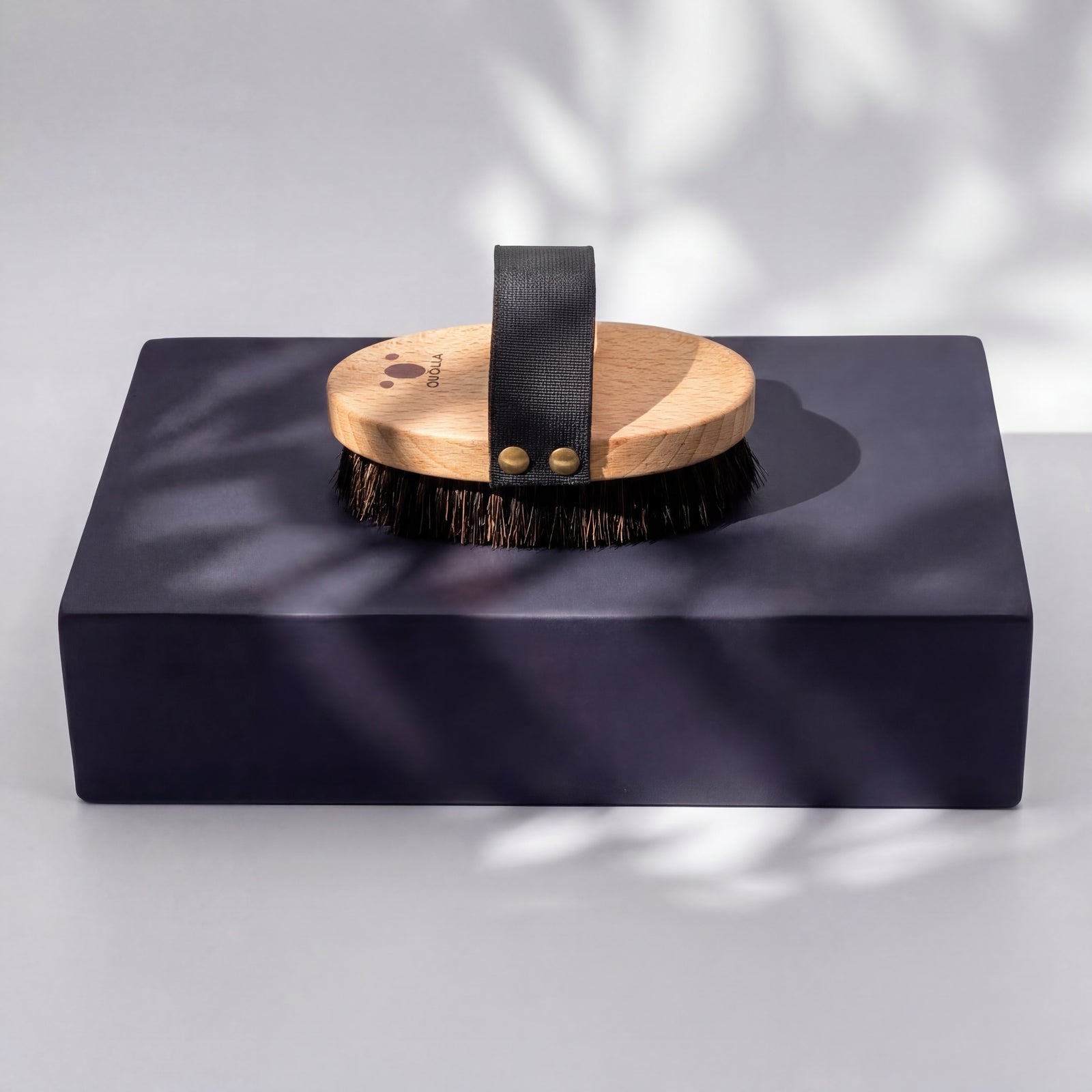

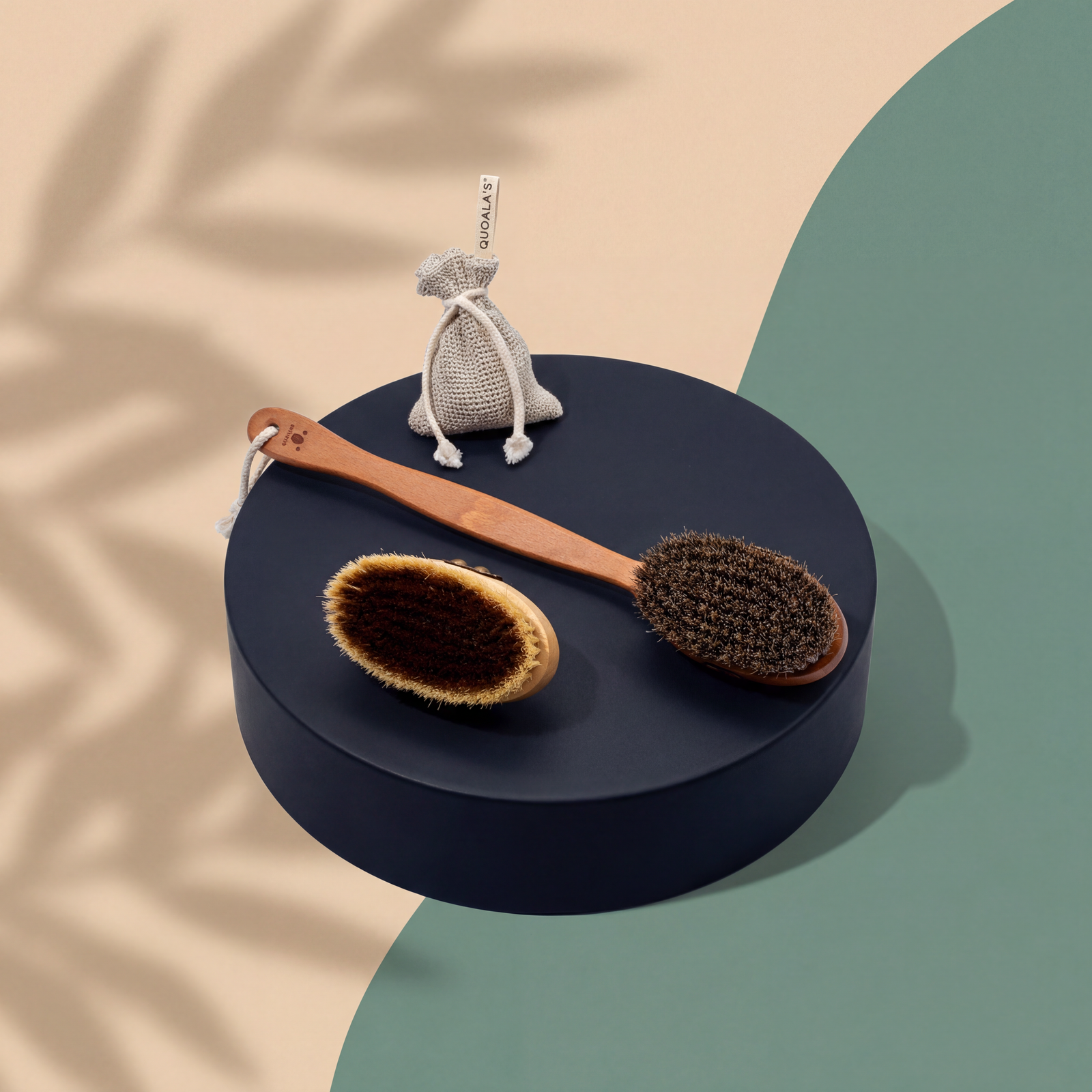

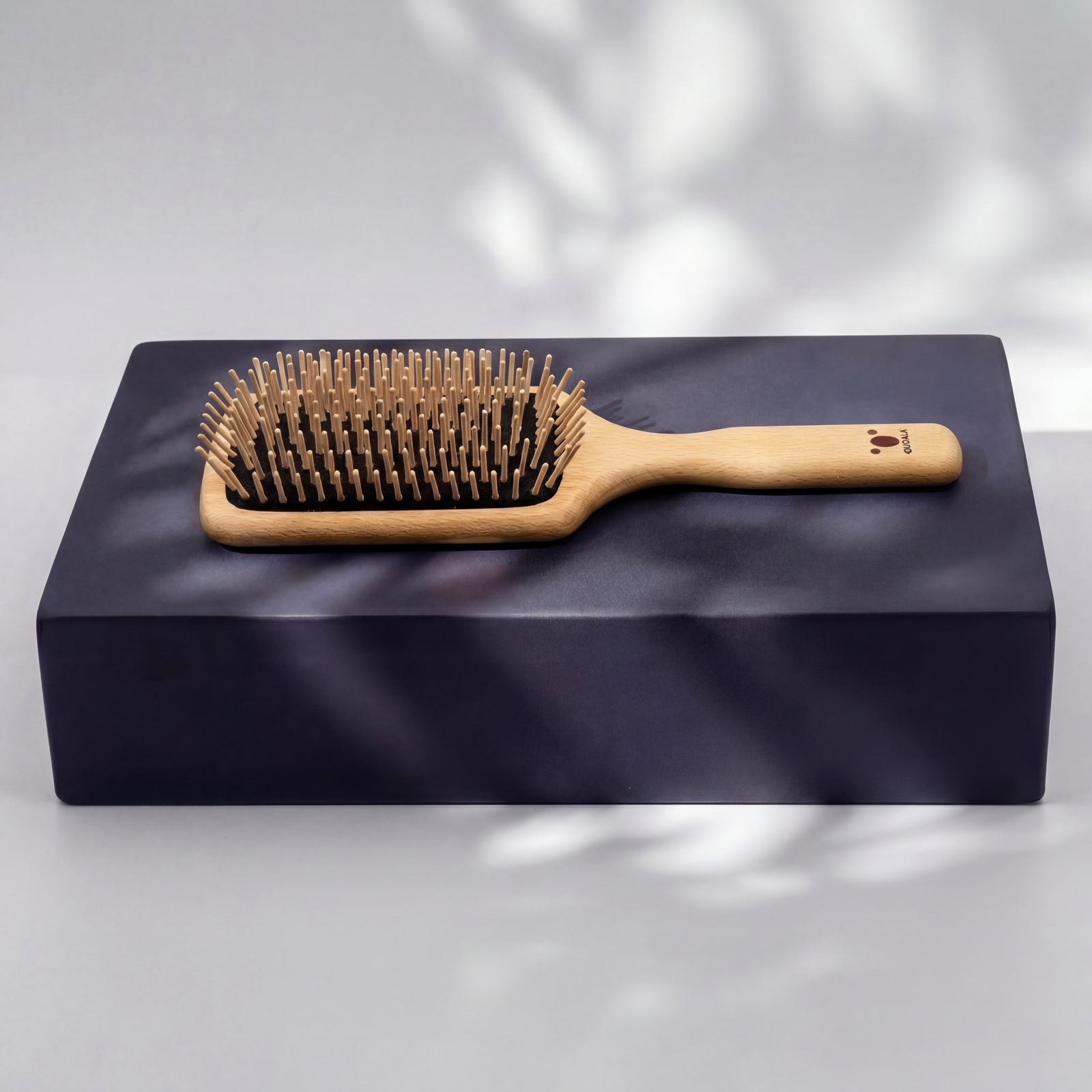

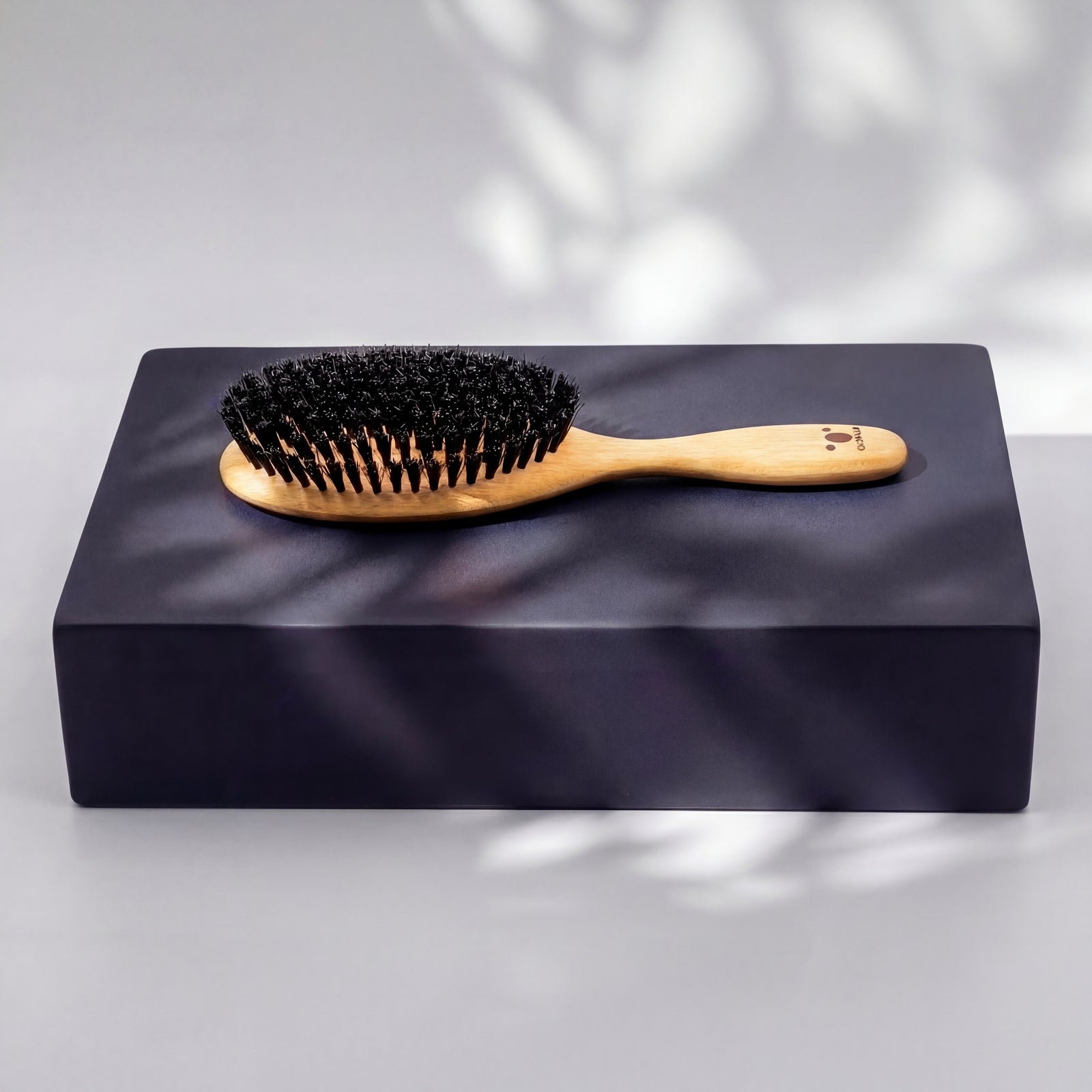

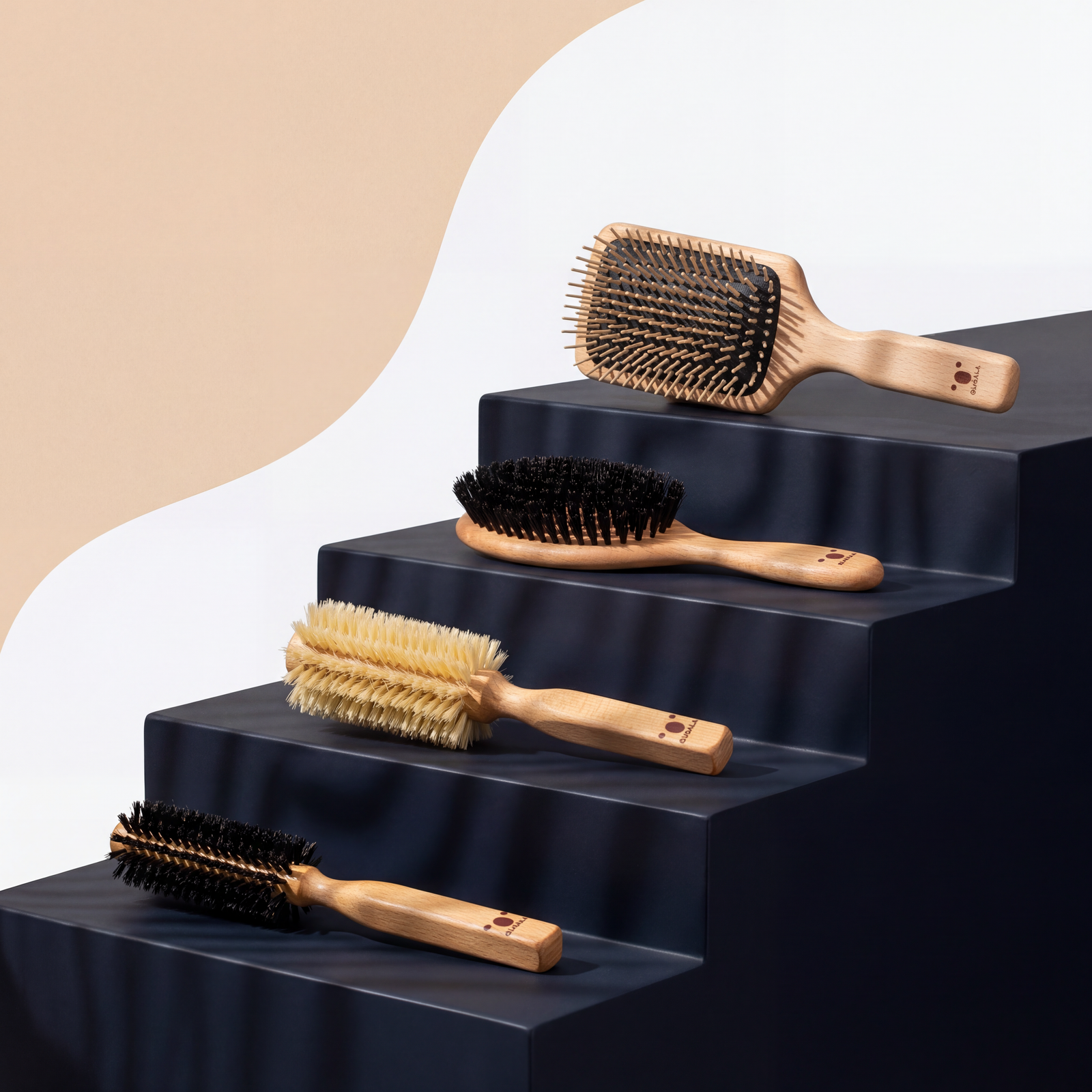

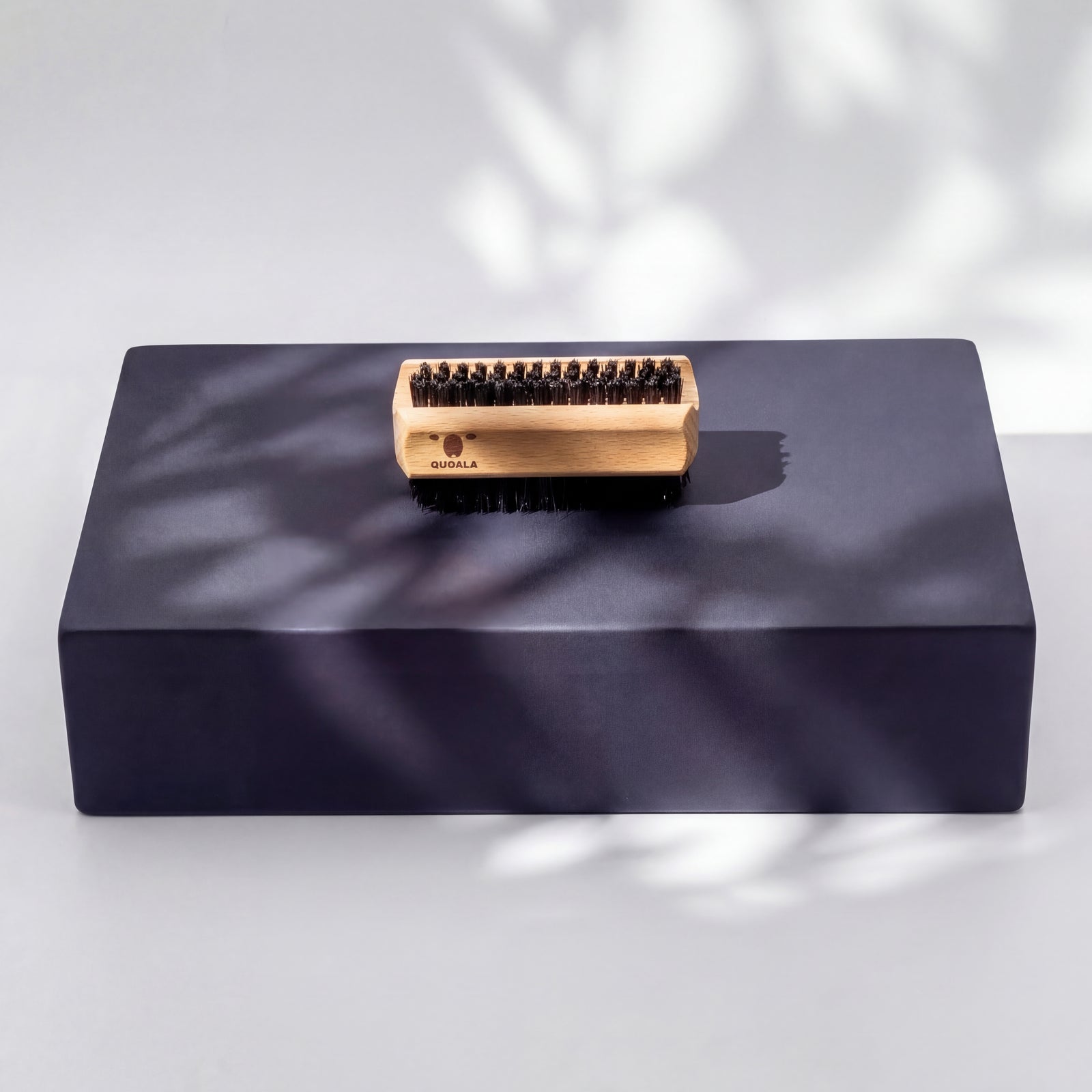


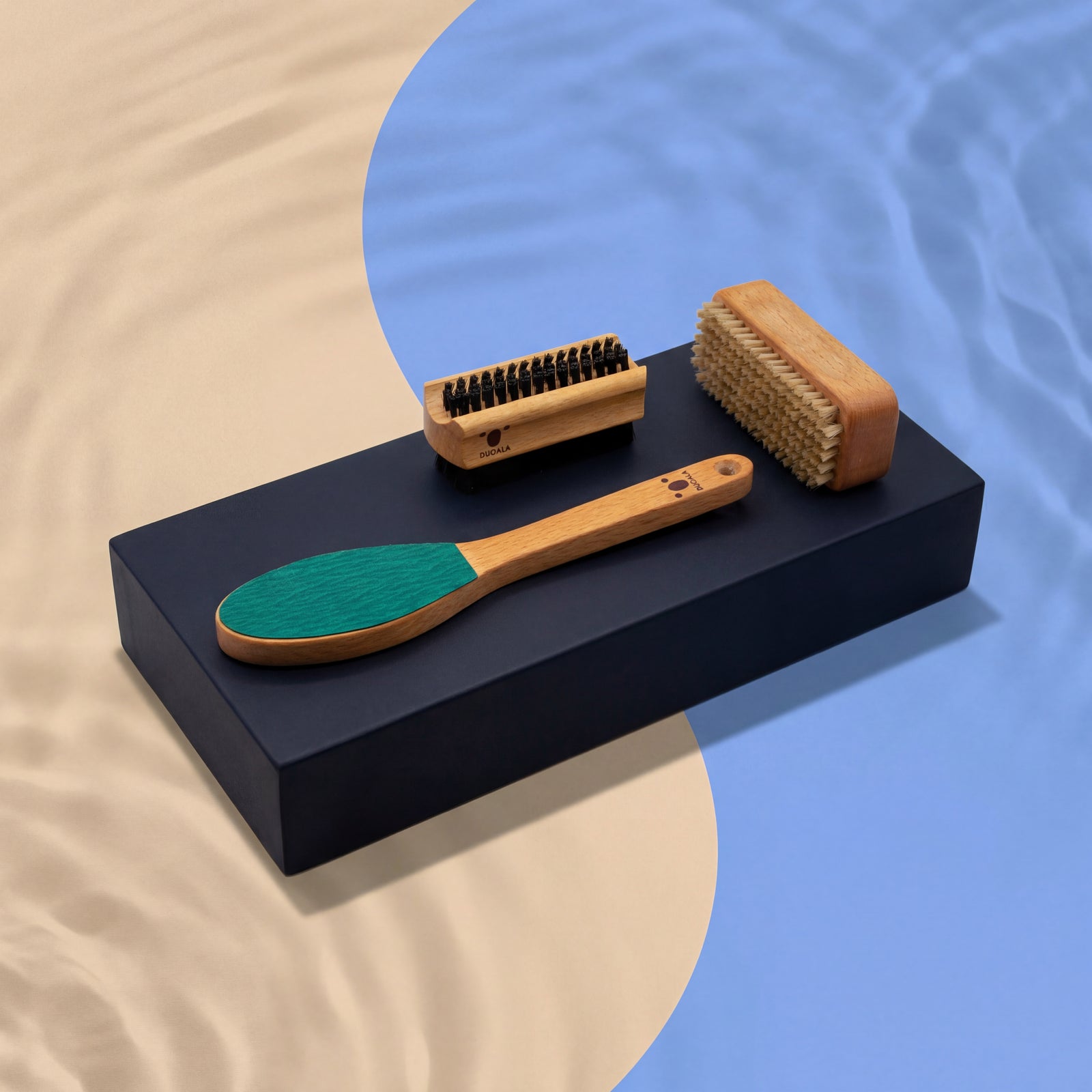

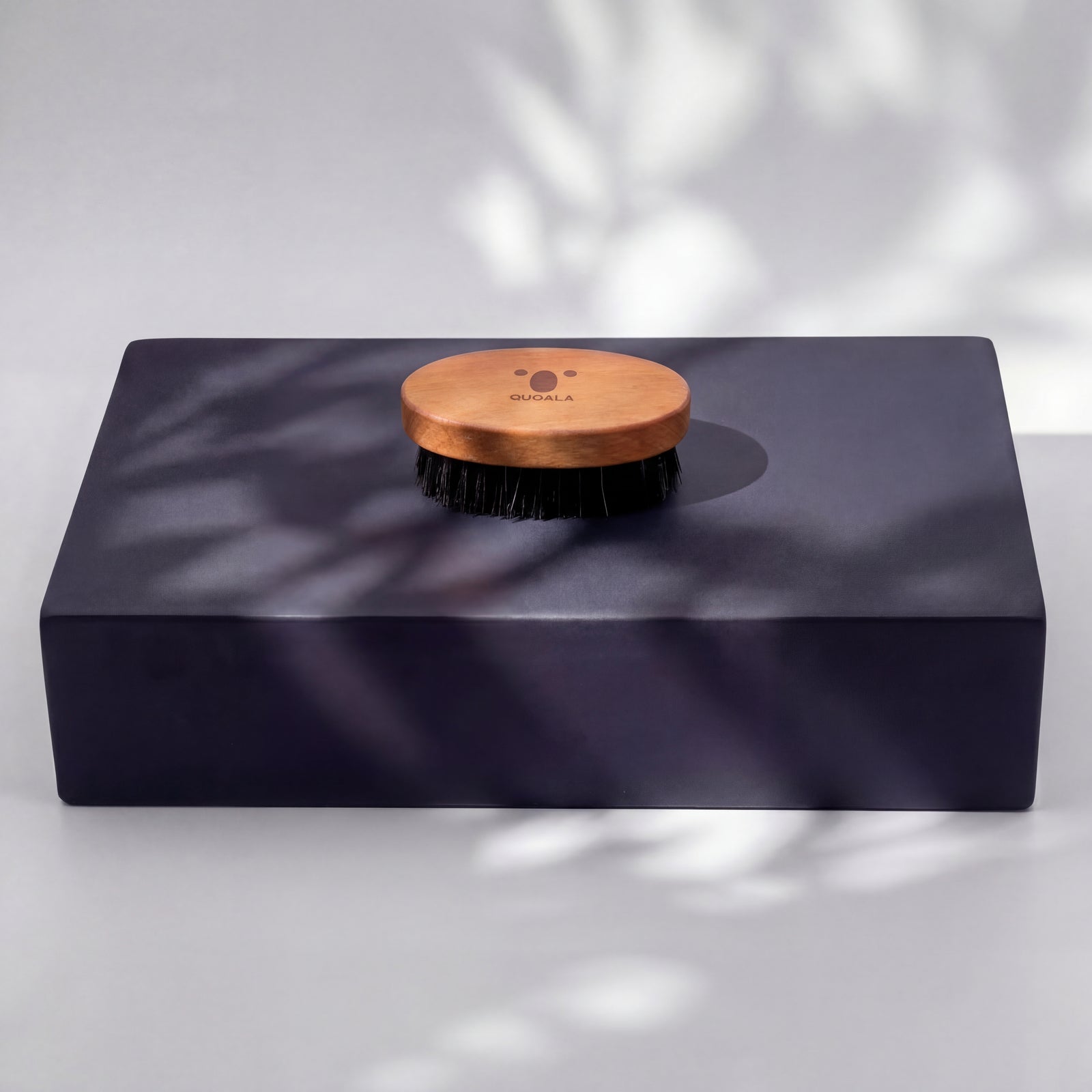

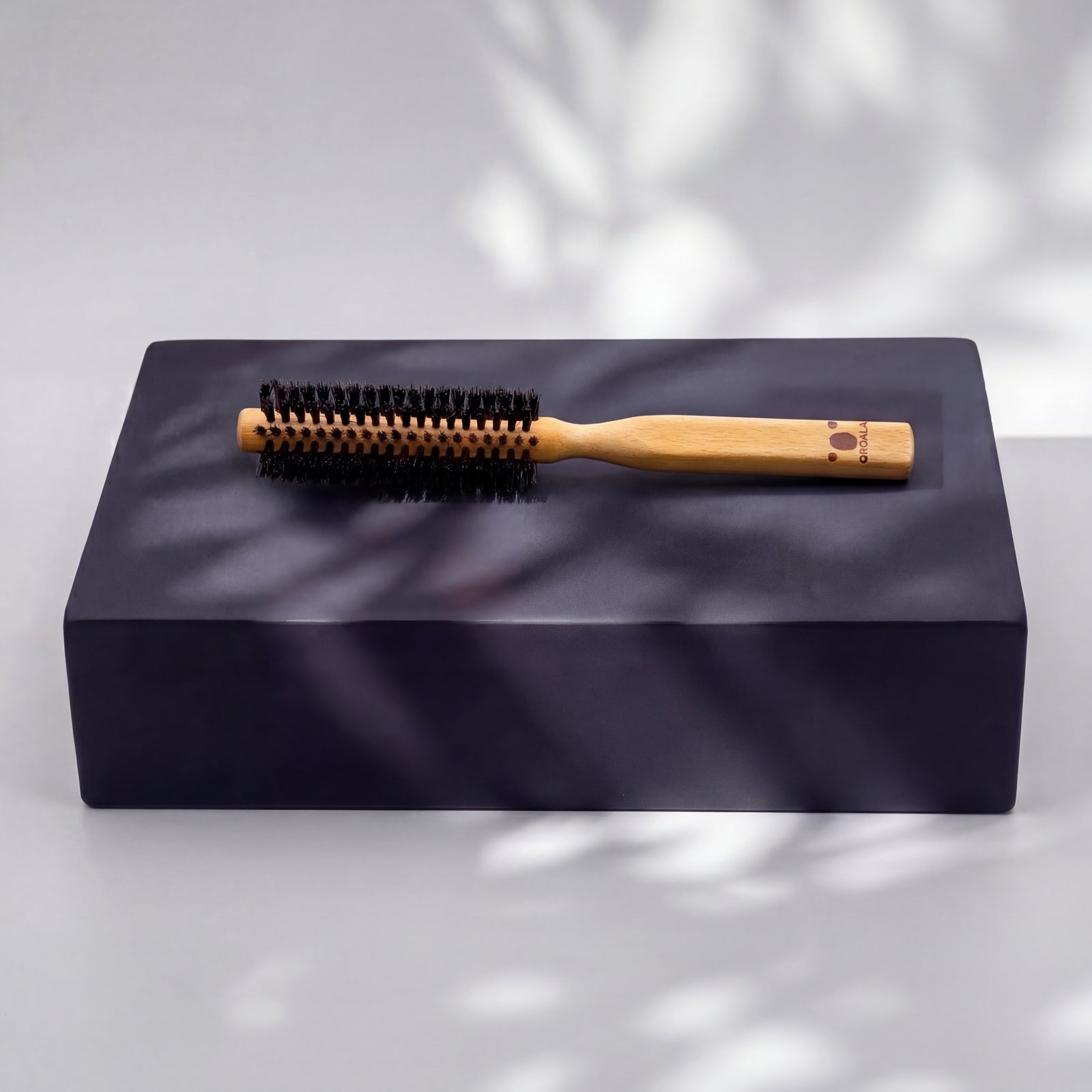

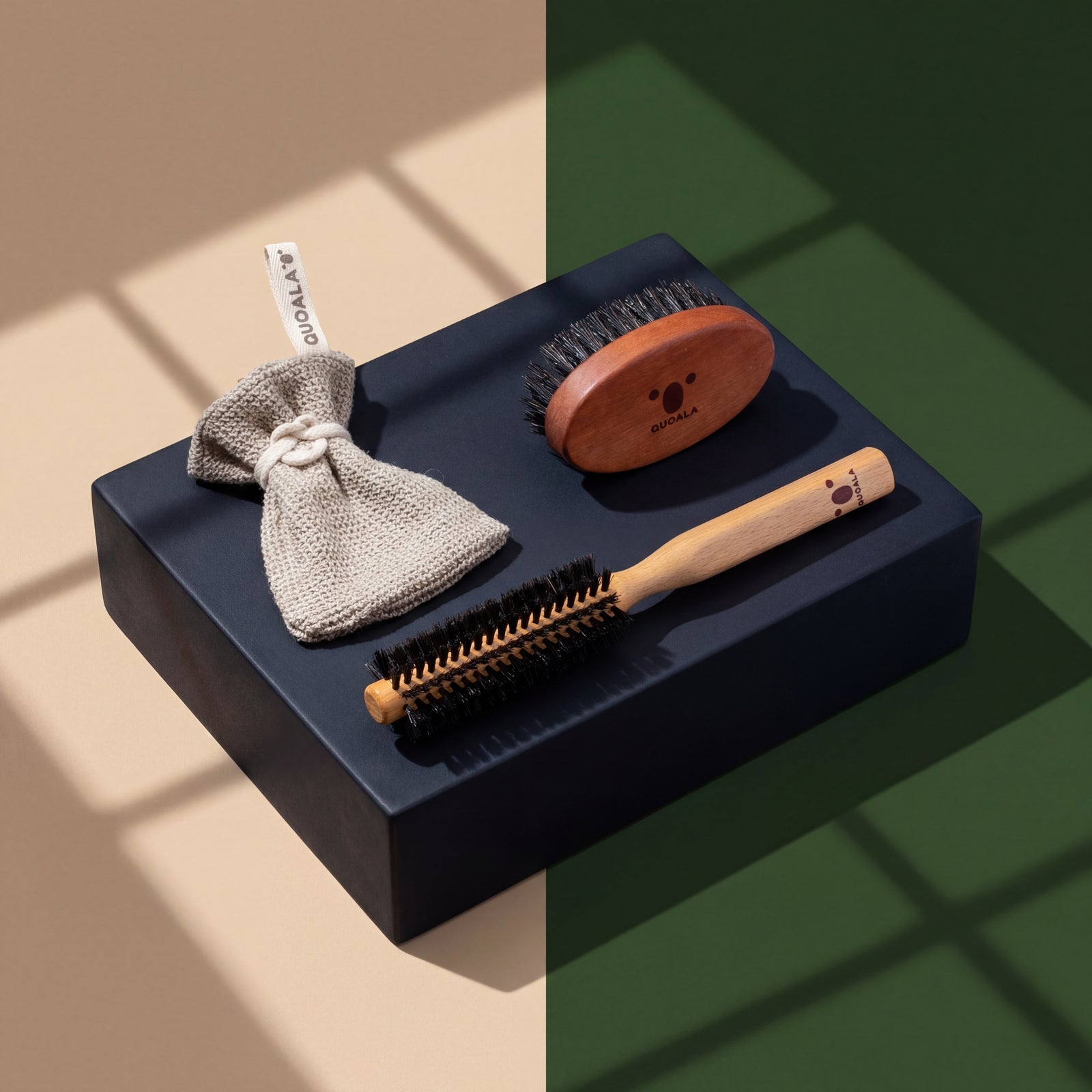

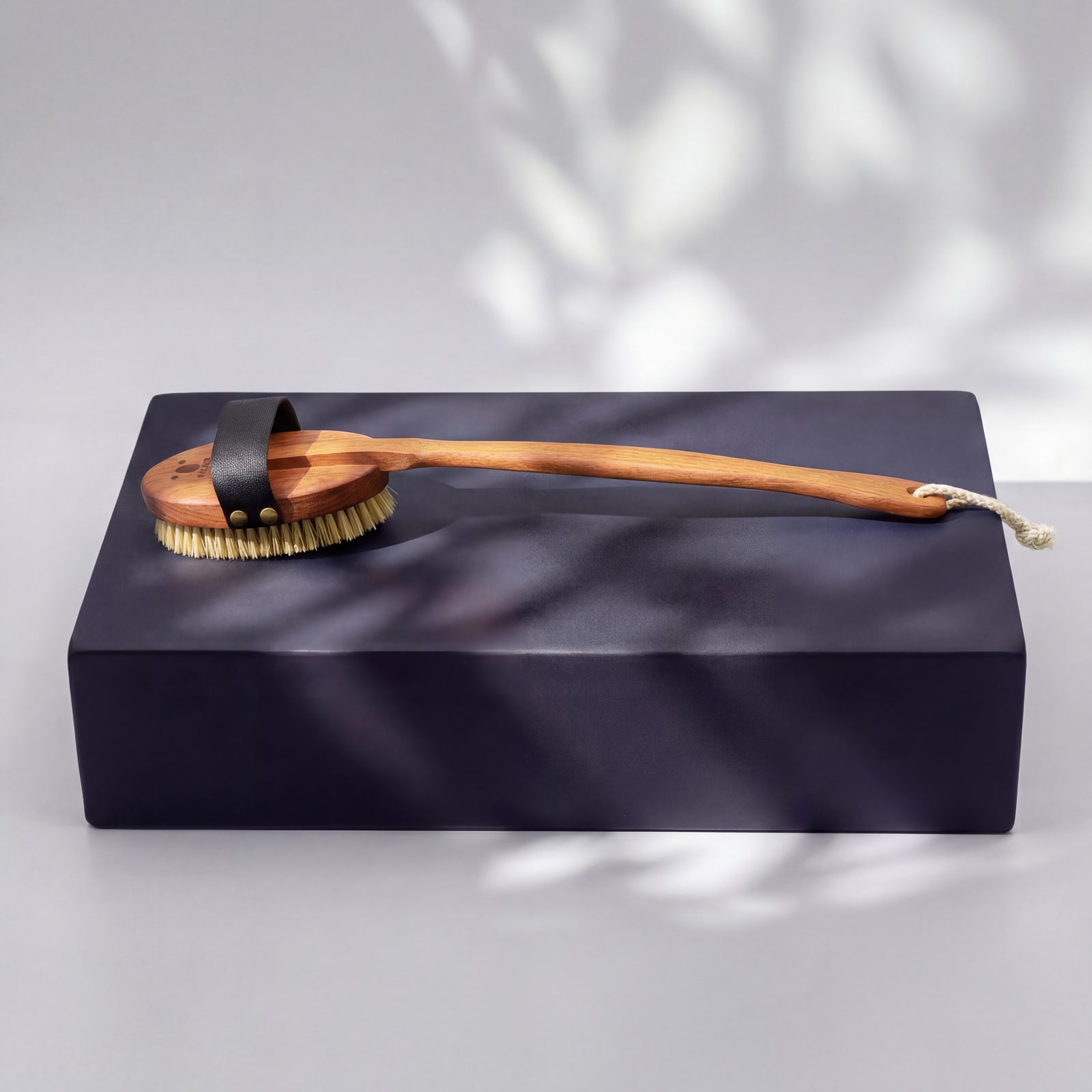

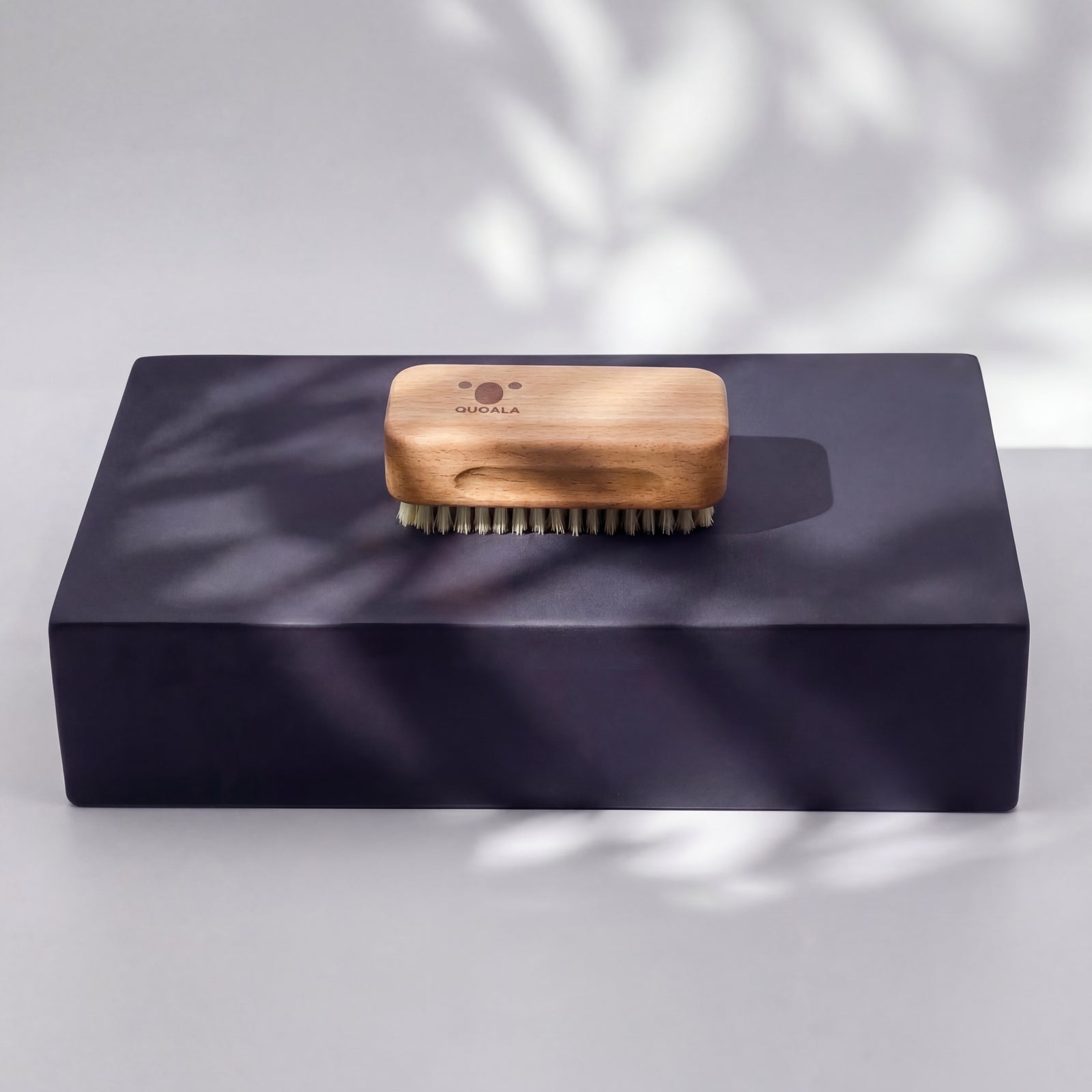

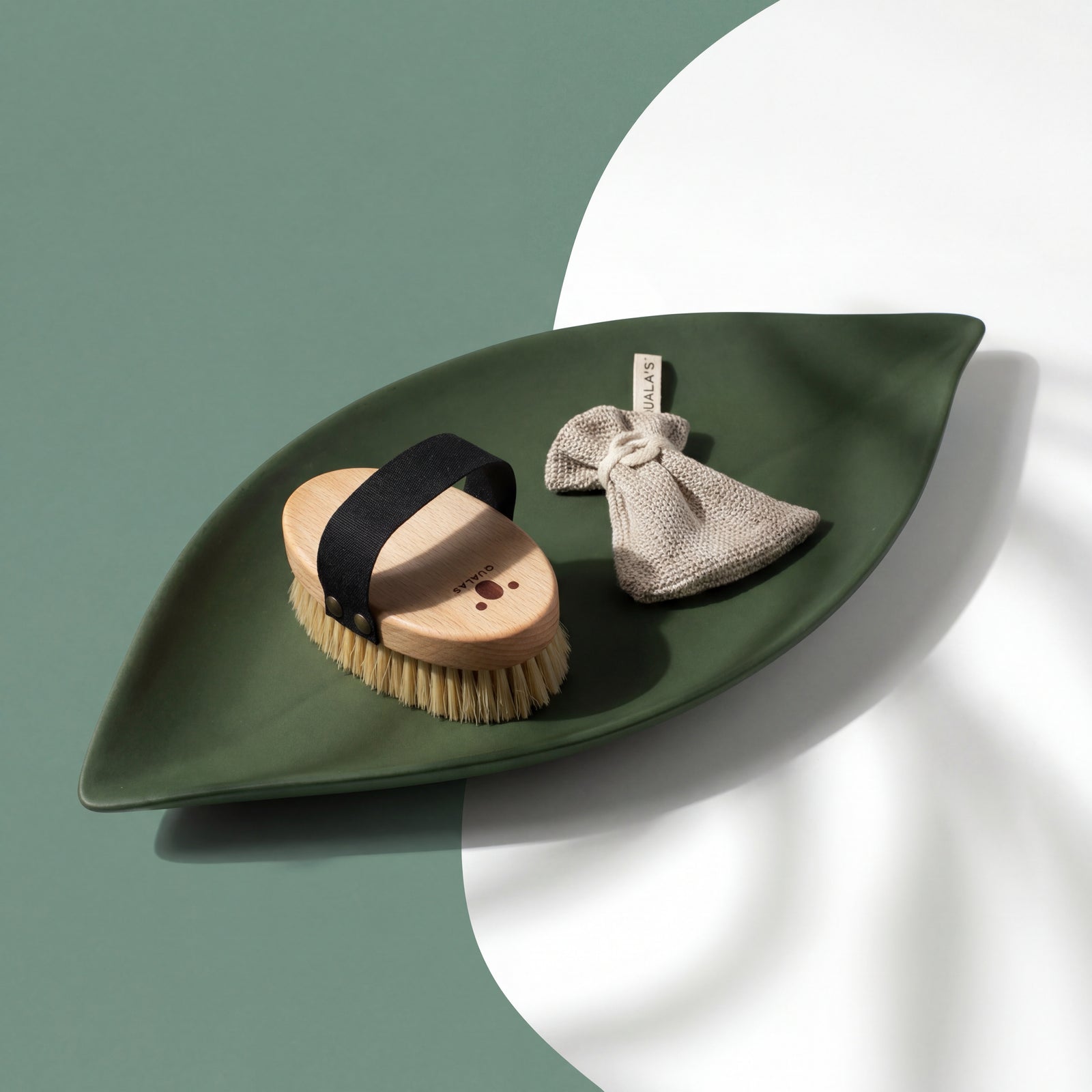

The typical smell of new natural bristles made from animal hair comes from keratin – the protein that animal hair is made of. In contact with moisture and body heat, keratin gives off a characteristic, organic smell. This is not a quality defect but a sign of genuine natural materials. This guide explains why it happens, how to reduce the smell for good within 2–3 weeks and how to reliably prevent mould.
Key points at a glance
- Natural keratin bristles have a scaly cuticle structure – they distribute sebum from root to tip and are fully biodegradable.
- Nylon bristles release microplastic particles during brushing – measured on toothbrushes, not on hair or body brushes [1]. With REACH Regulation 2023/2055, the EU has restricted microplastics that are intentionally added to products.
- A slight smell when wet is not a quality defect but a sign of genuine natural materials – it disappears within 2–3 weeks with consistent drying.
In this guide:
1. The functional advantages of natural bristles
Synthetic fibres like nylon may be low-maintenance, but at QUOALA we rely on nature out of conviction. Natural bristles and natural pins have biological and functional properties that are unique in body and hair care:
- Skin- and hair-like structure: Animal bristles (much like human hair) have a microscopically fine scale structure [2]. This means they clean and care much more gently and are better tolerated than smooth synthetic filaments, which often have sharp edges.
- Absorbing care products: Thanks to this very scale structure, animal natural bristles can absorb moisture, care oils or the scalp's natural sebum and distribute them evenly.
- 100 % biodegradable: Every tool loses tiny particles through mechanical friction over time. Our natural bristles are entirely natural products and can be returned to the environment without concern at the end of their life.
Natural bristle vs. synthetic: a direct comparison
| Property | Natural bristle (keratin) | Synthetic (nylon) |
|---|---|---|
| Microstructure | Cuticle scales (like human hair) | Smooth, no scales |
| Sebum distribution | ✓ Yes – from root to tip | ✗ No |
| Biodegradable | ✓ Fully | ✗ No – microplastics |
| EU Regulation 2023/2055 (intentionally added microplastics) | ✓ Not affected | Bristles not directly regulated |
| Own smell when wet | Slight (keratin) – fades | None |
| Raw material source | Animal or plant (renewable) | Petroleum (non-renewable) |
| Longevity (with care) | High – built to last | Medium |
A particular risk of synthetic bristles: microplastics. Plastic bristles release tiny plastic particles during brushing – measured on toothbrushes, not on hair or body brushes [1]. With REACH Regulation (EU) 2023/2055, the EU has restricted microplastics that are intentionally added to products [3]. Natural bristles also lose tiny particles – but these are made of keratin and are fully biodegradable.
In short: Natural bristles combine a scaly cuticle structure, natural sebum distribution and full biodegradability – properties nylon does not have in this form.
2. Can natural bristles smell? The material guide
Yes, sometimes – especially when they are used wet and stay damp for too long. This is not a defect and certainly not dirt. It is simply nature reacting to water. Here is how our different materials behave:

2.1 Tampico (agave fibre) – plant-based (firm)
- Made from the tough leaf fibres of the agave (100% vegan).
- Firm intensity, ideal for vigorous body, hand and hair brushes.
- Smell: Can develop a slightly earthy, grassy smell of its own if the brush is not dried completely after contact with water.

2.2 Horsehair & Tampico mix – animal & plant-based (medium)
- The perfect balance: soft horsehair glides smoothly, Tampico adds the necessary structure.
- Cruelty-free: Horsehair is a by-product of slaughter – no animal is kept or killed for it [4].
- Smell: Can release a slight, natural smell of its own when damp.

2.3 Pig bristle – animal (soft)
- A particularly soft structure for gentle care.
- Ideal for mild hairbrushes, blow-dry & styling brushes and soft bath brushes.
- Smell: When used wet (e.g. on wet hair or in the shower), it can develop a noticeable animal smell that fades once it has dried.

2.4 Boar bristle – animal (medium-firm)
- A very firm, resilient bristle with strong cleaning power and sebum distribution.
- The absolute classic for sturdy hairbrushes and beard brushes.
- Smell: Behaves like pig bristle – a smell of its own can occur with heavy moisture.

2.5 Hornbeam (wooden pins) – plant-based (massaging)
- Smooth, rounded wooden pins made from extremely hard hornbeam wood.
- Perfect for a gentle scalp massage and detangling with the Paddle Brush.
- Smell: Has no animal smell; at most it gives off a light, natural woody note. Must not be stored wet.

2.6 Bronze wires (ionic brush) – copper-tin alloy
- Ultra-fine wires made of a copper-tin alloy (for the monastery brush).
- No smell: As bronze is a metal alloy, it has no smell of its own.
- Caution: Must never get wet, as the metal would otherwise oxidise and form a patina.
In short: The slight smell when wet is inherent to the material and not a defect – the right drying habits make the difference between a fresh and a musty brush.
3. The 4 rules: how to keep your brush fresh
Once you know the properties of your natural bristles, caring for them is entirely intuitive:
3.1 Let it dry completely after every use
Tap the brush out gently (especially after wet use). If your brush has a cord, hang it up by it – this makes drying much easier. Models without a cord (such as hand, beard or hairbrushes) should be laid bristles down on a dry towel in a well-ventilated place. Circulating air is by far the best protection against odour.
3.2 Never soak it in water
Submerging the bristles for a long time makes them absorb too much moisture into their core structure – and that is exactly what causes the typical damp smell of animal fibres.
3.3 No radiator: let it dry naturally
Direct heat damages the bristles (the keratin becomes brittle) and the FSC wood. Instead, let the brush dry naturally in the room air.
3.4 Cleaning with mild shampoo
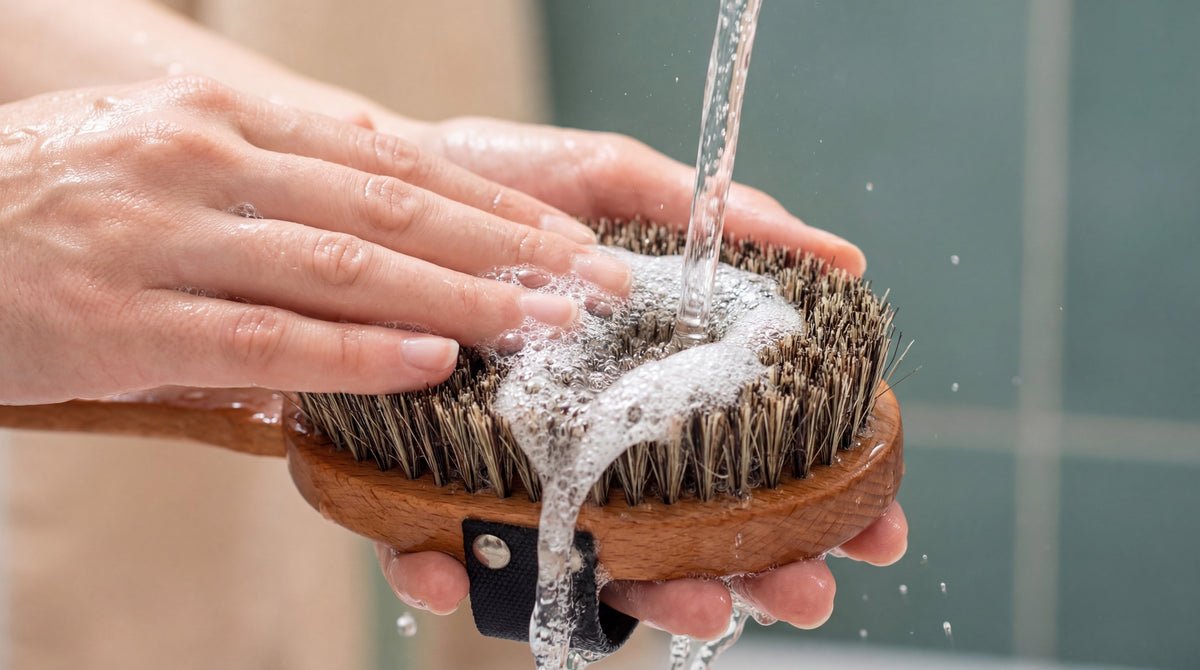
If a bath brush needs cleaning, wash the bristles gently with warm water and a mild shampoo. Hairbrushes and beard brushes should only be wiped down briefly with a damp cloth without soaking the wood, while monastery brushes must never be cleaned with water. Afterwards, let the brush dry thoroughly.
In short: Four simple rules – dry completely, don't soak, no heat, mild shampoo – keep every natural-bristle brush fresh and working for the long term.
4. Which bristle suits you?
If you are particularly sensitive to smells or deliberately choose vegan products, Tampico and hornbeam are the best choice. But if you are looking for the traditional, gentle feel and value the functional scale structure of animal hair (especially for hair and beard care), pig and boar bristles are the right choice – they simply need a little more attention when drying after wet use.
We don't hide behind artificial coatings. We accept transparent trade-offs: natural materials and real function instead of synthetic properties. If you care for your QUOALA brush properly, it will accompany you reliably for a long time in your quiet everyday moments.
In short: If you are sensitive to smells or live vegan: Tampico or hornbeam. For the best care results for hair and beard: pig and boar bristles are the right choice.
5. Frequently asked questions
Why do natural bristles smell when new or after getting wet?
With animal bristles, the smell comes from keratin – the protein they are made of. Tampico can develop a slightly earthy smell if the brush does not dry completely. In contact with moisture and warmth, keratin gives off an organic, characteristic smell. This is not a quality defect but a typical feature of genuine natural materials.
How long does it take for the smell to fade?
If you consistently follow the ventilation rule – let the brush air-dry standing or hanging after every use – the smell usually decreases noticeably after 2–3 weeks. Moisture-bound smells disappear faster if the brush is not stored in a damp environment.
Can I use a natural brush wet?
That depends on the product: bath brushes can be used wet and dry, but must dry completely afterwards. Hairbrushes, blow-dry brushes and beard brushes are used and cleaned dry. Monastery brushes must only be used dry and never cleaned wet.
What is the difference between natural and synthetic bristles?
Animal natural bristles have a microscopic scale structure that synthetic fibres such as nylon lack. This structure allows them to absorb sebum and care products and distribute them evenly.
Can I treat the brush with fragrances?
That is not necessary, and strong fragrances are not recommended as they can attack the bristles. Regular airing, correct drying and a monthly clean with mild shampoo are enough to keep the brush fresh.
Are biodegradable bristles better for the environment than nylon?
Nylon bristles made of petroleum-based plastic take centuries to break down. Natural bristles made of animal hair or agave fibres are fully biodegradable. Friction during brushing releases tiny particles – biodegradable with natural bristles, microplastics with nylon (measured on toothbrushes) [1].

Honestly made. Long-lasting in everyday life.
Choose the bristle that suits your routine and your values. Invest in premium tools made of certified FSC wood, crafted in a family-run business in Germany.
Sources and further reading
Scientific sources
- Öztürk Aytulun et al. (2025), Preliminary results on microplastic release from commercial toothbrushes during simulated brushing, Microchemical Journal. Measured on toothbrushes, not on hair or body brushes. Our assessment S68 · Source
- McKittrick et al. (2012), The Structure, Functions, and Mechanical Properties of Keratin, JOM. Review: structure and properties of keratin in hair, bristle and horn. Our assessment S27 · Source
- Regulation (EU) 2023/2055, Official Journal of the EU. Restricts microplastics that are intentionally added to products. Our assessment S67 · Source
- Regulation (EC) No 1099/2009 on the protection of animals at the time of killing; German Federal Ministry of Agriculture (BMEL), animal welfare. Bristles and horsehair are by-products; no animal is kept or killed for them. Our assessment Z2 · Source