













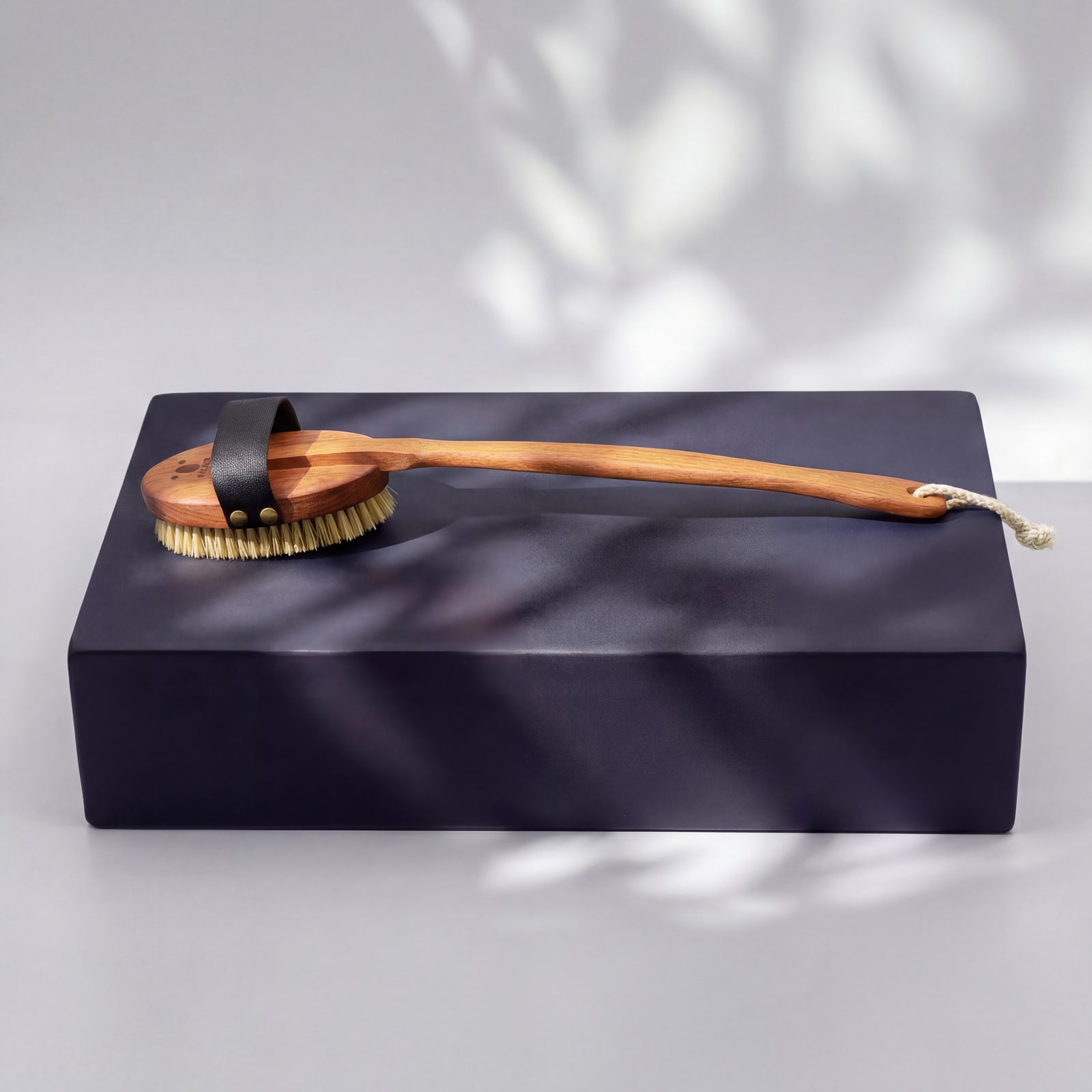

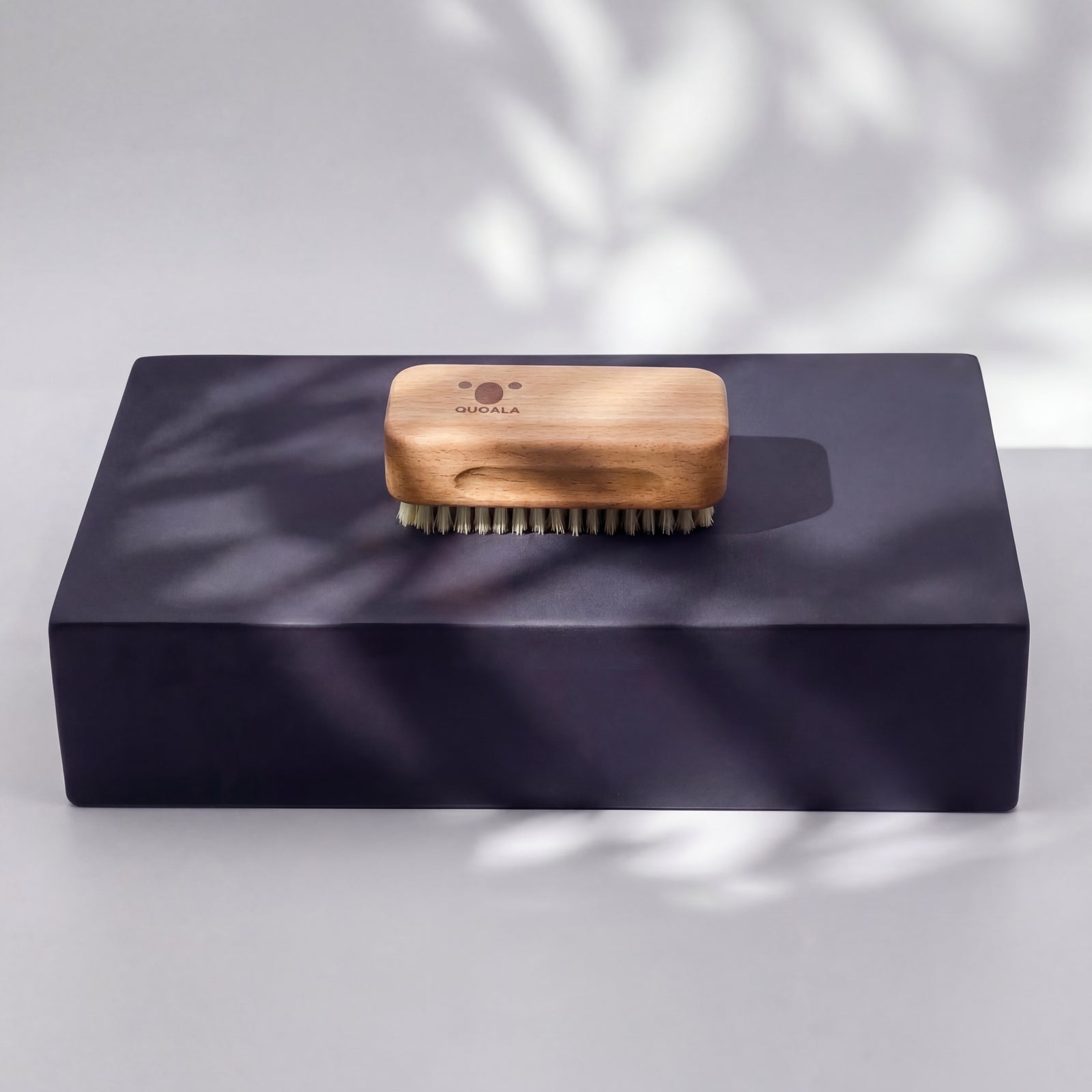

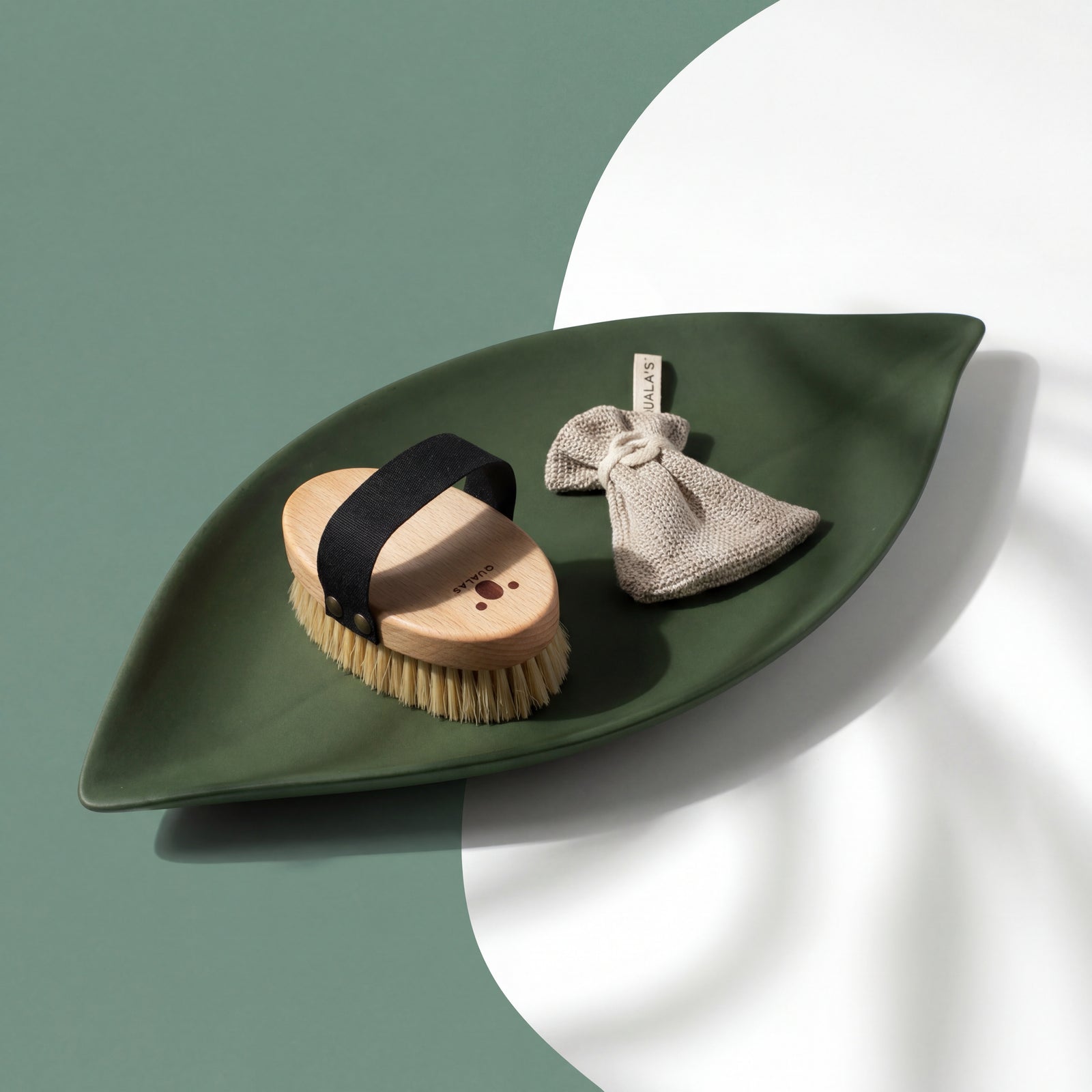

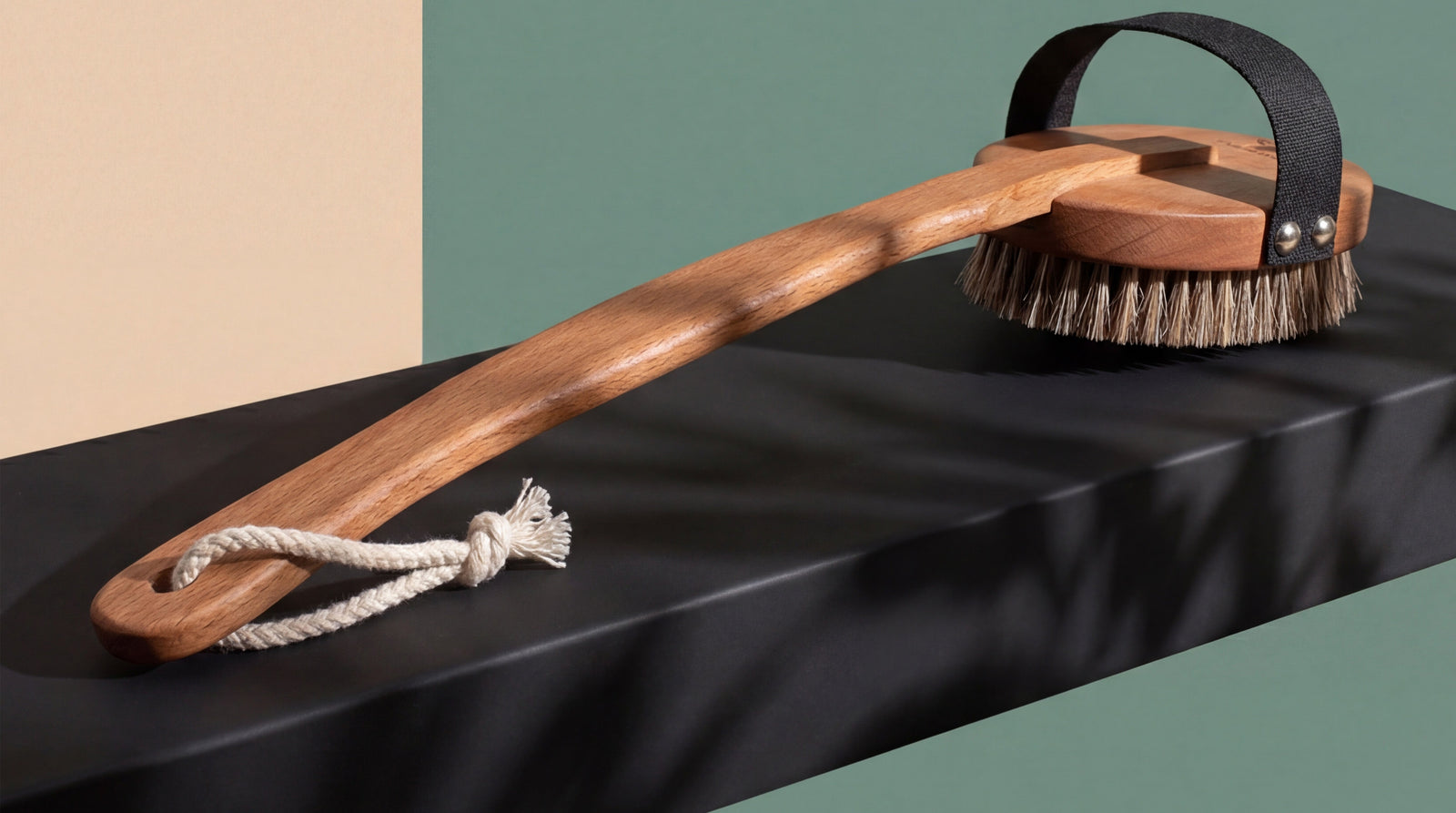

Tool Care: How to Make Your Bath Brush a Long-Lasting Companion
At QUOALA, our bath brushes are designed for daily, intensive use and built for absolute quality. At the same time, natural materials are "alive": real wood reacts to water, and natural bristles behave differently in varying temperatures than synthetic fibers. With the right, careful maintenance, your body brush will become a long-lasting tool for your daily self-care moments. In this guide, you will learn the scientific reasons behind material care and how to best protect your brush.
Guide Contents:
1. The 5 Essential Care Rules
Wood is a hygroscopic material – meaning it absorbs moisture from its surroundings and releases it again[1]. To prevent cracks or swelling of the wood, the following steps are crucial after each use:
1.1 Store in a Dry, Well-Ventilated Place
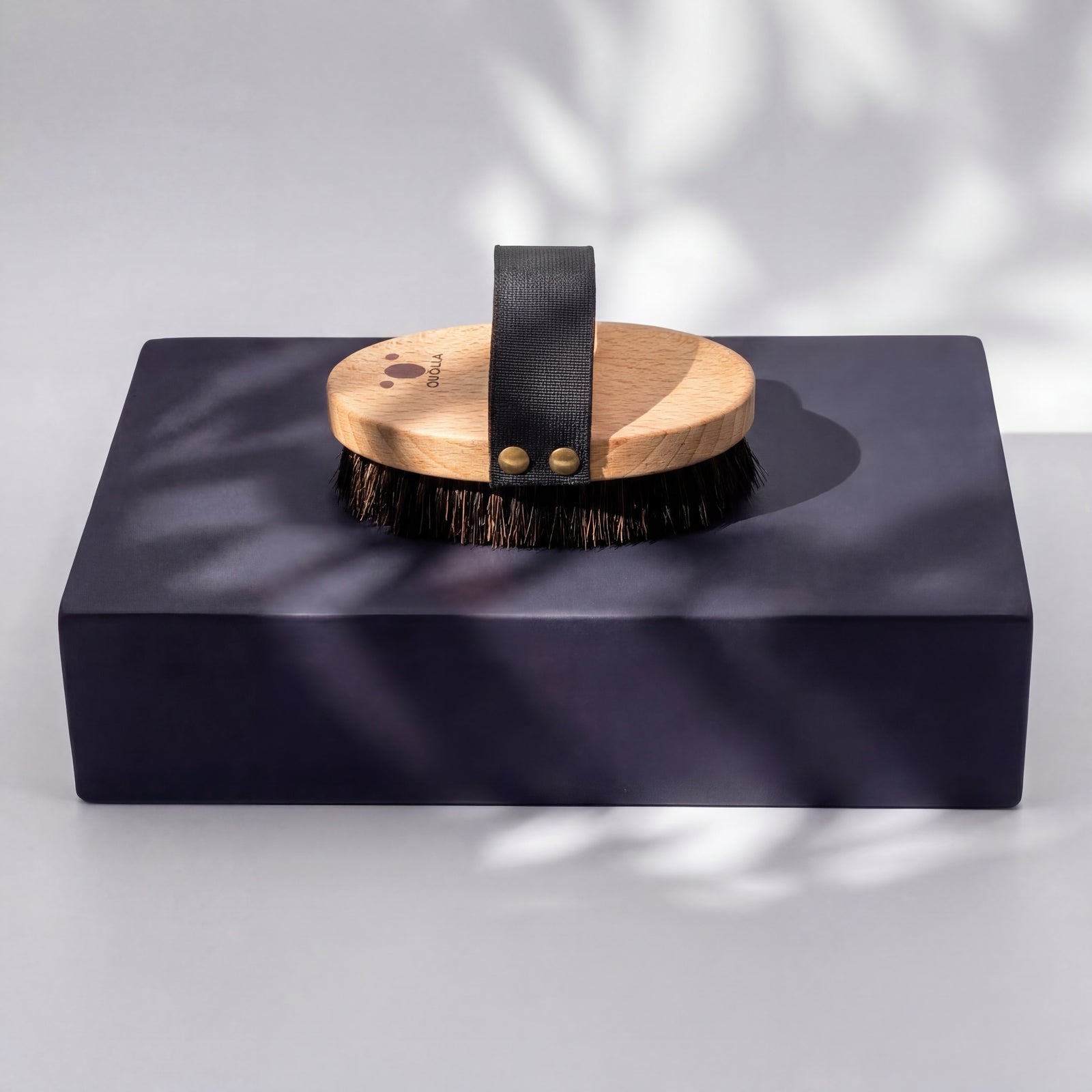
Persistent moisture is the biggest challenge for wooden bath brushes. Allow your brush to dry thoroughly after each use and never leave it soaking in water. Ideally, store it hanging or bristles-down in a well-ventilated area, away from damp shower corners. This prevents mold growth and protects the FSC wood and natural bristles from softening.
1.2 Use the Cord for Hanging
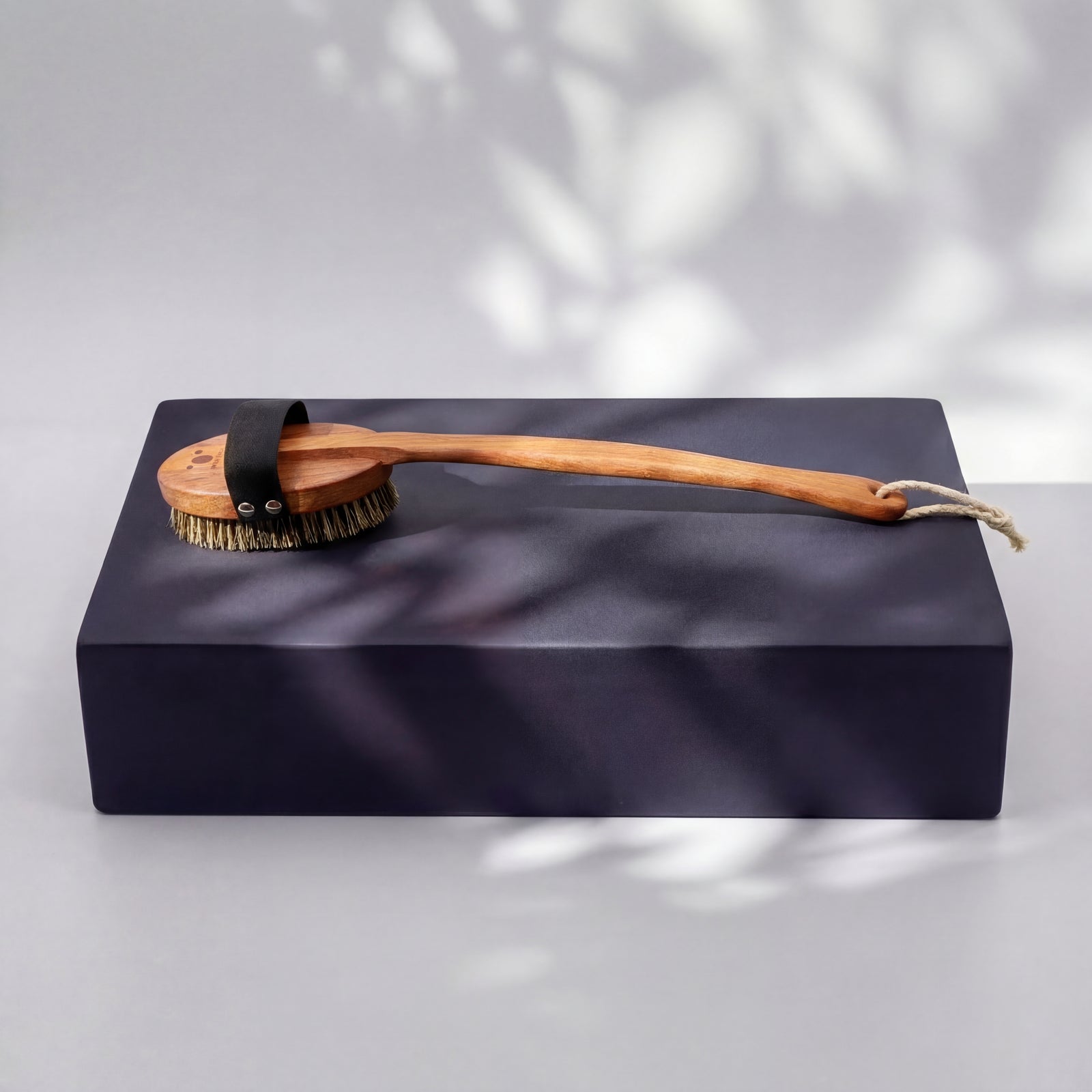
Many of our bath brushes are equipped with a practical cotton cord. This is not just a visual detail, but your most important tool for proper care: simply hang the brush by its cord after use. This allows residual water to drip off by gravity, air circulates freely around the entire wooden body, and the brush dries quickly and hygienically.
1.3 After Use: Tap Out or Rinse Gently
There are two simple ways to clean your bath brush after use:
- Tap out: After dry brushing, simply tap the brush gently on the edge of the sink to mechanically remove dead skin cells.
- Rinse: If you used the brush wet, rinse it thoroughly under warm, running water. If necessary, you can use a mild natural shampoo to remove soap residue – then rinse extremely well with clear water.
1.4 Never Soak the Brush in Water
Completely submerging the brush (especially the wooden body) or soaking it for an extended period puts massive strain on the material. Even brief soaking in bath water can cause the wood to absorb too much water, swell, crack, or warp. Instead, let water run over it for a short time and then shake the brush vigorously.
1.5 No Heating: Let Air Dry Naturally
It may be tempting to place a wet brush on a radiator to speed up drying. However, since real boar and horsehair bristles are made of keratin (like human hair), direct, intense heat makes this structure brittle and prone to breaking[2]. At the same time, the wood dries out too aggressively. Instead, hang it by its cord or lay it flat on a towel (bristles down). Give the room air the time it needs.
2. Wood Care & Patina: When the Material Dries Out
At QUOALA, we deliberately do not give an "indestructibility promise." We opt for uncompromising natural materials instead of synthetic plastic alternatives. It is therefore completely normal for the wood to develop a certain natural patina over time, darkening or becoming slightly rougher.
Wood Care Tip: If you notice that the wood feels very dry or loses its shine after a few months of use, you can occasionally rub it gently with a few drops of natural vegetable oil (e.g., linseed oil, walnut oil, or a drop of olive oil). This penetrates the pores, keeps the wood supple, and makes it significantly more water-repellent again.
Our Fair Guarantee: Should your brush show an unexpected material defect (such as deep stress cracks) within the first 3 months despite proper care, our warranty logic applies. In this case, simply contact our support – we will find a quick and uncomplicated solution.
3. Does This Apply to All QUOALA Brushes?
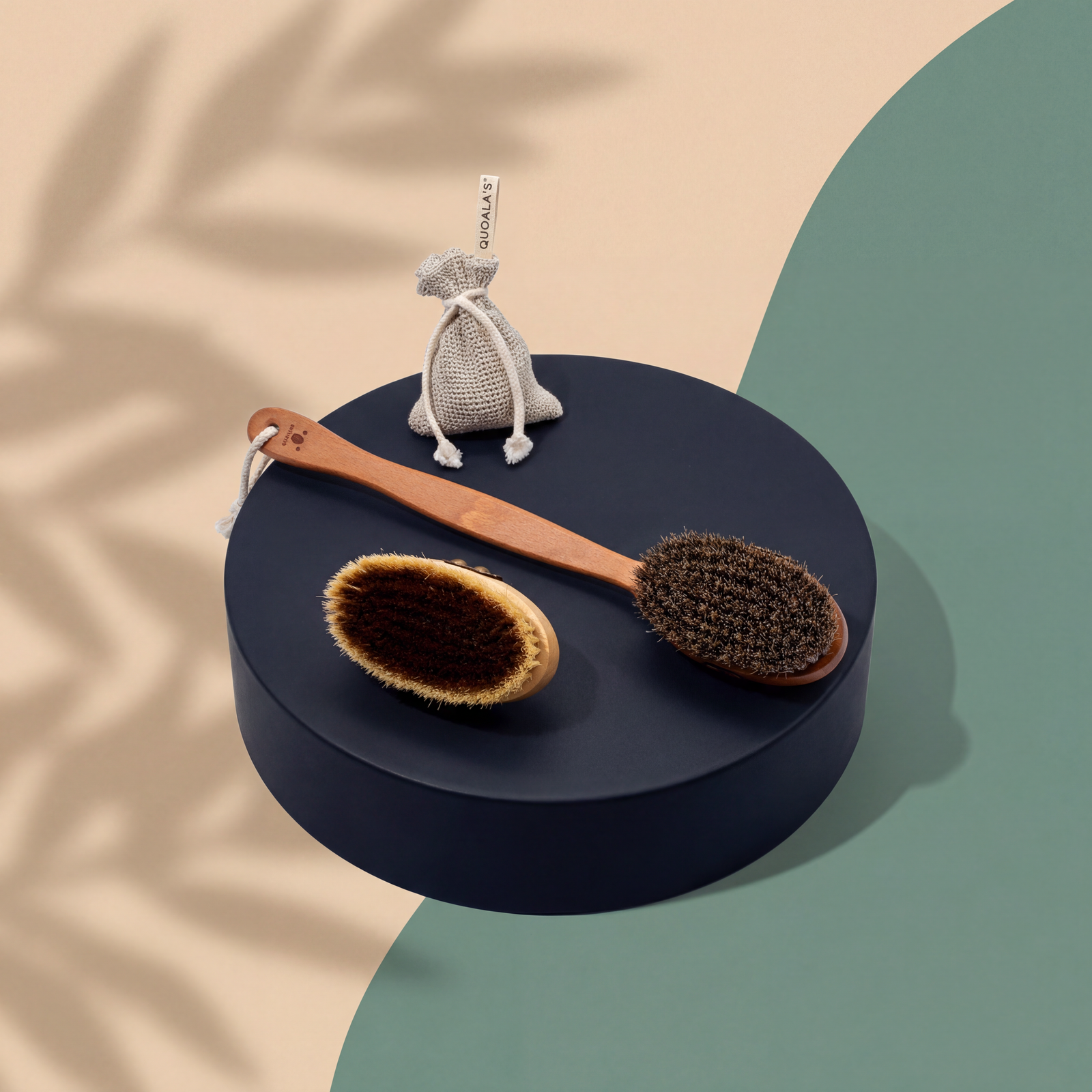
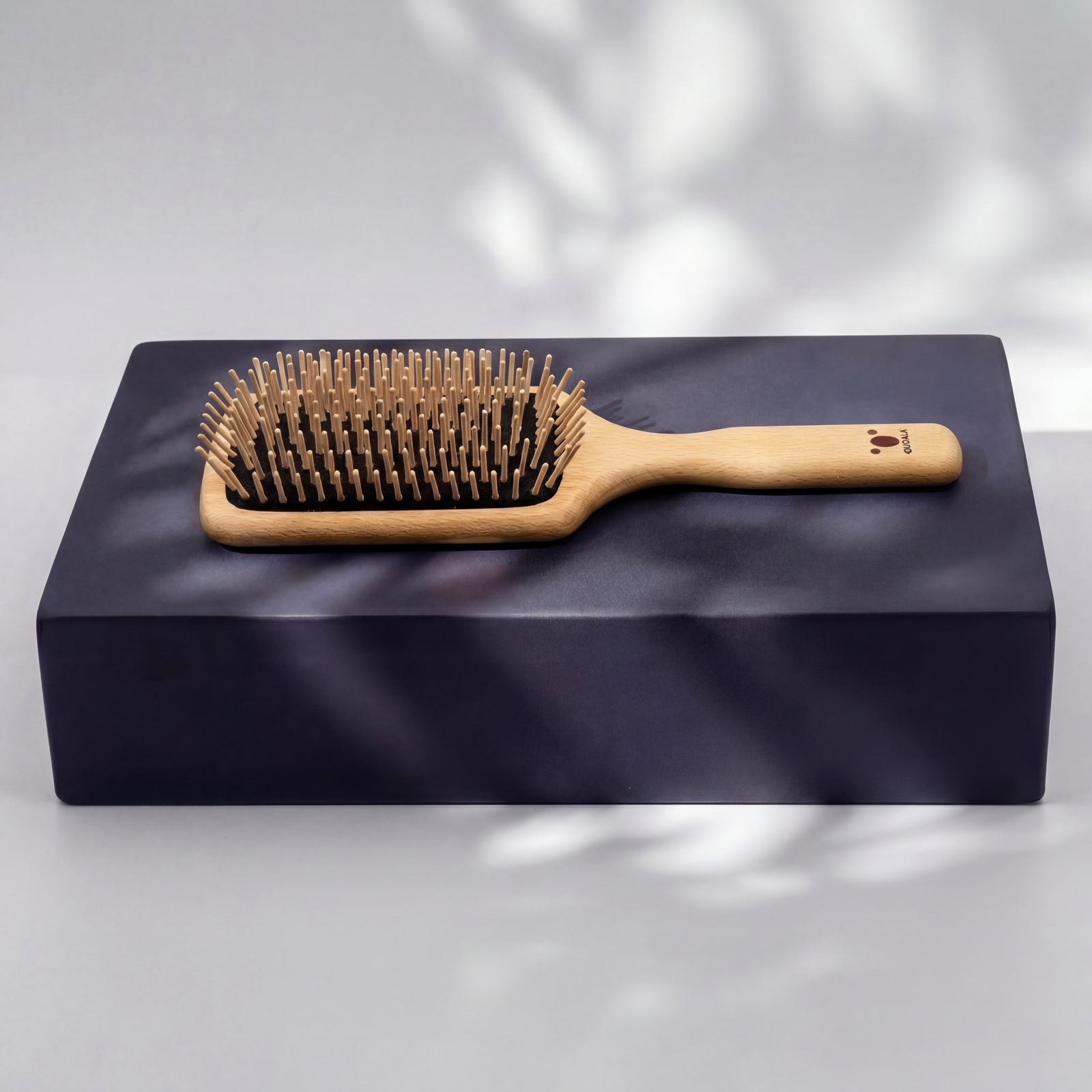
Yes. These care instructions apply universally to all QUOALA products made from FSC-certified wood. Whether our ionic dry brushes, hair brushes, beard brushes, or hand and nail brushes: wood remains a biological material and appreciates careful treatment. Just remember that tools like the Ionic Monastery Brush must never be washed wet, as this would oxidize the bronze wires.

A Loyal Companion with Proper Care
Every QUOALA product follows the same principle: function, material quality, and reduced aesthetics. If you care for your tools correctly, they will reliably accompany you through many routines.
4. FAQ: Quick Answers to Brush Care
Why does my natural brush smell when it gets wet?
This is completely normal and proof of absolute naturalness. Real animal hair (like boar or horsehair) can initially develop a slight natural odor when wet. You can find out why this happens and how it dissipates on its own in our article Why Natural Bristles Can Smell.
Can I use disinfectant for the bristles?
No. Harsh alcohols or chemical disinfectants immediately dry out natural bristles and attack the wood's finish. A mild natural shampoo and warm water are perfectly sufficient for hygienic cleaning.
How often should I oil the brush?
That depends on the usage. If you use the bath brush wet often, oiling it every 2 to 3 months is ideal. For pure dry brushes, this process once or twice a year is completely sufficient.
Scientific Evidence (Referenced)
- Wood Hygroscopy: Wood continuously adjusts its moisture content to the ambient climate. Strong fluctuations (such as soaking and rapid drying on a heater) lead to mechanical stress and cracks. Evidence: Fundamentals of Materials Physics.
- Keratin and Heat: Animal natural bristles (boar, horsehair) consist of proteins (keratin). Intense heat denatures these proteins, causing the bristles to lose elasticity and break. Evidence: Journal of Cosmetic Science (Thermal damage to keratin).