




















EMAS is the EU's strictest environmental management system – stricter than ISO 14001, because it requires a publicly available environmental statement, external validation by state-approved verifiers and documented improvement targets. For QUOALA, this means our production partners must improve and disclose their energy and water consumption, waste volumes and CO₂ emissions year after year. What the seal actually checks and why it is the toughest production standard in Europe – this article explains it.
In this article:
1. The people on site: what EMAS covers – and what it doesn't
A common misconception: EMAS is an environmental management system. It covers a site's environmental performance – energy, water, waste, emissions – but not wages or social standards. What EMAS has to do with the people on site:
- Involving employees: EMAS requires employees to be actively involved in environmental management [1].
- What EMAS does not cover: wages, working hours and social standards are not part of EMAS. In Germany, these are governed by labour law and the statutory minimum wage.
2. Protecting the local environment
Production in distant countries often creates waste or pollutants that burden nature. EMAS is our "guardian" against pollution:
Certified processes ensure that no chemicals or wastewater reach the environment unfiltered. EMAS sites must demonstrate a complete circular approach – from efficient use of energy to the responsible disposal of production residues. This is how we make sure your well-being does not come at the expense of another ecosystem.
3. No empty promises: the duty of transparency
EMAS is not a simple "marketing badge" you buy once. It is an ongoing process with hard obligations:
3.1 Annual environmental statement
Companies must disclose their data on waste, energy and emissions [1].
3.2 State supervision
Independent, state-approved environmental verifiers regularly inspect the sites in person [1].
3.3 Continuous improvement
Anyone who wants to keep the seal must show every year that they have become more efficient and further reduced their environmental impact [1].
4. Why does this matter for QUOALA customers?
We know transparency matters to you. When you hold a QUOALA product in your hands, you can be sure:
- There is no "greenwashing". The environmental facts are verified.
- Production follows the highest European environmental standards, wherever the site is.
- Your purchase supports production whose environmental performance is checked every year.
5. What does the certificate mean in practice?
The certification is one of the hardest awards for companies to achieve. It combines the environmental management of ISO 14001 with additional requirements for legal compliance and public reporting. It is the "purity law" of modern production [1].
6. A closer look at our values
Every QUOALA product follows the same philosophy: the balance between aesthetics, function and radical responsibility. We believe true self-care only begins when you know the product was made with a clear conscience. Together, we are making a statement for a transparent and fair future.
7. Frequently asked questions
What is EMAS and where does it come from?
EMAS is a voluntary environmental management system of the European Union, introduced in 1993 and today the most demanding environmental certification scheme in Europe. It requires external validation by state-approved verifiers and a publicly available environmental statement.
How does EMAS differ from ISO 14001?
EMAS builds on ISO 14001 but goes considerably further: on top of the internal environmental management requirement, EMAS demands a publicly accessible environmental statement with concrete figures, official registration and independent checks by accredited environmental verifiers.
Where are QUOALA's tools made?
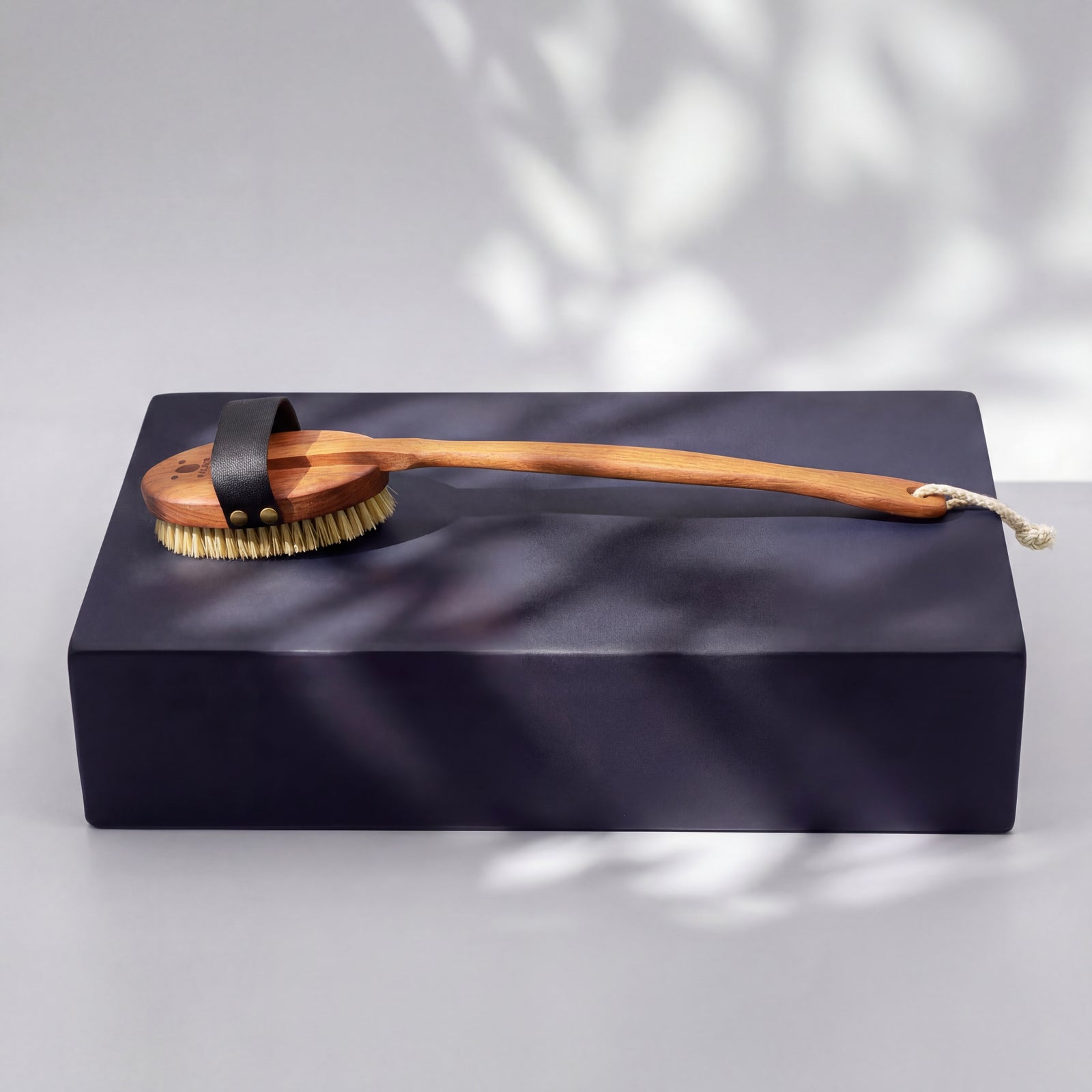
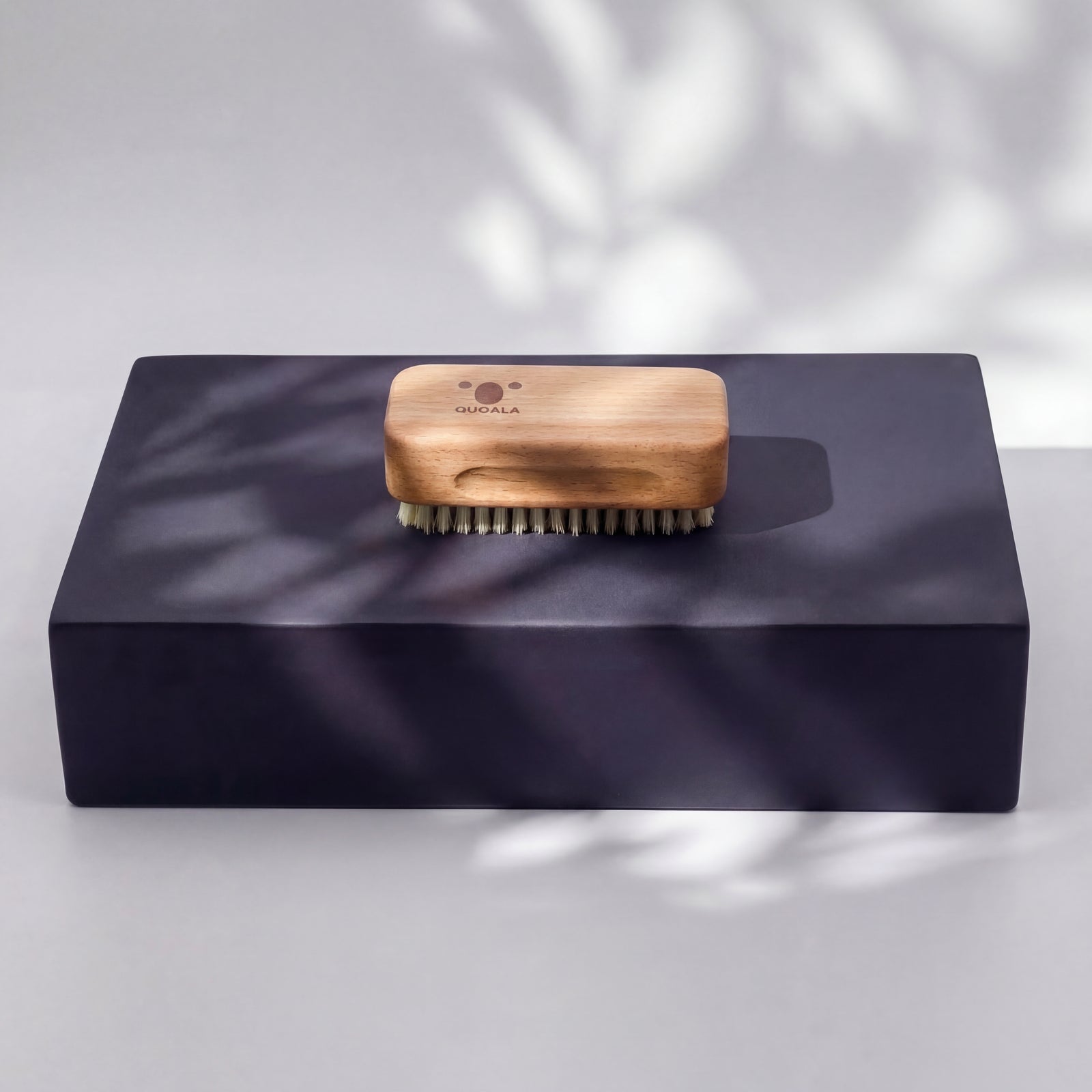
QUOALA's brushes and the foot file are made in a family-run business in Germany, the soap bag in a GOTS-certified family-run business in Italy. The brush manufactory is EMAS-registered. That means documented improvements in energy and water consumption, waste volumes and CO₂ emissions — checked and disclosed year after year.
Does EMAS have to be renewed regularly?
Yes. EMAS registration is not a one-off. Companies must publish an environmental statement every year and be checked regularly by independent, state-approved verifiers. Anyone who wants to keep the seal must show continuous improvement.
What does the EMAS seal mean in practice for the QUOALA products I buy?
When you buy a QUOALA product, it comes from a site whose environmental management is checked by independent verifiers under EMAS: energy, water, waste and emissions are recorded, published and improved year after year. EMAS is an environmental standard – it does not cover wages or working conditions.

Discover our certified products
Be part of a movement that brings quality and ethics together. Invest in long-lasting tools: Swiss brand. Made in Europe.
Sources and further reading
Scientific sources
- Regulation (EC) No 1221/2009 (EMAS), European Commission. Public environmental statement, checks by accredited environmental verifiers, continuous improvement. Our assessment S15 · Source