















Most care tools are made on a single principle: produce cheaply, sell affordably, replace quickly. The result is familiar — synthetic bristles that can shed microplastics in use, wood from untraceable sources, promises on the packaging that nobody can check. A screening by the European Commission found that 42% of voluntary environmental claims on the market are potentially misleading and 59% have no easily accessible evidence. [1] QUOALA exists to change exactly that. Not through ideology — through material science, honest evidence and European craft. Natural materials have specific biological properties that can be explained and backed up. And at QUOALA, every material has a reason we can name.
In May 2026, FSC Switzerland featured QUOALA founder Gregory Basmadjian in its interview series “Three questions for…” [2] — a conversation that condenses this stance into three questions. This article explains, for every QUOALA material, why it was chosen, what it is biologically or functionally suited for — and what that means for your daily care routine.
The FSC interview: FSC Switzerland featured QUOALA in its series “Three questions for…”. Read the full interview (German) →
Contents:
In short
QUOALA uses FSC-certified beech wood, boar bristles and tampico agave fibre — every material chosen deliberately, not by chance. The ionic brush (monastery brush) is a body brush with bronze wires for dry brushing — not a hair brush. Responsibility at QUOALA means concrete, verifiable decisions: FSC® licence FSC-N003920, European manufacturing, full material transparency.
The problem QUOALA solves
The wellness market is full of words like “natural”, “sustainable”, “responsibly made” — with no explanation of what they actually mean and no evidence to back them up. Consumers who want to make better decisions cannot tell real commitments from empty marketing. QUOALA fills that gap: care tools made of deliberately chosen materials — with reasons we can name, traceable sources and full material transparency.
1. Why this conversation matters
The wellness market is full of promises. “Sustainable”, “natural”, “responsible” — these words sit on packaging without any explanation of what they mean in practice and without evidence to prove them. That is exactly the problem that moved Gregory Basmadjian to build QUOALA:
“I was missing a brand that really manages this balancing act: products that look good, work well and are made more responsibly — without coming across as preachy.”
— Gregory Basmadjian, founder of QUOALA, FSC interview, May 2026
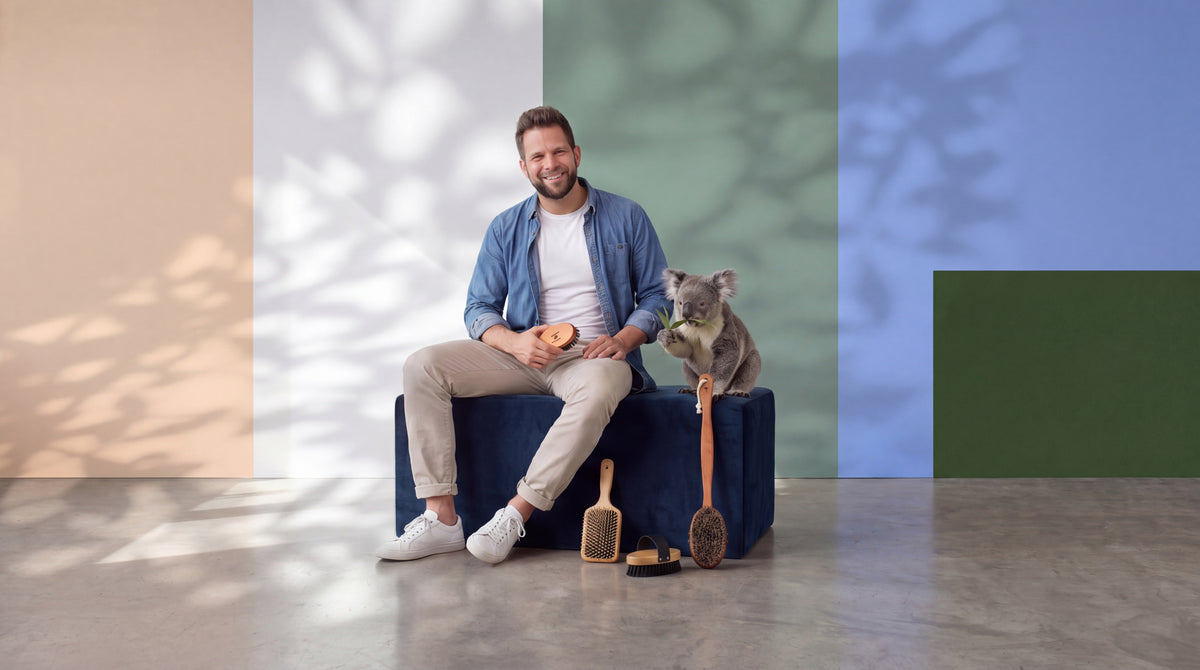
QUOALA was founded in Switzerland in 2021 with the aim of closing precisely this gap. The brushes are made in a family business in Germany, the soap bag in a GOTS-certified family business in Italy — from materials that were not chosen by chance, but deliberately.
2. Wood: more than looks — three FSC wood species and what that means
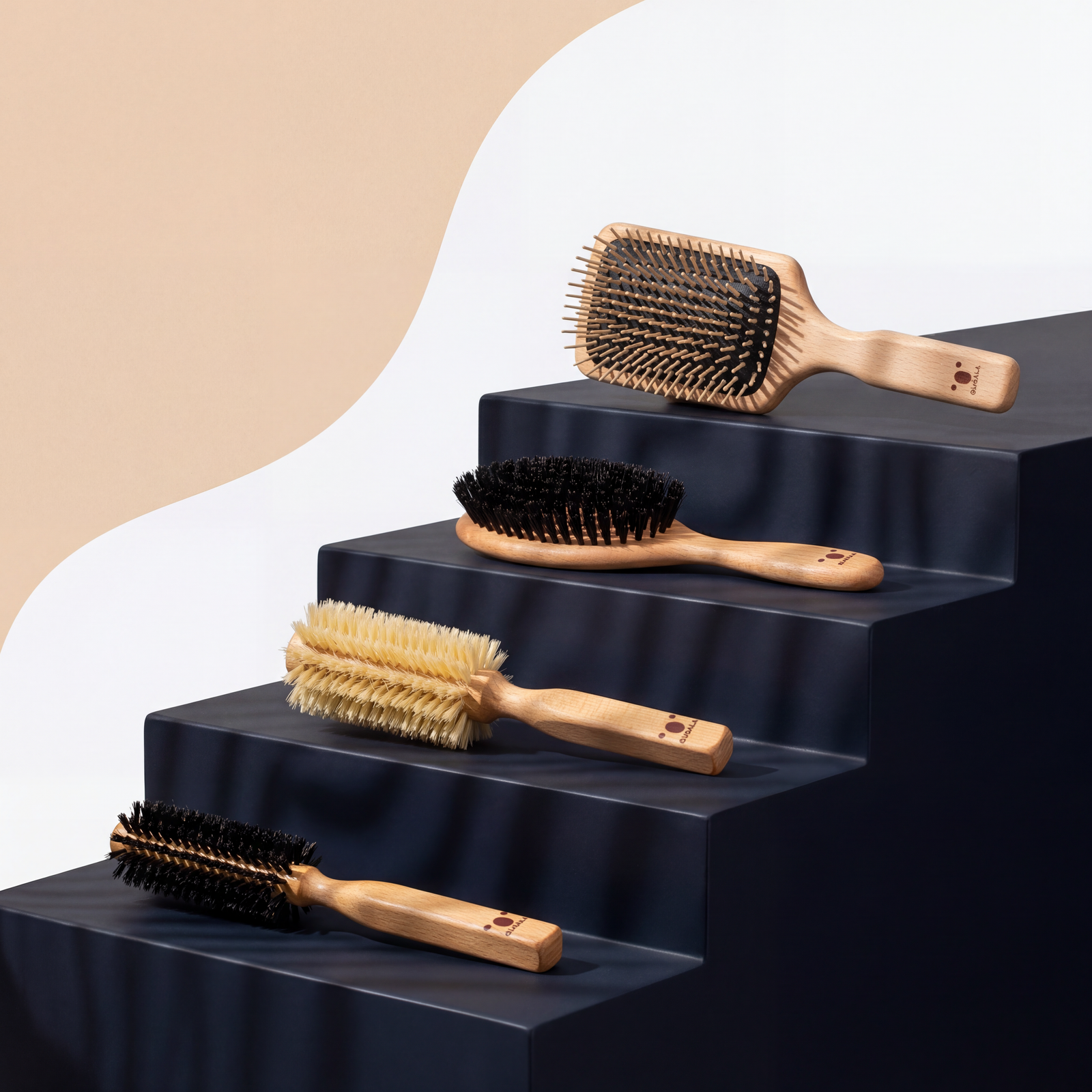
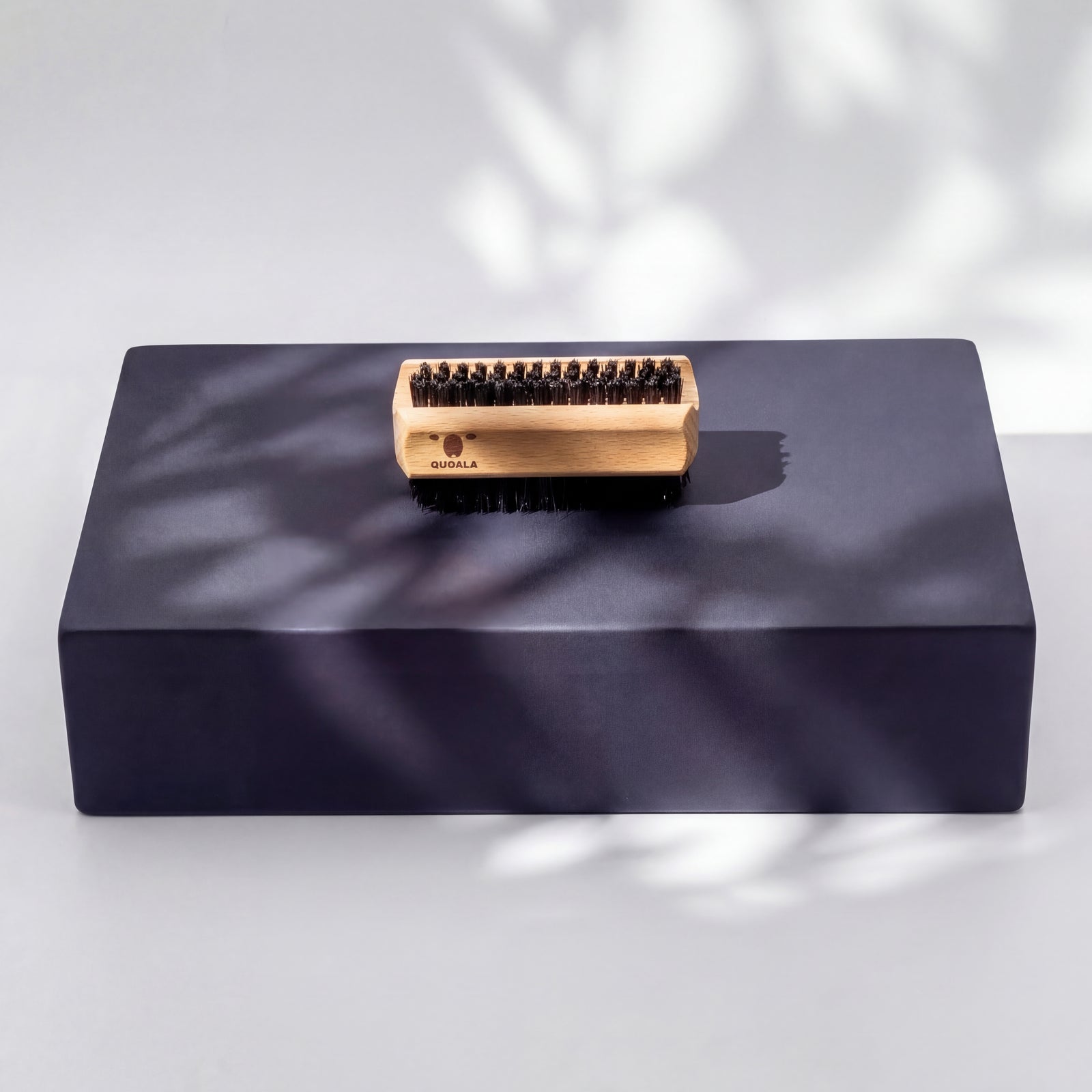
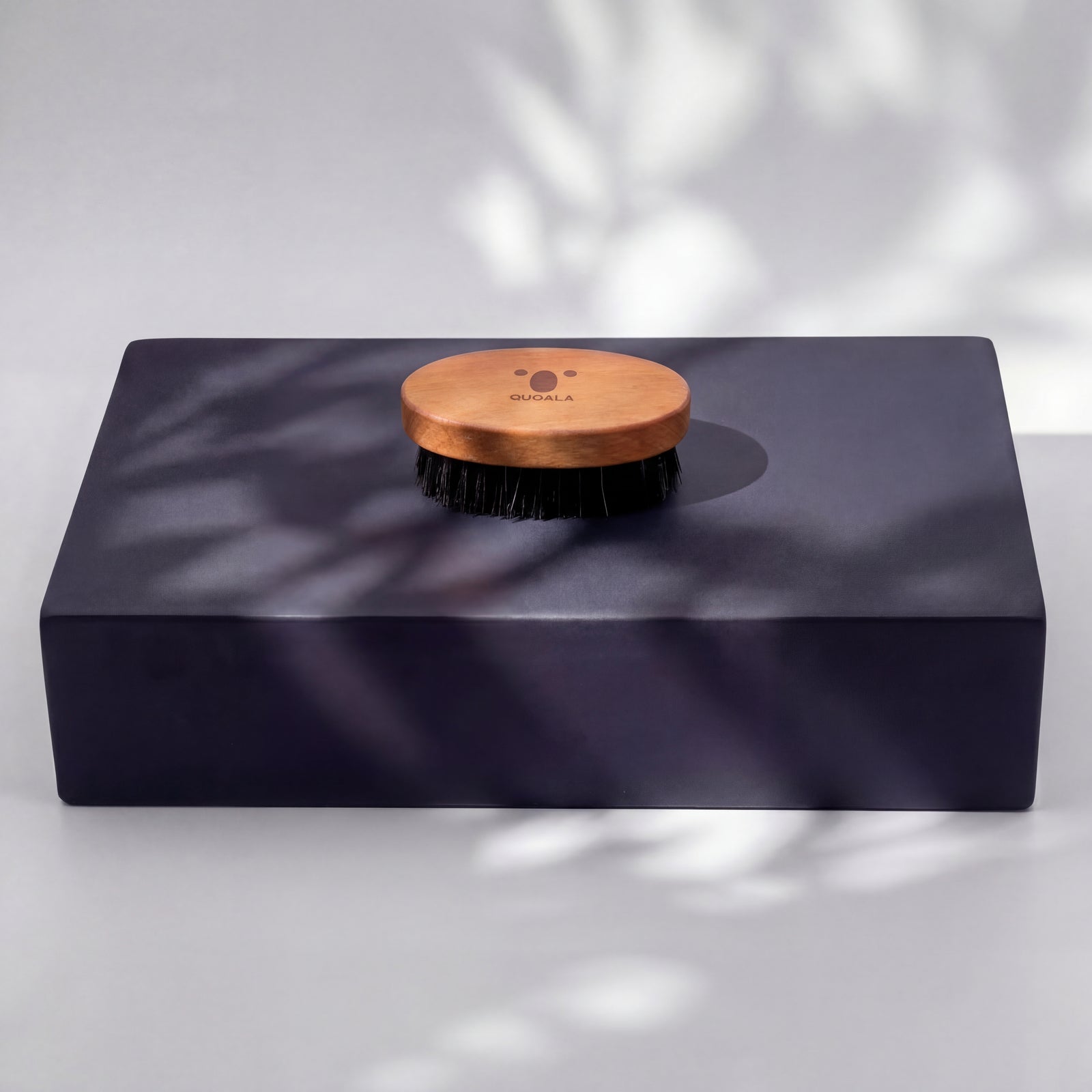
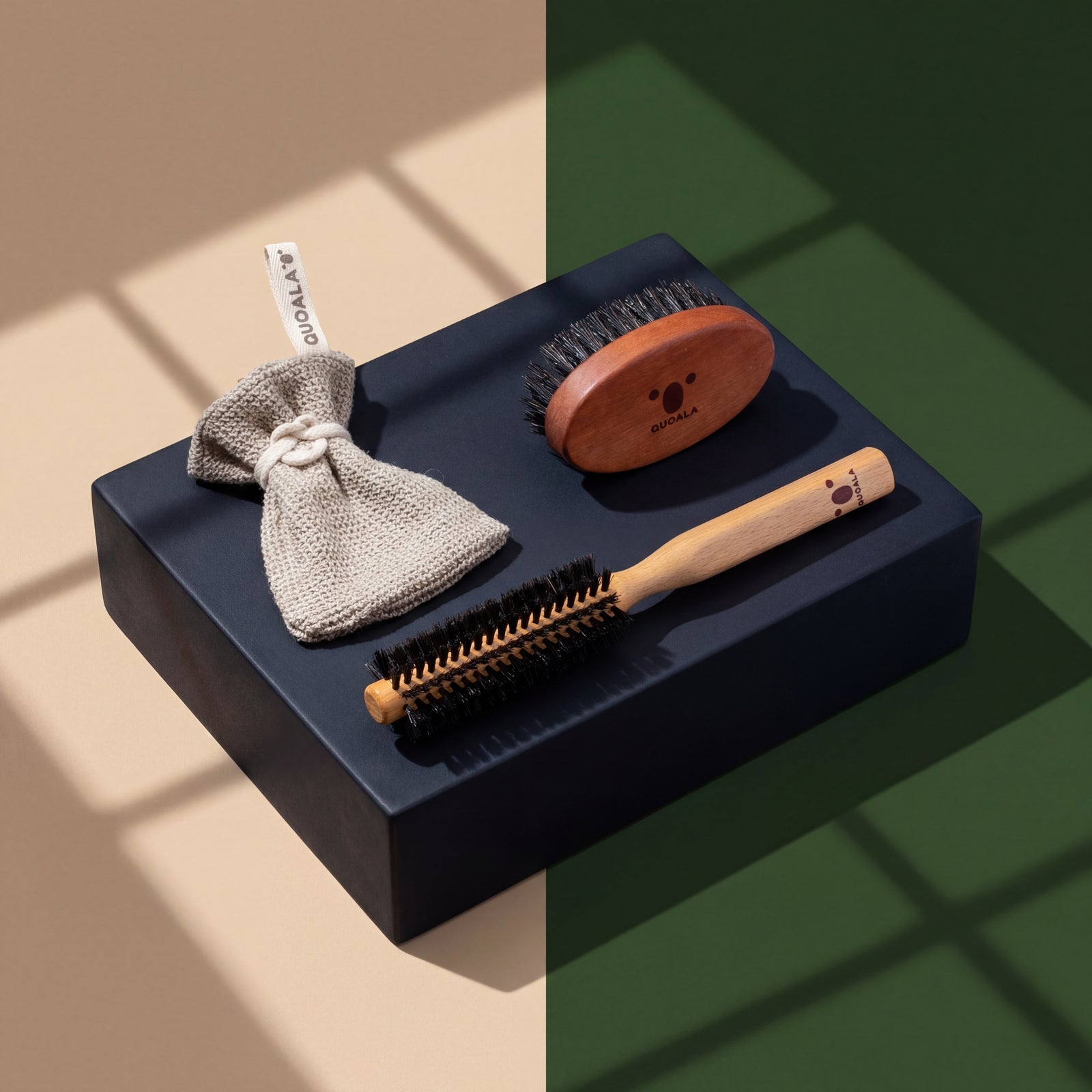
QUOALA uses three different wood species: beech (hair and body brushes), pear wood (beard brush) and hornbeam (paddle hair brush). All three are renewable and feel more pleasant in the hand than plastic.
What FSC certification means: The Forest Stewardship Council® (FSC®) sets international standards for responsible forest management. QUOALA is FSC®-licensed (licence number FSC-N003920) [3].
“As a sole proprietor I cannot check every raw material back to its source myself. Certifications help me to live responsibility in a structured way rather than merely claim it.”
— Gregory Basmadjian
The advantage: All three wood species carry the FSC® mark — an independently verified signal, not a marketing label. Renewable, pleasant in the hand.

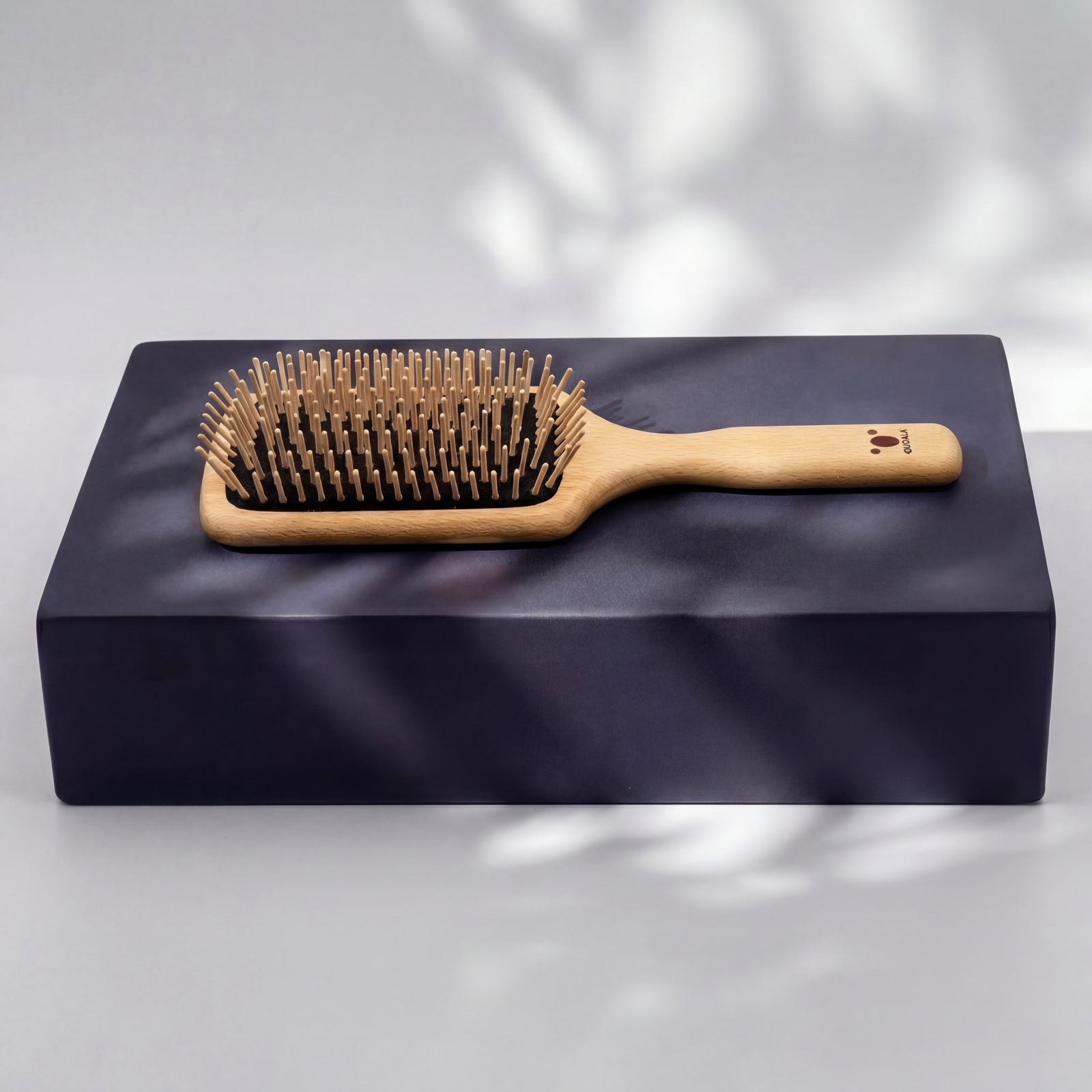
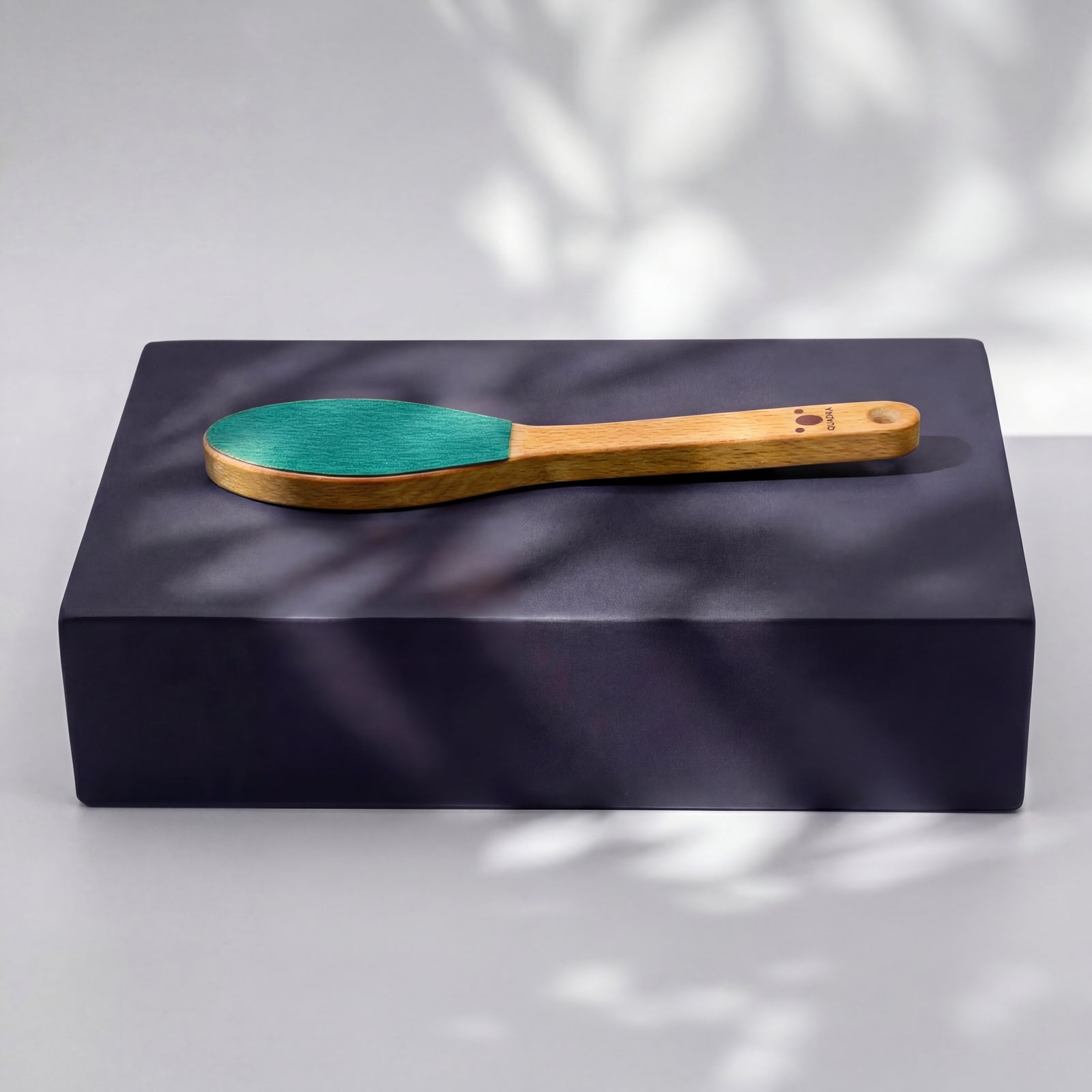
Paddle hair brush, hornbeam
FSC hornbeam wooden pins · natural rubber cushion · gentle detangling
CHF 42.50 · View product →

3. Bristles: boar, tampico — and why the difference is measurable
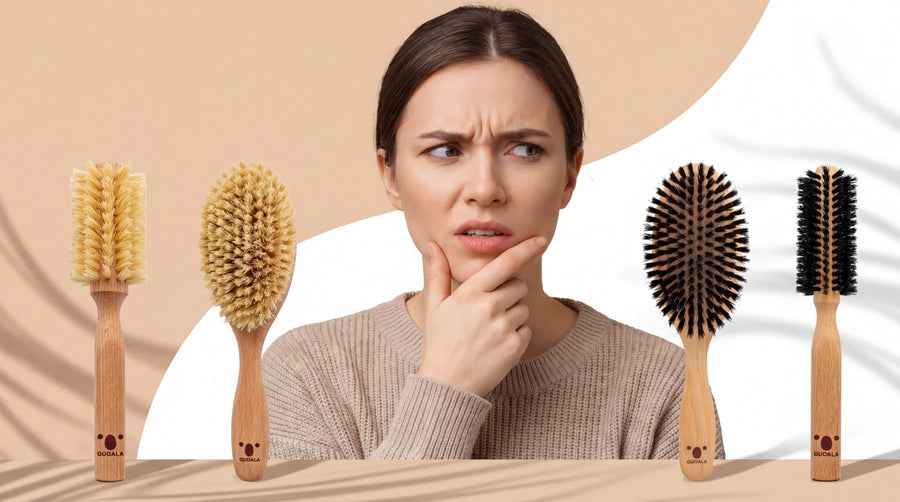
Boar bristles have a scale structure similar to human hair. [4] This micro-structure allows sebum to be distributed naturally along the hair shaft. Tampico (agave fibre) is the vegan alternative — firm, heat-resistant and robust in wet use.
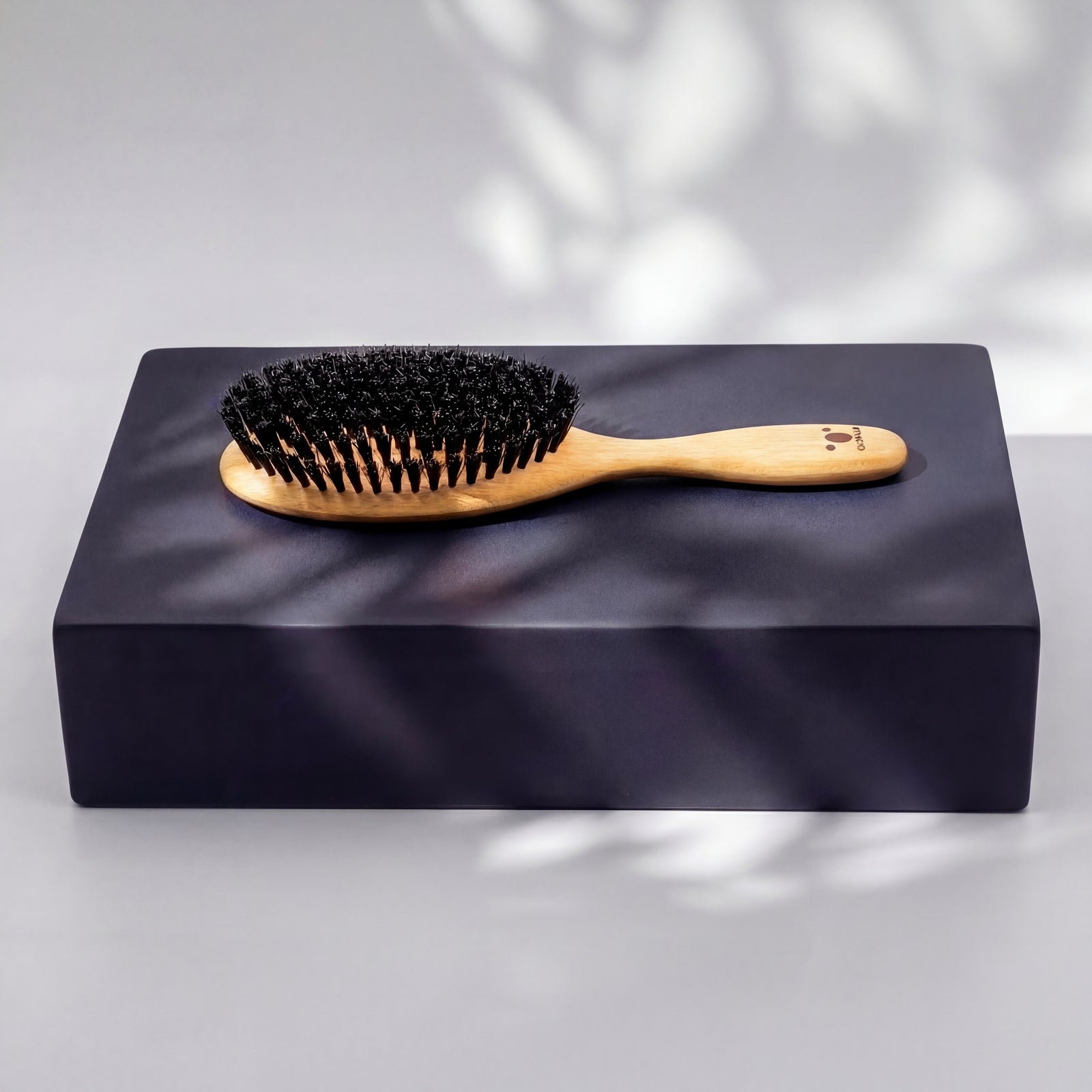
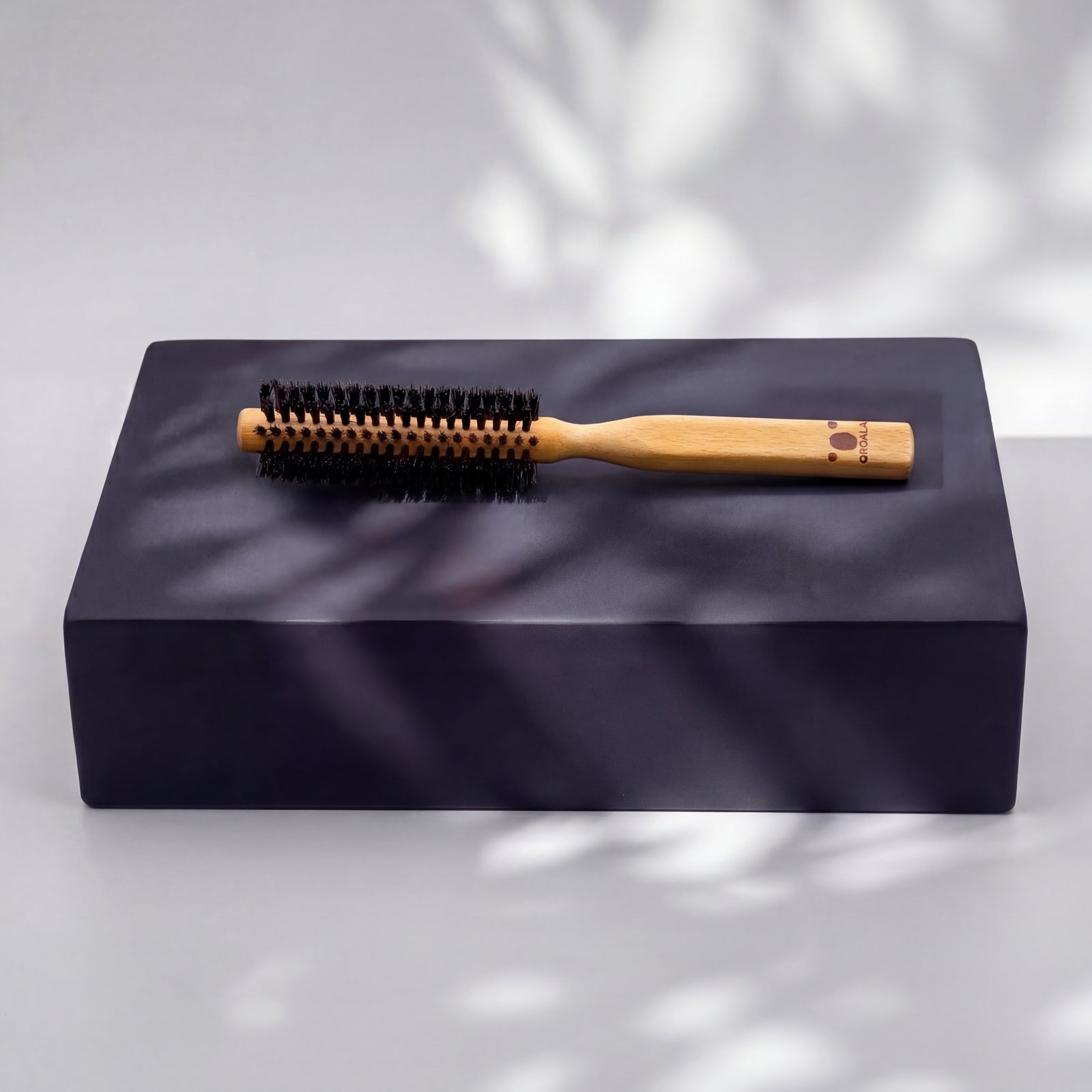
Hair brush, boar bristles
FSC beech wood · medium-firm · sebum distribution & natural shine
CHF 42.50 · View product →

4. Bronze instead of brass: the monastery brush in detail
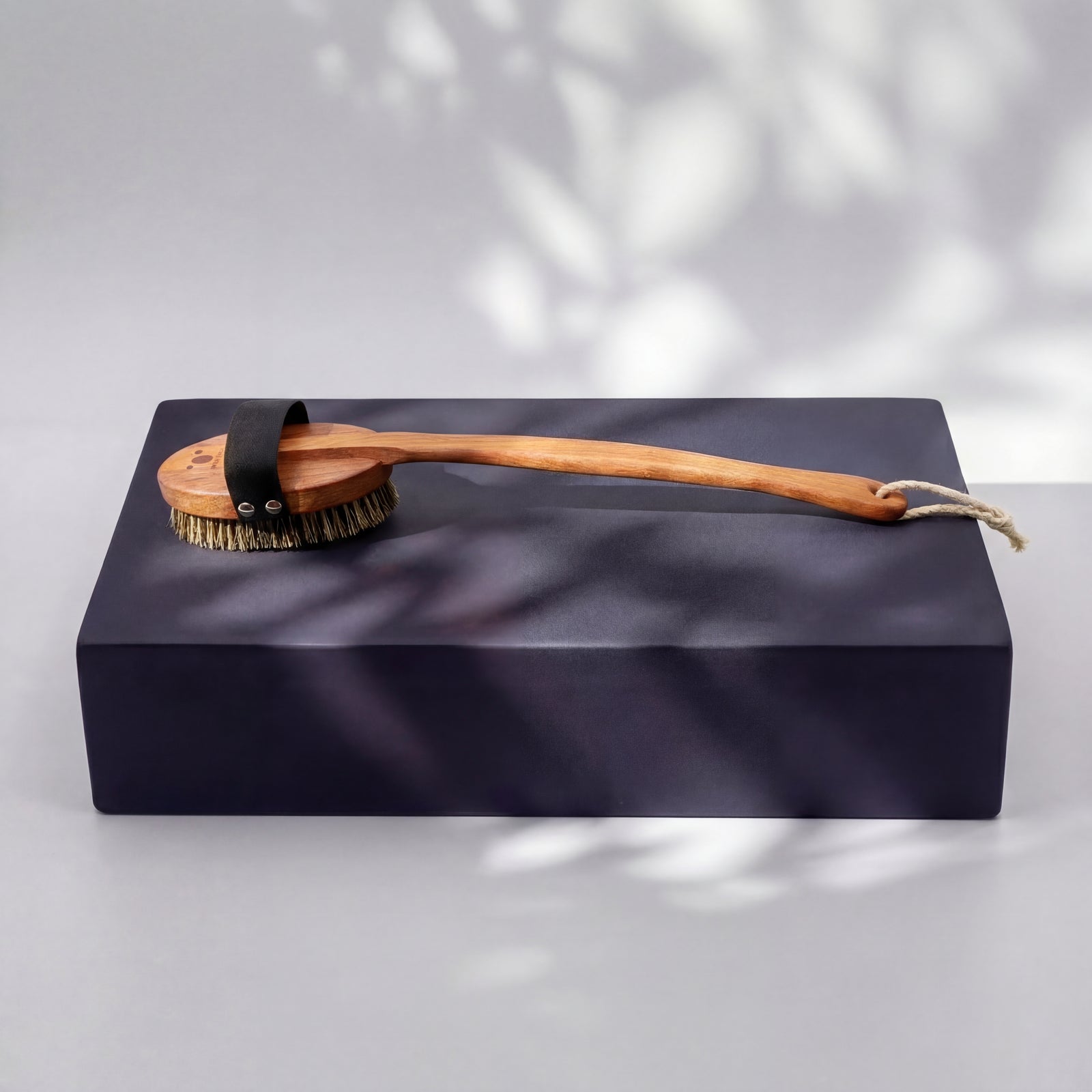
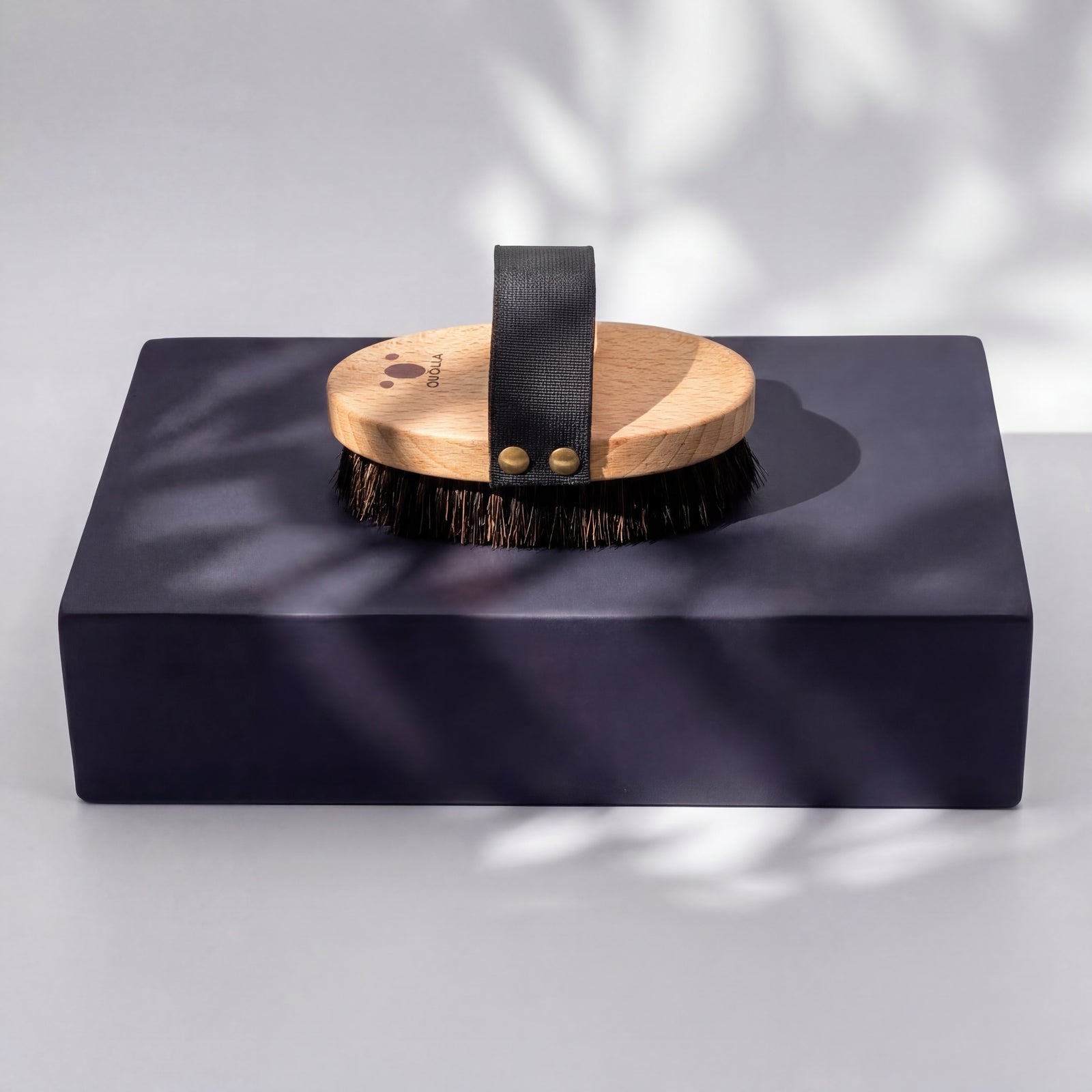
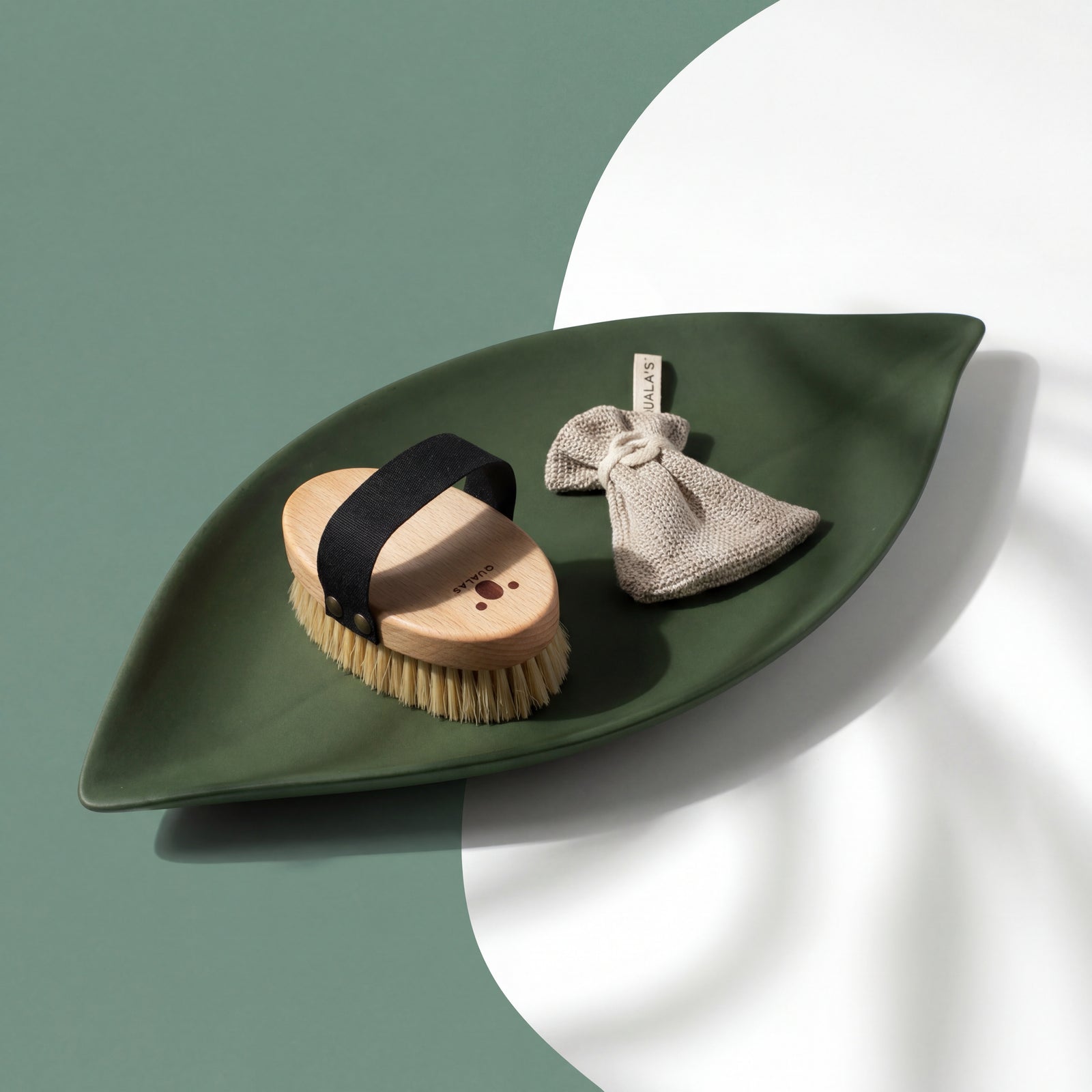
The QUOALA monastery brush — also known as the ionic brush — is a body brush for dry brushing. Its distinctive feature: the woven wires are made of bronze, not brass.
Why bronze and not brass? Both are gold-coloured copper alloys and look almost identical.
- More copper: Our bronze contains 93% copper. Brass usually contains only 60–70% copper, with the rest being zinc.
- No zinc loss: Brass containing more than around 15% zinc can lose zinc in moist environments and become porous ("dezincification"). Bronze contains no zinc — the tin makes it durable. Source: Copper Development Association
- Copper against germs: In laboratory settings, copper surfaces damage bacteria and fungi — and more slowly the less copper the alloy contains. A property of the metal, not a skin claim. Evidence S13
Dry brushes: for the body, not for the hair. The monastery brush is used on the skin of the body — dry strokes from the extremities towards the heart. The bronze wires make the brushing sensation noticeably more distinct.

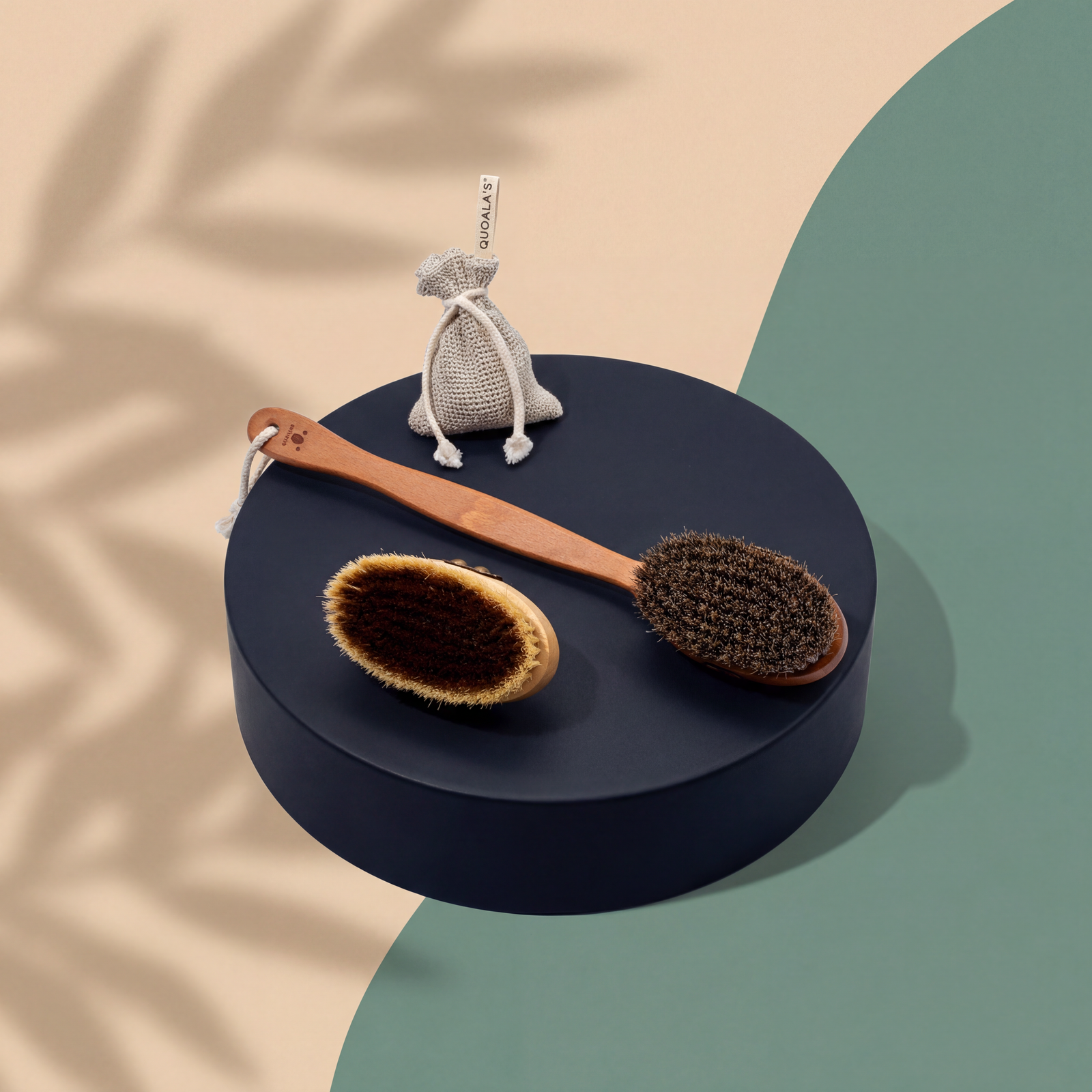
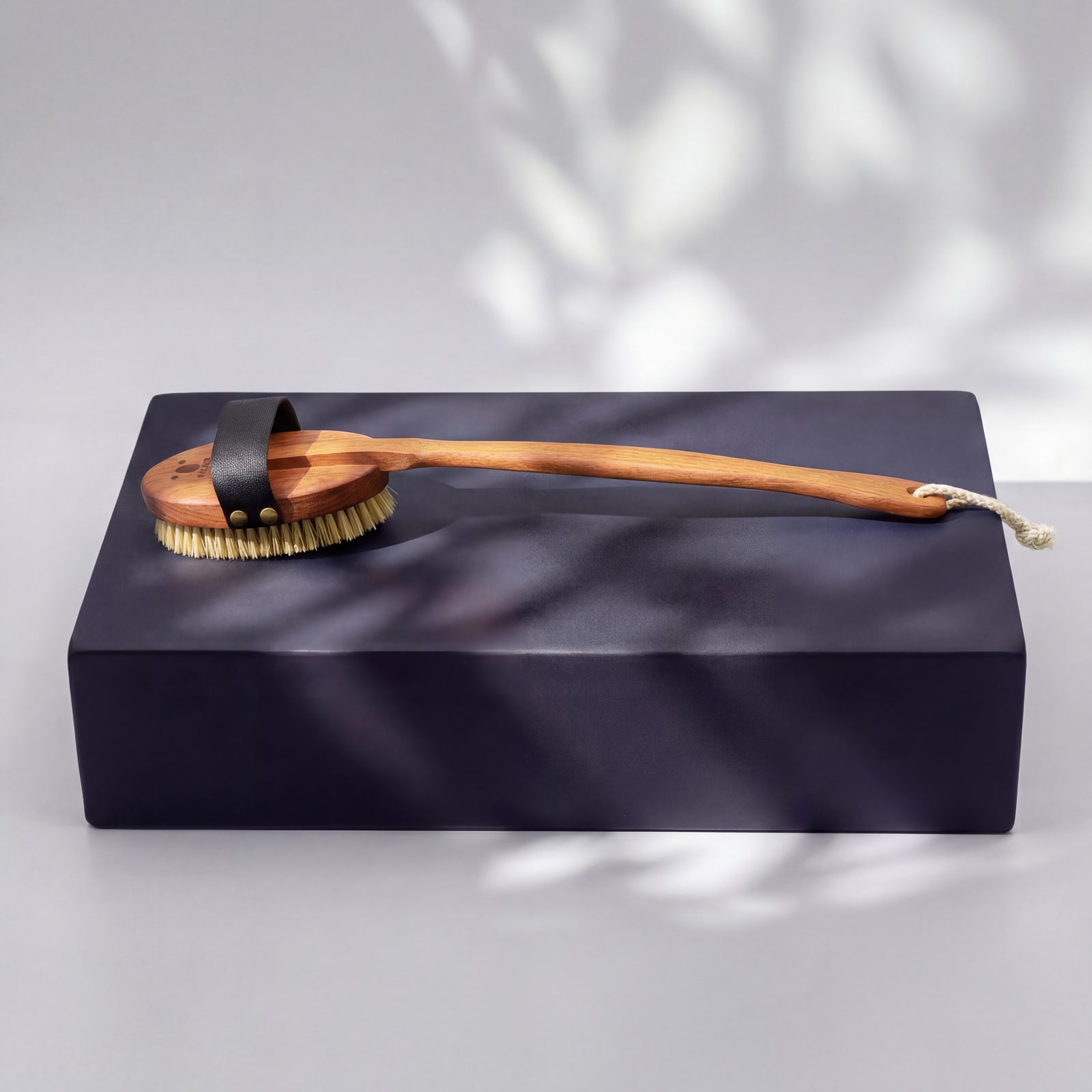
Monastery brush / dry brush
Bronze wires · horsehair · FSC beech wood · body dry brushing
CHF 54.50 · View product →

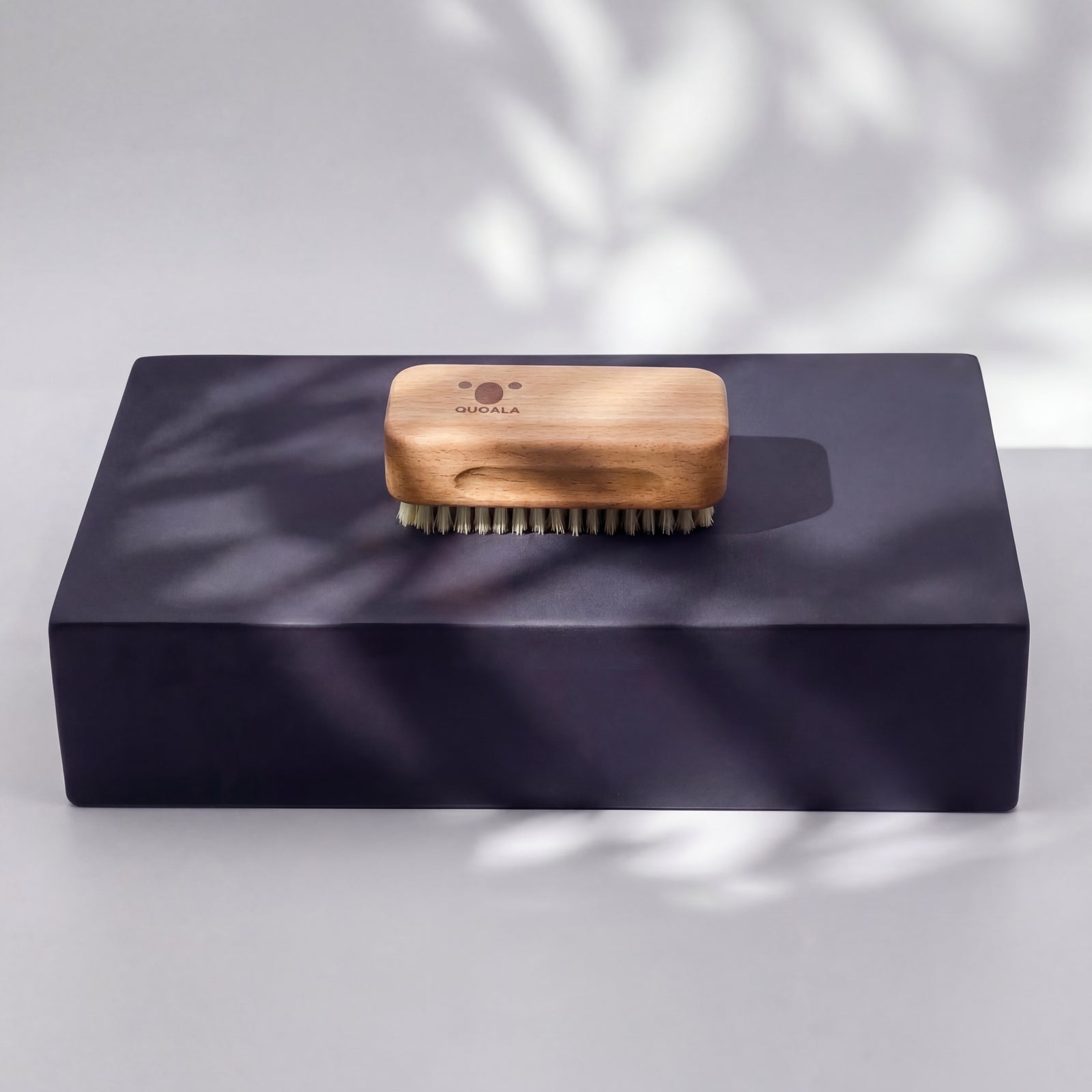
Monastery brush / dry brush, tampico
Bronze wires · tampico · FSC beech wood · vegan
CHF 54.50 · View product →
5. Responsible without dogma — responsibility as a stance
For its bath brushes, QUOALA chose an elastic strap — not because it is “ideologically perfect”, but because it is functionally the most coherent solution. A pure cotton cord stretches when wet and loses its hold.
“If a more natural alternative with the same functional properties becomes available tomorrow, we will look at it immediately.”
— Gregory Basmadjian, FSC interview
That is not an excuse — it is a stance. Every material decision is weighed, documented and communicated openly. You can ask QUOALA at any time why a material was chosen. The answer exists.
6. Frequently asked questions
Why does QUOALA use FSC-certified beech wood rather than bamboo or plastic?
Beech from FSC-certified European forests offers a traceable supply chain, excellent hardness and moisture resistance. Bamboo is often promoted as an alternative, but when processed into moulded parts it is frequently bonded with adhesives. Plastic can shed micro-particles in use — natural wood does not.
What is the difference between boar bristles and tampico agave fibre?
Boar bristles have a scale-like surface structure that distributes the natural sebum film evenly along the hair and smooths the cuticle — ideal for dry hair and high shine. Tampico agave fibre is plant-based, slightly stiffer and particularly suited to intensive cleaning and to anyone who prefers a vegan alternative.
What is the bronze ionic brush and who is it for?
The monastery brush (ionic brush) is a body brush for dry brushing — not a hair brush. The bronze wires give it a distinct, tingling feel on the skin. It suits people who want to add a mechanical massage to their body care routine.
How can I be sure that the wood of my QUOALA brush is really FSC-certified?
QUOALA holds FSC® licence FSC-N003920. Every brush carrying this label is traceable back to the certified forestry operation.
Does QUOALA share material information transparently?
Yes. For every product, QUOALA states the exact material composition and origin — wood species, bristle type, country of manufacture. That is a deliberate decision against generic words like “natural” without evidence.
Where are QUOALA products made?
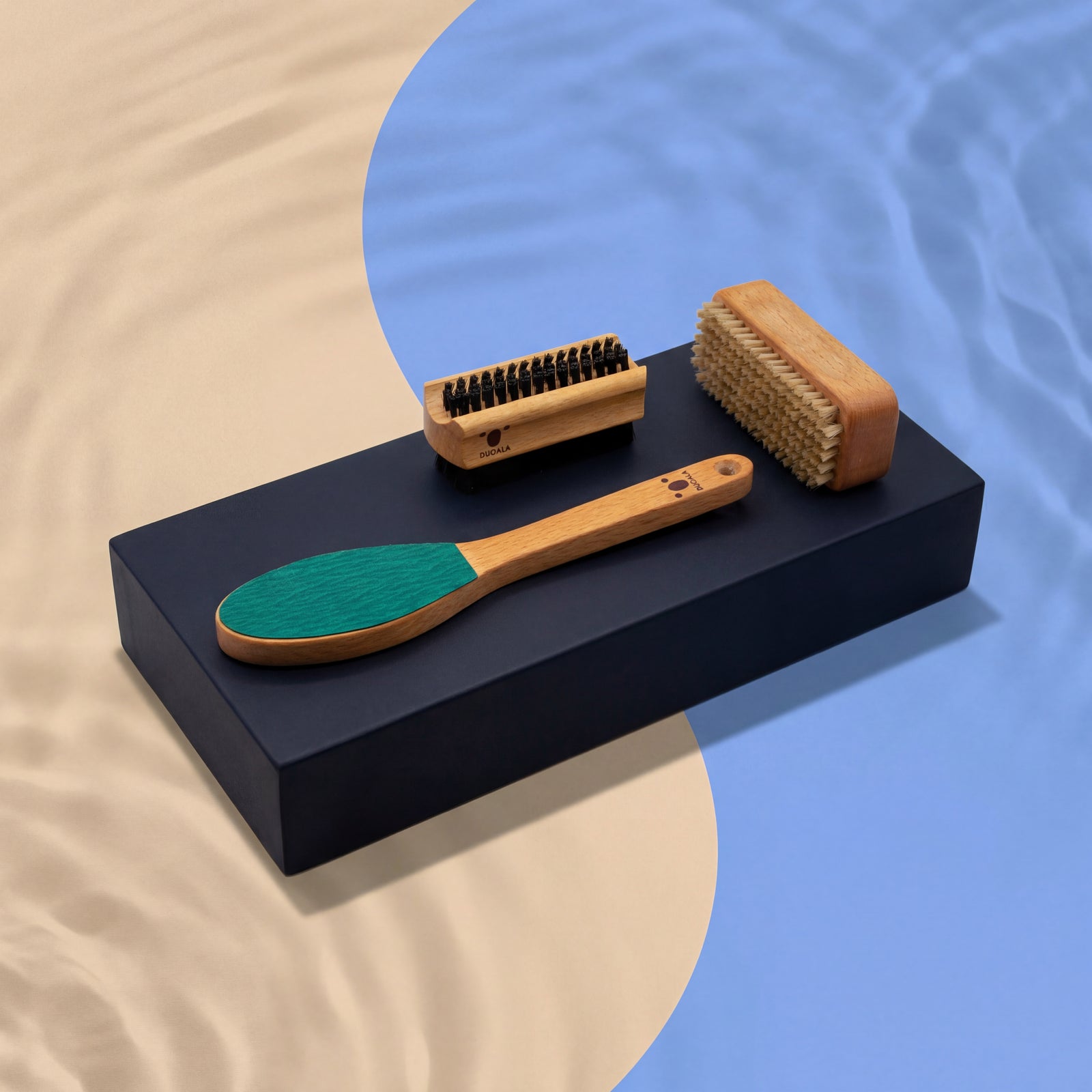
Our brushes and foot file are made in a family business in Germany, the soap bag in a GOTS-certified family business in Italy; the brush manufactory is EMAS-registered. European manufacturing means shorter transport routes, strict environmental and occupational safety rules and direct quality control.

Care tools you understand — and enjoy using
FSC-certified wood, natural bristles, hand-picked materials — made in Europe.
Sources and further reading
Scientific sources
- European Commission (2021), Screening of websites for ‘greenwashing’: half of green claims lack evidence, press release IP/21/269. 42% of the green claims checked were potentially misleading, 59% lacked easily accessible evidence. Our assessment Z6 · Source
- FSC Switzerland (2026), Drei Fragen an QUOALA (German), fsc-schweiz.ch, 20 May 2026. Interview with founder Gregory Basmadjian on material choice and FSC wood. Our assessment Z8 · Source
- FSC Switzerland (2021), promotional licence FSC-N003920 for GGA Basmadjian Trading. Licence agreement; not available in a public database.
- Robbins (2012), Chemical and Physical Behavior of Human Hair, Springer. Structure of the hair fibre with its scaly cuticle; animal bristles spread sebum along the hair. Our assessment S8 · Source