

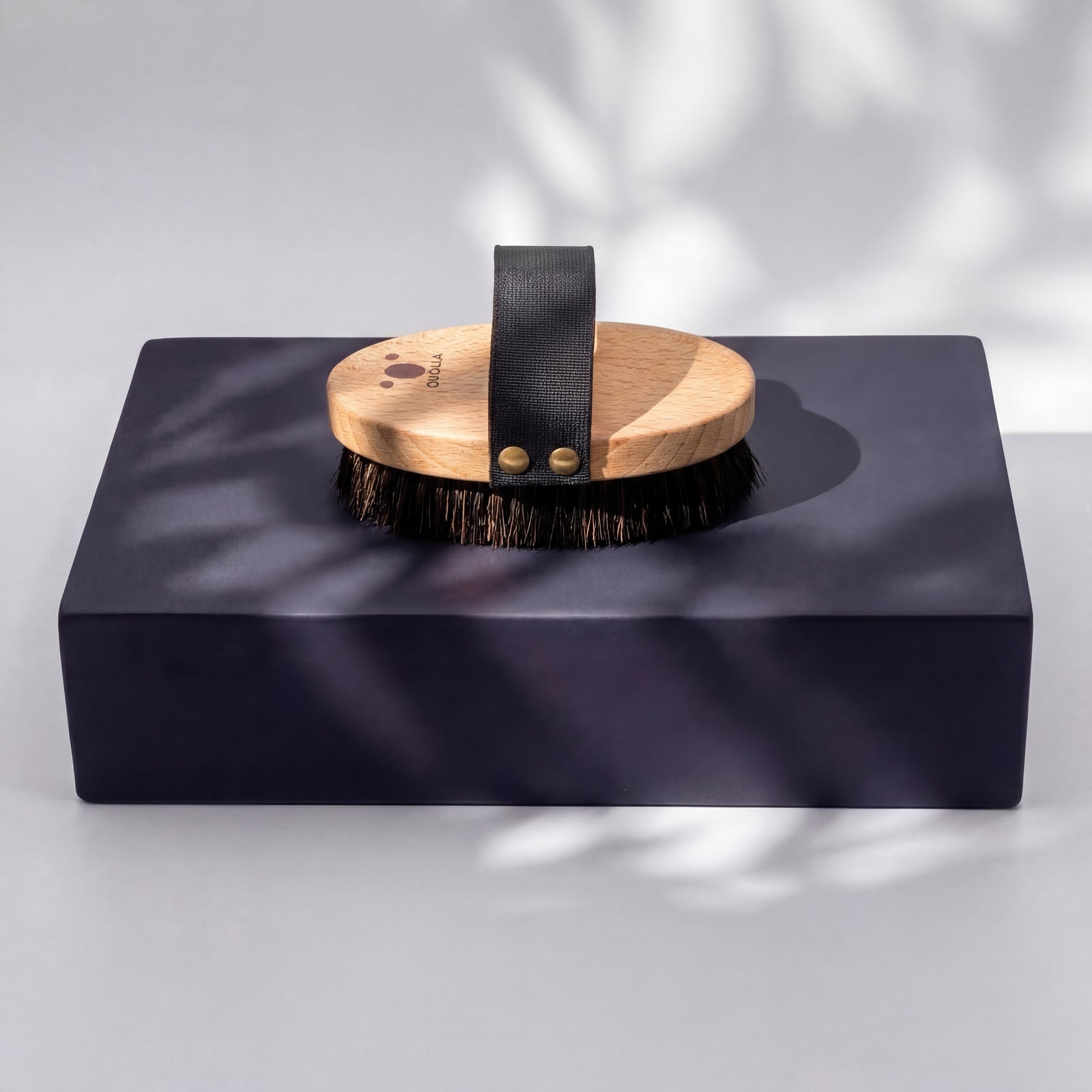

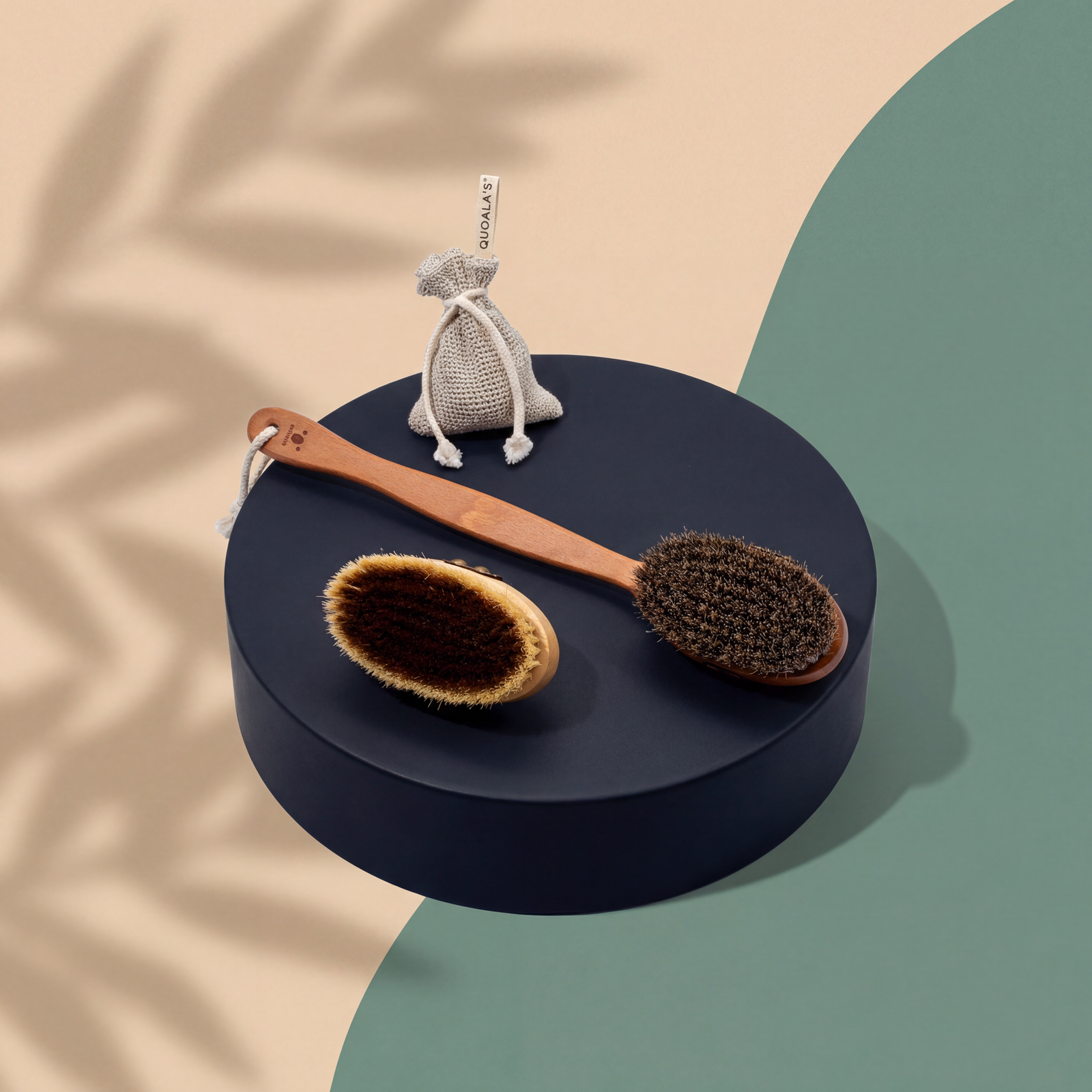

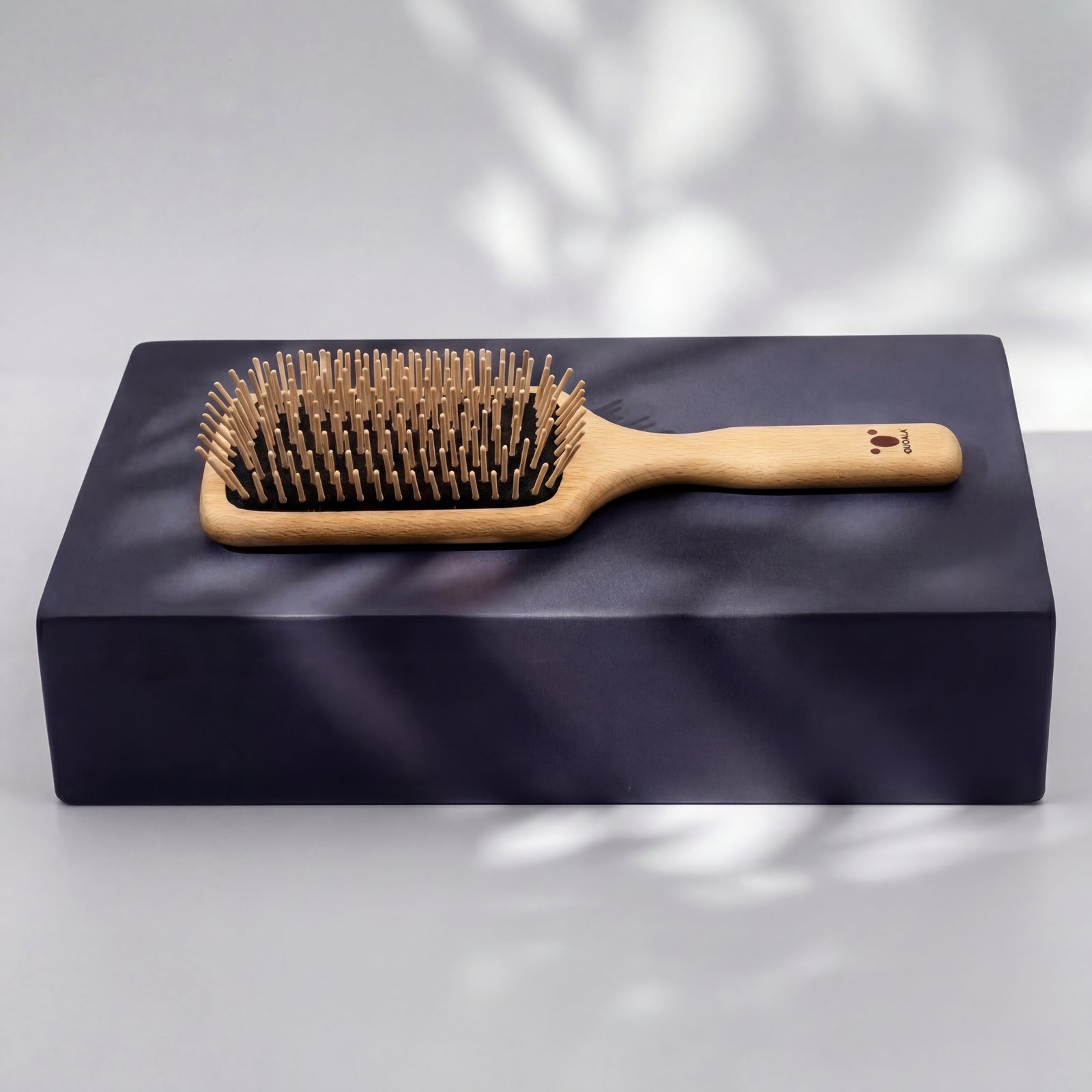

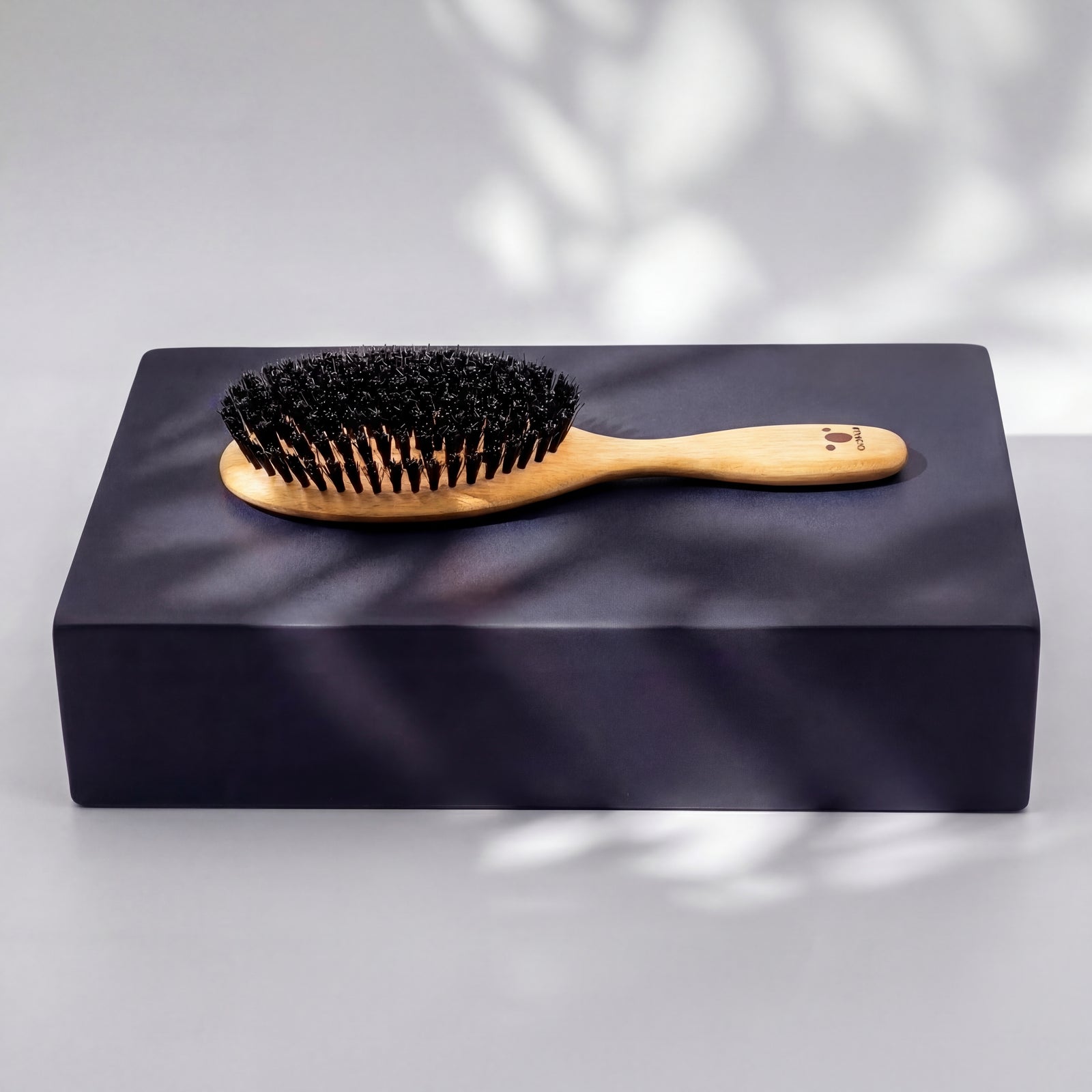





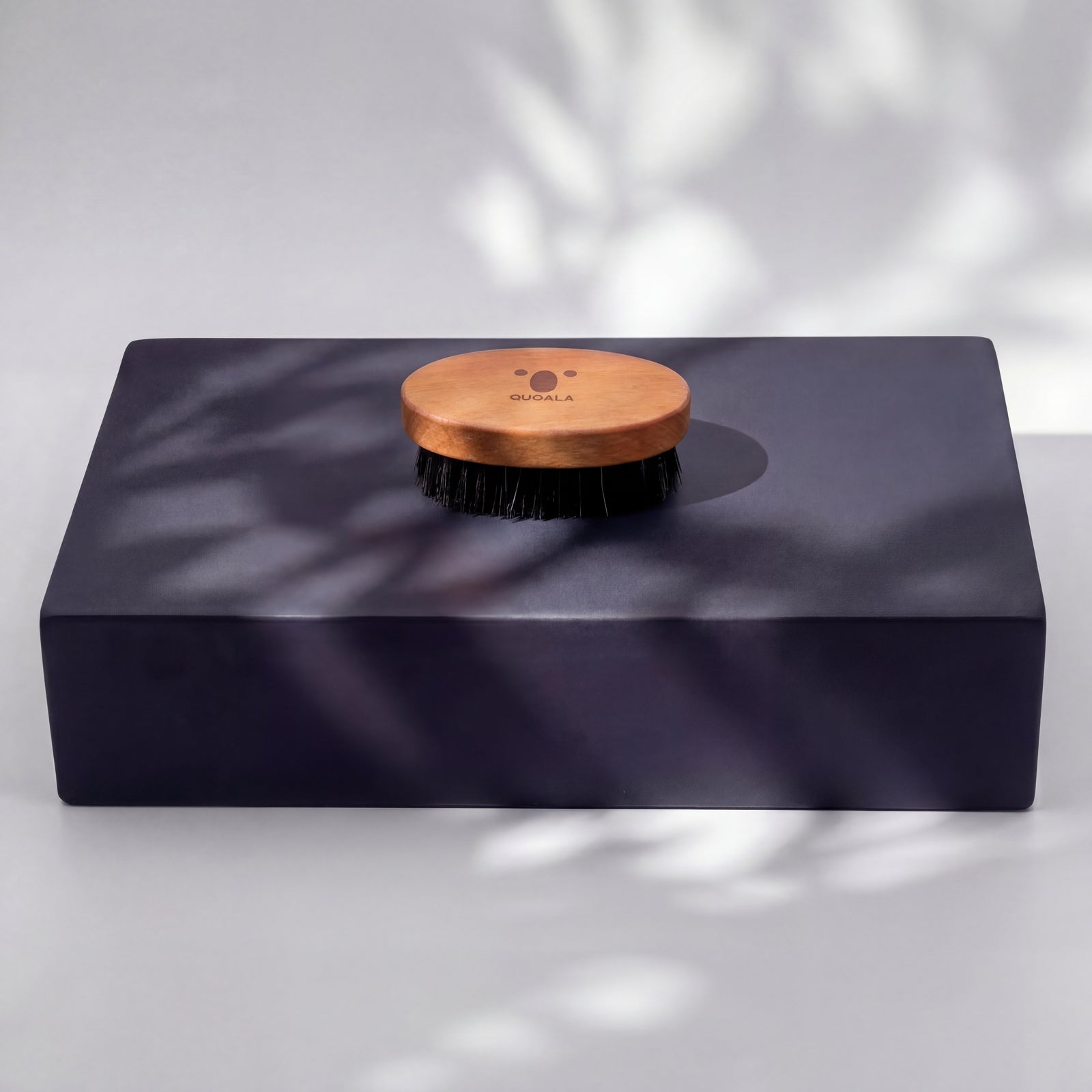

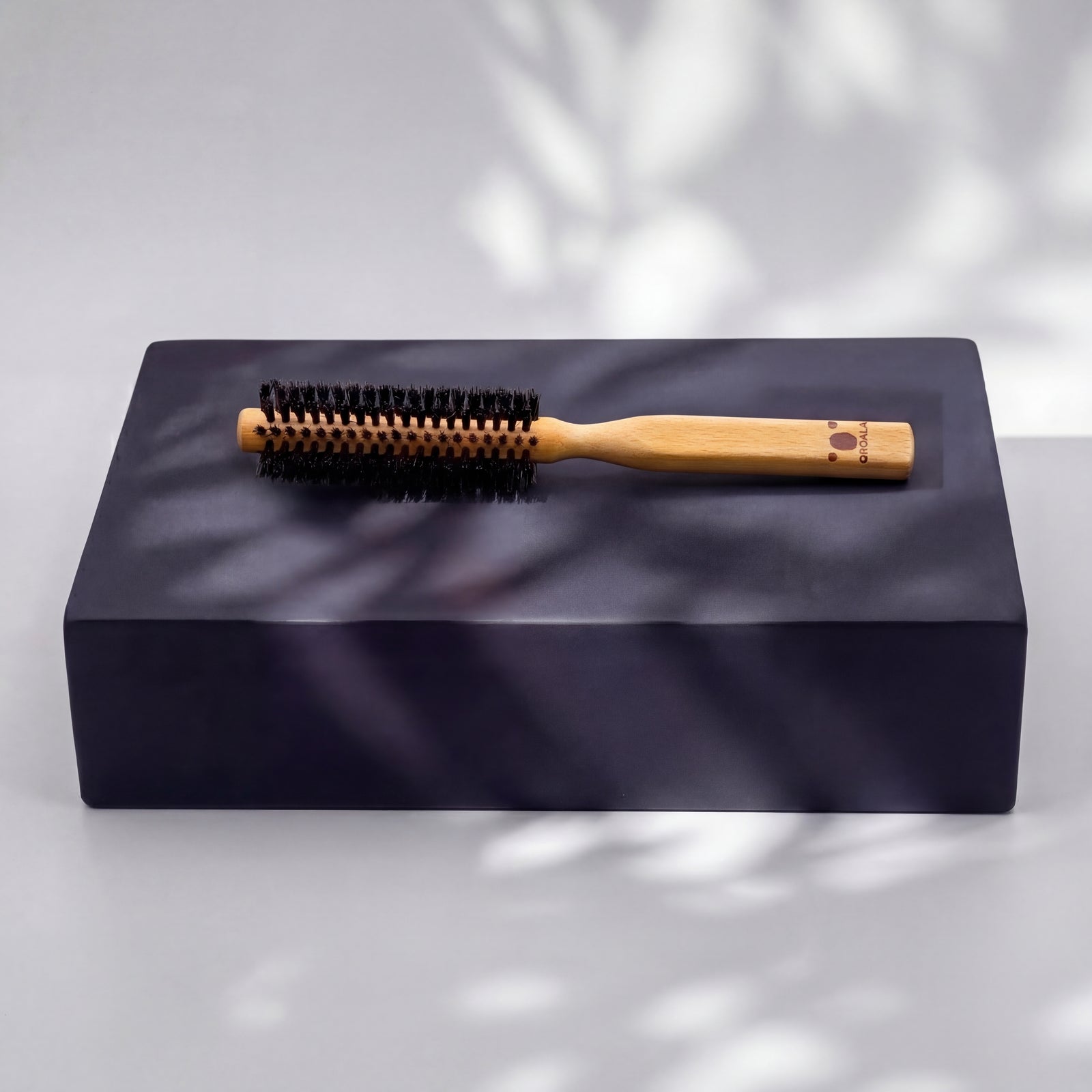

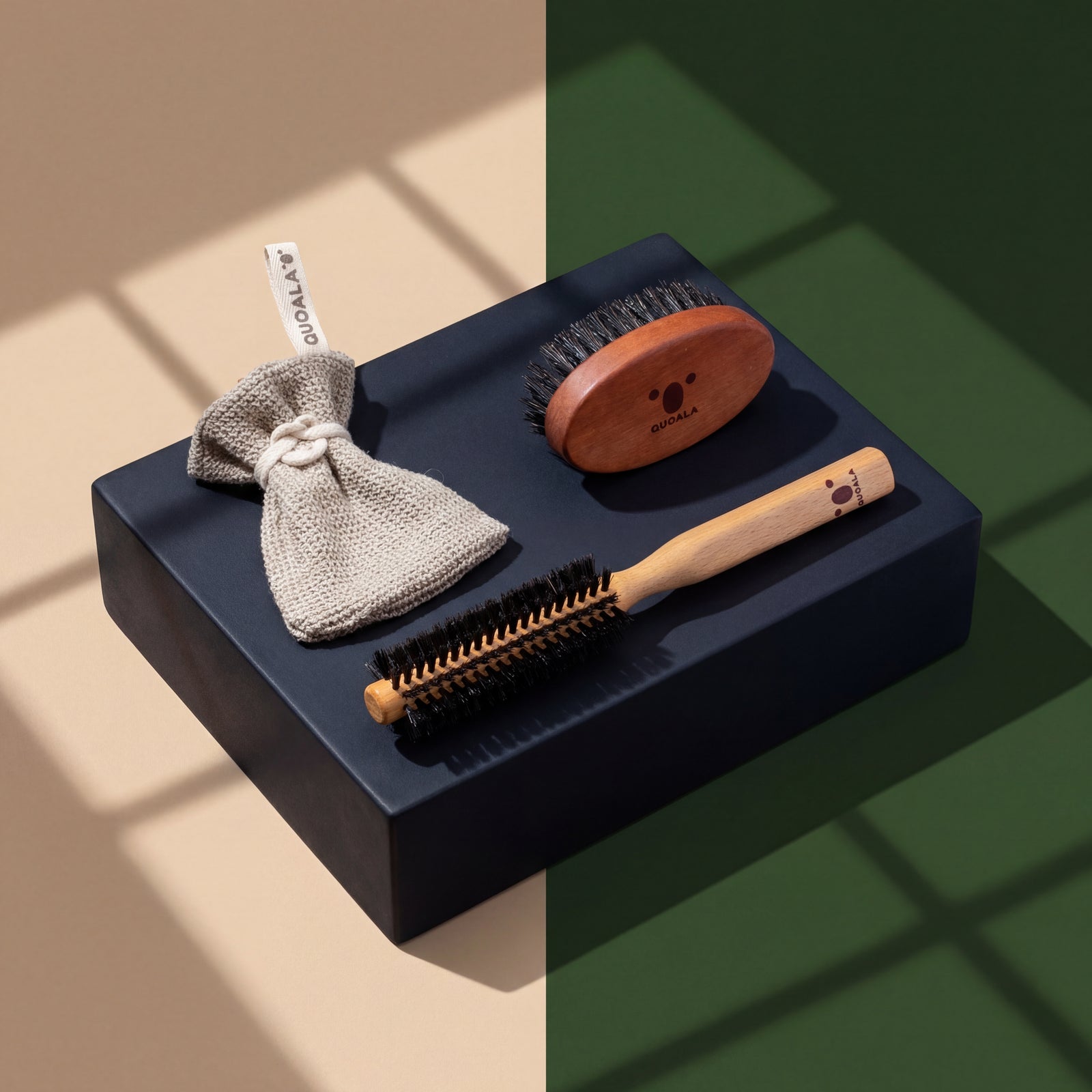

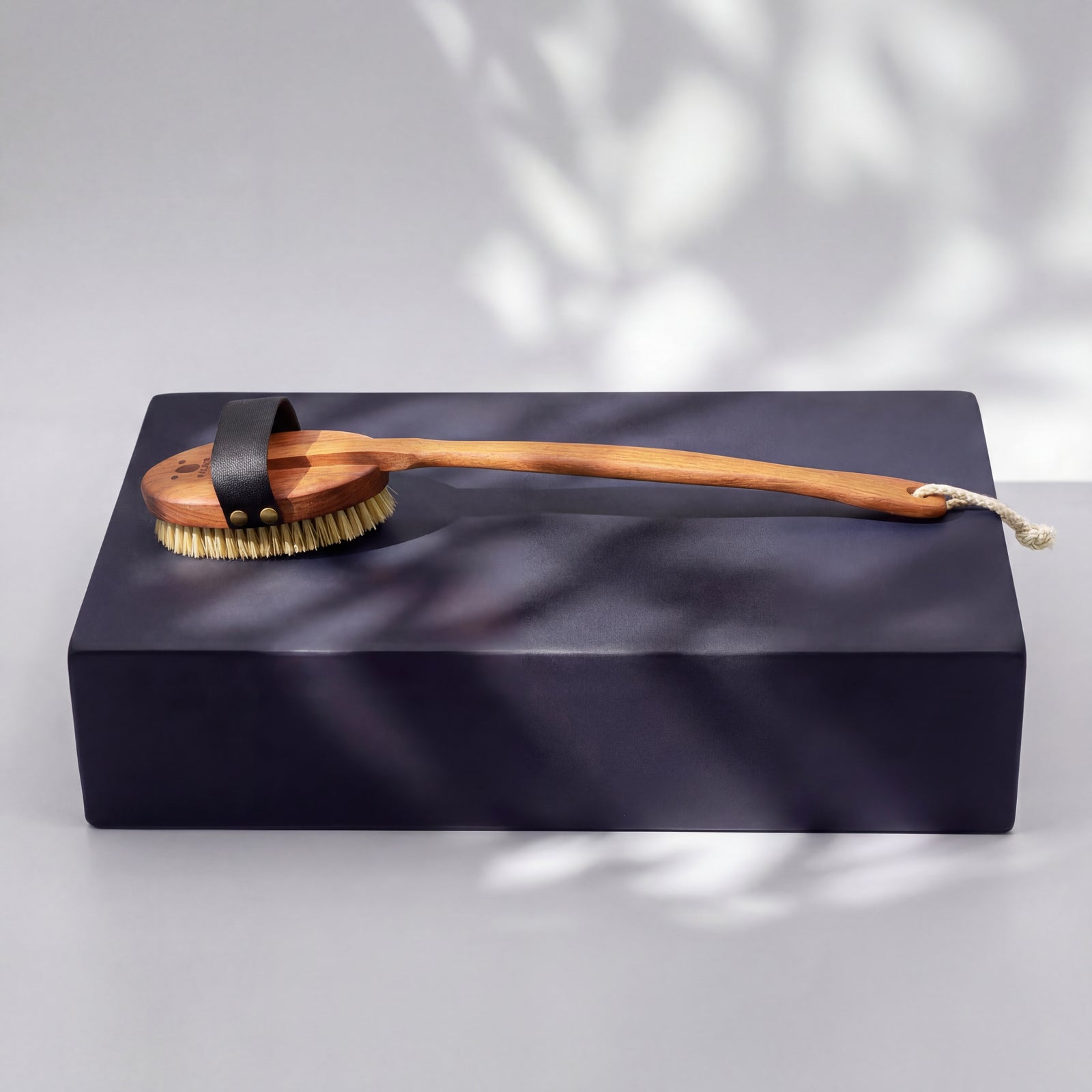



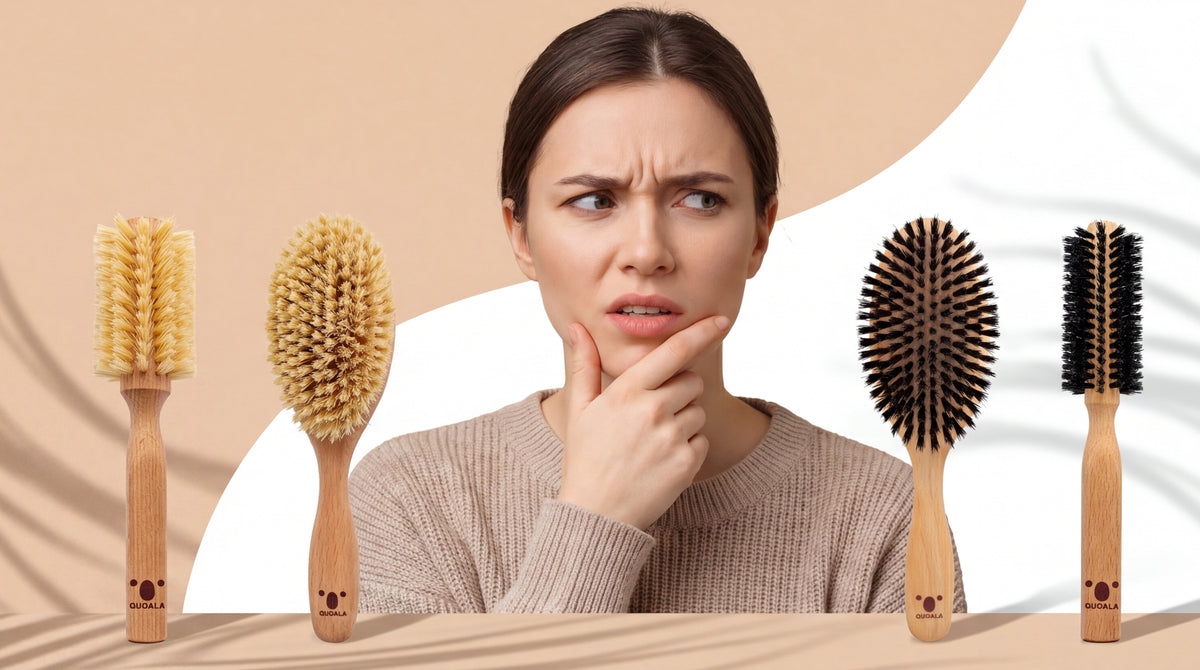
When you invest in a good hair brush, you are making a decision for the long-term health of your hair. Plastic and nylon are said to damage hair through invisible micro-tears. We have found no evidence of this on hair brushes — so we do not claim it. What we can back up: every brushing puts strain on the hair, regardless of the bristle material; brushing gently and starting from the ends is kinder to it [1].
In the world of genuine natural materials, two functional giants therefore face each other: boar bristle (the traditional gold standard) and tampico fibre (the modern, plant-based alternative).
Key points at a glance
Boar bristle, made of alpha-keratin, cares for hair by carrying sebum and smoothing the cuticle — for normal to thick hair, with a gentle scalp massage. Tampico fibre, made of agave cellulose, is firmer and keeps its shape when wet — for thick hair. Both are cruelty-free natural fibres, set in FSC®-certified wood. Nylon is ruled out: no sebum function, no degradation.
Contents of this guide:
- 1. The biomechanics: keratin vs. cellulose
- 2. The QUOALA decision framework
- 3. Ethics & sustainability (zero waste)
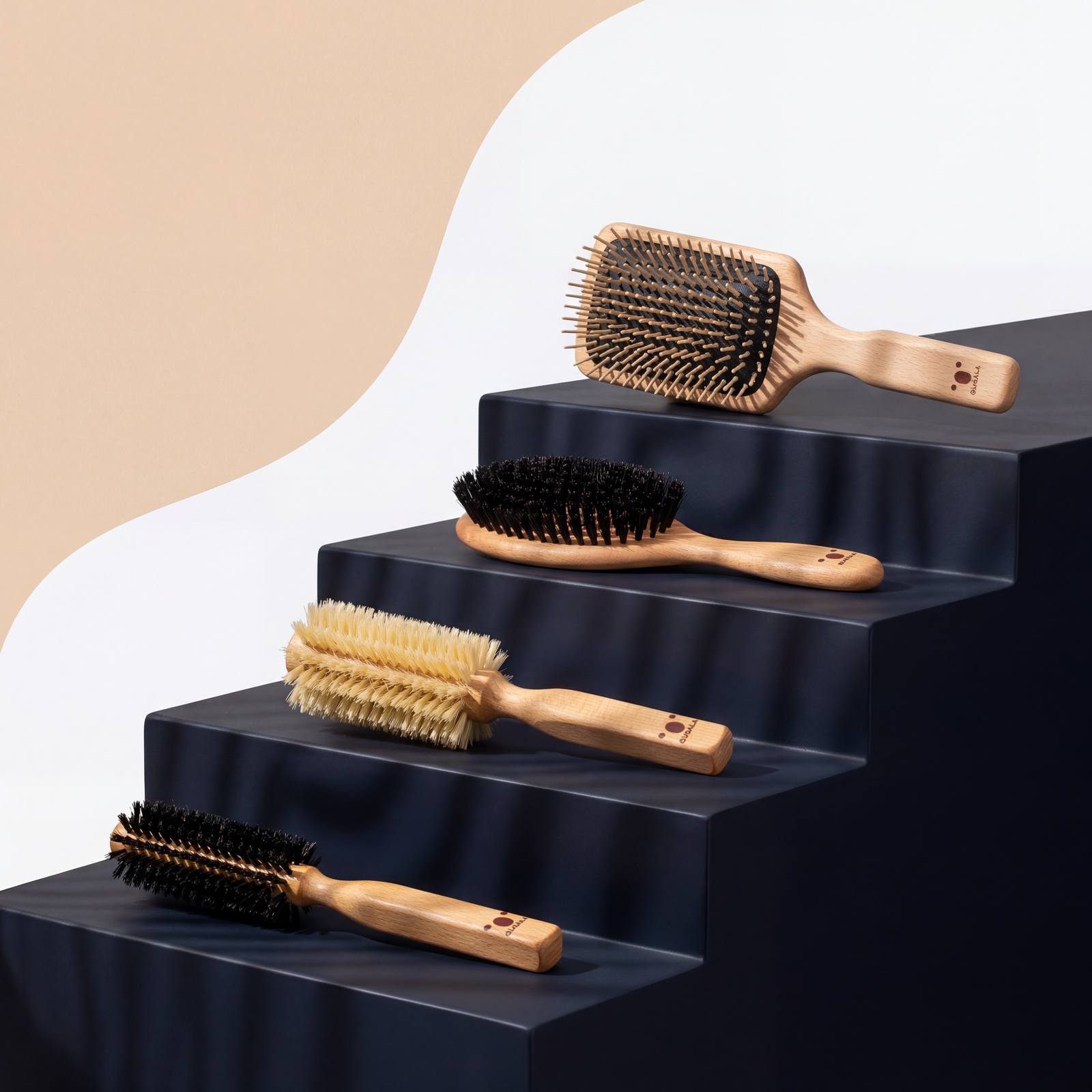
- 4. Product guide: the large care brushes
- 5. Product guide: blow-dry brushes & heat resistance
- 6. Material comparison in detail: keratin vs. cellulose
- 7. Overall conclusion: the right choice for your hair
- 8. Frequently asked questions
1. The biomechanics: keratin vs. cellulose

Boar bristle
As a natural product made of alpha-keratin, boar bristle resembles the structure of human hair. The tiny, scale-like structures (cuticle) of the bristle act as microscopic transporters. They take up the natural sebum of your scalp through capillary action and distribute it right down to the ends of your hair, which gives a natural shine [2].

Tampico fibre
Plant-based tampico fibre consists mainly of cellulose and lignin. Its characteristic features are longitudinal grooves and micropores, which make it extremely hydrophilic (water-attracting). Thanks to its higher modulus of elasticity, it offers more firmness than animal bristles, so you feel it more clearly on your scalp [3].
Summary: biomechanics
Animal boar bristle (keratin) mimics the structure of human hair and acts as an ideal distributor of the scalp's own sebum. Plant-based tampico fibre (cellulose) is firmer and water-attracting and gets through dense hair well.
2. The QUOALA decision framework
- Normal to thick hair / sensitive scalp → boar bristle
- Dense, heavy hair / you want to feel the brush on your scalp → tampico fibre
3. Ethics & sustainability (zero waste)
Tampico fibre is 100 % vegan and harvested in a sustainable cycle. We source boar bristle exclusively as a cruelty-free by-product, so that resources are used in full. For our brush handles, we use FSC®-certified beech and hornbeam wood.
If you invest in a hair brush that cares for your hair every day and stays with you for a long time, its end of life should also be dignified and ecologically sensible. Synthetic nylon does not degrade [4] and releases microplastics during brushing – measured on toothbrushes, not on hairbrushes [5]; plant fibres, keratin and untreated wood are biodegradable [6] [4].
Summary: ethics & durability
Long-lasting function requires well-considered materials. Natural fibres and wood are biodegradable as materials; nylon is not.
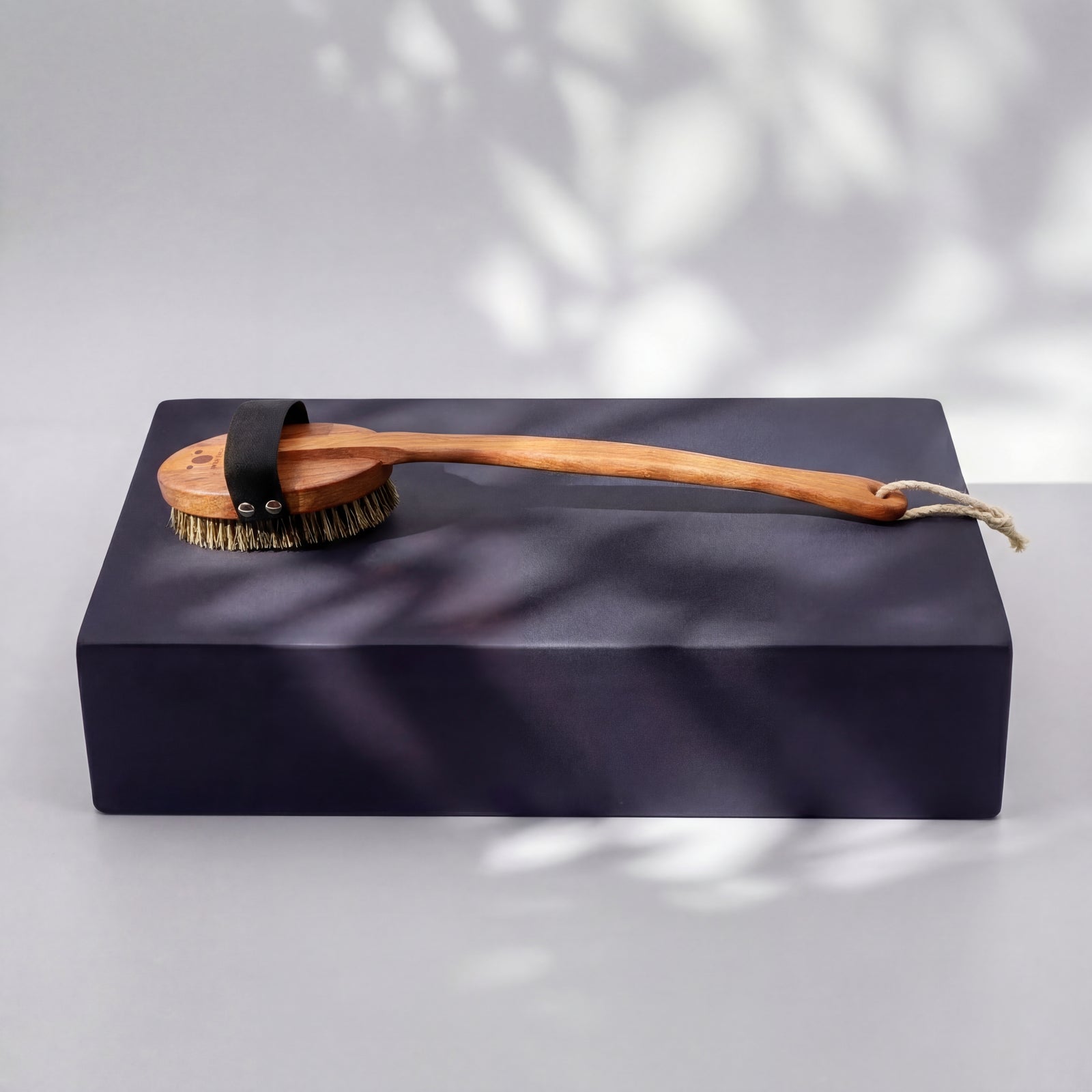
4. Product guide: the large care brushes


5. Product guide: blow-dry brushes & heat resistance
Blow-dry brushes have to do more than ordinary care brushes: they are exposed to the direct heat of the hairdryer. Boar bristle and tampico fibre are thermally stable above 100 °C and keep their shape even with repeated blow-drying.


Summary: the product selection
While our classic care brushes are optimised for daily sebum distribution, the blow-dry brushes offer full heat resistance for safe styling with movement, without melting plastic.
6. Material comparison in detail: keratin vs. cellulose
Keratin cuticle

Macro shot: the roof-tile cuticle of boar bristle — keratin scale layer visible
Boar bristle consists of alpha-keratin, a robust fibrous protein. Its polypeptide chains are linked to each other by strong disulphide bridges. The outermost layer, the cuticle, is only about 0.3 to 0.5 micrometres thick [7].
- Sebum transport through capillary action: the scaled surface captures oils efficiently and carries them along the length of the hair.
- Cuticle smoothing: the mechanical friction of the keratin scales smooths the cuticle layer of your own hair.
Cellulose microstructure

Macro shot: cellulose longitudinal grooves and micropores of the tampico agave fibre
Obtained from Agave lechuguilla in northern Mexico, tampico fibre consists of crystalline cellulose I embedded in a lignin–hemicellulose matrix [3].
- Higher modulus of elasticity: the fibre bends less readily than keratin — good for dense hair; you feel it more clearly on your scalp.
- Hygroscopicity: the porous structure allows the fibre to take up moisture and care products and release them evenly.
Materials compared: boar bristle, tampico vs. nylon
The real divide is not between boar bristle and tampico fibre — it lies between the two natural fibres on one side and synthetic nylon on the other.
| Property | Boar bristle | Tampico fibre | Synthetic (nylon) |
|---|---|---|---|
| Material | Alpha-keratin (animal) | Cellulose + lignin | Polyamide (petroleum) |
| Surface structure | Roof-tile cuticle | Longitudinal grooves + micropores | Smooth, no pores |
| Sebum transport | Evidence-based (S8) | Plausible, not measured (S111) | – |
| Stiffness | Low to medium | High | Medium |
| Feel on the scalp | Low to medium | High | Medium (without care effect) |
| Moisture | Softer when wet | Stable, barely changed | Unchanged |
| Degradability | Biodegradable | Biodegradable | Non-degradable (microplastic) |
| Vegan | No (animal) | Yes (plant-based) | Yes (synthetic) |
And tampico? The agave fibre absorbs oil (S110). It is plausible that it passes some of it on into the hair and can thus contribute to shine – but nobody has measured this yet (S111). That is why we do not promise it – but we do not hide it either.
Summary: the material comparison
Synthetic bristles lack the most important task of a care brush: sebum transport. The choice is between the soft, shine-giving care of boar bristle and the firm, shape-retaining grip of tampico fibre.
7. Overall conclusion: the right choice for your hair
Your hair routine does not need plastic bristles:
- Boar bristle is your precise tool for natural shine, a gentle scalp massage and normal to thick hair.
- Tampico fibre is your tool for a firm grip, powerful detangling and thick, resilient hair.
8. Frequently asked questions
What is the main difference between boar bristle and tampico?
Boar bristle cares for normal to thick hair by distributing sebum. Tampico is firmer and suits dense hair – you feel the brush more clearly on your scalp.
Is boar bristle cruelty-free?
Our boar bristles are certified by-products of the food industry — no animal is kept or bred for bristle production.
Which brush suits my hair type?
Normal to strong hair → boar bristle. Thick, heavy hair → tampico fibre. Very fine, brittle hair: brush especially gently, briefly and starting from the ends.
Are the brushes biodegradable?
Wood, plant fibres and keratin are biodegradable as materials; nylon is not. Our hair brushes have no plastic bristles. We will only promise it for the whole brush once we have confirmed how the bristles are fixed in the head.

The right bristle for your hair
Boar bristle or tampico fibre: our hair brushes have handles made of FSC-certified wood and are made to last for years.
Sources and further reading
Scientific sources
- Robbins & Kamath (2007), Hair breakage during combing. IV. Brushing and combing hair, Journal of Cosmetic Science. Lab study on hair fibres: brushing and combing break hair; brushing gently from the ends is kinder. Our assessment S45 · Source
- Robbins (2012), Chemical and Physical Behavior of Human Hair, Springer; Gao et al. (2019). Animal bristles spread sebum along the hair. Our assessment S8 · Source
- Almohamad, Drean, Peschel & Harzallah (2026), Structural and Mechanical Characterisation of Five Agave Fibres for Sustainable Textile Applications, Fibers. Agave fibres such as tampico: longitudinal grooves, porous structure, rough and water-loving; no measurements on skin or hair. Our assessment M6 · Source
- Collie, Brorens, Hassan & Fowler (2024), Marine Biodegradation Behavior of Wool and Other Textile Fibers, Water, Air, & Soil Pollution. In seawater, wool and viscose biodegraded, nylon and polyester did not. Our assessment S53 · Source
- Öztürk Aytulun et al. (2025), Preliminary results on microplastic release from commercial toothbrushes during simulated brushing, Microchemical Journal. Nylon bristles shed microplastics during simulated brushing; measured on toothbrushes, not on hair or body brushes. Our assessment S68 · Source
- Brunšek, Kopitar, Schwarz & Marasović (2023), Biodegradation Properties of Cellulose Fibers and PLA Biopolymer, Polymers. Plant fibres such as sisal, hemp and jute biodegrade in soil. Our assessment S52 · Source
- Yu, Yang, Wang & Meyers (2017), Structure and mechanical behavior of human hair, Materials Science and Engineering C. Structure of hair made of alpha-keratin with cuticle and cortex. Our assessment S19 · Source