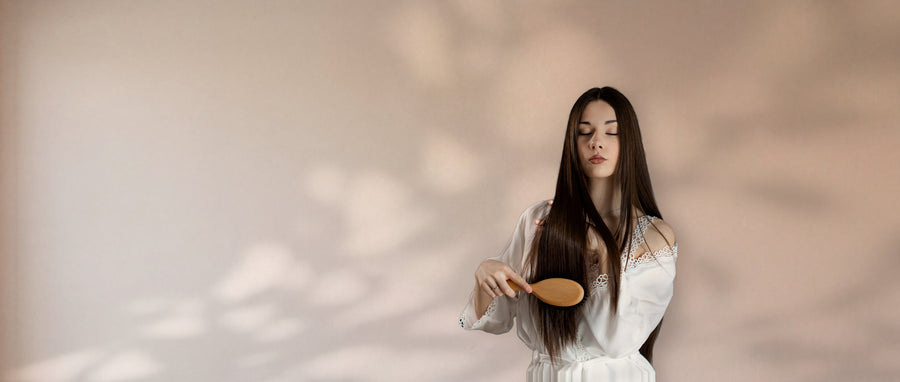

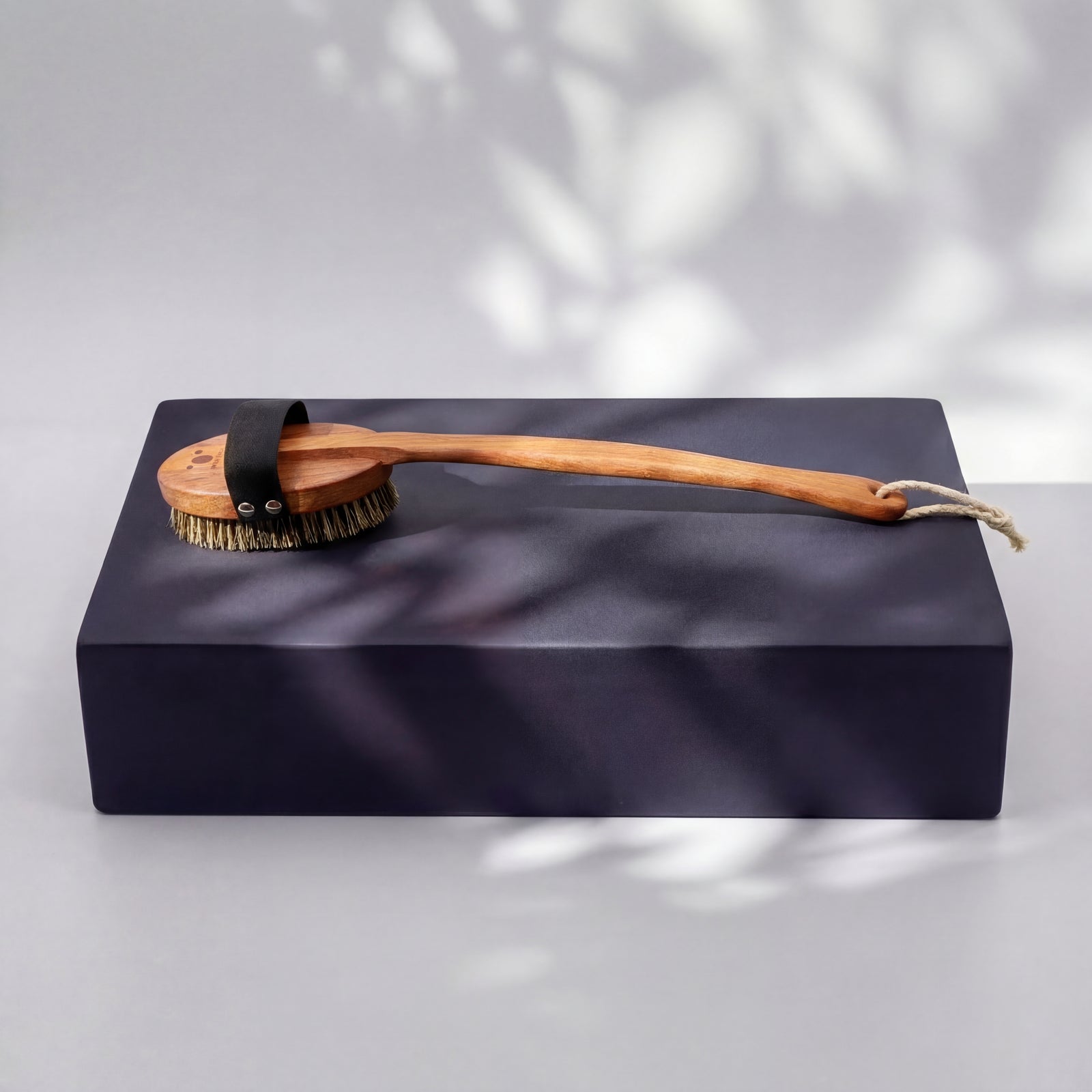

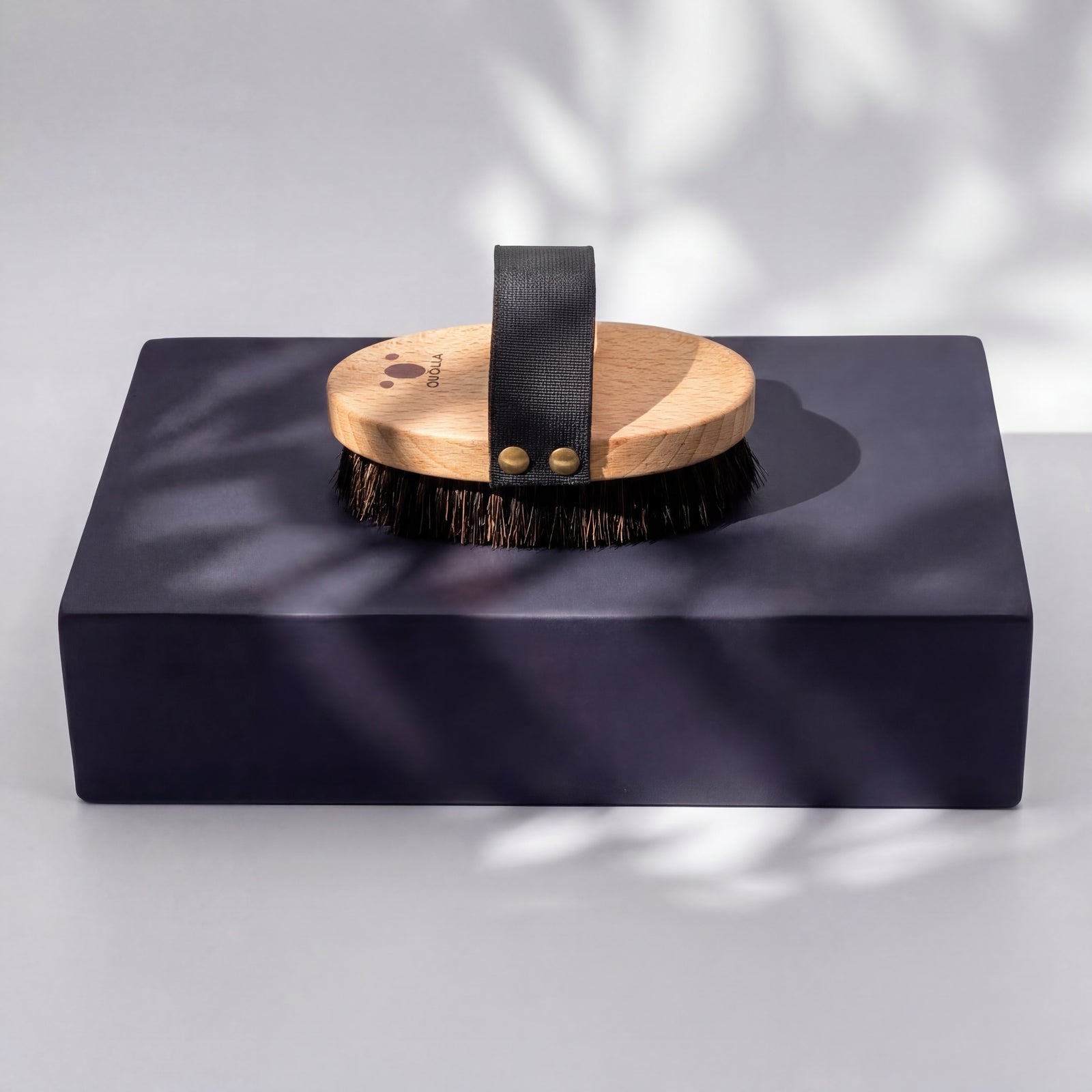

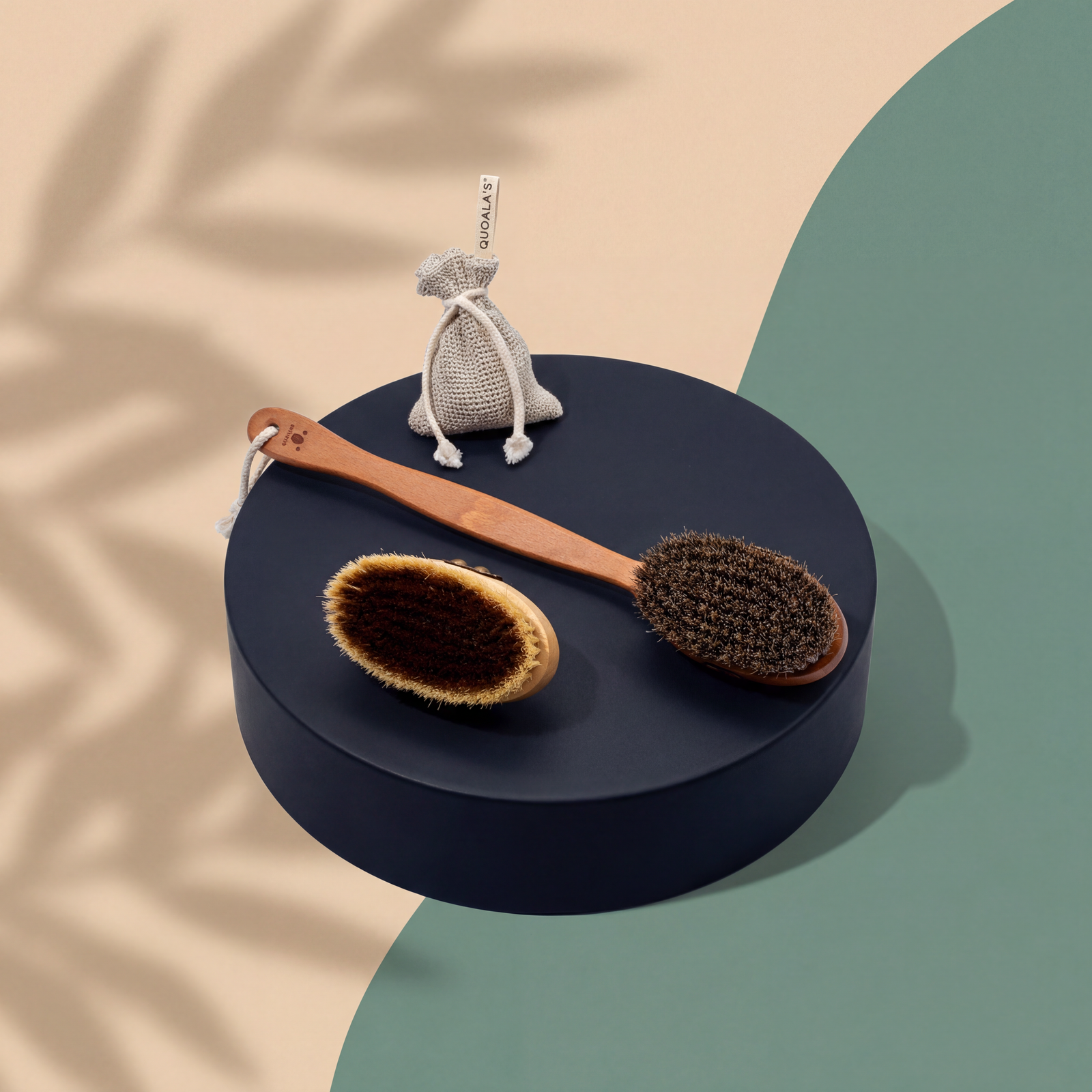









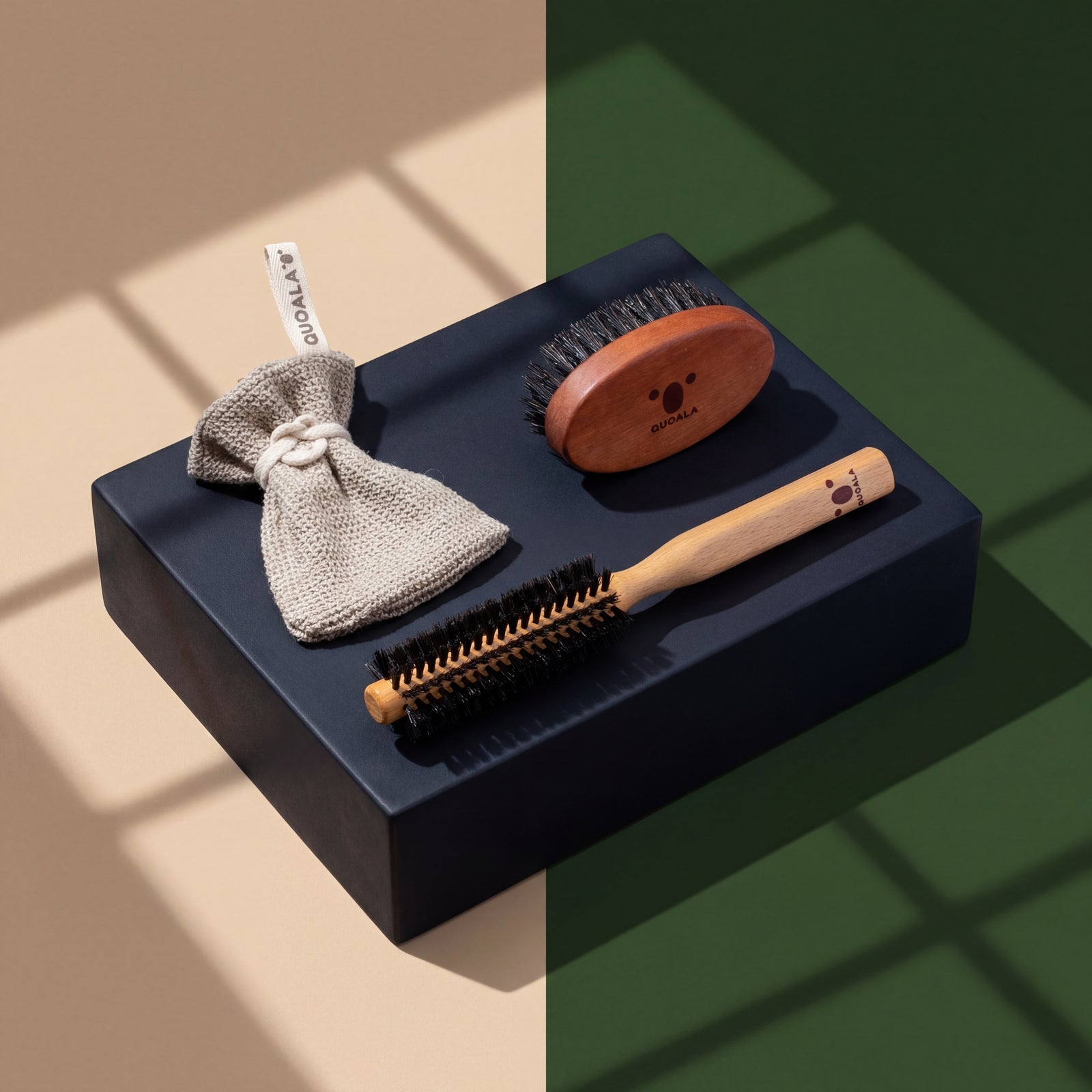

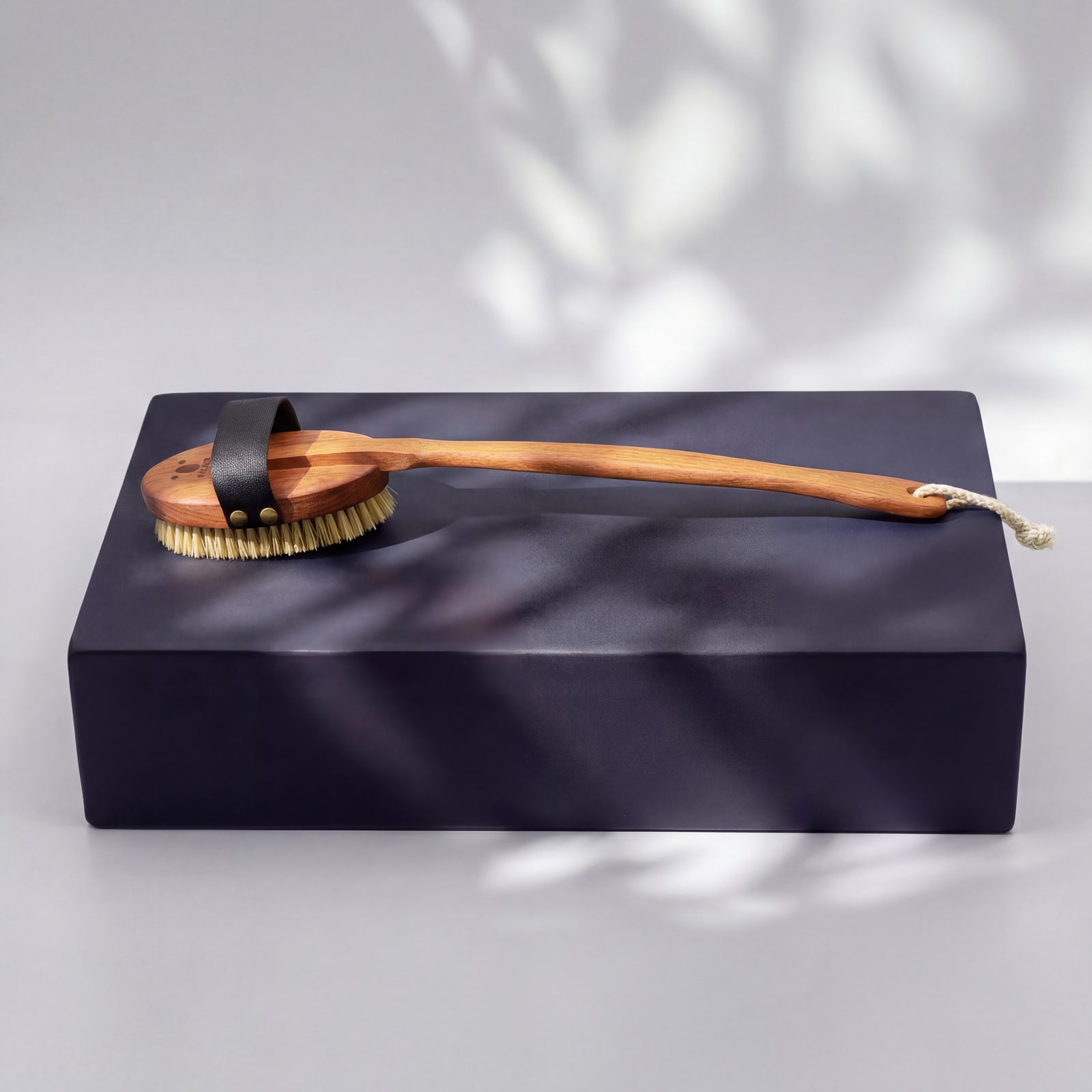

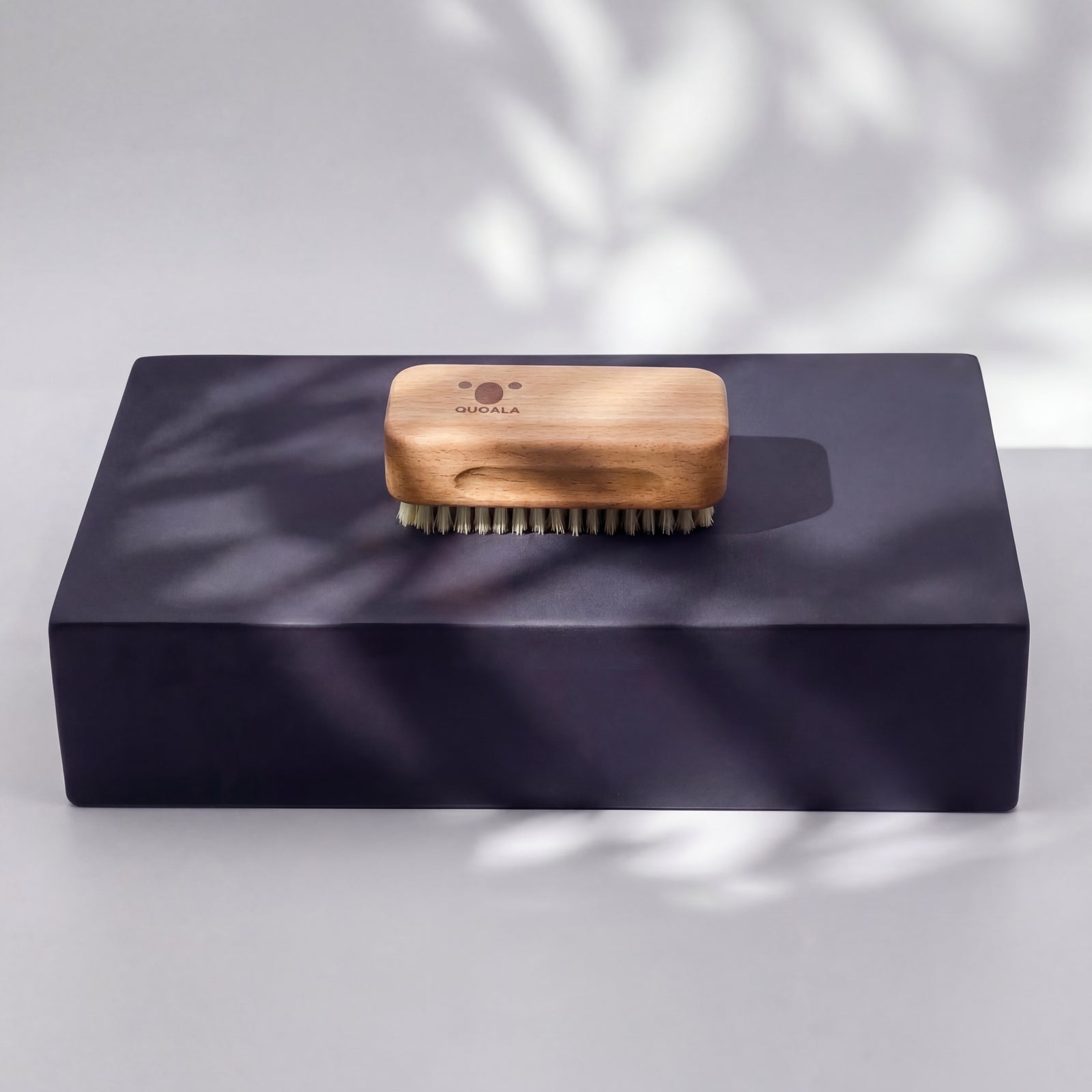

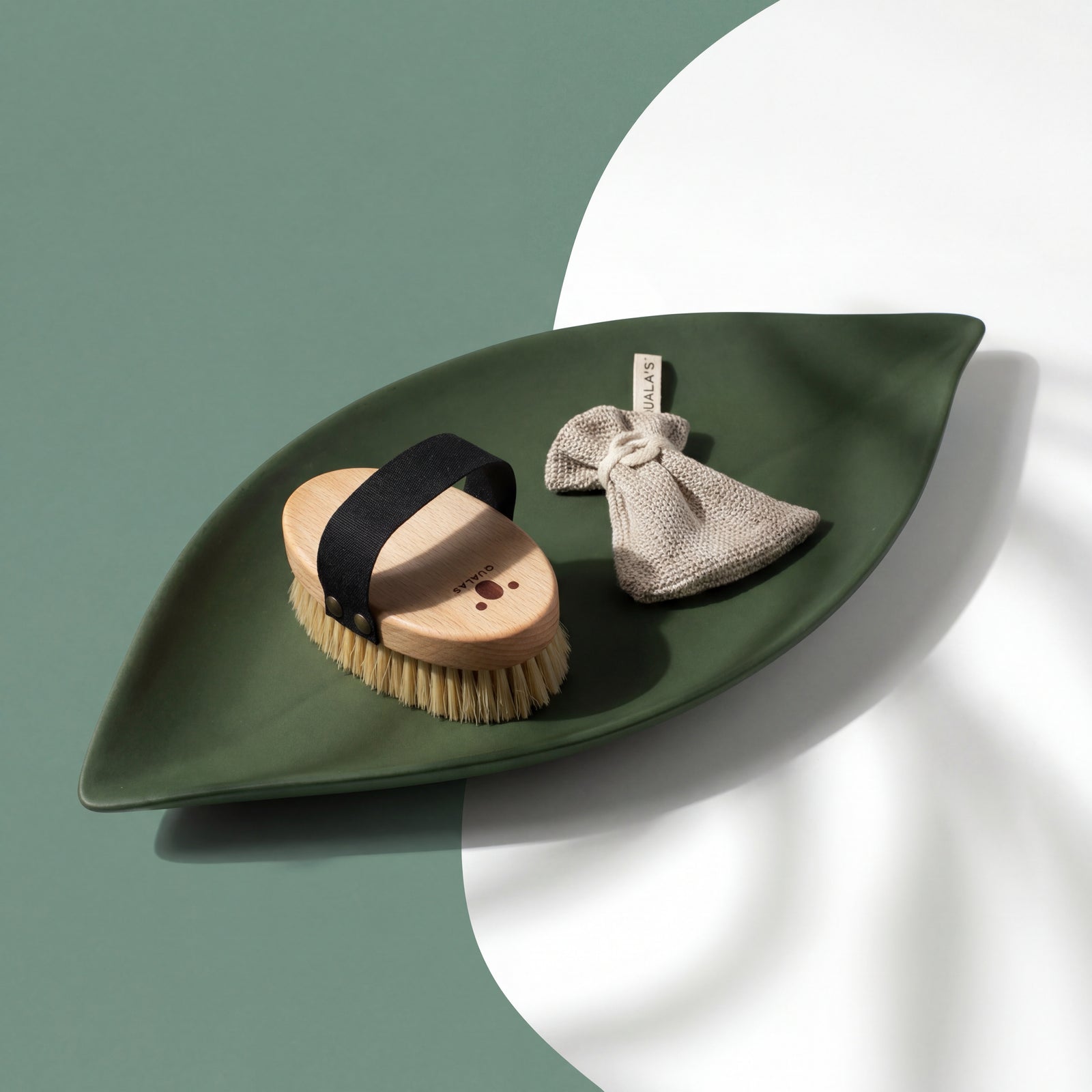

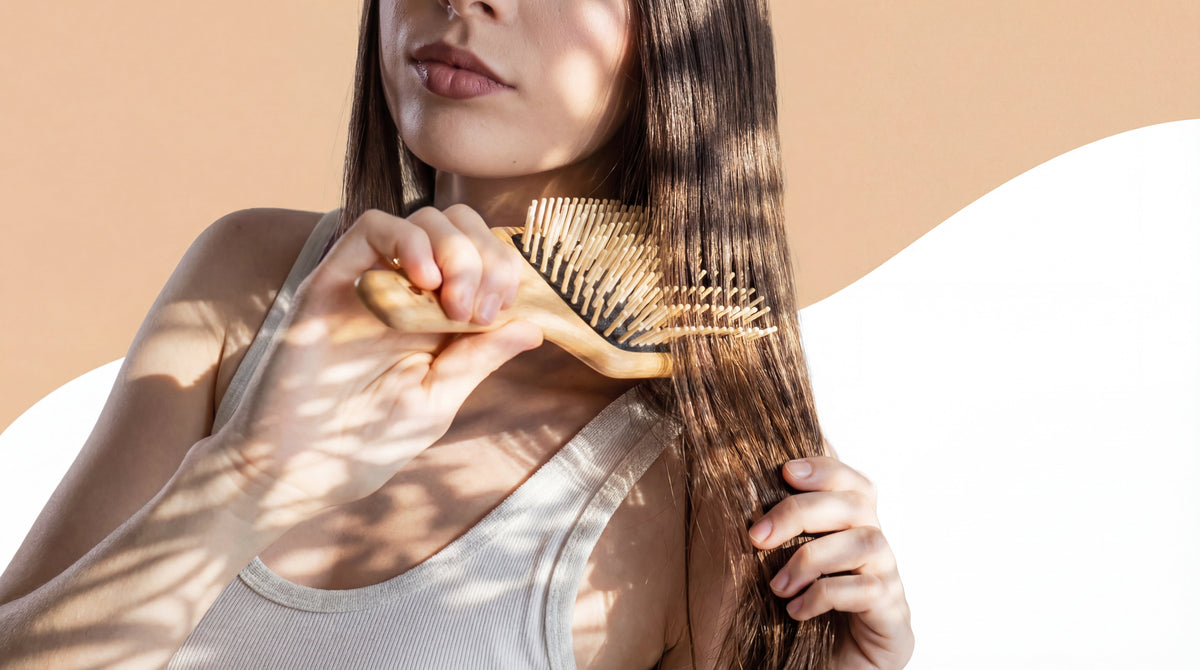
A hairbrush is not just a hairbrush. If you try to drive a nail into the wall with a screwdriver, you will fail – and damage the workpiece. That is exactly what happens in many bathrooms every day: the wrong brush is used for the wrong purpose, which puts unnecessary strain on the hair and can irritate the scalp.
At QUOALA we see our hair care products as highly specialised tools. Having already looked at the right timing (wet vs. dry hair), in this guide we show you which brush you need for which step of your routine and how the biology behind it works.
Key points in brief
- Detangling, caring and styling call for different types of brush – the wrong tool at the wrong time puts unnecessary strain on the hair.
- Wooden pins for detangling and scalp massage, natural fibres for deep care and shine, heat-resistant round brushes for blow-drying and shaping.
- Never use natural-fibre brushes on wet hair – wet hair is mechanically vulnerable, and the scale structure of the bristles roughens the cuticle.
Contents of this guide:
1. The foundation: detangling hair & massaging the scalp
This is your basic brush. It comes into play when your hair is tangled in the morning, when you have thick curls or when you want to enjoy a gentle scalp massage.

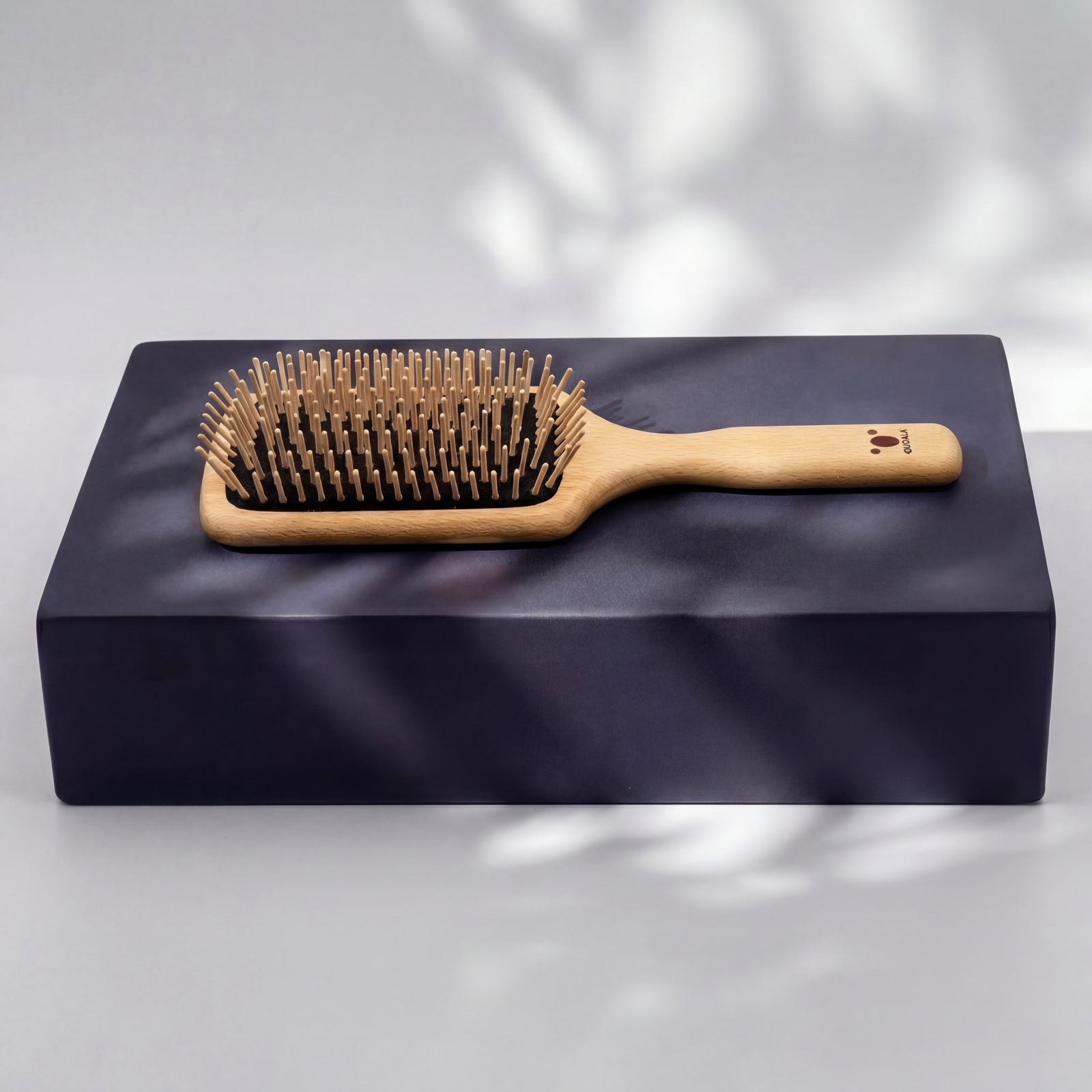
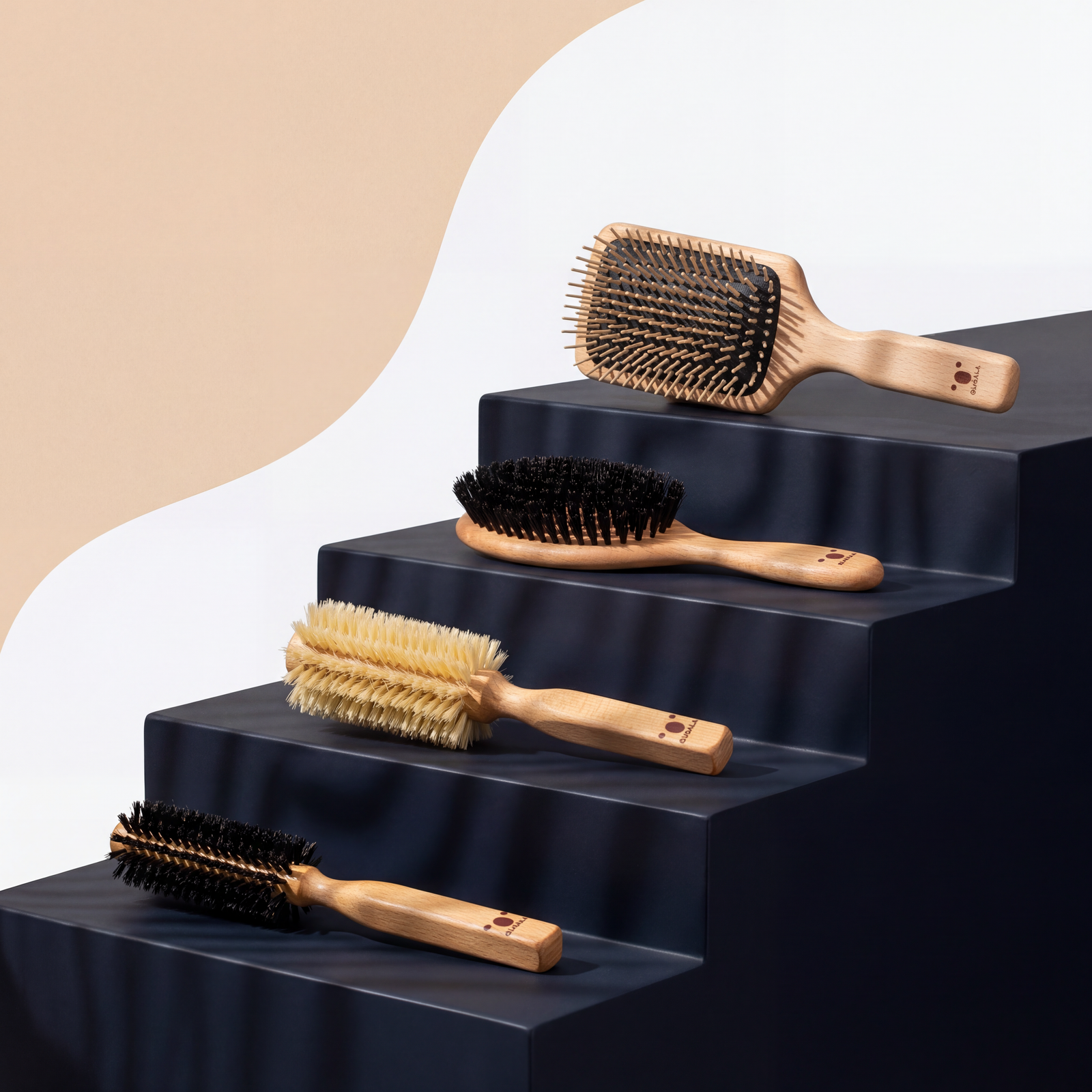
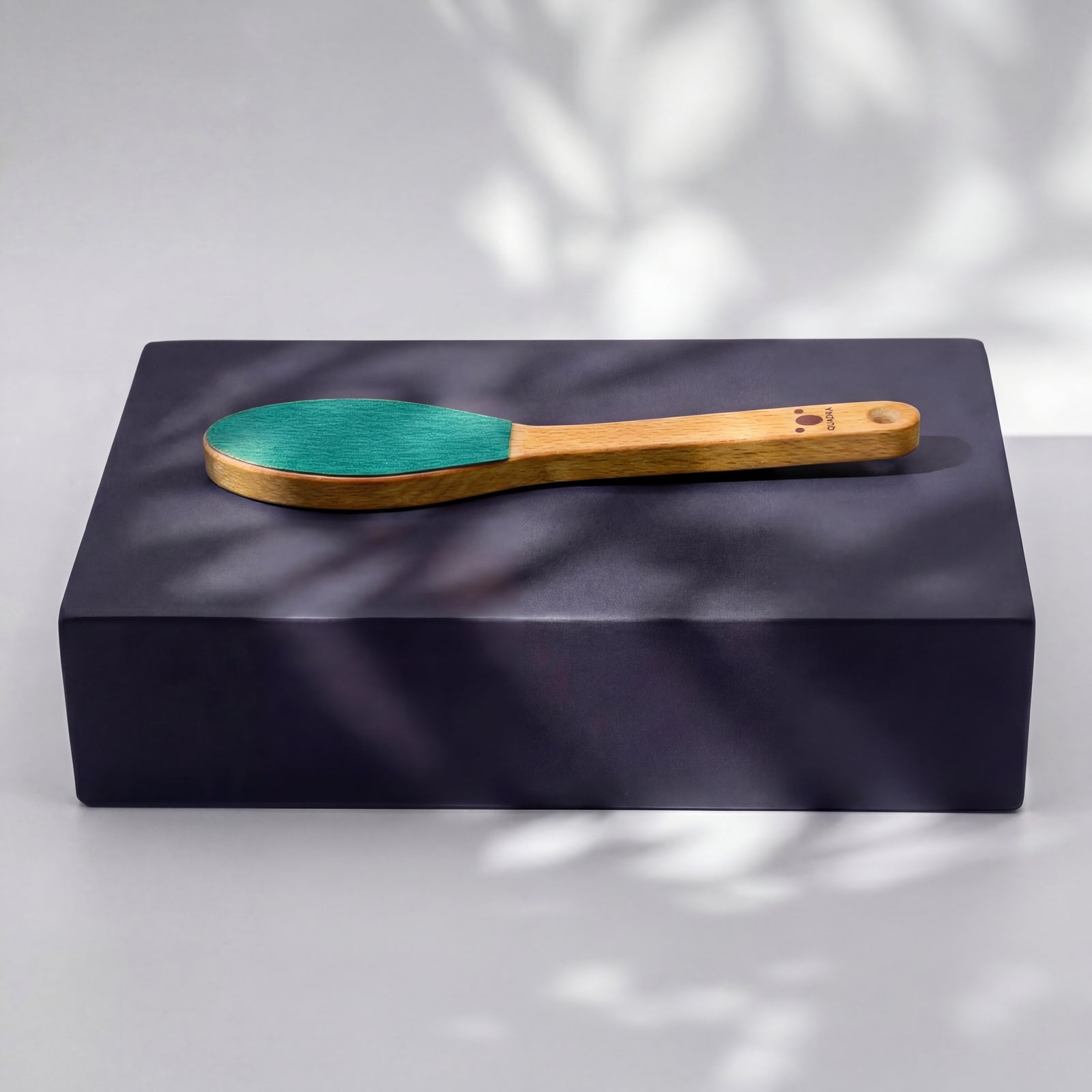
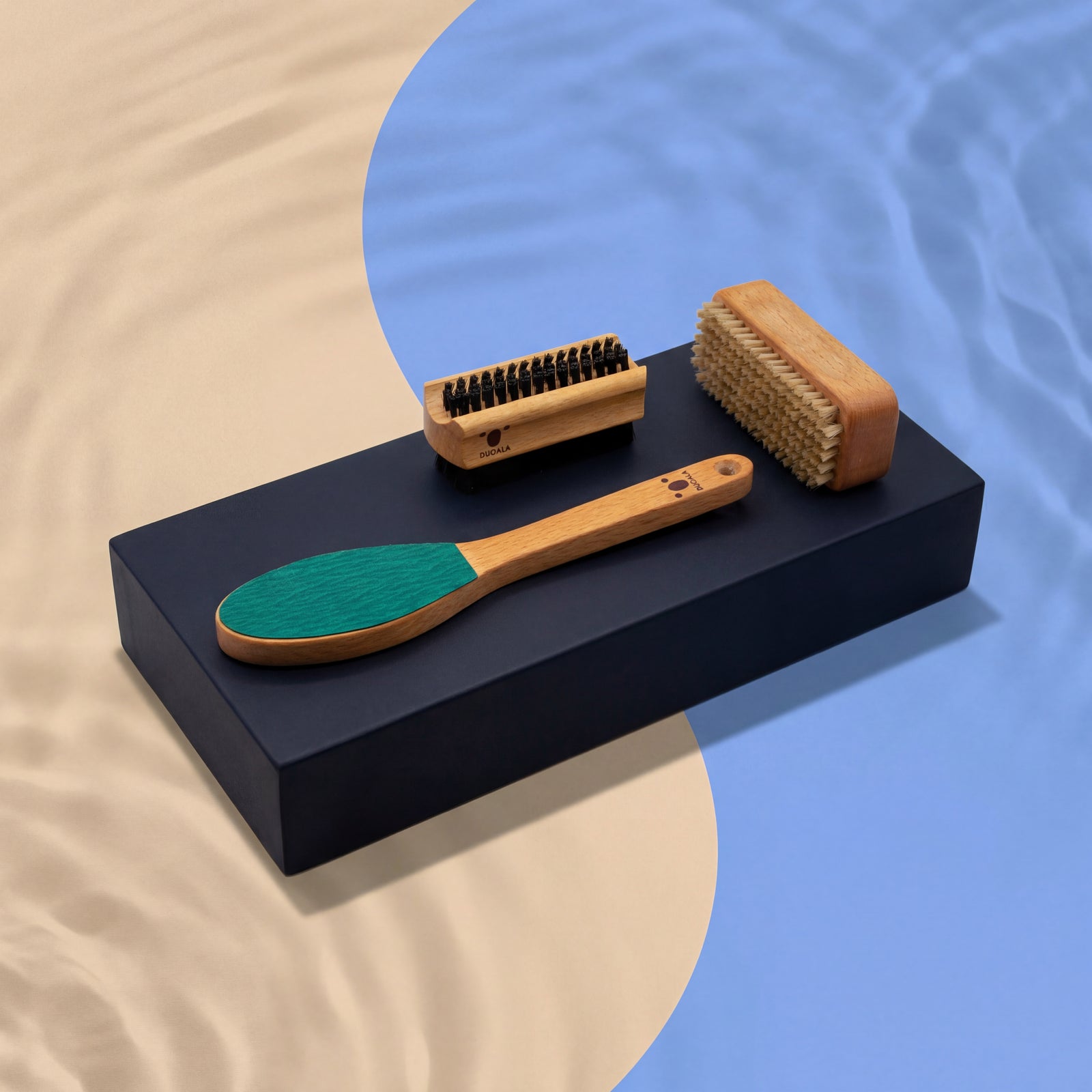
Paddle hairbrush (hornbeam pins)
Tangled hair is extremely exposed to mechanical stress. The thick hornbeam pins of our paddle brush greatly reduce friction when combing through and glide through the hair without roughening the cuticle [1]. The rounded pins also provide a gentle scalp massage.
The science: Hornbeam pins have a low modulus of elasticity. This means they spring back slightly on contact instead of pressing rigidly into the scalp. This effect significantly reduces mechanical damage to the hair [1]. At the same time, brushing provides a gentle scalp massage.
In short: Wooden pins with a low modulus of elasticity spring back gently – ideal for detangling and scalp massage without roughening the cuticle.
2. The ritual: deep care & shine for your hair
This is your tool for the intensive care routine (ideally in the evening) on hair that is already detangled and dry. Natural-fibre brushes are not meant for loosening hard knots, but purely for distributing lipids.

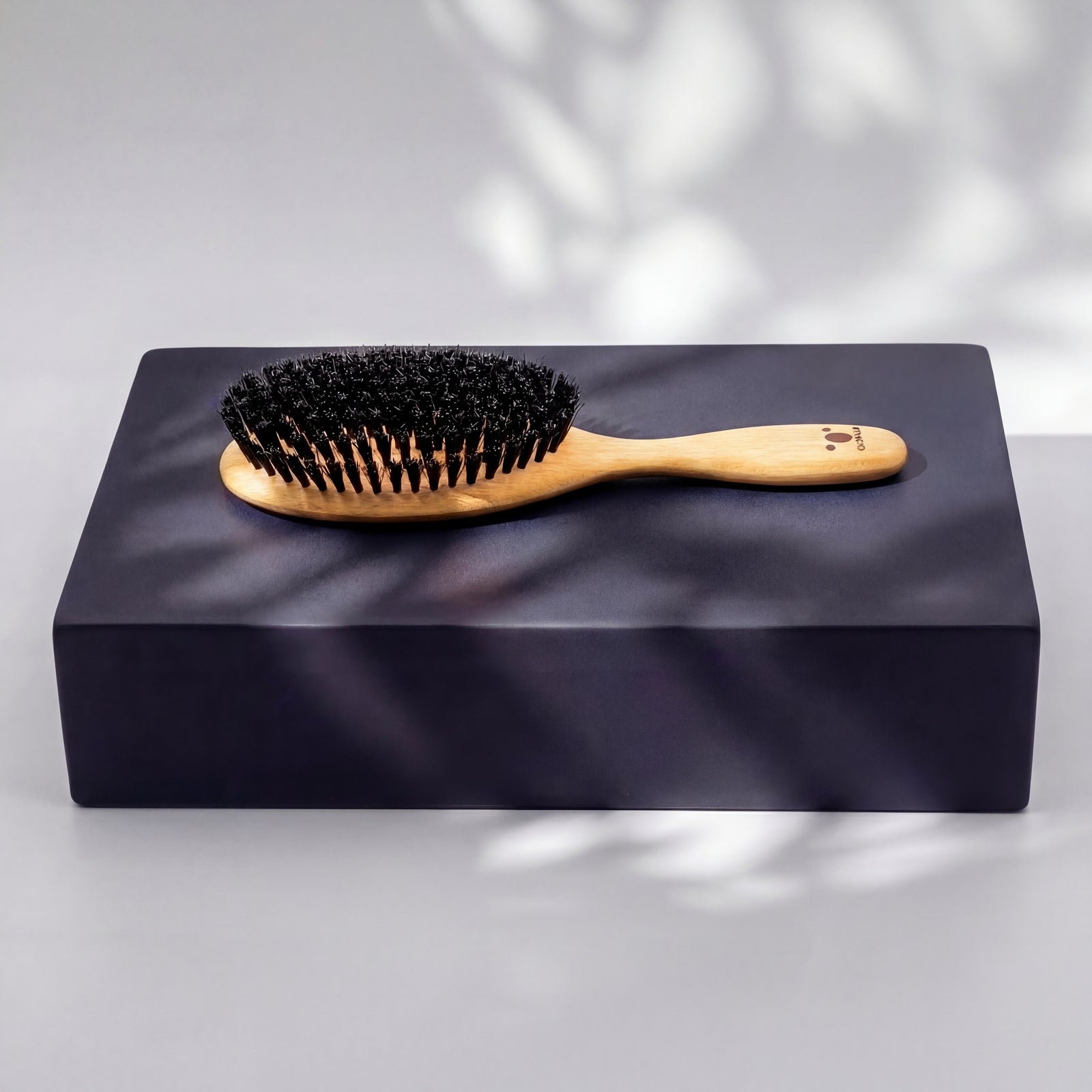
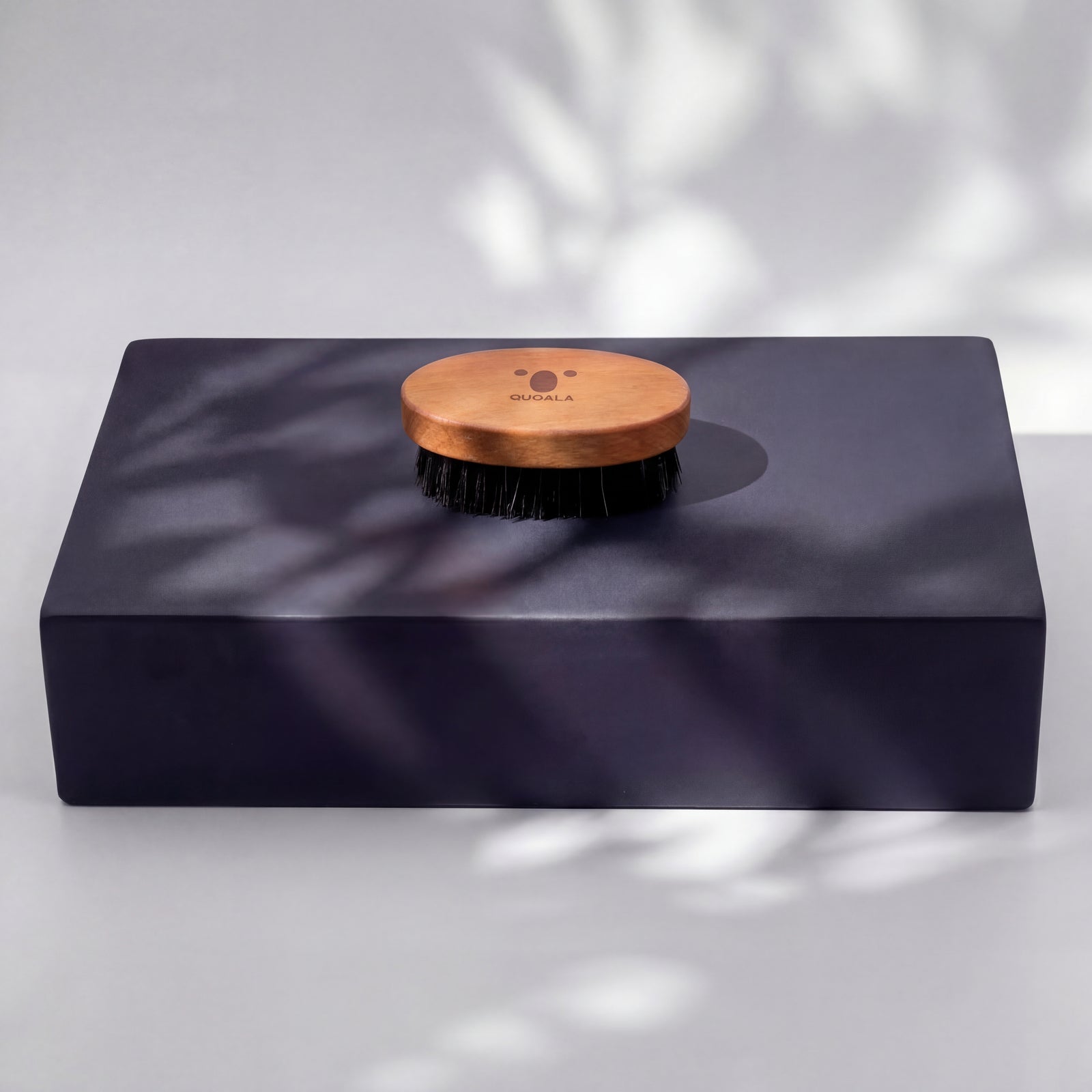
Large hairbrush (boar bristles)
The gold standard for fine to normal hair. The boar bristles pick up the natural hair oil (sebum) at the root and carry it evenly to the ends – for visible shine without products. Ideal for the evening care routine on dry, detangled hair. View product

Large hairbrush (Tampico)
Vegan strength for normal to thick hair. Tampico fibres are firm natural fibres of plant origin – they glide vigorously through normal to thick hair. The best choice for anyone who wants to live free of animal products. View product
The science: Natural fibres have a porous, scaly or grooved microstructure. They act like tiny sponges. When brushing with animal bristles, they absorb the natural hair oil (sebum) at the root and distribute it to the ends [2], contributing to natural shine. With Tampico, oil absorption is proven; that it transfers some of it to the hair is plausible, but has not been measured.
Tip on choosing a material: Not sure? Our decision guide on boar bristles vs. Tampico helps you make the right choice for your hair structure and scalp.
In short: Animal bristles distribute sebum to the ends for natural shine. Plant-based Tampico absorbs oil – transfer to the hair is plausible, but has not been measured.
3. The finish: styling & shaping
This brush comes last – either when blow-drying (with heat) or for smoothing and shaping hair that is already dry. It needs a different geometry and heat resistance from the care brushes.

Medium Tampico blow-dry brush
For shoulder-length to medium-length hair, perfect for a bouncy blow-out. View product

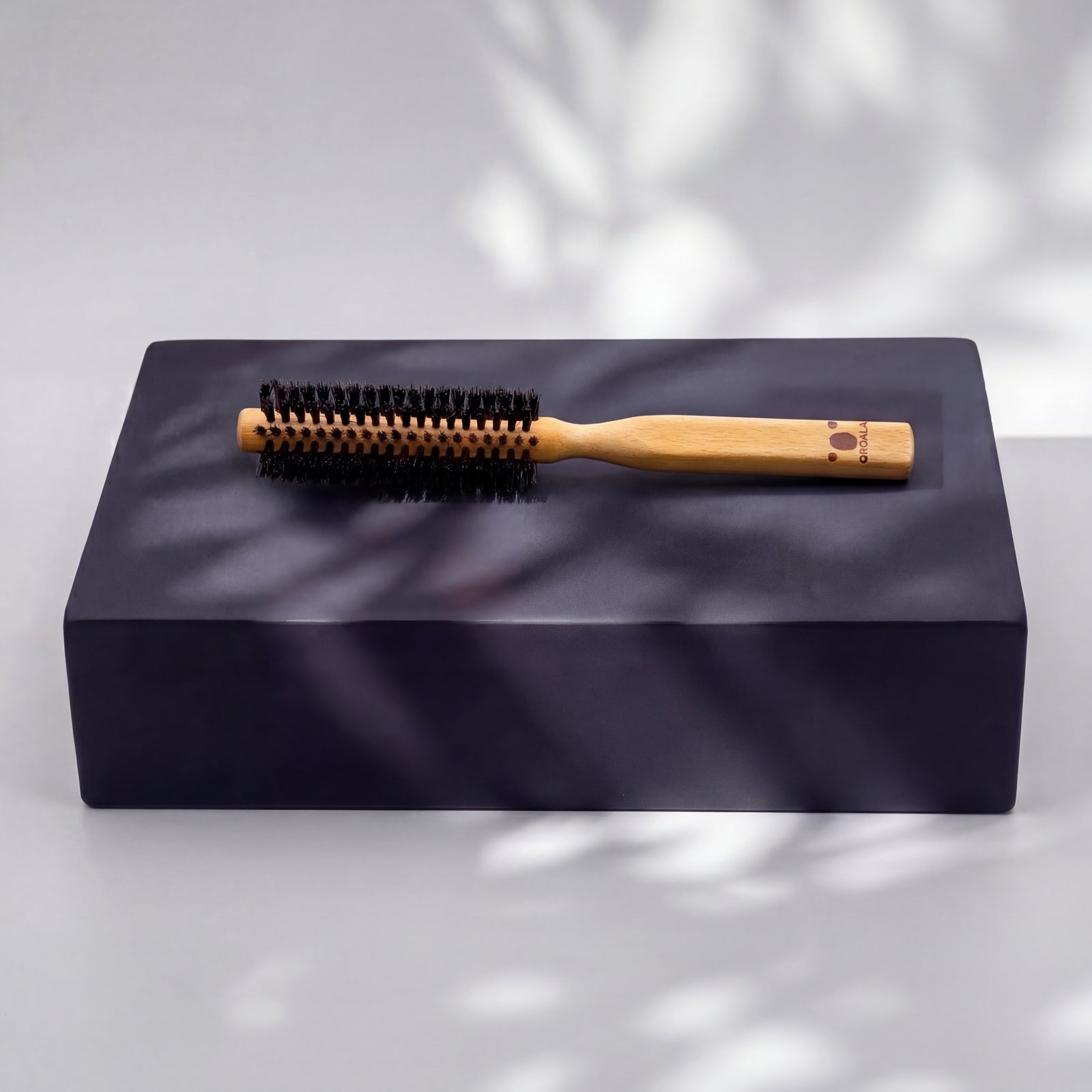
Small boar bristle blow-dry brush
For short to medium-length hair, contours and beards: precise movement when blow-drying. View product
The science: Blow-dry brushes have to cope with the heat of the hairdryer. The handles are made of FSC-certified wood [3], which stays dimensionally stable at normal blow-drying temperatures [4]. Even so, don't hold the natural bristles in the hot airflow for long. At the same time, the cylindrical shape of the round brush glides under the layers of hair and gives the hair the desired shape as it cools.
In short: Blow-dry brushes need heat resistance and the right cylindrical geometry – don't hold the natural bristles in the hot airflow for long.
4. Frequently asked questions
Which hairbrush is best for detangling?
For daily detangling, a paddle brush with wooden pins is ideal. The thick, rounded pins glide through knots without roughening the cuticle. Natural-fibre brushes are not suitable for loosening hard knots – if you force it, you break hairs.
When should you use the natural-fibre care brush?
Natural-fibre brushes work best in the evening on hair that is already detangled and dry. Animal bristles distribute the natural hair oil from the root to the ends and create shine. With plant-based Tampico, transfer to the hair is plausible, but has not been measured. Wet hair is mechanically vulnerable – never use natural-fibre brushes on wet hair.
Which brush do I need for blow-drying?
For blow-drying you need a heat-stable round brush. The bristles must withstand the heat of the hairdryer without melting or losing their shape. Normal care brushes are not designed for this step.
Can I use a single brush for every step of my hair care routine?
No. Detangling, caring and styling call for different materials and geometries. Forcing a natural-fibre care brush through tangled hair breaks hair. The right tools at the right moment, used gently and starting from the ends, are kind to your hair.
Does brushing stimulate hair growth?
Brushing provides a gentle scalp massage. There is no evidence that brushing makes hair grow faster.
Find your personal hair care set
Every head of hair is different. Whether you want to detangle, care or style – in our collection you will find exactly the right tool for every step of your routine.
Sources and further reading
Scientific sources
- American Academy of Dermatology: Tips for healthy hair. Detangle wet hair with a wide-tooth comb. Our assessment S83 · Source
- Robbins (2012), Chemical and Physical Behavior of Human Hair, Springer; Gao et al. (2019). Animal bristles spread sebum along the hair. Our assessment S8 · Source
- FSC International: What the FSC labels mean. What the FSC label guarantees about where the wood comes from. Our assessment S14 · Source
- Wagenführ (2007), Holzatlas, 6th edition, Carl Hanser Verlag. Reference work (in German) on wood species and their properties. Our assessment S58