















Brushing your hair is something we do almost without thinking. And that is exactly the problem: mechanical stress from brushing the wrong way is one of the main causes of breakage, split ends and a damaged cuticle.
If you invest in a premium tool from QUOALA – whether with vegan Tampico fibre or classic boar bristles – you need the right know-how to get the most out of it. Mindfulness (conscious living) means carrying out everyday rituals consciously and correctly. In this guide we give you a clear, science-based framework for your daily brushing ritual.
Did you know? A true premium tool for your hair is made not only from the best bristles but also from responsibly sourced wood. Read here why we at QUOALA make no compromises on our wood and rely on FSC® certification.
Key points at a glance
When wet, hair loses up to 50 % of its tensile strength — the wrong brush tears it. Only use the paddle brush with widely spaced pins on wet hair. Dry hair benefits from natural-fibre brushes (boar bristles in the morning for shine, Tampico in the evening for a deep clean). Blow-dry brushes have a clearly defined special role: shaping with heat, and nothing else. The 4-step framework — bottom-up, sectioning, scalp contact, tool hygiene — keeps mechanical stress on your hair as low as possible in every routine.
Contents of this guide:
1. The science of “when”: wet vs. dry hair
The biggest mistake in hair care happens straight after the shower. To understand when you can use which brush, we need to look at the molecular structure of hair.
The risk when wet (hygral fatigue)
Your hair is made of keratin proteins held together by various chemical bonds. When your hair gets wet, the water temporarily breaks the hydrogen bonds. The hair shaft swells, the cuticle opens slightly, and the hair loses up to 50 % of its tensile strength. It becomes extremely stretchy but highly vulnerable [1].
The golden rule: Never use a dense natural-fibre brush on wet hair. The dense bristles create too much friction and tear the softened hair or overstretch it irreversibly. On wet hair, only use a tool with wide gaps between the pins [2].

Our recommendation:
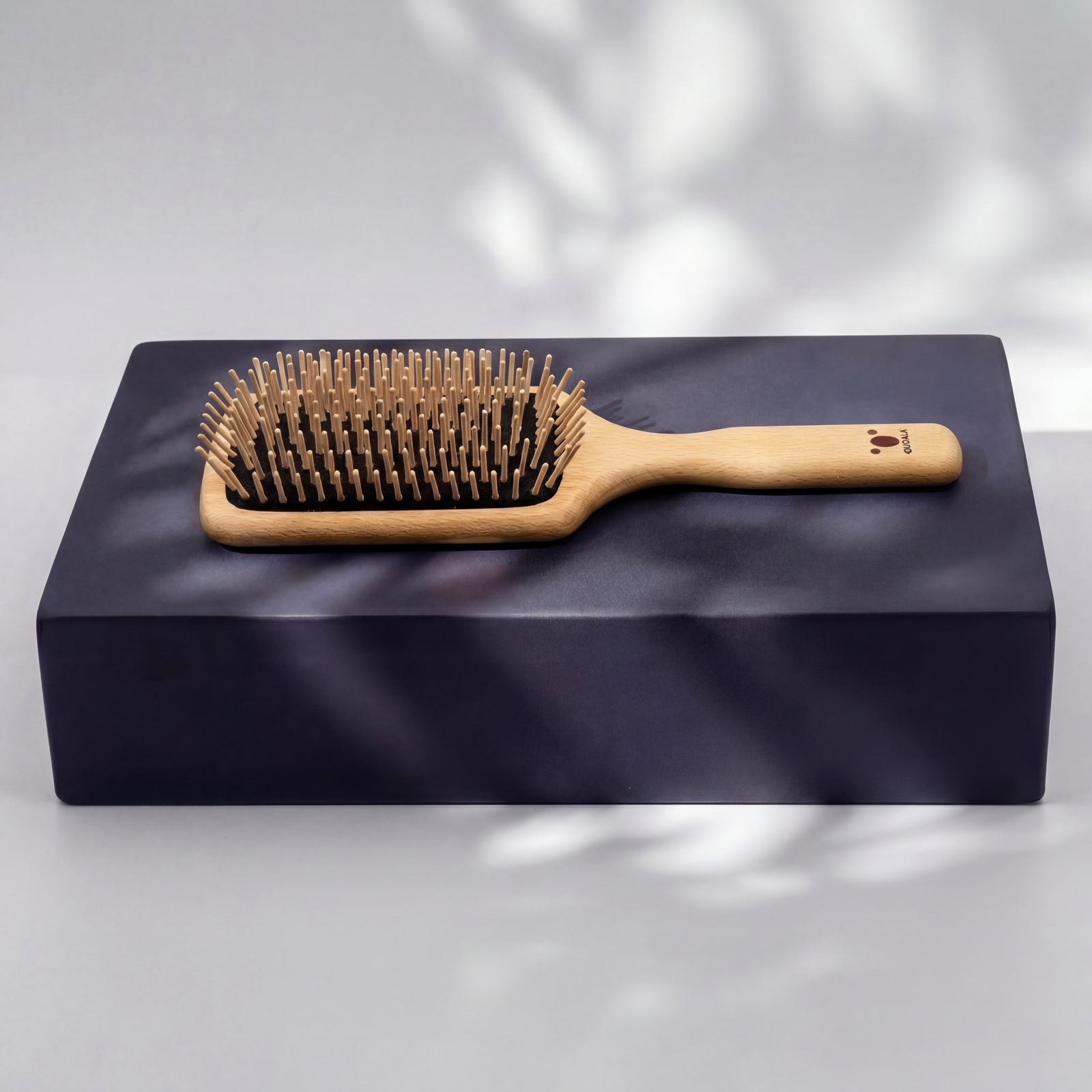
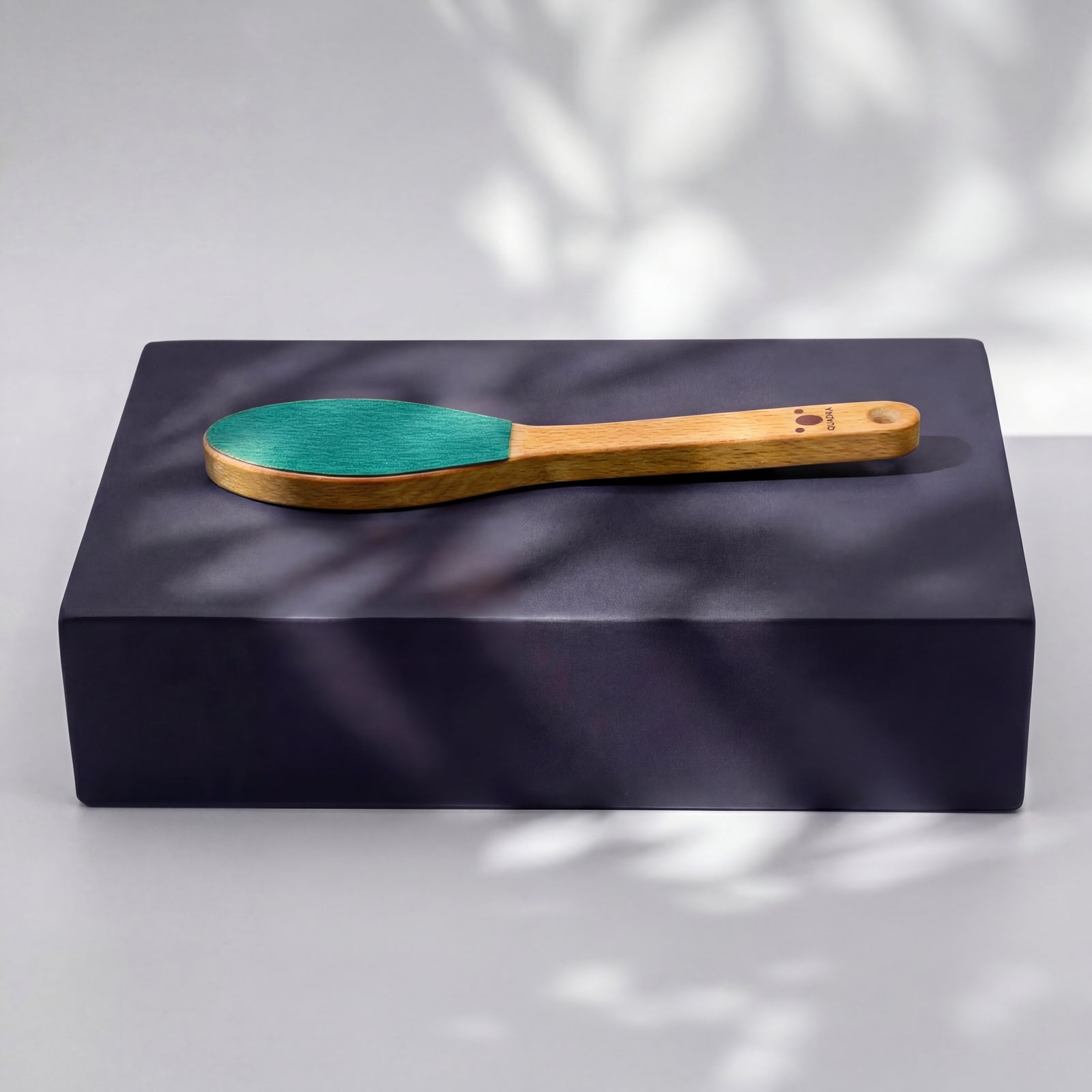
The absolute best practice for wet hair. The smooth hornbeam pins keep friction to a minimum and detangle safely without overstretching the swollen hair.
The strength of dry hair
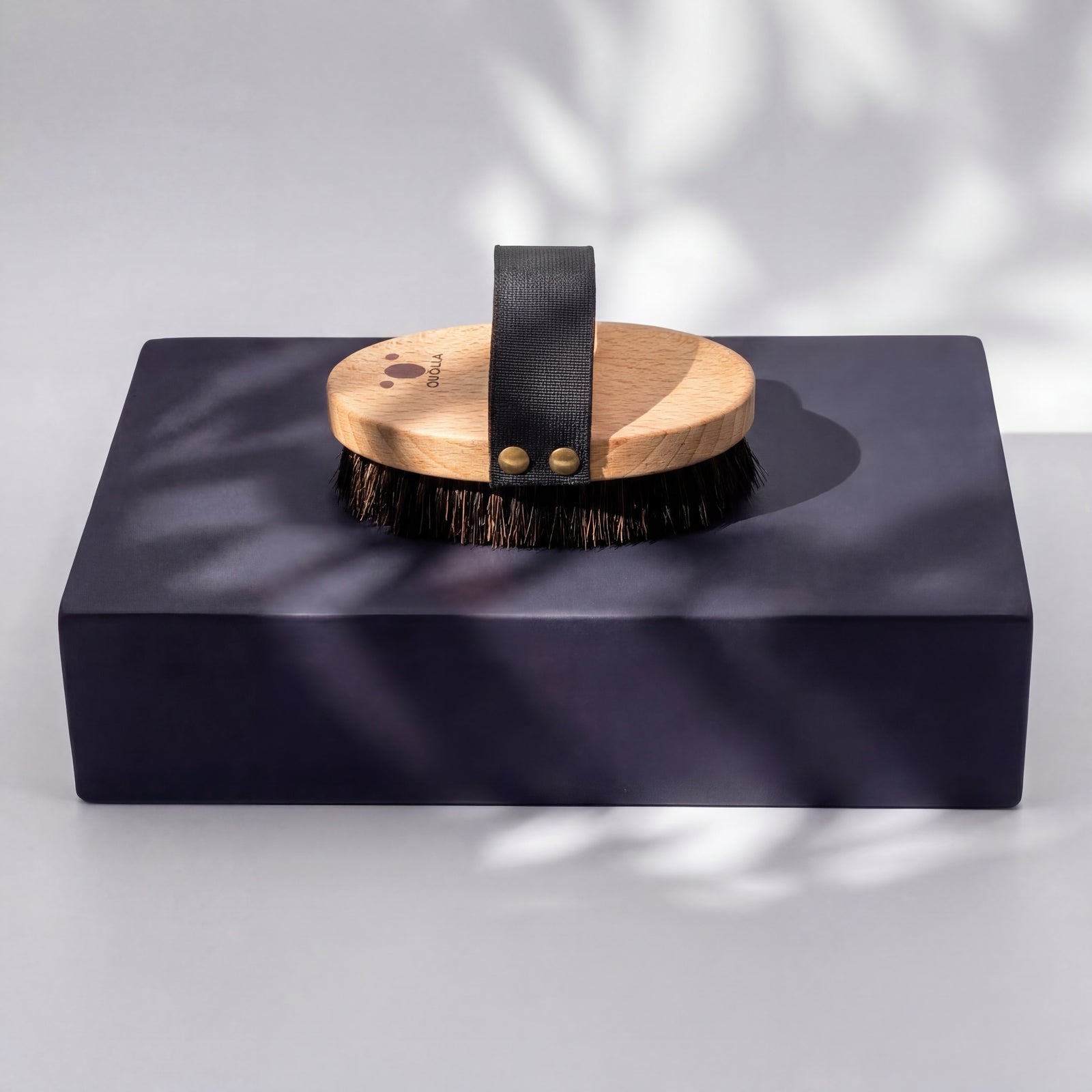
As soon as your hair is dry, it regains its full strength. Now is the only right time for your QUOALA natural-fibre brush (boar bristles or Tampico). Only when dry can boar bristles absorb sebum optimally and distribute it reliably (Tampico absorbs oil; whether it releases any of it back into the hair is plausible, but has not been measured). Gentle brushing on dry hair, starting from the ends, is the kindest way to treat your hair.
Summary: wet vs. dry hair
Wet hair loses up to 50 % of its tensile strength — natural-fibre brushes do more harm than good on wet hair. The QUOALA paddle brush with hornbeam pins is the only suitable tool straight after the shower. Only once the hair is completely dry do boar bristles and Tampico fibre come into play and do their full job of caring and distributing.
2. The circadian rhythm: morning vs. evening routine
A scientific approach means adapting your brushing to the rhythm of your day. Here are our recommendations for your care routine (on dry hair):
Morning routine (reset)
Friction stresses the cuticle – this has been measured for combing and brushing [3]; it is also said of the pillow, but we have not found any evidence for that.
- Goal: Detangle and smooth the cuticle.
- How: Short, gentle brushing (30–60 sec.) to bring back the shine for the day.

For the morning:
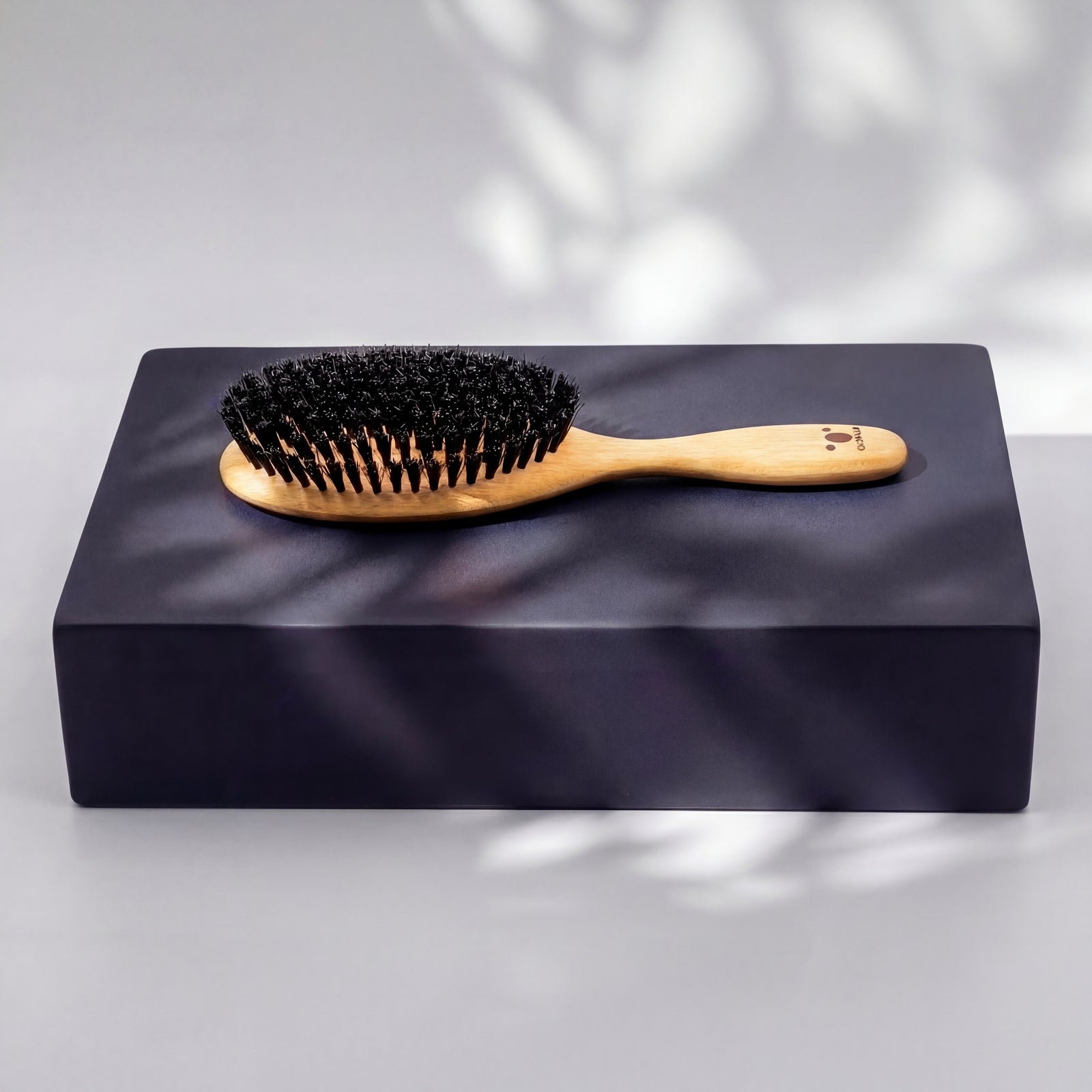
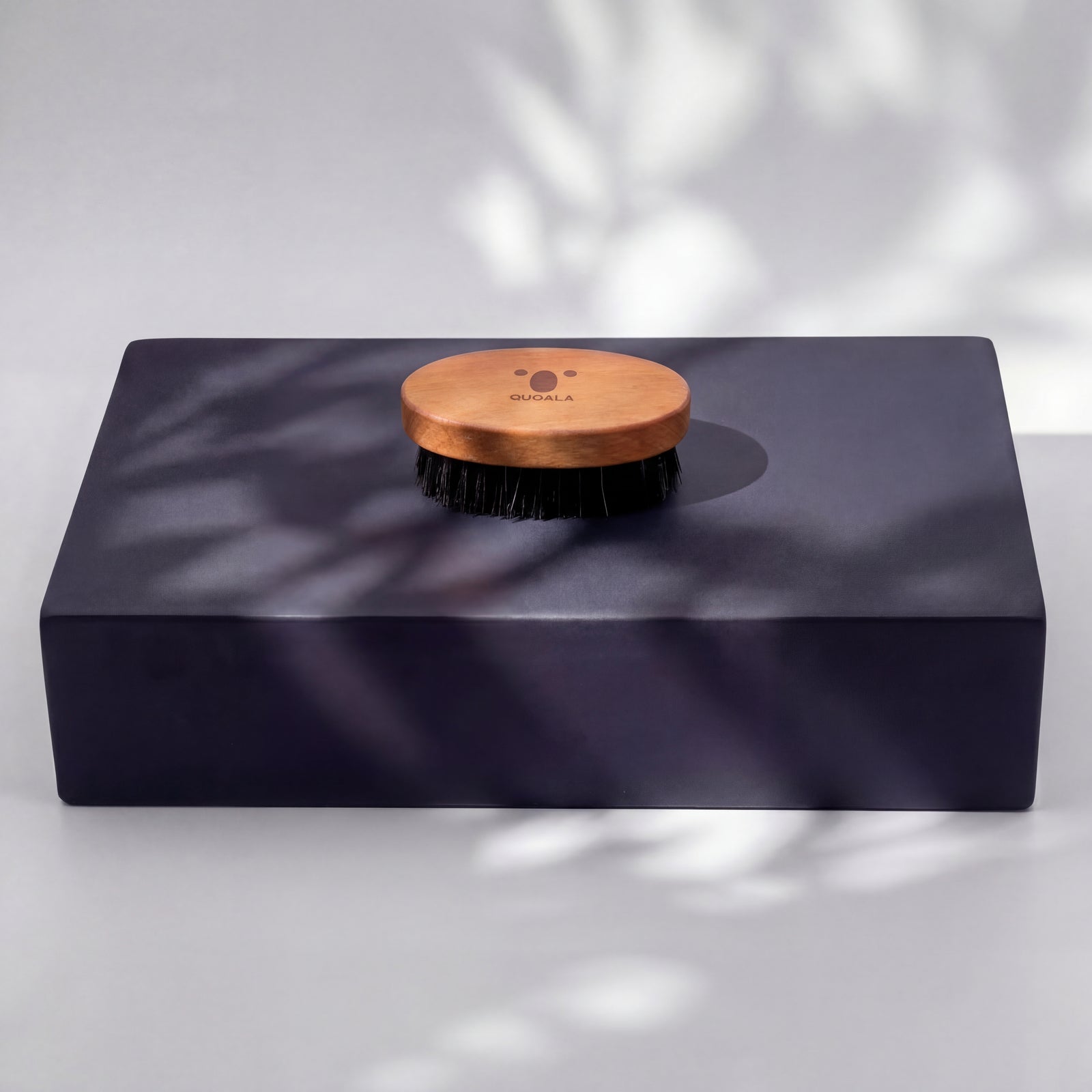
The softer boar bristles gently smooth the cuticle and bring back shine without irritating the scalp.
Evening routine (deep clean)
This is the most important session. Dust, pollen and sebum build up over the day.
- Goal: Cleansing and redistributing sebum to the ends.
- How: 2–3 minutes of massage so that the lipids can soak in overnight like a treatment.

For the evening:
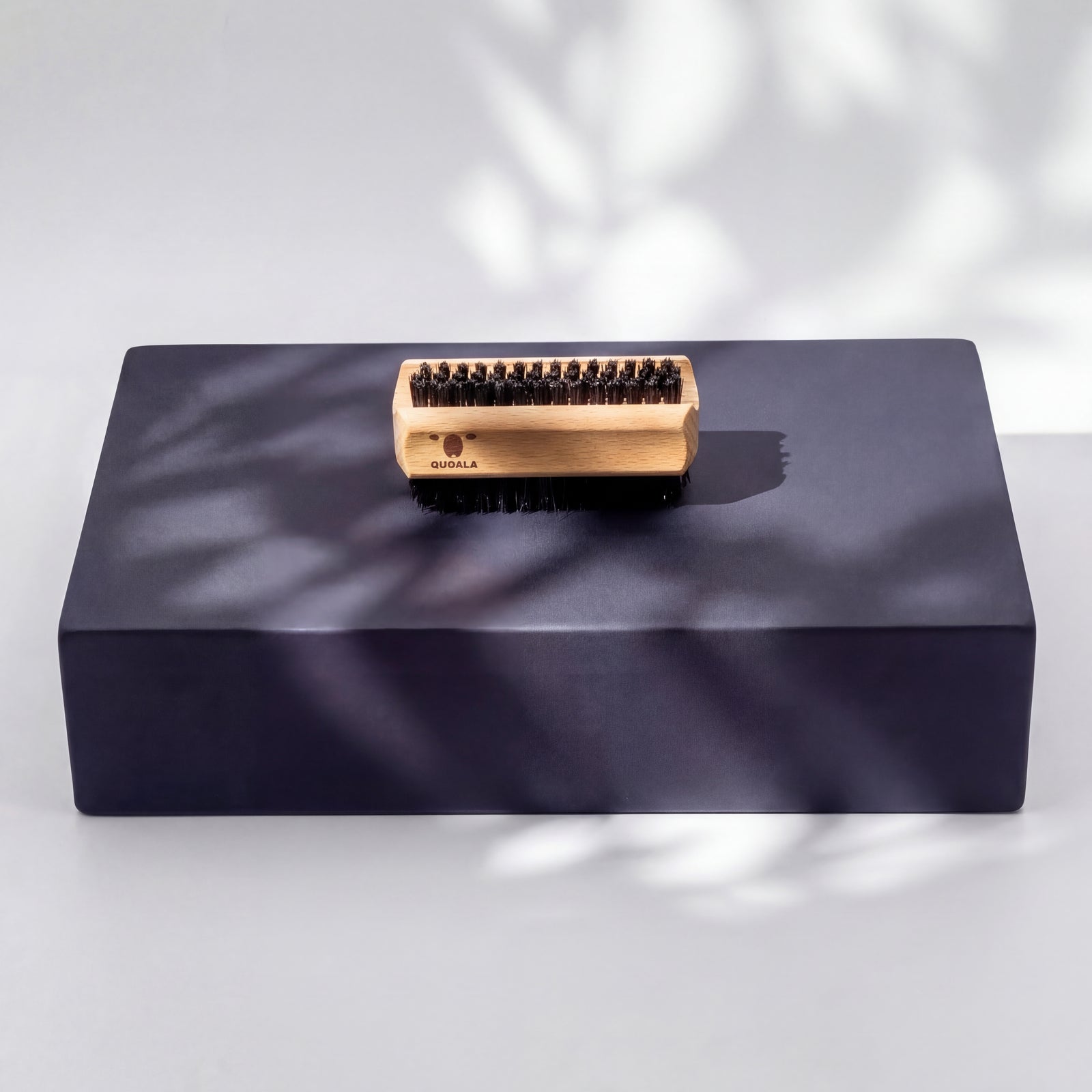
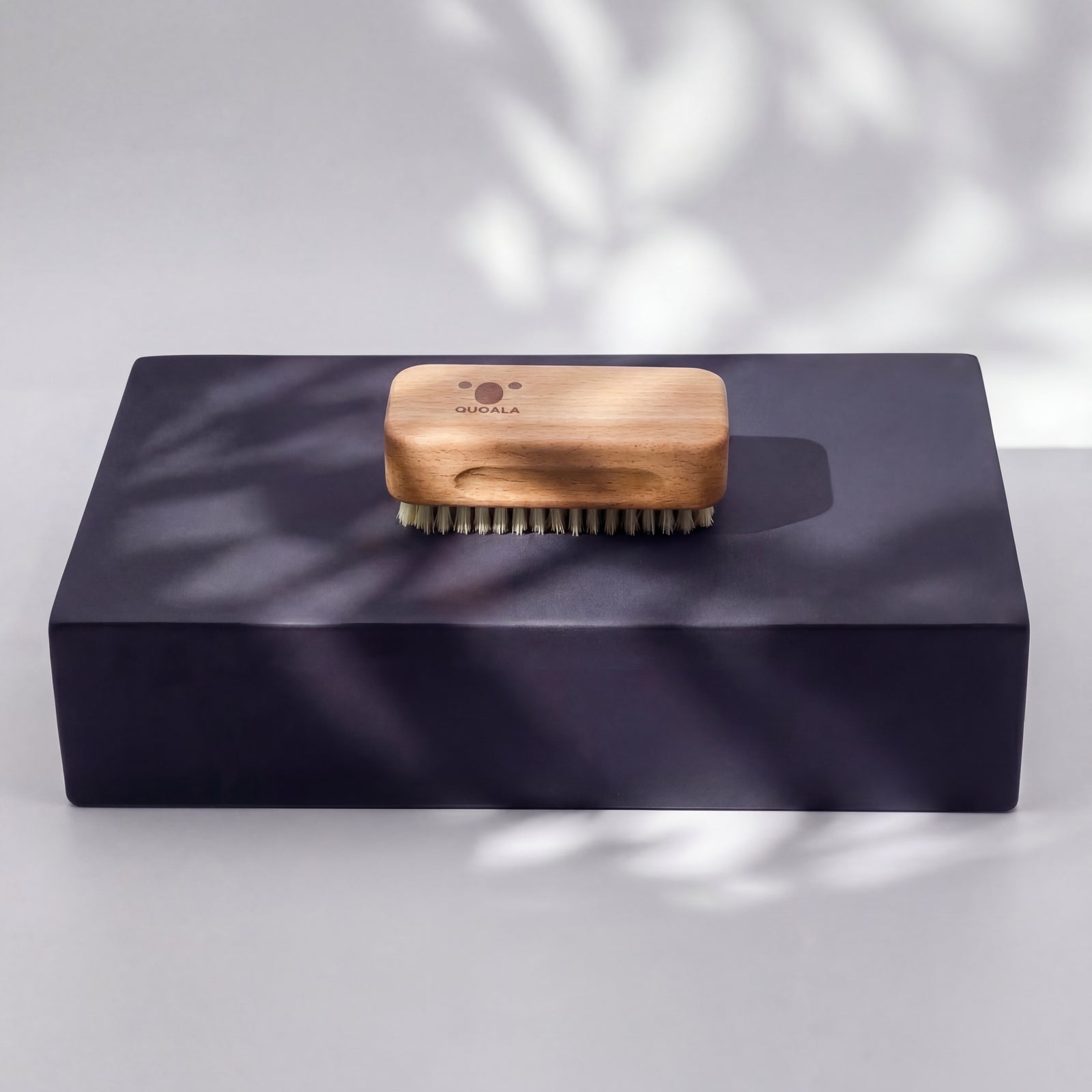
The firmer Tampico fibre organizes dense hair with good grip and absorbs oil.
The minimalist approach: is one brush enough?
Absolutely. Boar bristles in the morning and Tampico in the evening is the ultimate premium protocol. But if you consciously choose just one tool (for example out of vegan conviction), that is completely legitimate. You simply make small compromises in your routine:
- Tampico only (the vegan choice): In the evening you get a gentle scalp massage and firm grip in dense hair. The compromise: For gently smoothing the cuticle in the morning, the firm plant fibre can feel a little too hard on a sensitive scalp.
- Boar bristles only (the gentle choice): You start every morning with maximum shine and complete gentleness. The compromise: In the evening, with very thick hair, you may lack the mechanical firmness to fully remove styling residue and sebum right down to the scalp.
Tip: if you are not sure which material suits your hair structure better, read our detailed scientific comparison: Boar bristles vs. Tampico fibre.
Summary: morning vs. evening routine
Morning and evening have different brushing goals: in the morning it is about smoothing the cuticle, in the evening about removing the day's residue and redistributing the sebum film to the ends. Boar bristles are the gentler morning tool, Tampico fibre the firmer evening tool. Both routines require dry hair — that is the one non-negotiable condition.
3. Heat styling: when blow-dry brushes come into play
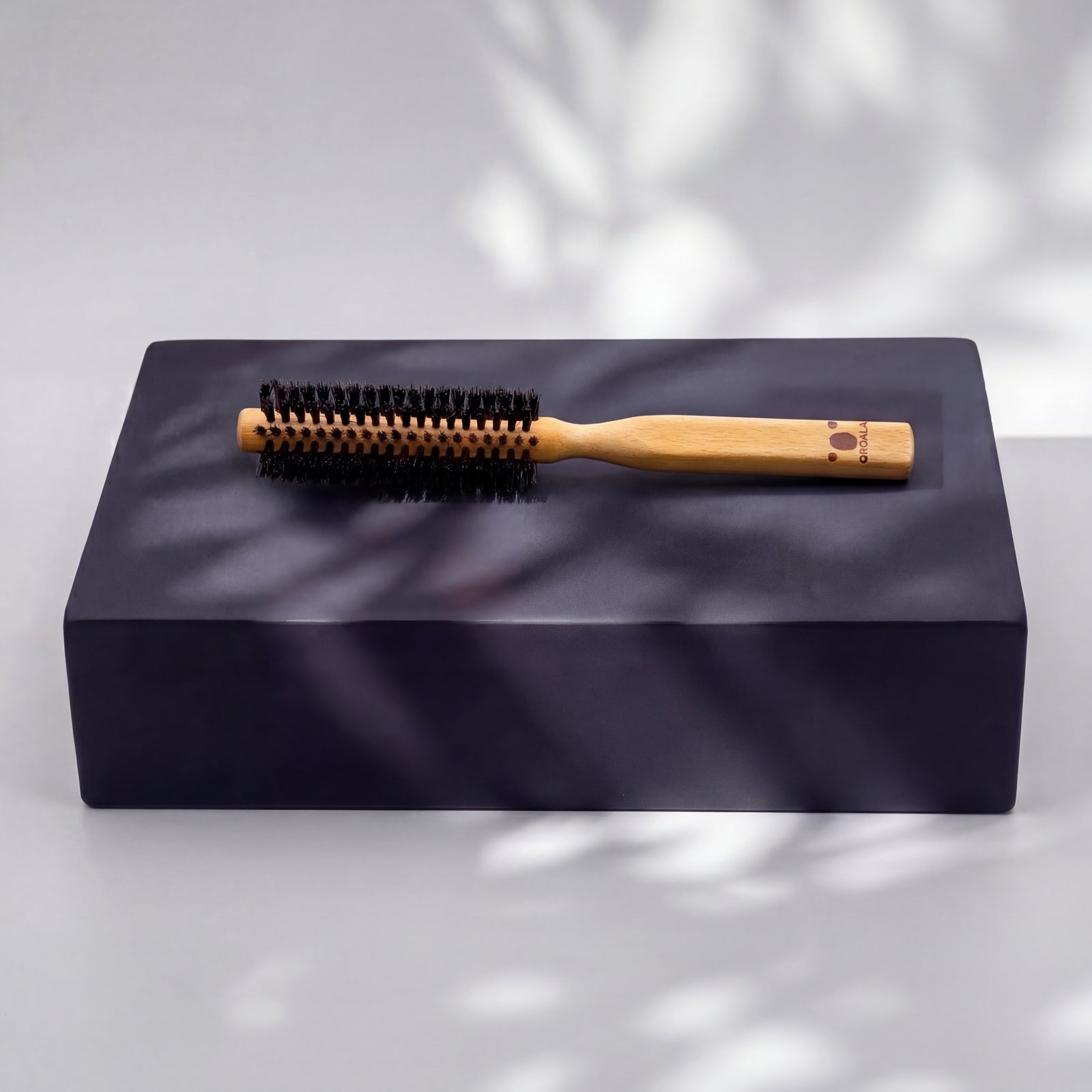
Blow-dry brushes (round brushes) have a clear special role in your routine. They are not made for loosening stubborn knots in wet hair or for caring for dry hair day to day. Their only purpose is shaping the hair with moisture and heat.
Material know-how: heat resistance when blow-drying
Blow-drying often involves temperatures that put a lot of strain on the tool. That is exactly why we use different fillings for our blow-dry brushes depending on their size:
- Boar bristles (for shine & details): Like our own hair, animal hair is made of keratin. This gives an incomparable shine when blow-drying, but also makes the bristle more sensitive to prolonged, direct heat. We use it for the small blow-dry brush, which is ideal for short to medium-length hair, contours and beards.
- Tampico fibre (the strong grip): This strong plant fibre from the agave is robust and gives plenty of pull. That is why it is our material of choice for the medium blow-dry brush, which is used to blow-dry long hair into shape and movement with heat.
Contours & beard
- When: On towel-dried/damp hair, together with the hairdryer.
- Who for: Short to medium-length hair, contours and beards.

Our recommendation:
Small blow-dry brush (boar bristles)
The fine grip of the boar bristles gives maximum shine when blow-drying specific sections.
Blow-outs & movement
- When: On damp hair, to build up tension (grip) and smooth the hair with heat.
- Who for: Long hair, strong curls or a bouncy blow-out.

Our recommendation:
Medium blow-dry brush (Tampico)
Robust plant fibre. Offers the strongest pull (grip) to blow-dry long hair into shape quickly.
Summary: heat styling
Blow-dry brushes are styling tools, not care tools — their only purpose is shaping with the heat of the hairdryer. Boar bristles deliver incomparable shine for detail styling and short hair, while the strong agave Tampico fibre, with its grip, is made for long hair. The right material for the right job is at the heart of the QUOALA range.
4. The QUOALA 4-step application framework
When you reach for the large care brush in the morning or evening, always follow this sequence to treat your hair as gently as possible:
- Bottom-up: Always start with the bottom 5 centimetres [4]. Only move upwards once the ends are free. If you brush down from the root, you risk dragging knots through the whole shaft — the most common cause of mechanical breakage.
- Sectioning: Divide thick hair into sections so that the bristles reach every layer. With fine hair this step is optional; with thick or long hair it is essential for even sebum distribution.
- Scalp contact: Once detangled, draw the brush from root to tip with medium pressure. This step spreads the natural lipids as a conditioning layer over the whole hair shaft.
- Tool hygiene: Remove loose hairs after every use to keep the brush clean for the next session. Trapped hairs reduce the flexibility of the bristles and weaken the cleansing effect.
Care tip: Wash your care tool thoroughly every 2 to 4 weeks. You can find the instructions here: Cleaning natural brushes.
Summary: the 4-step framework
Bottom-up brushing avoids dragging knots through the hair shaft. Sectioning ensures the bristles reach every layer of hair. Scalp contact activates sebum distribution as natural conditioning. Tool hygiene keeps the bristles fully effective. Together, all four steps are kind to your hair and get the best out of your QUOALA brush.
5. Summary: the QUOALA match
The best tool is useless without the right technique. Here is your final overview of which tool to use in which state:
Wet & detangling
Gentle detangling straight after the shower, without tearing the hair.
Summary: the QUOALA match
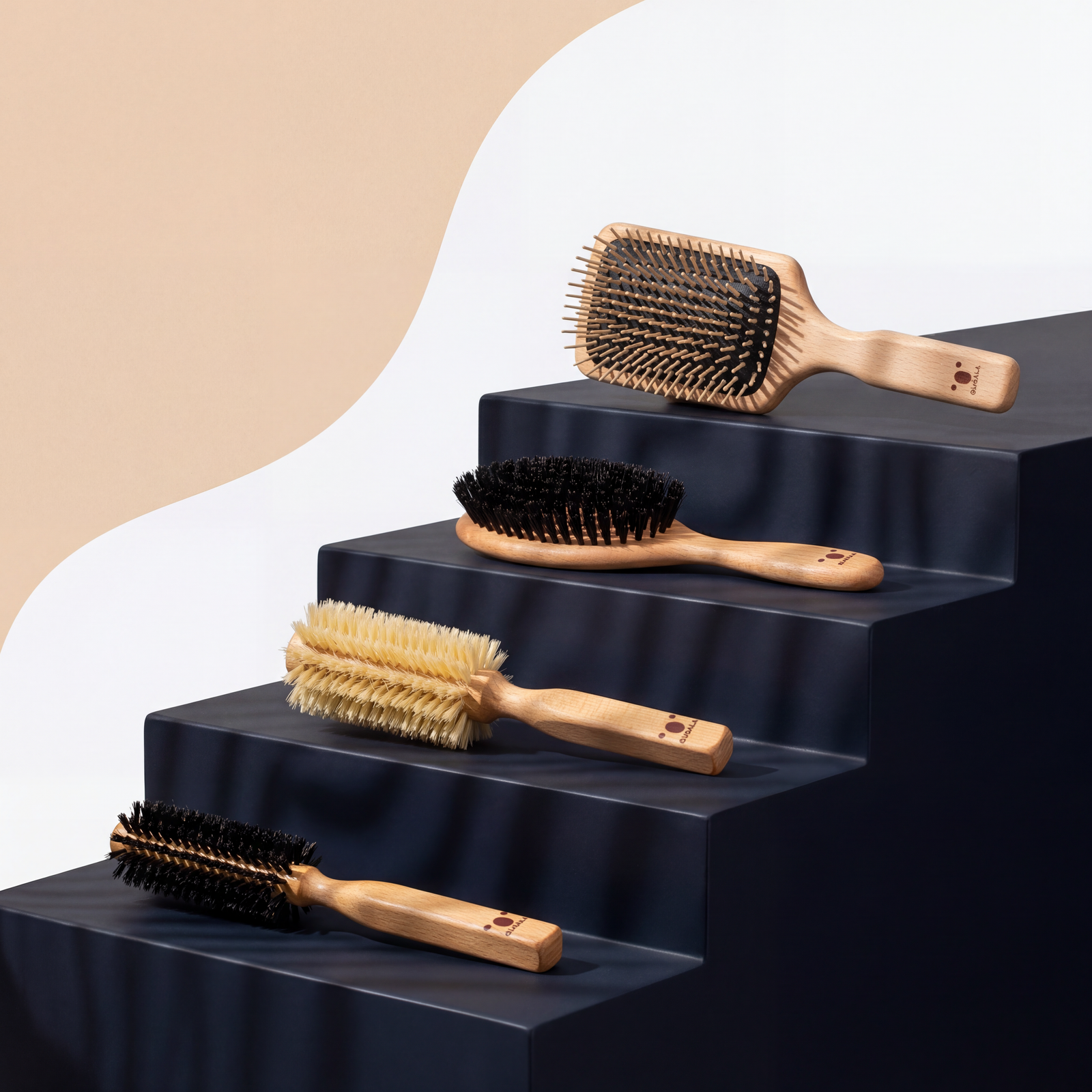
Three hair states, three tools: paddle brush for wet hair, natural-fibre brush for dry care, blow-dry brush only when actively blow-drying. Knowing and using this system keeps mechanical stress on your hair low and gets the full potential out of every QUOALA tool — whatever your hair type or routine.
6. Frequently asked questions
Should I brush my hair wet or dry?
When wet, hair loses up to 50 % of its tensile strength because water temporarily breaks the hydrogen bonds. On wet hair, only use a brush with widely spaced pins — such as the QUOALA paddle brush with hornbeam pins. Dense natural-bristle brushes are meant for dry hair.
How often should I brush my hair each day?
There is no universal number. Hair type, length and care goal all play a role. In the morning, brushing spreads the natural sebum film; in the evening it removes dust residue and prepares the hair for the night. Brushing too much adds unnecessary mechanical stress.
What is the difference between boar bristles and Tampico fibres in hairbrushes?
Boar bristles have a scale-like microstructure that spreads sebum evenly along the hair shaft and smooths the cuticle — this creates a natural, glossy shine. Tampico agave fibres are plant-based and firm: Tampico absorbs oil; whether it releases any of it back into the hair is plausible, but has not been measured. It provides firm grip for thick hair as a vegan alternative.
Why does my hair break when I brush it?
Breakage when brushing often has three causes: brushing wet hair with the wrong brush, bristles that are too harsh for fine hair, or brushing down from the roots without first detangling the ends. Always start at the ends and work your way up to the root step by step.
Can I use a QUOALA hairbrush for blow-drying?
Yes, with care. For active blow-drying — brushing and hot air at the same time — we recommend limiting the hairdryer temperature to a maximum of 150 °C and not holding the brush permanently in the direct stream of heat.
How do I clean my QUOALA hairbrush properly?
Regularly remove trapped hairs with a brush comb or a toothpick. Comb hair out dry; at most, briefly wipe the bristles with a damp cloth and under no circumstances soak them. Let the brush dry with the bristles facing down so that water does not soak into the wood.

The tools for your framework
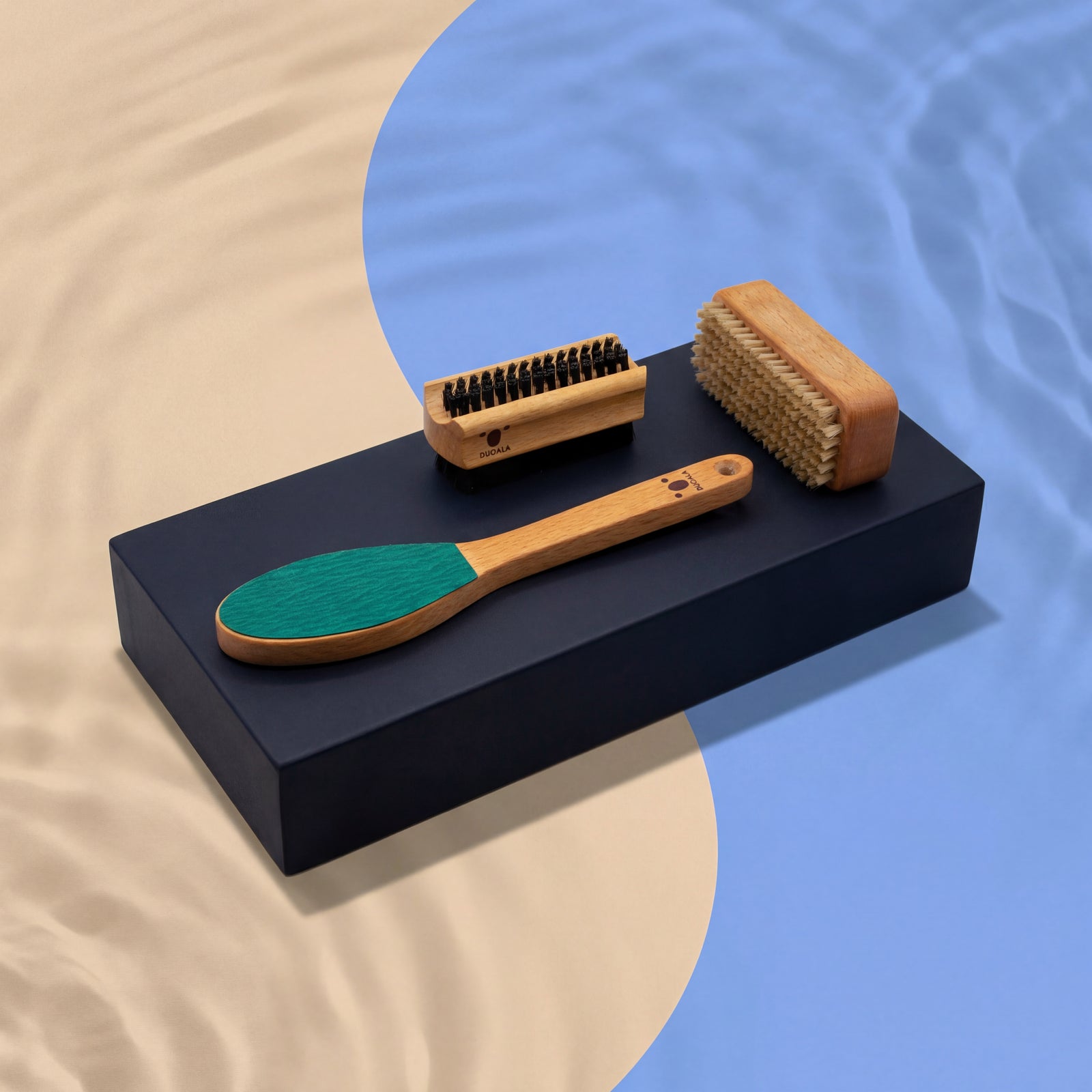
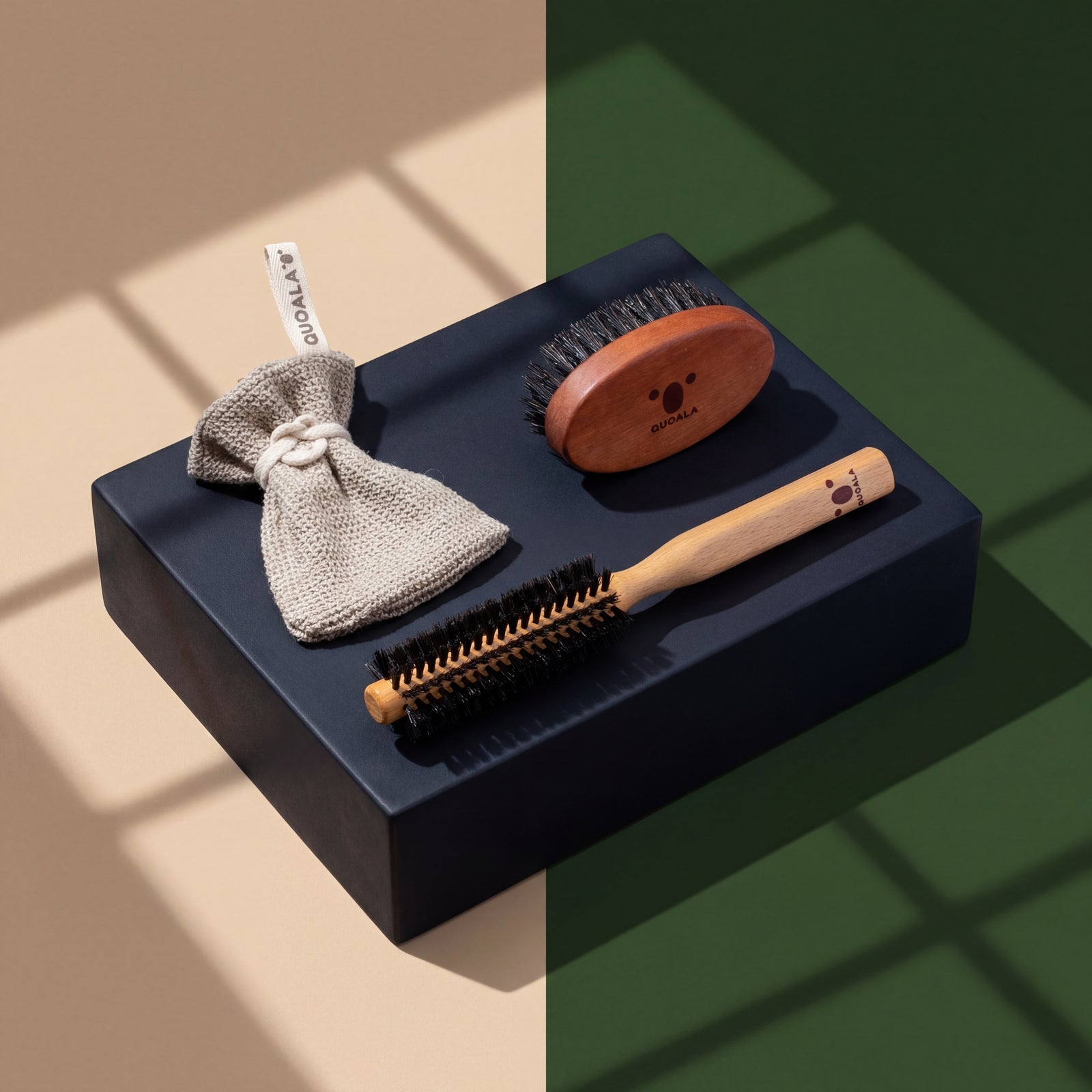
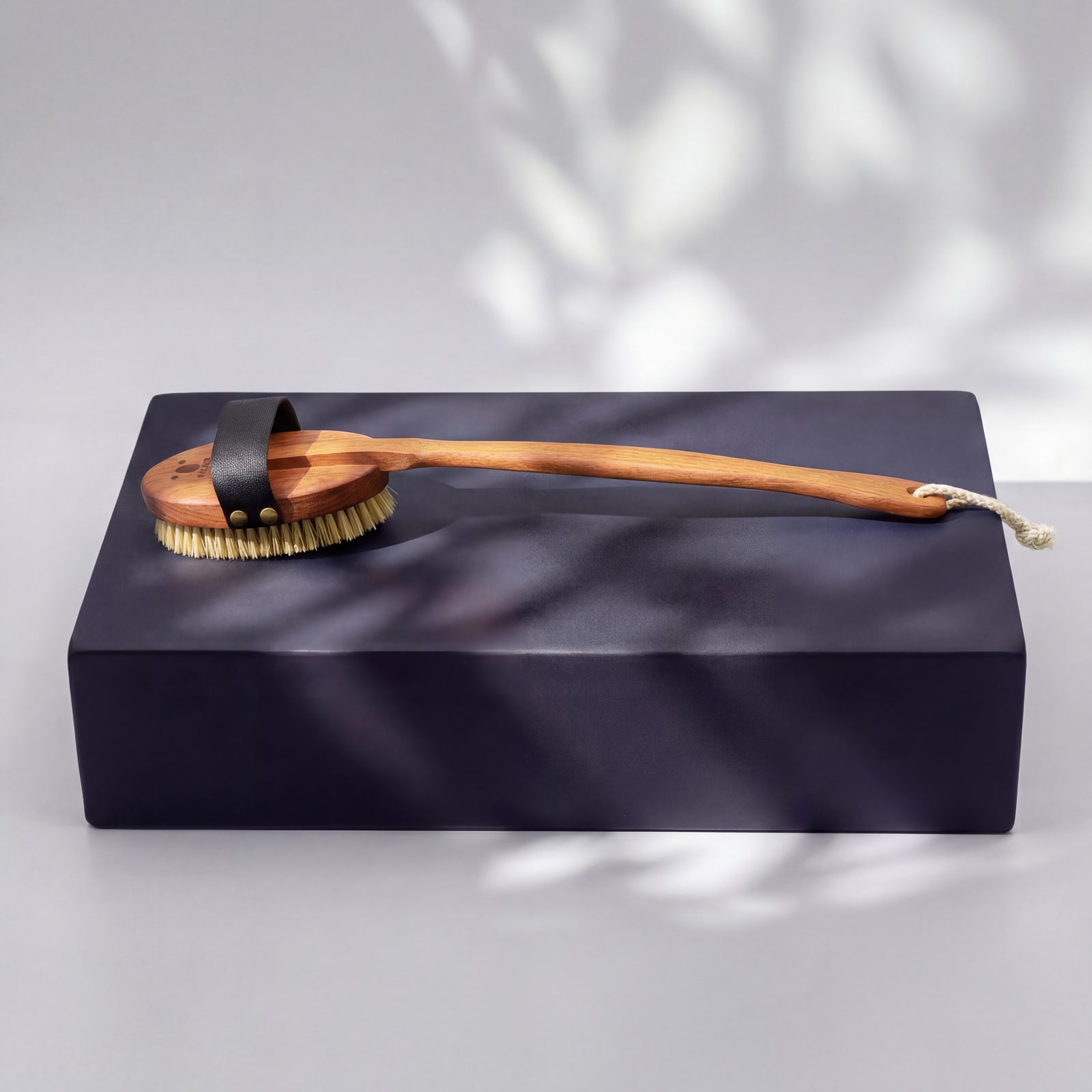
Rely on science-based personal care. Discover our range of detangling, care and styling brushes made from FSC wood.
Sources and further reading
Scientific sources
- Yu et al. (2017), Structure and mechanical behavior of human hair, Materials Science and Engineering C. Wet, warm hair gives way sooner. Our assessment S19 · Source
- American Academy of Dermatology: Tips for healthy hair. Detangle wet hair with a wide-tooth comb. Our assessment S83 · Source
- Robbins & Kamath (2007), Hair breakage during combing. IV. Brushing and combing hair, Journal of Cosmetic Science. Lab study on hair fibres. Our assessment S45 · Source
- Gavazzoni Dias (2015), Hair cosmetics: an overview, International Journal of Trichology. Review: hair weathers towards the tips, so comb and brush gently. Our assessment S91 · Source