















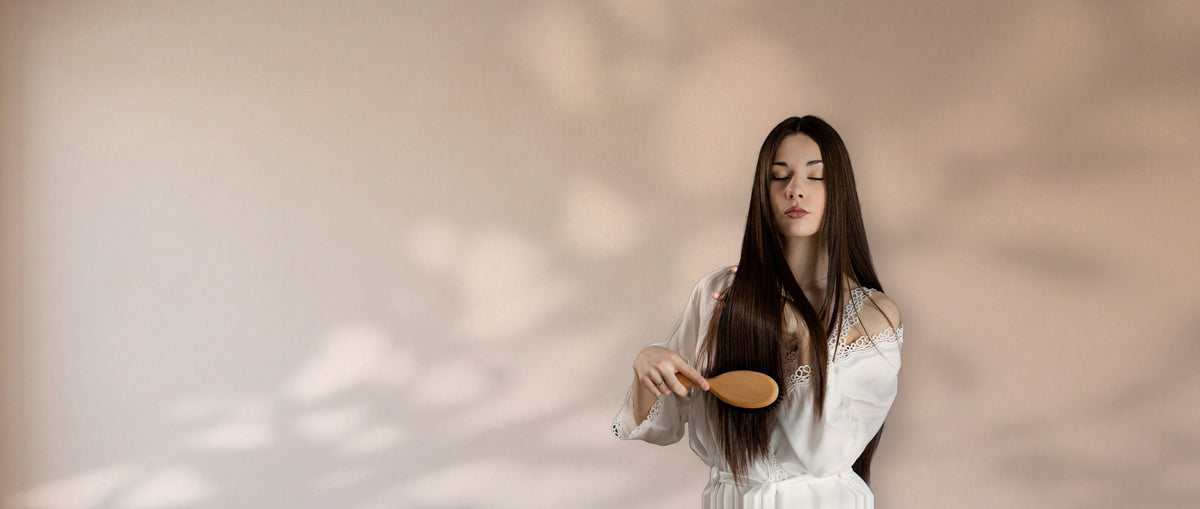
"100 brush strokes a day" – many of us remember that advice from our grandmothers. But is brushing your hair actually healthy? And how often is right? The honest answer is less spectacular than the myth: brushing has a real benefit, and it costs your hair a little every time. Knowing that, you brush more deliberately and for less time.
The key points at a glance
Brushing your hair is healthy if you keep it short and gentle. An animal bristle brush carries the skin's own oil from the scalp into the lengths [1]. At the same time, every brushing wears away some of the protective oil layer and can break hairs [2] [3]. So the rule is: as often as needed, no more. The 100 strokes are a myth, and brushing does not help against hair loss.
Contents
1. Is brushing good for your hair?
Yes, in moderation. Brushing has two documented sides, and both belong in an honest answer.
What brushing does for you
It distributes the skin's own oil. The scalp produces sebum; the lengths of your hair do not. Animal bristles such as boar bristles have the same scale structure as human hair: they pick up sebum at the scalp and spread it along the hair [1]. That is why hair shines after brushing with a boar bristle brush, without any product.
It detangles and smooths. And many people find brushing the scalp pleasant. A measurable drop in stress from scalp massage has so far been shown with hands, not with a brush [5].
What brushing costs
Every brushing wears away some protection. A fine oil layer sits on the surface of the hair. Brushing and combing speed up its loss, and the hair then rubs more [2].
Brushing breaks hairs. In the lab, brushing caused about as much breakage as combing, mostly where loops of hair get caught [3]. It cannot be avoided entirely; gently and starting from the ends breaks the fewest hairs [3] (see section 5).
Summary: Is brushing your hair healthy?
Brushing spreads sebum into the lengths and detangles. But each time it costs some of the protective layer and can break hairs. Brushing is healthy when it stays short and gentle.
2. How often should you brush your hair?
As often as needed, no more. There is no study that sets an ideal number of strokes. But there is a clear direction: in a small study with 14 women, fewer hairs fell out when they brushed less often [4]. Together with the wear on the protective layer [2], that means: shorter is better than longer.
For most hair types, this is enough in practice:
- Once in the morning, to detangle and spread the sebum.
- In the evening if needed, when your hair is tangled or you want to brush the day out.
- Slowly, not quickly. About a hand's width per second is perceived as particularly pleasant [6], and slow strokes catch less.
Oily roots? Then use animal bristles to brush the sebum deliberately into the lengths [1]. Dry, stressed lengths? Then brush less and especially gently [8].
Summary: How often to brush?
There is no fixed number. Once or twice a day, briefly and slowly, is enough for most people. In the study, brushing less often meant fewer hairs lost.
3. The myth of 100 brush strokes
The 100 strokes promise long, shiny hair. There is no evidence for it, if anything the opposite. More strokes mean more wear on the protective layer [2], more chances for breakage [3] and, in the study mentioned above, more hairs lost [4].
The grain of truth in the myth: animal bristles really do spread sebum and so add shine [1]. But that takes a few calm strokes from the scalp to the ends, not 100.
Summary: 100 brush strokes
No evidence for the 100 strokes. Shine comes from animal bristles spreading sebum, and a few calm strokes are enough for that.
4. Does brushing help against hair loss?
No. There is no evidence that brushing prevents hair loss or speeds up hair growth.
For context: hairs in your brush are usually no cause for concern. According to the American Academy of Dermatology, it is normal to shed 50 to 100 hairs a day [10]. Not every hair in the brush is a warning sign. And if you brush less often, you will find fewer hairs in it [4].
When to see a doctor: if you lose noticeably more hair than usual for weeks, see thinning patches, or your scalp itches, flakes or hurts. That belongs in a dermatologist's hands, not in your brushing routine [10].
Summary: Hair loss
Brushing does not help against hair loss and does not make hair grow faster. Losing 50 to 100 hairs a day is normal.
5. How to brush gently
Brushing without any breakage is not possible. These five steps are kind to your hair:
- Brush dry. Wet, warm hair gives way sooner [7]. The American Academy of Dermatology recommends a wide-tooth comb instead of a brush for wet hair [11]. If you want to detangle wet hair, use only widely spaced pins and be very gentle.
- Start at the ends. Detangle the bottom few centimetres first, then work upwards section by section. Fewer loops of hair get caught, and that is where most breakage happens [3].
- Move slowly. About a hand's width per second [6]. Stop at a knot instead of pulling through.
- Be extra gentle with stressed hair. Coloured or damaged hair rubs more [8] and needs fewer, calmer strokes.
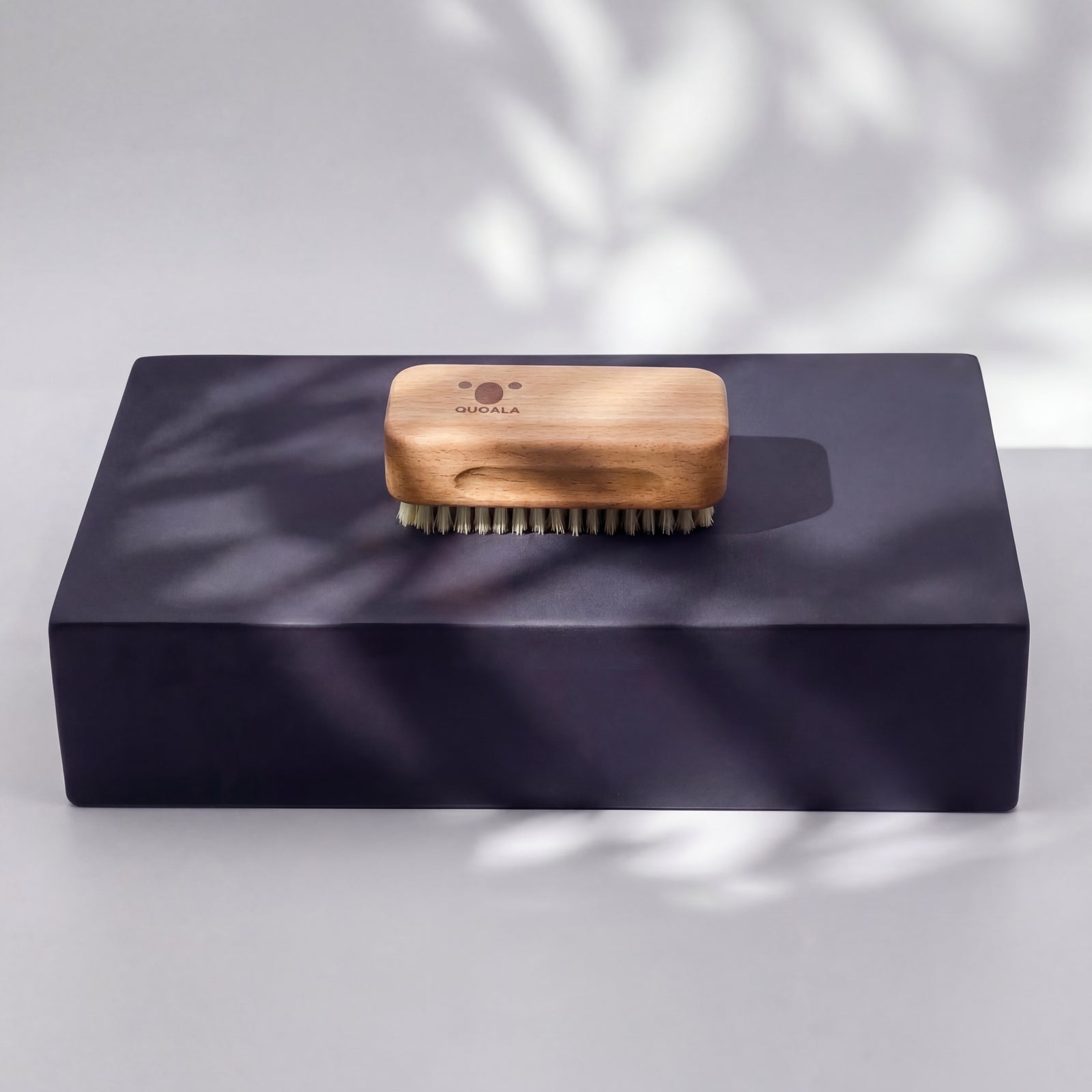
- Keep your brush clean. Remove hair regularly and let the brush dry well after washing. Wood also carries germs if it stays damp [9].
Summary: Brushing gently
Dry, from the ends, slowly. Extra gentle with stressed hair, and keep the brush clean and dry.
6. Which brush suits you?
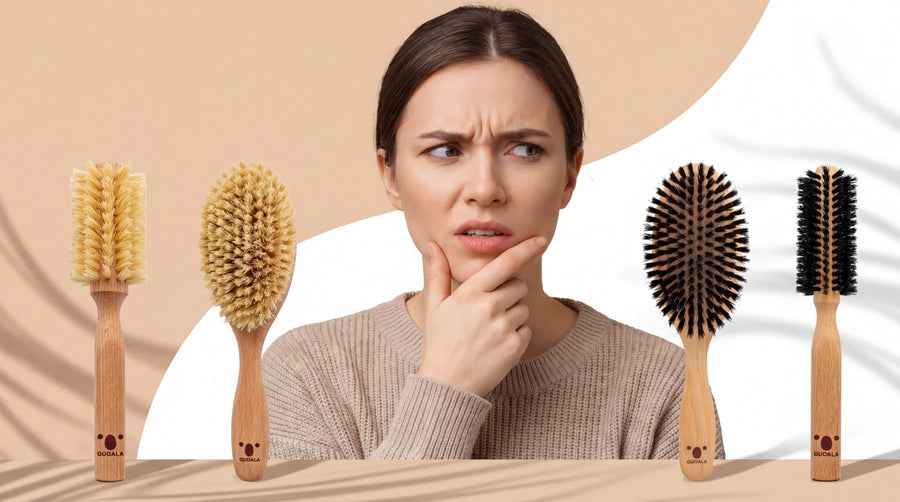
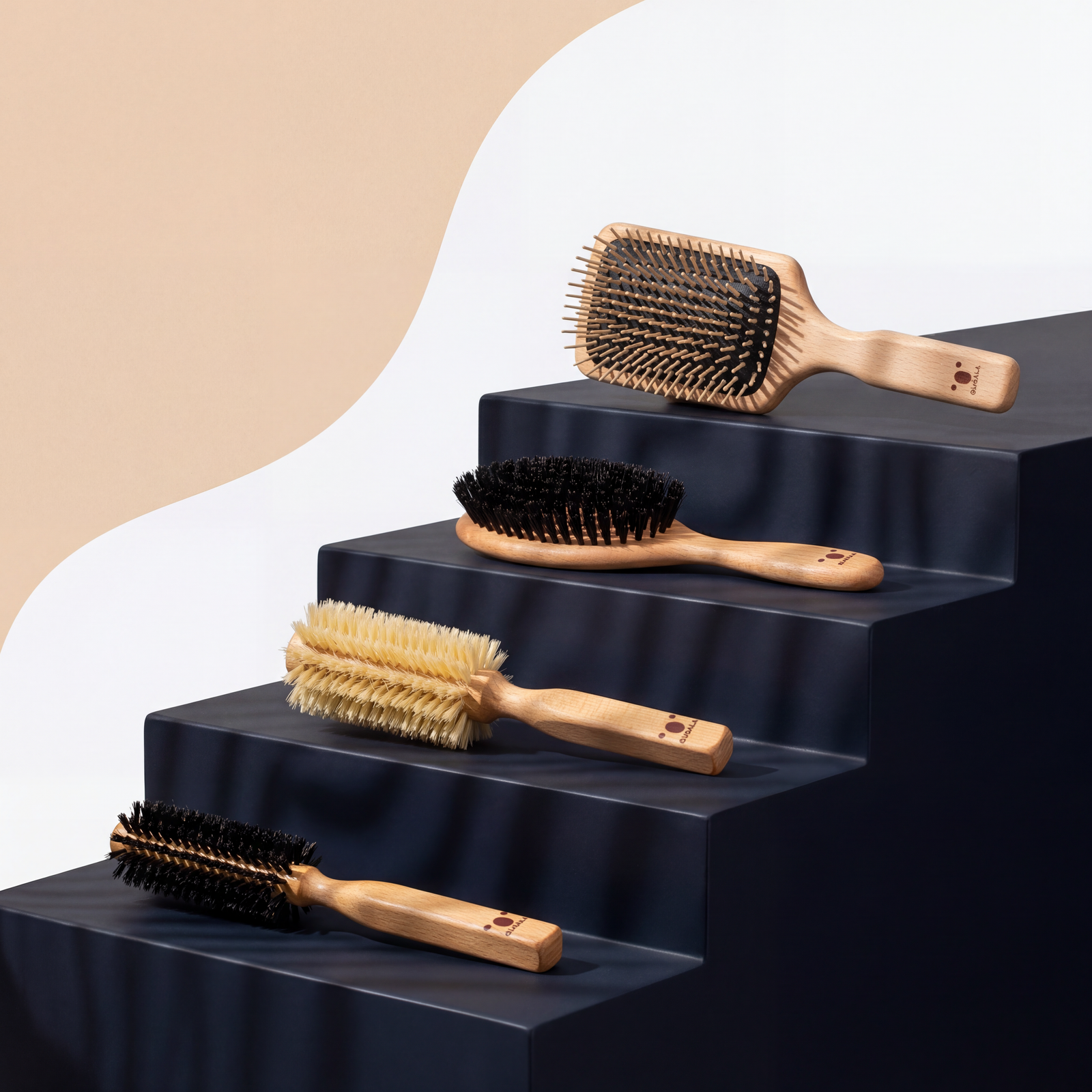
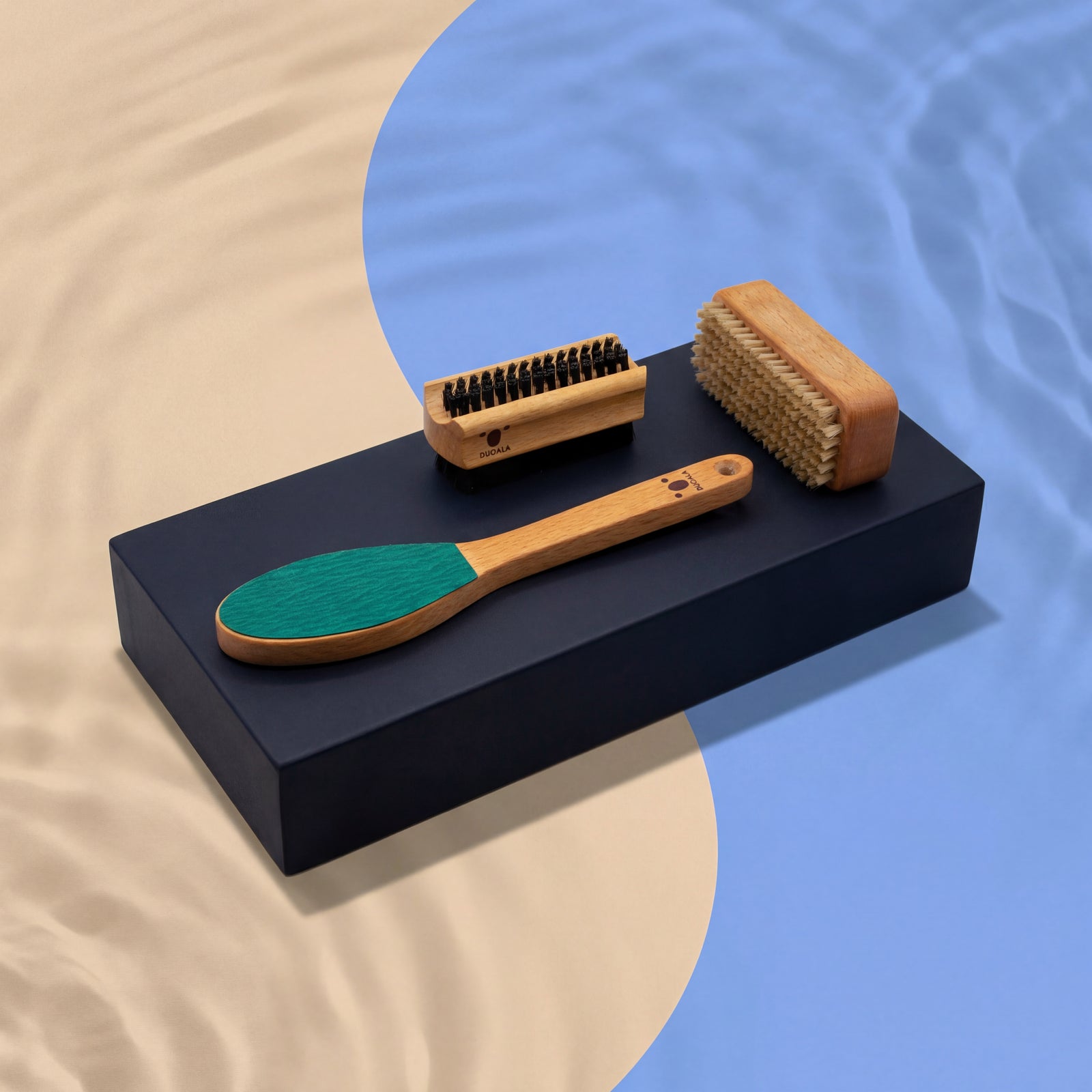
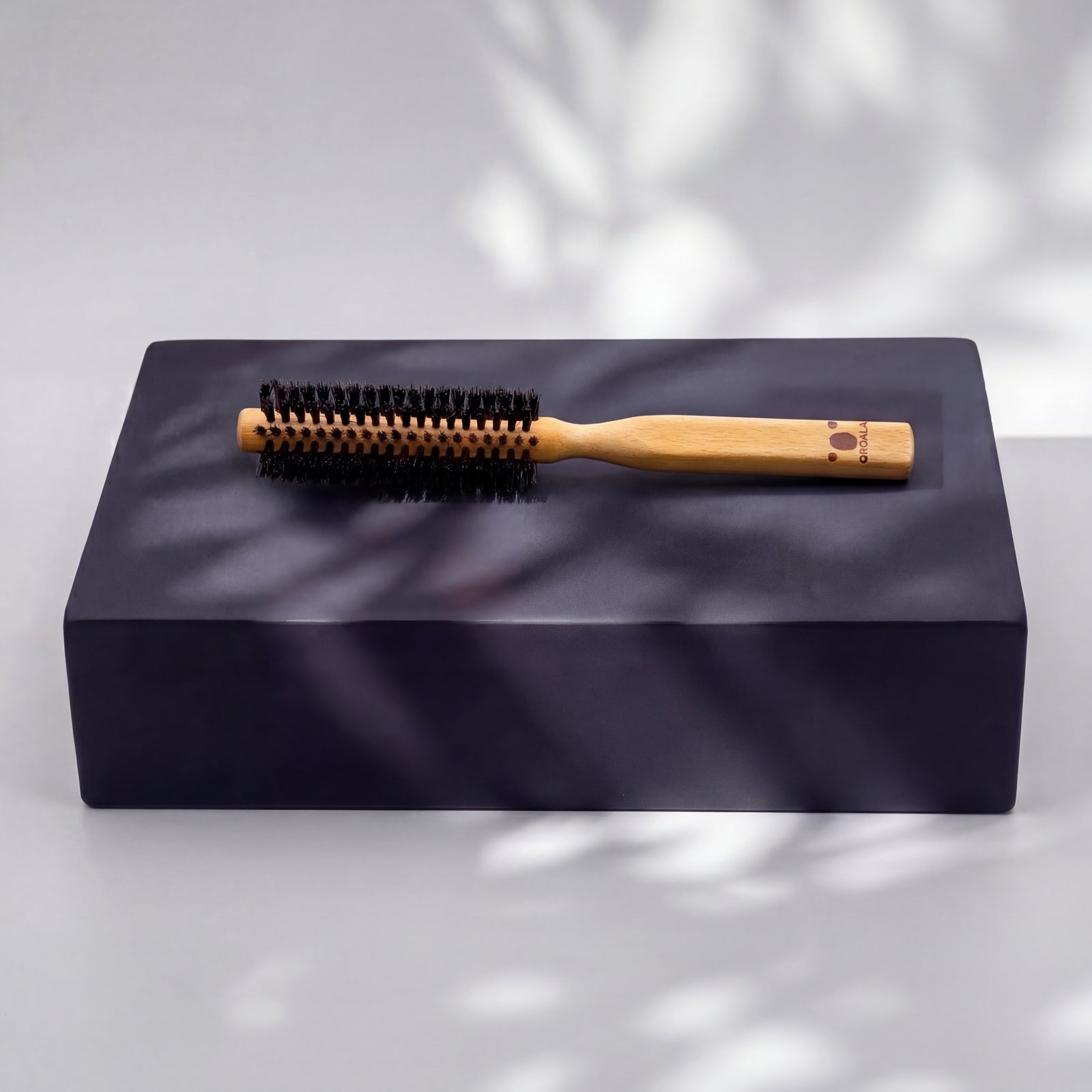
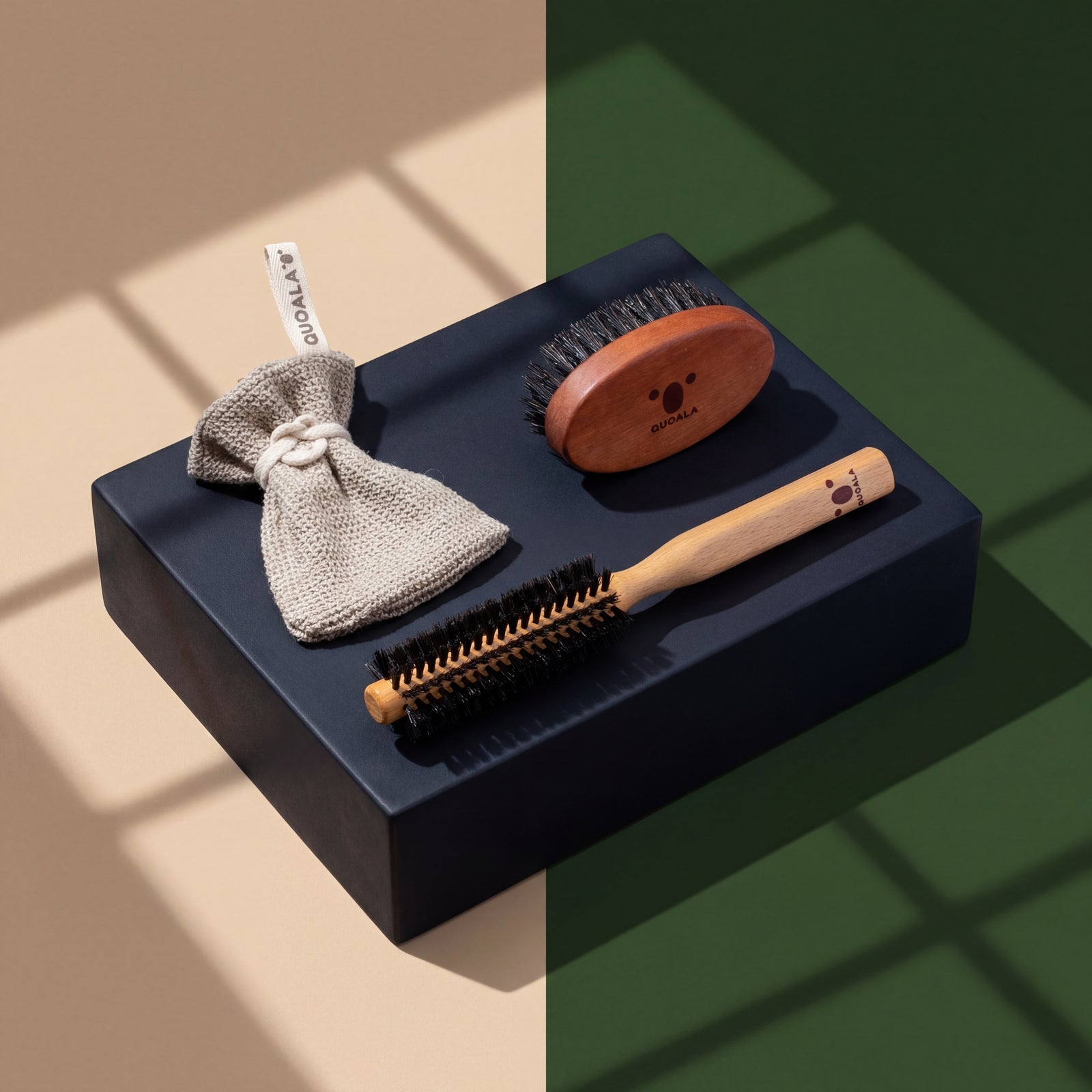
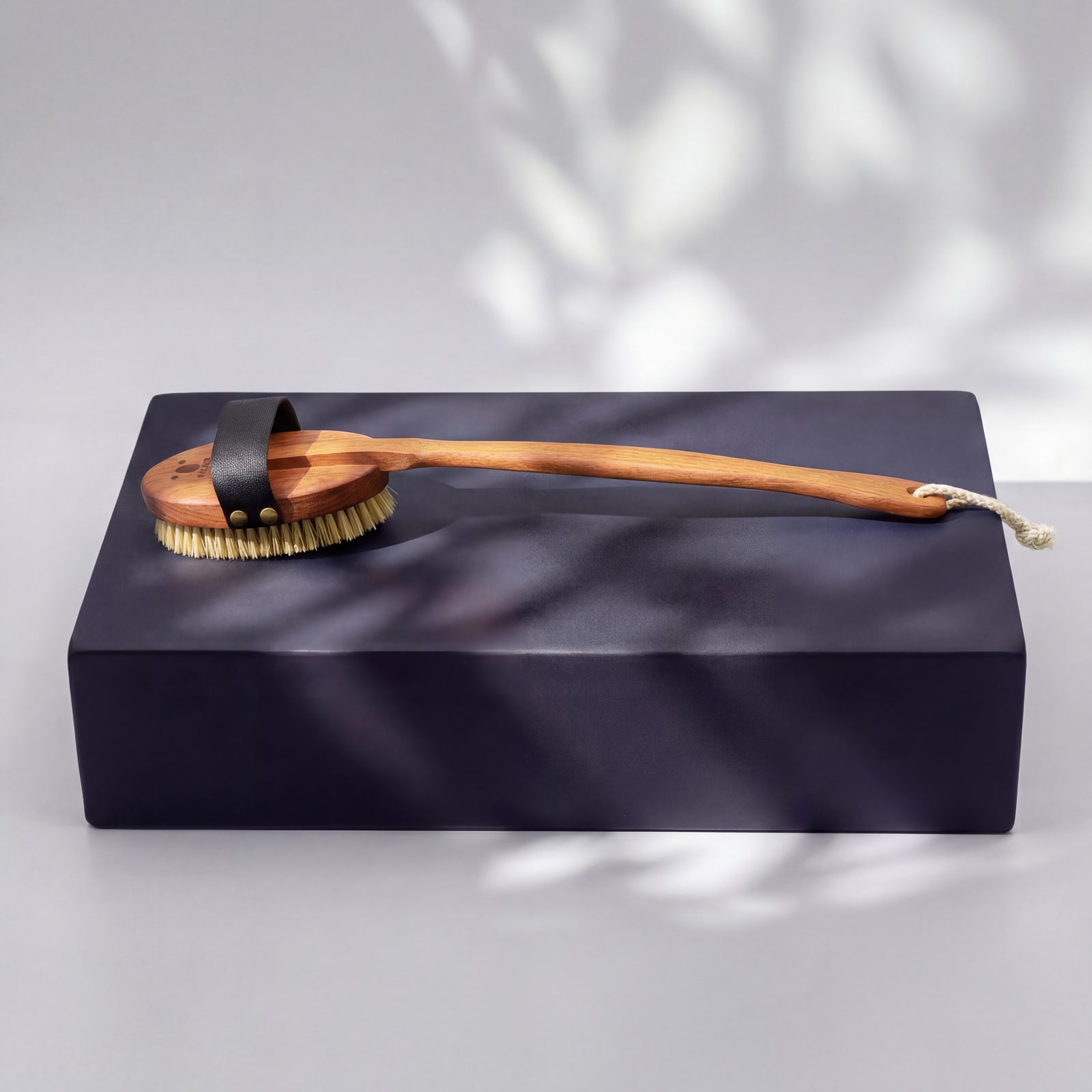
The brush decides how much of the benefit you get. Spreading sebum takes animal bristles with a scale structure, such as boar bristles [1]. If you want to brush vegan or have very thick hair, choose a firmer plant fibre. For detangling after washing, widely spaced wooden pins work well.

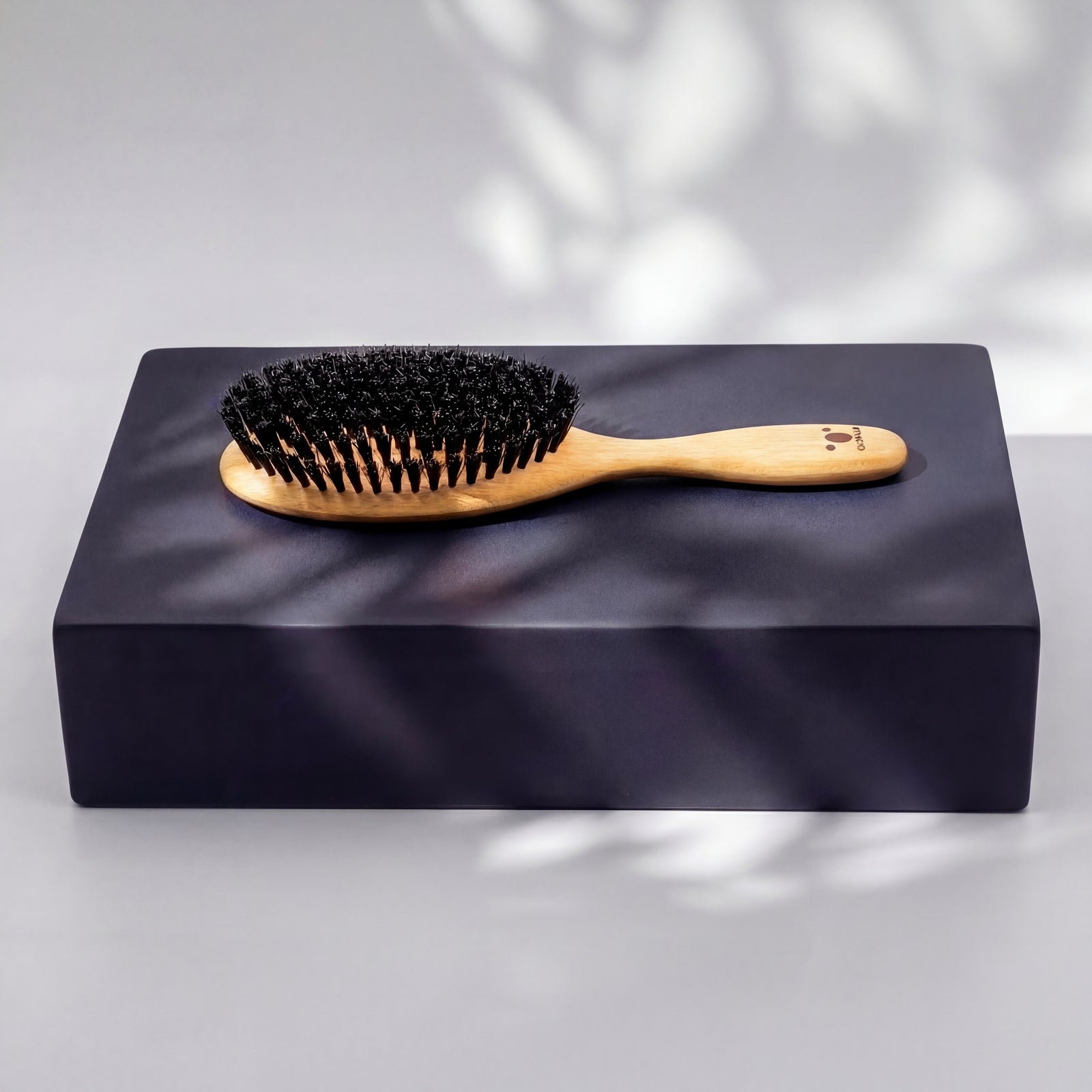
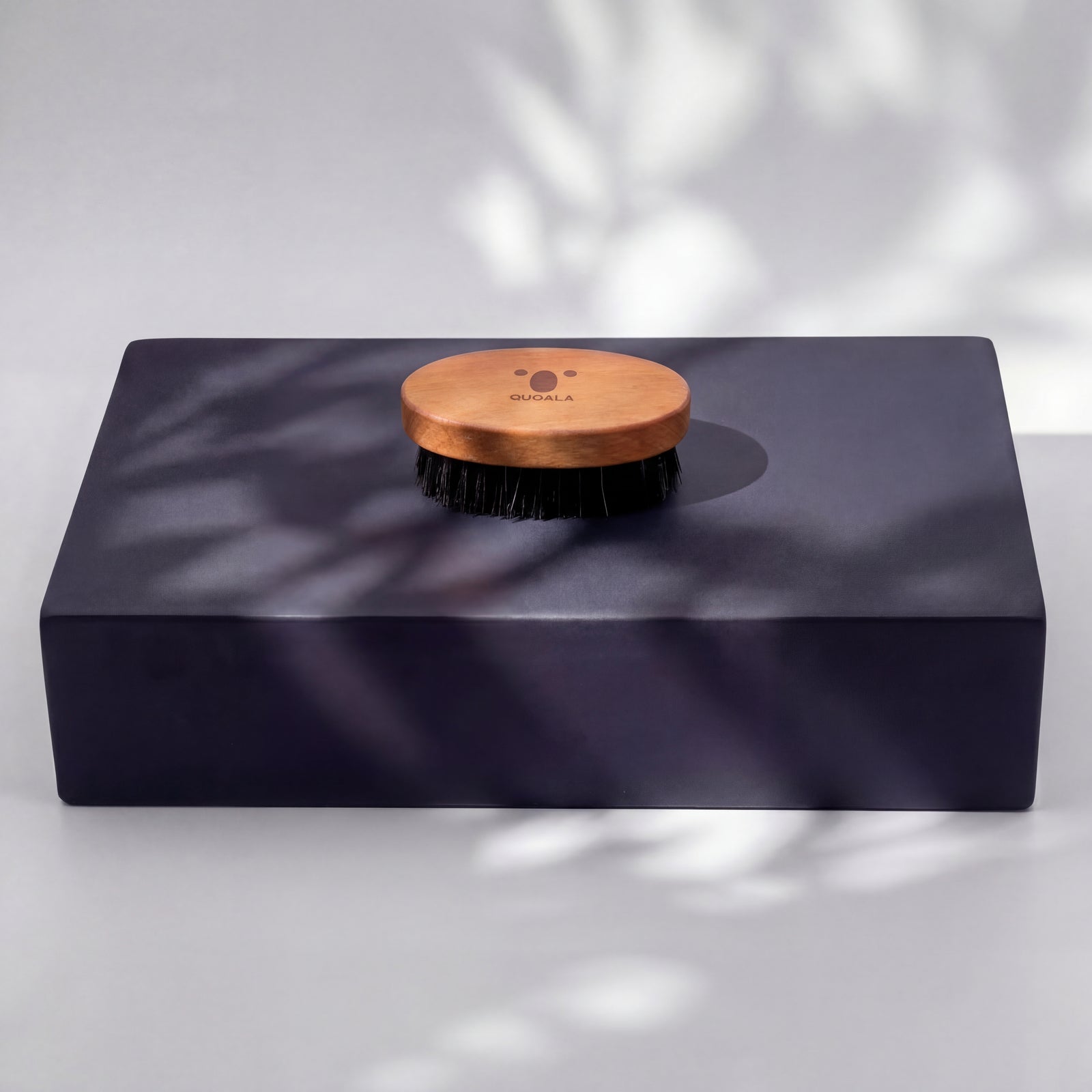
Hair Brush, Boar Bristles
Medium-firm. The scale structure of the boar bristle spreads sebum into the lengths [1]. For fine to normal hair and the daily morning brush.
View product
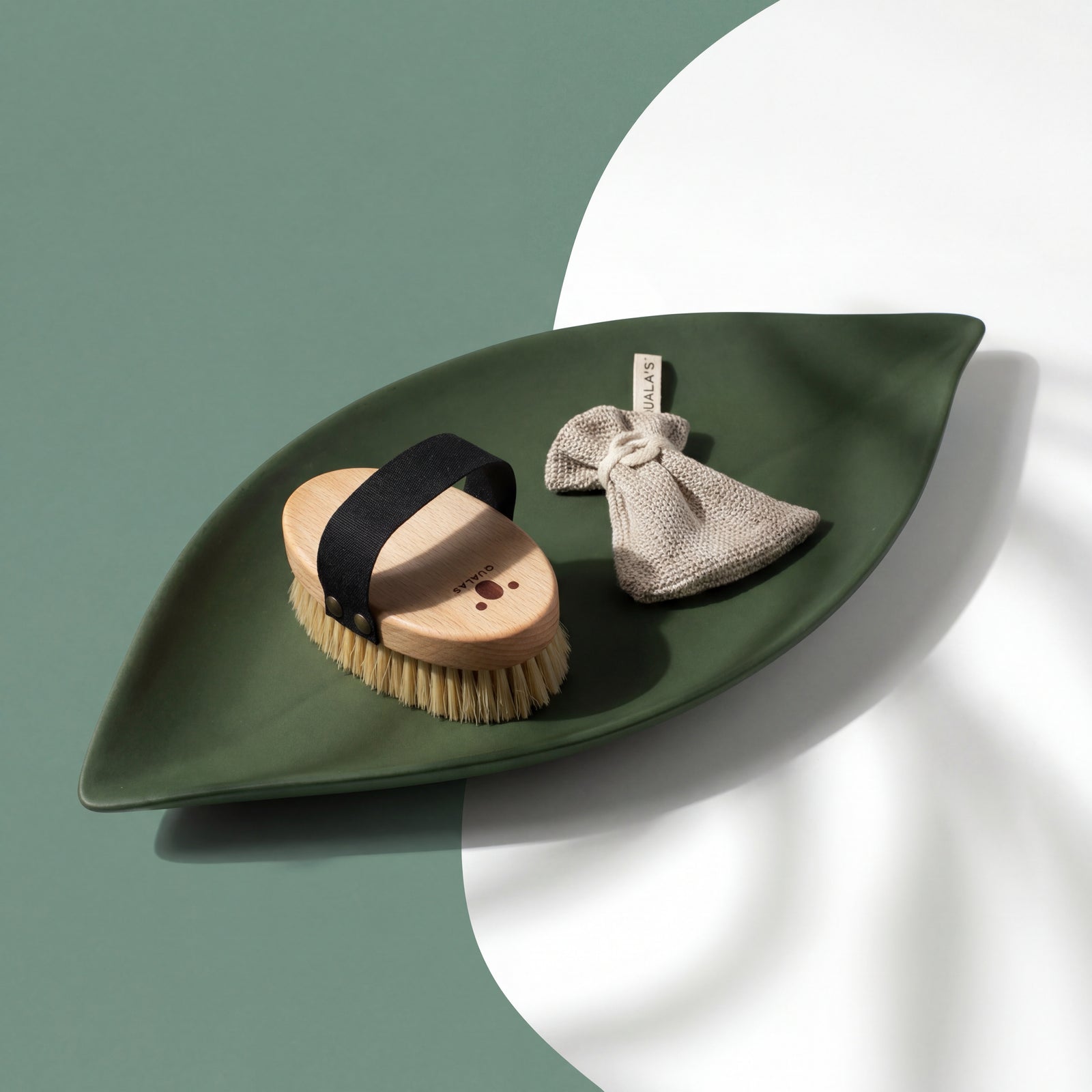
Hair Brush, Tampico
Firm and vegan. The stronger plant fibre for thick hair and for anyone who prefers to brush without animal bristles.
View product
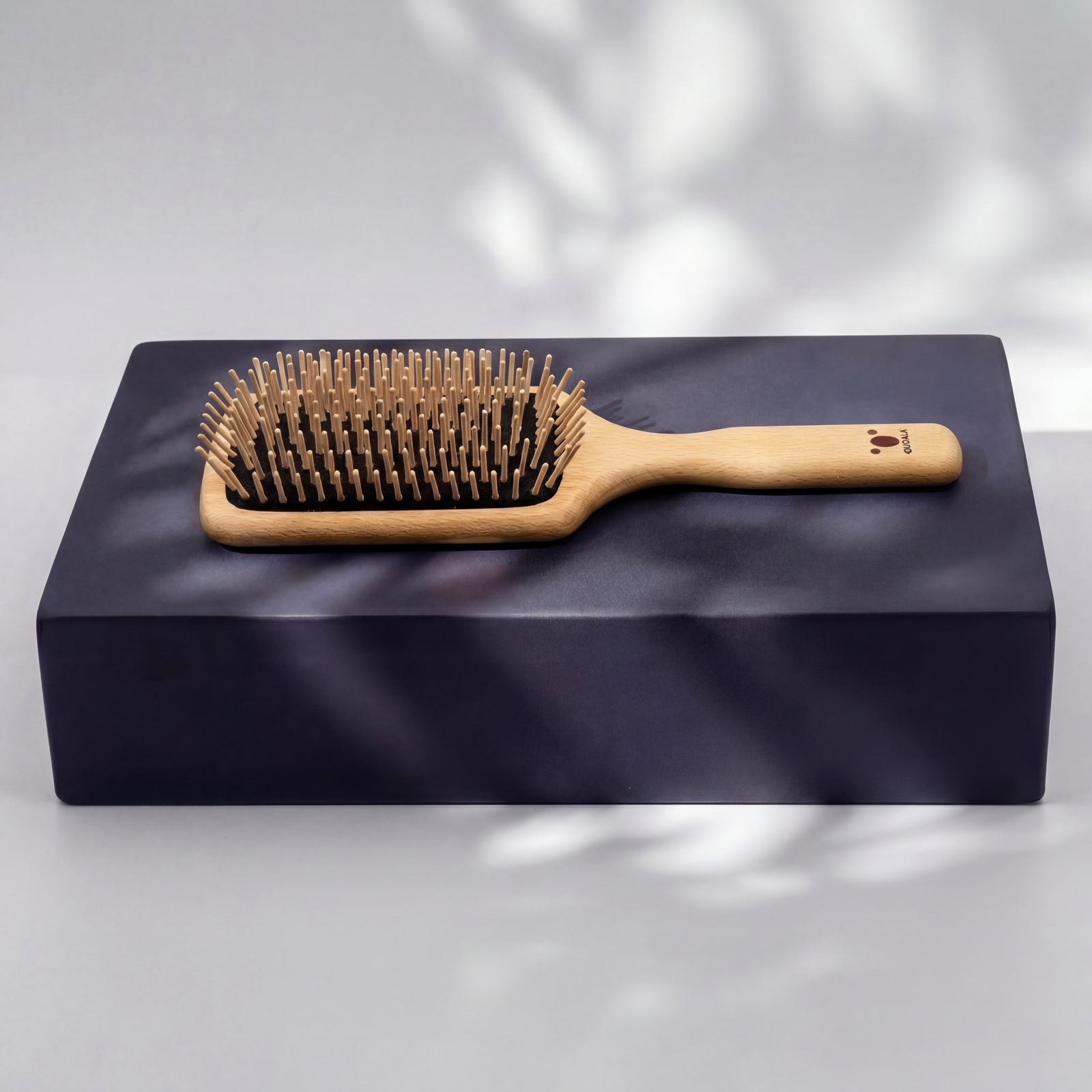
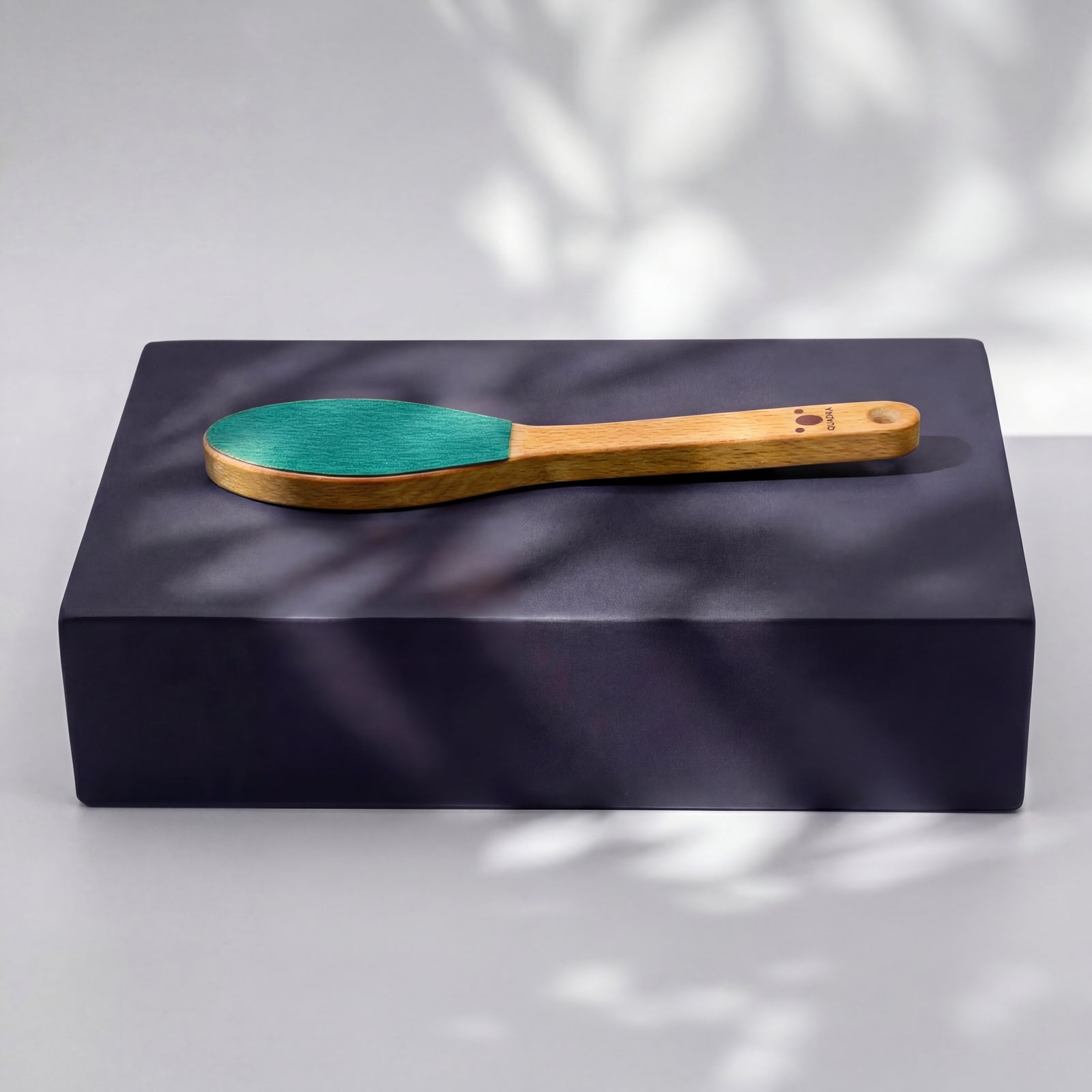
Paddle Hair Brush, Wood Pins
Firm and vegan, with widely spaced hornbeam pins. For gentle detangling after washing when there is no comb at hand.
View productWhat each bristle does in detail is explained in our comparison of boar bristle vs. tampico fibre.
Summary: The right brush
Boar bristles to spread sebum, tampico for vegan care and thick hair, wooden pins for gentle detangling after washing.
7. Frequently asked questions
Is brushing your hair every day healthy?
Yes, if it stays short and gentle. Once a day, animal bristles spread sebum into the lengths [1]. Long or rough brushing, on the other hand, wears away the protective layer and breaks hairs [2] [3].
How many times a day should I brush my hair?
For most people, one or two short sessions are enough: in the morning to detangle, in the evening if needed. There is no study with an ideal number, but brushing less often meant fewer hairs lost [4].
Do I have to brush 100 times for shiny hair?
No. Shine comes from animal bristles spreading sebum [1]. A few calm strokes from the scalp to the ends are enough.
Does brushing help against hair loss?
No, there is no evidence for that. Losing 50 to 100 hairs a day is normal [10]. If you lose noticeably more, have it checked by a dermatologist.
Can I brush wet hair?
Better not. Wet hair gives way sooner [7]. Use a wide-tooth comb [11] or a brush with widely spaced pins and detangle gently from the ends.

Brush less, brush better
Boar bristle, plant fibre or wooden pin: our hair brushes have handles made of FSC-certified wood and are made to last for years.
Sources and further reading
Scientific sources
- Robbins (2012), Chemical and Physical Behavior of Human Hair, Springer; Gao et al. (2019). Animal bristles spread sebum along the hair. Our assessment S8 · Source
- Weiand et al. (2025), Understanding and controlling the friction of human hair, Advances in Colloid and Interface Science. Brushing and combing wear away the lipid layer. Our assessment S24 · Source
- Robbins & Kamath (2007), Hair breakage during combing. IV. Brushing and combing hair, Journal of Cosmetic Science. Lab study on hair fibres. Our assessment S45 · Source
- Kiderman et al. (2009), Journal of Dermatological Treatment. 14 women, not randomised: brushing less often, less hair loss. Our assessment S26 · Source
- Kim et al. (2016), Journal of Physical Therapy Science. Scalp massage by hand, 34 women, 10 weeks. Our assessment S18 · Source
- Perini et al. (2015), Frontiers in Behavioral Neuroscience. Stroking speed and pleasant touch. Our assessment S56 · Source
- Yu et al. (2017), Structure and mechanical behavior of human hair, Materials Science and Engineering C. Wet, warm hair gives way sooner. Our assessment S19 · Source
- Bhushan et al. (2005), Friction and wear studies of human hair and skin, Wear. Damaged hair rubs more. Our assessment S23 · Source
- Tomičić et al. (2020), Wood Science and Technology. Germs also adhere to wooden surfaces. Our assessment S60 · Source
- American Academy of Dermatology: Do you have hair loss or hair shedding? Losing 50 to 100 hairs a day is normal. Our assessment S82 · Source
- American Academy of Dermatology: Tips for healthy hair. Detangle wet hair with a wide-tooth comb. Our assessment S83 · Source