















The calendar is full, the phone keeps buzzing, and in the evening your thoughts keep circling. Stress is part of life, and a little of it even helps you tackle tasks. When it becomes a constant state, it is worth reducing it on purpose. The good news: the approaches that perform best in studies cost almost nothing and fit into an ordinary day.
The key points at a glance
Reducing stress works best through small things you do regularly. Slow exhaling calms you within minutes [1] [2]. Exercise, enough sleep, time in nature and people you trust lower the load over days and weeks [4] [6]. Short mindfulness exercises and a calm scalp massage round it off [8] [9]. If stress lasts for weeks and takes over your daily life, tips like these are no longer enough: then it belongs in professional hands, in Switzerland for example with Die Dargebotene Hand, phone 143.
Contents
- 1. Reducing stress: what stress is and when it becomes too much
- 2. Breathe out slowly
- 3. Move, even in small doses
- 4. Sleep better
- 5. Get out into nature
- 6. People who are good for you
- 7. Short mindfulness exercises
- 8. Scalp massage as a calm ritual
- 9. When to get help
- 10. Self-care without buying anything: what this has to do with QUOALA
- 11. Frequently asked questions
1. Reducing stress: what stress is and when it becomes too much
The World Health Organization describes stress as a state of worry or mental tension caused by a difficult situation. It is a natural response that helps us address challenges. A little stress is useful; too much can strain body and mind.
Typical signs according to the WHO: you find it hard to relax, you feel irritable or anxious, you struggle to concentrate, you have headaches, an upset stomach or trouble sleeping. Knowing these signs helps you notice earlier when it is time to act.
The seven approaches in this article are self-care for everyday stress. They do not replace treatment when stress turns into burnout, an anxiety disorder or depression. How to recognise this and where to find help in Switzerland is covered in section 9.
Summary: What stress is
Stress is a normal response to challenges. It becomes a problem when it persists. Restlessness, irritability, poor sleep and trouble concentrating are signals to reduce it deliberately. → Our standard: Practice
2. Breathe out slowly
The fastest way to reduce stress is your breath. A systematic review found that breathing slowly on purpose, at fewer than ten breaths per minute, is linked to signs of relaxation in the nervous system, such as higher heart rate variability [3]. A meta-analysis of twelve controlled trials with 785 adults shows that breathing exercises lowered perceived stress, with a small to medium effect [1].
In a Stanford study, one exercise that emphasises the exhale did particularly well: the "cyclic sigh". 108 participants practised five minutes a day for a month. The cyclic-sighing group improved their mood more than the mindfulness-meditation group, and their resting breathing rate dropped [2]. For context: most participants were students, the study ran online, lasted four weeks and was registered only afterwards. One of the authors is neuroscientist Andrew Huberman, who also recommends the technique publicly.
How to do the cyclic sigh:
- Breathe in twice through your nose: once deeply, then a short top-up until your lungs are completely full.
- Breathe out long and slowly through your mouth until all the air is out.
- Repeat, for a few breaths in a stressful moment or for five minutes in a row [2].
How Huberman builds breathing, morning light and sleep into his day is covered in our article Andrew Huberman: routines for more energy in everyday life.
Summary: Breathing
Slow breathing with a long exhale has a measurable calming effect. Five minutes of cyclic sighing a day improved mood in one study. The exercise is free and works anywhere. → Our standard: Practice
3. Move, even in small doses
Exercise is one of the best-studied ways to counter stress. According to the WHO, regular exercise can help reduce stress, and walking already counts. In adults, physical activity reduces symptoms of depression and anxiety.
A large overview of 97 reviews covering more than 1,000 trials found medium effects on depression, anxiety and psychological distress. More intense activity worked somewhat better [4]. To be honest: the quality of many included reviews was low, so the result is a good direction rather than an exact number.
As a guideline, the WHO recommends at least 150 minutes of moderate-intensity activity per week for adults. That is, for example, five brisk 30-minute walks. If you are starting from zero, start smaller: the stairs instead of the lift, walking to the station, a stroll after lunch.
Summary: Exercise
Exercise lowers stress and eases symptoms of anxiety and depression. Brisk walking already counts. WHO guideline: 150 minutes a week, and smaller steps towards it count too. → Our standard: Practice
4. Sleep better
Stress and sleep are linked in both directions. Stress can disturb sleep, and according to the WHO, enough sleep helps the body cushion the effects of stress. The American sleep medicine societies recommend that adults regularly sleep seven hours or more per night [5].
The WHO sums up what helps you fall asleep like this:
- Fixed times: go to bed and get up at roughly the same time every day, including weekends.
- A calm bedroom: quiet, dark and at a comfortable temperature.
- Screens away earlier: limit TV, laptop and phone before sleep.
- Light evenings: no large meals, no caffeine and no alcohol shortly before bed.
- Move during the day: people who have been active often fall asleep more easily.
A calm evening ritual that is always the same can help you stick to these rules, because it gives the day a clear end. You will find an example in section 8.
Summary: Sleep
Seven hours or more, fixed times, a dark and quiet bedroom, screens away earlier. Good sleep cushions stress. → Our standard: Practice
5. Get out into nature
Just 20 to 30 minutes outdoors can be enough. In a US study, 36 city dwellers spent ten minutes or more at least three times a week for eight weeks in an outdoor place that felt like nature to them. They were free to choose where and when. The stress hormone cortisol in their saliva fell more than it does anyway over the course of the day. Per minute spent, 20 to 30 minutes brought the most benefit [6].
For context: the group was small, and the comparison was with the participants' own natural daily curve, not with a separate control group [6]. The advantage of this approach: it combines easily with exercise. And if you go out in the morning, you also get daylight, which helps set your internal clock. More on this in the Huberman article on morning light.
Summary: Nature
Time in nature lowered the stress hormone cortisol in one study, most efficiently after 20 to 30 minutes. A nearby park is enough. → Our standard: Practice
6. People who are good for you
Talking brings relief. The WHO advises staying in touch with family and friends and sharing worries with people you trust. This can lift your mood and help you feel less stressed.
How strong this buffer can be was shown in an experiment in Zurich: 37 healthy men had to give a speech and do mental arithmetic in front of an audience, a standard test for social stress. Those who could be supported by their best friend beforehand had less cortisol in their saliva [7]. The limitation: a small group, men only, a lab setting.
For everyday life, this means: a phone call, a walk together or an honest conversation in the evening are not a waste of time but part of reducing stress.
Summary: Social contact
People you trust buffer stress, and in the lab this even showed up in cortisol. Sharing worries is a proven approach, not a weakness. → Our standard: Practice
7. Short mindfulness exercises
Mindfulness means noticing what is happening right now, without judging it. The best-studied format is the eight-week MBSR programme (Mindfulness-Based Stress Reduction). A meta-analysis of 29 studies with 2,668 healthy adults found large effects on stress and medium effects on anxiety and low mood [8]. The studies did, however, differ a lot from each other.
The US National Center for Complementary and Integrative Health (NCCIH) considers meditation and mindfulness low-risk, but stresses that there is little research on possible side effects. Some people experience unpleasant feelings such as anxiety while meditating. If you notice this, feel free to pause or choose a different exercise.
According to the WHO, a few minutes a day are enough to practise the self-help exercises in its stress guide. Three mindfulness exercises for everyday life:
- Watch your breath for one minute. Close your eyes or lower your gaze. Simply count your exhales up to ten, then start again. When your thoughts wander, gently come back.
- A three-minute body scan. Let your attention move slowly from your feet to your head. Where is there tension? Nothing needs to change, just notice.
- Do one everyday action with full attention. Brushing your teeth, drinking coffee or brushing your hair, fully present with the smell, the sound, the touch.
Summary: Mindfulness
Mindfulness training clearly lowers stress in healthy adults. A few minutes are enough to start: count your breaths, do a body scan or carry out one everyday action with full attention. → Our standard: Practice
8. Scalp massage as a calm ritual
A scalp massage can measurably lower stress, at least when done by hand. In a study from South Korea, 34 office workers, all women, received a 15- or 25-minute scalp massage twice a week for ten weeks. Compared with the control group, the stress hormones cortisol and noradrenaline as well as blood pressure changed measurably [9].
What the study does not show
The massage was given by trained people using their hands, and only women were tested, in a small group. Whether a self-massage or brushing the scalp has the same effect has not been studied [9]. That is why we do not claim that a brush lowers stress.
What we can say: slow, gentle touch is perceived as especially pleasant. In a lab experiment, people whose skin was stroked with a soft brush preferred a speed of about 1 to 10 centimetres per second, roughly a hand's width per second [10]. This was tested on the forearm and palm, not on the scalp.
How to turn it into a short evening ritual:
- Start with your fingertips. Two to three minutes of slow, circular movements from the hairline over the crown to the nape of the neck. This comes closest to the hand massage that was studied.
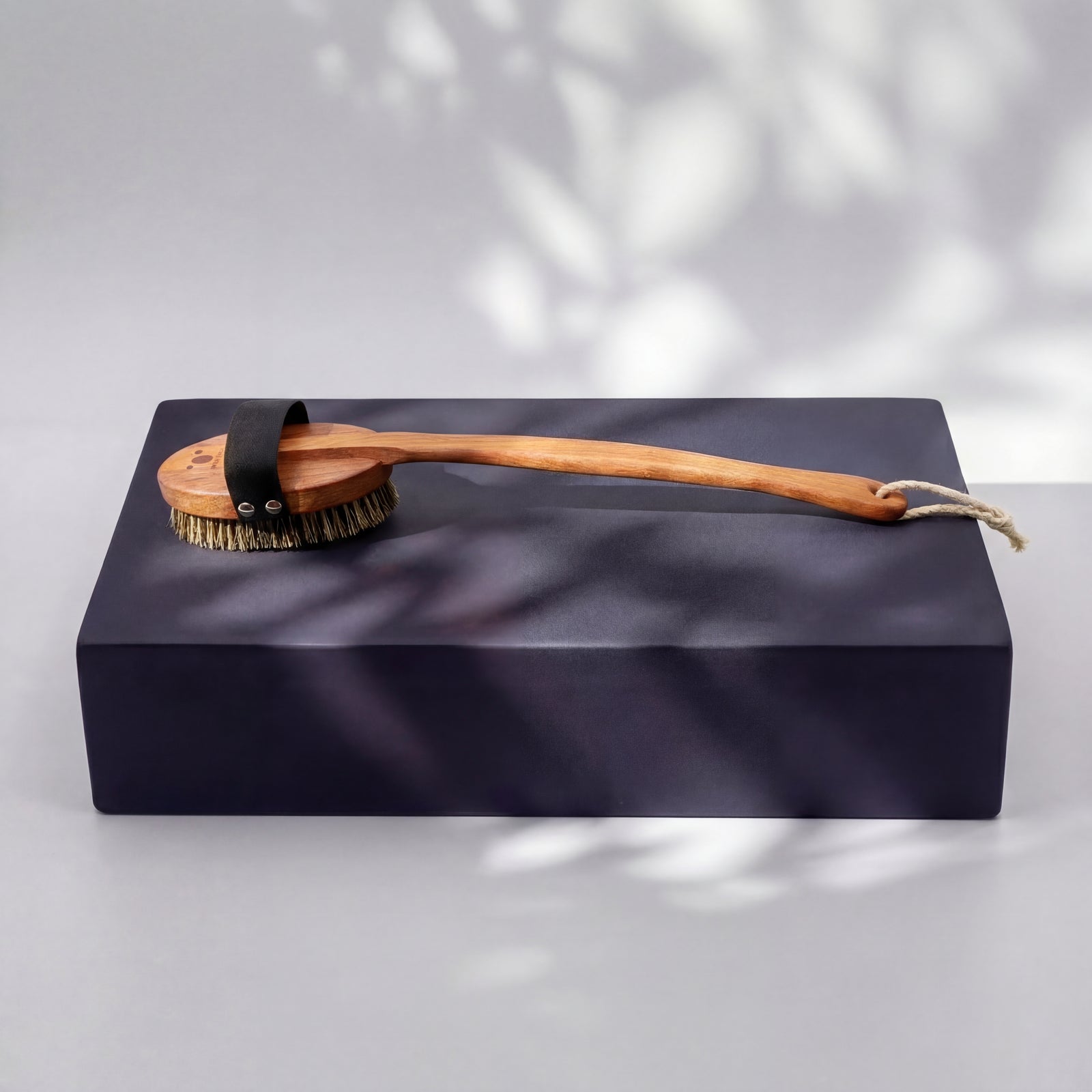
- Then brush through slowly. Calm strokes from the scalp to the ends, about a hand's width per second, with little pressure. Many people find this a pleasant way to finish.
- Breathe out as you go. Pairing the brush strokes with a long exhale combines two approaches from this article.
How often and how gently brushing is good for your hair is covered in Is brushing your hair healthy? How often and with what.
Summary: Scalp massage
A scalp massage by hand lowered stress hormones and blood pressure in one study. This has not been measured for brushing. As a calm evening ritual with slow strokes and a long exhale, it still fits well into a routine. → Our standard: Practice
9. When to get help
Most people cope well with stress. But if it becomes persistent and affects work, school or relationships, a mental health condition may be behind it, most commonly an anxiety disorder or depression. According to the WHO, this belongs in professional hands. Burnout cannot be breathed away either.
Get support if …
- the stress does not ease for weeks, even though you are working on it,
- you hardly sleep any more or constantly feel exhausted, empty or hopeless,
- work, family or friendships are noticeably suffering,
- you need more alcohol, tobacco or medication to get through the day.
Where to turn in Switzerland:
- Your GP as a first point of contact.
- Die Dargebotene Hand, phone 143: around the clock, anonymous and free of charge (call charges may apply depending on your provider). Its English-language service Heart2Heart is on 0800 143 000. Chat (German) daily from 10 am to 10 pm via 143.ch.
In an emergency or if you are thinking about harming yourself: call the emergency number 144 immediately.
Summary: Getting help
The tips in this article are meant for everyday stress. If stress lasts for weeks and dominates your daily life, talk to your GP or to Die Dargebotene Hand, phone 143. Getting help is self-care too.
10. Self-care without buying anything: what this has to do with QUOALA
Look at the seven approaches again: breathing, walking, sleeping, being outdoors, talking, pausing, massaging your scalp. None of them needs a product. For us that is not a contradiction but the core of our standard Practice: you know what works, and you decide what fits into your day.
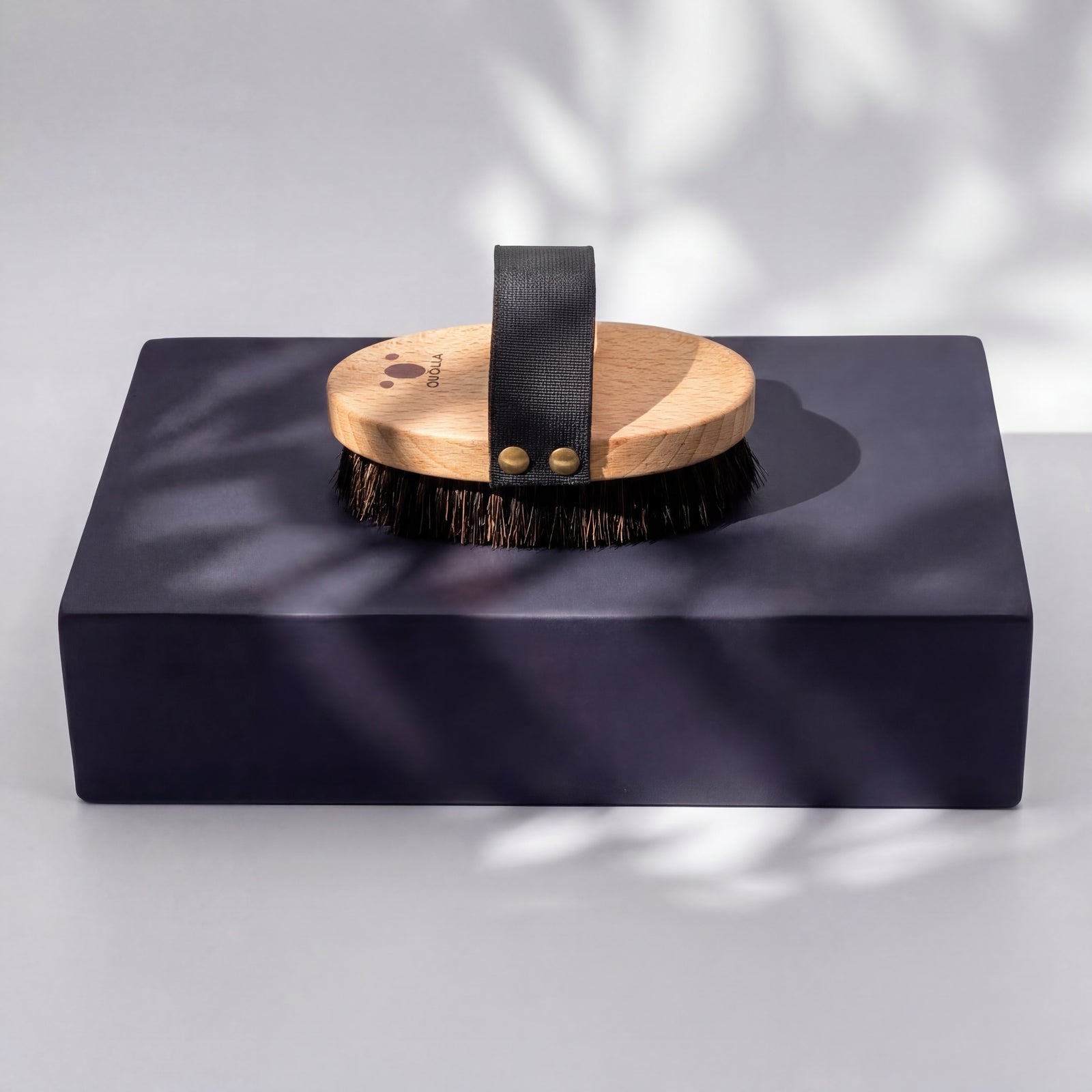
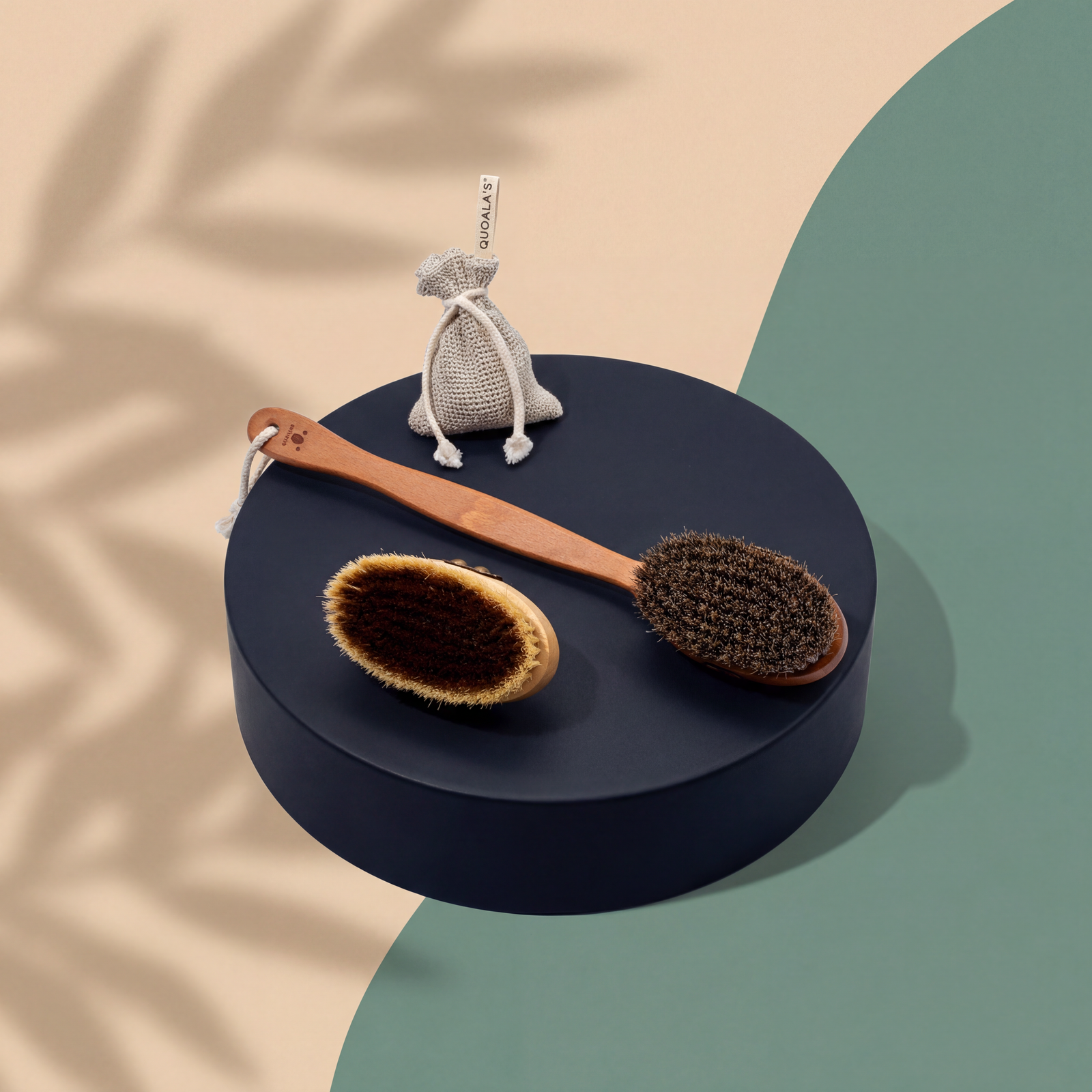
Knowledge alone does not reduce stress, though. The hard part is doing it every day. That is where we see our role: not as the solution, but as a small, tangible anchor for a routine you want anyway. A hairbrush that lies in the same place every evening can be the signal to end the day, put the phone away and breathe slowly for a few minutes. It does not lower stress, and we do not promise that it does.

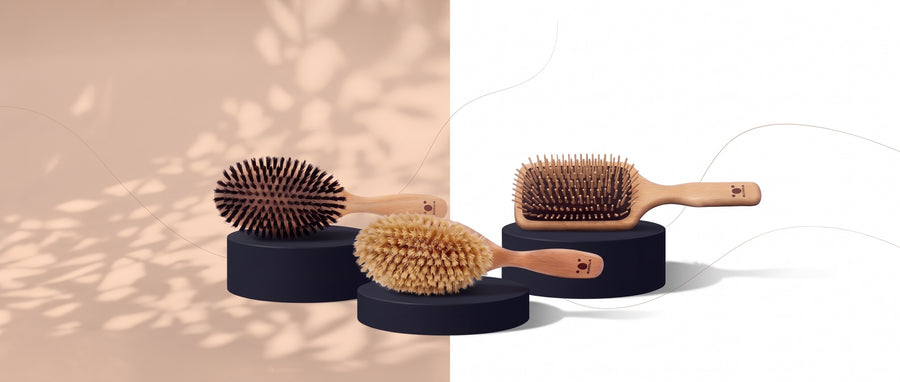
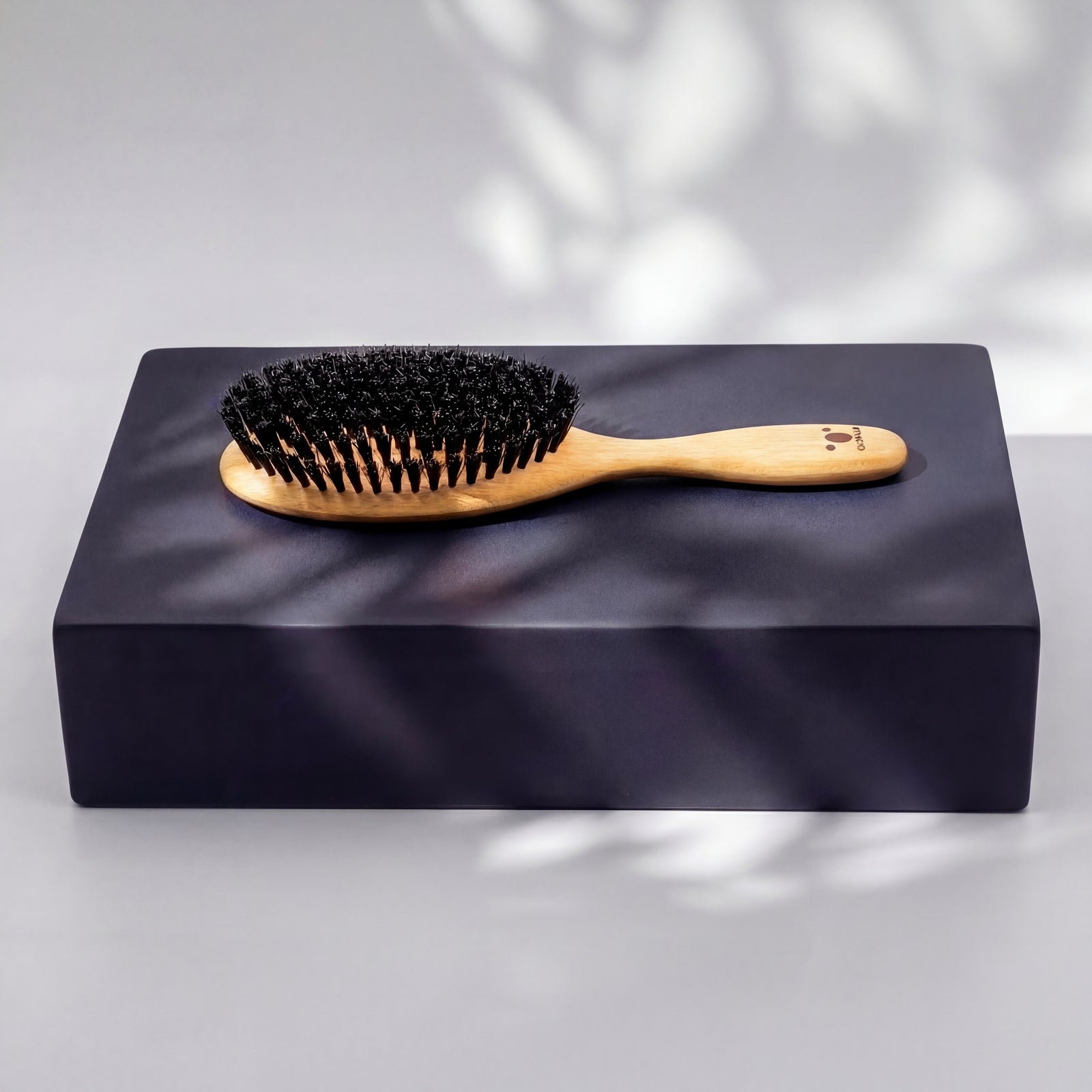
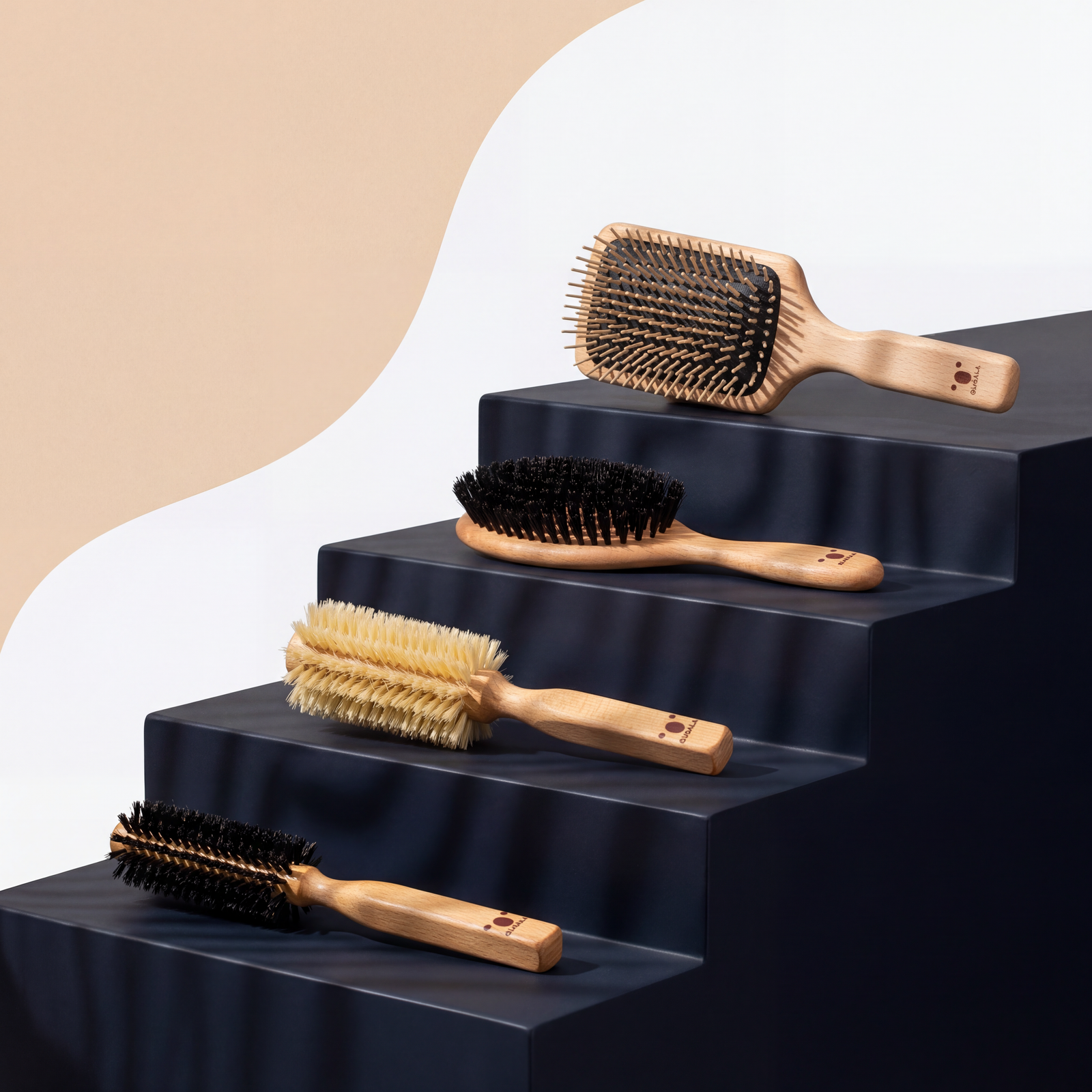
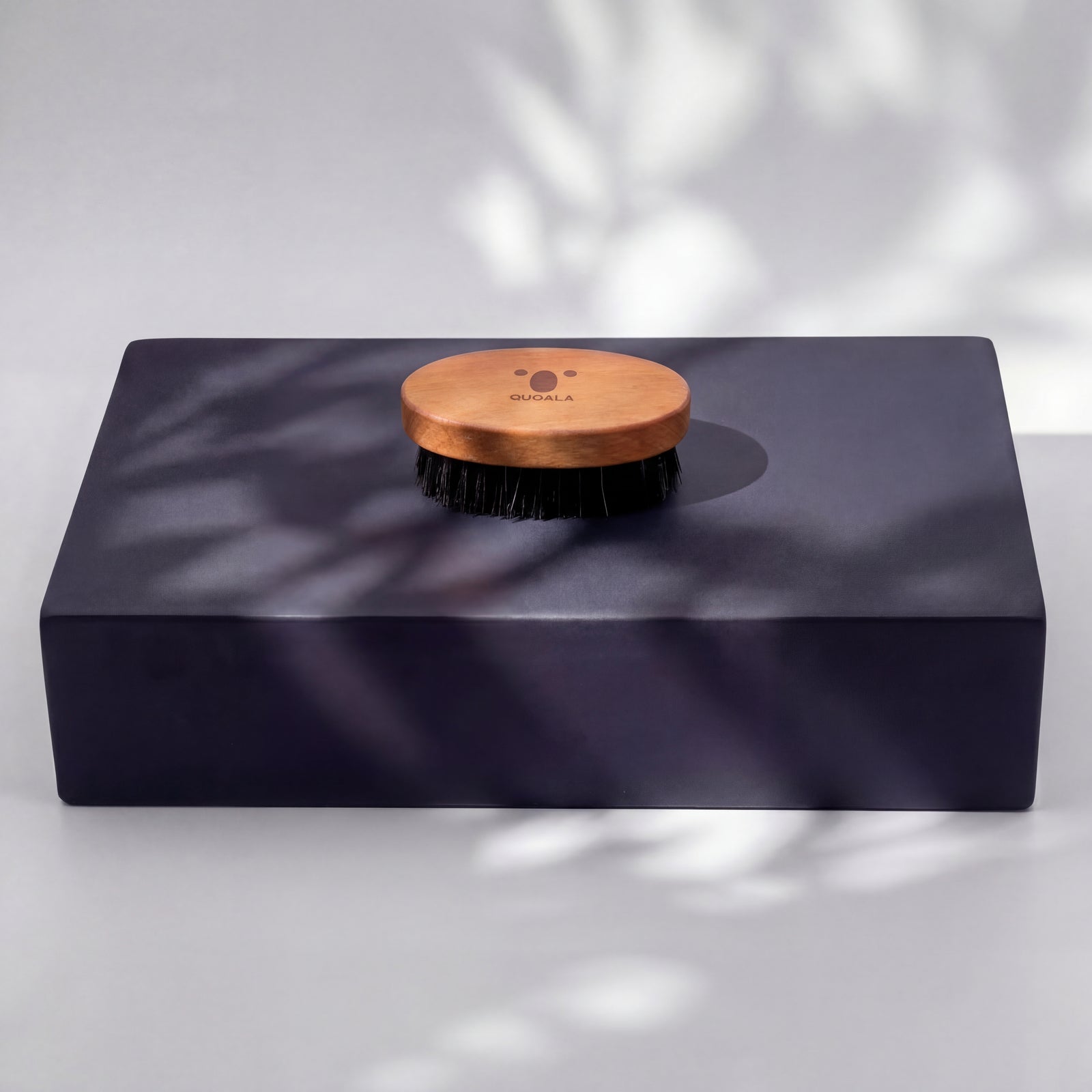
Boar bristle hairbrush
Medium-firm, for calm strokes from the scalp to the ends. The boar bristles carry the scalp's natural sebum into the lengths as you brush [11].
View product
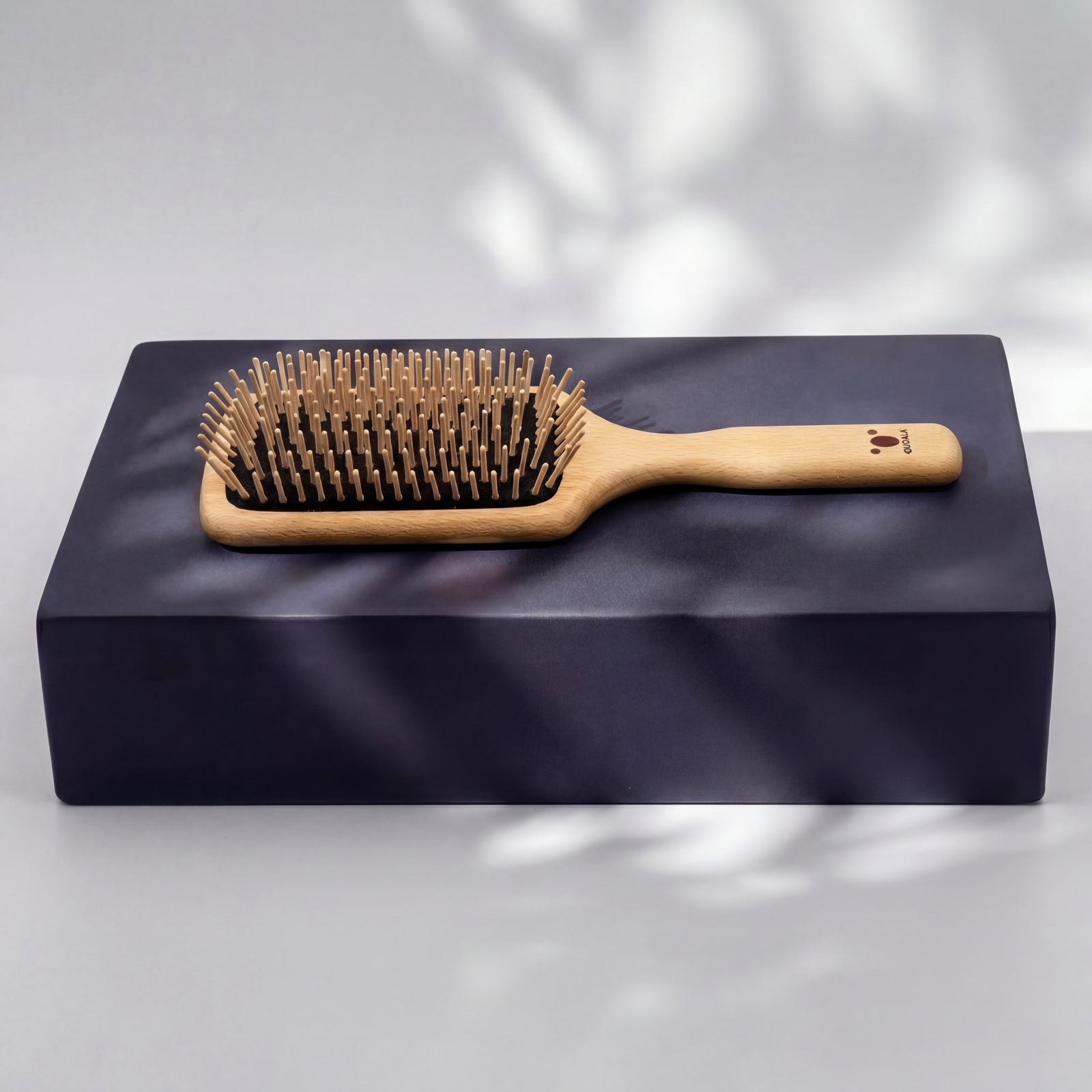
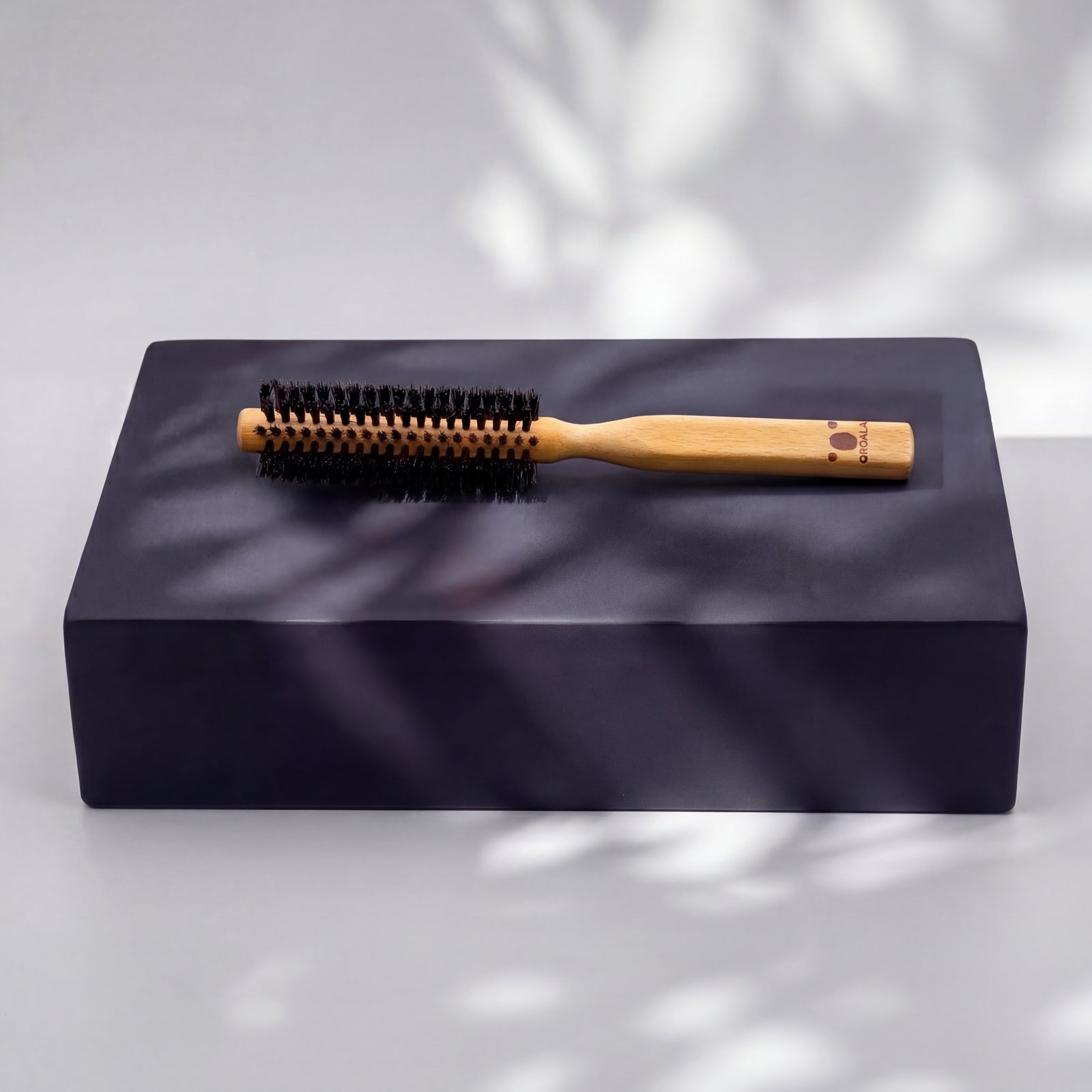
Paddle hairbrush with wooden pins
Firm and vegan, with widely spaced hornbeam pins. The broad surface suits slow, long strokes across the whole head.
View productSummary: The QUOALA connection
Reducing stress does not require a product. A brush can give an evening ritual a fixed place, and we promise nothing more. The knowledge is yours, and so is the decision.
11. Frequently asked questions
How can I reduce stress quickly?
Slow breathing with a long exhale works fastest, for example the cyclic sigh: in twice through the nose, out long through the mouth [2]. Even a few breaths help, and five minutes a day improved mood in one study.
What helps most against everyday stress?
The best evidence is for exercise, enough sleep, contact with people you trust, breathing exercises and mindfulness [1] [4] [8]. Which approach suits you best is individual. What matters is doing it regularly.
Which mindfulness exercises help with stress?
Short exercises are a good start: count your breaths for one minute, do a three-minute body scan or carry out one everyday action with full attention. A structured mindfulness programme clearly lowered stress in healthy adults [8].
Does a scalp massage help against stress?
By hand, yes, at least in one study with 34 women: stress hormones and blood pressure went down [9]. Whether brushing the scalp does the same has not been studied. Many people still find it pleasant as a calm ritual.
When should I get help for stress?
When stress lasts for weeks, when sleep, work or relationships suffer, or when you feel empty and hopeless. In Switzerland, Die Dargebotene Hand helps around the clock on 143, in English (Heart2Heart) on 0800 143 000. In an emergency, call 144.

A few calm minutes in the evening
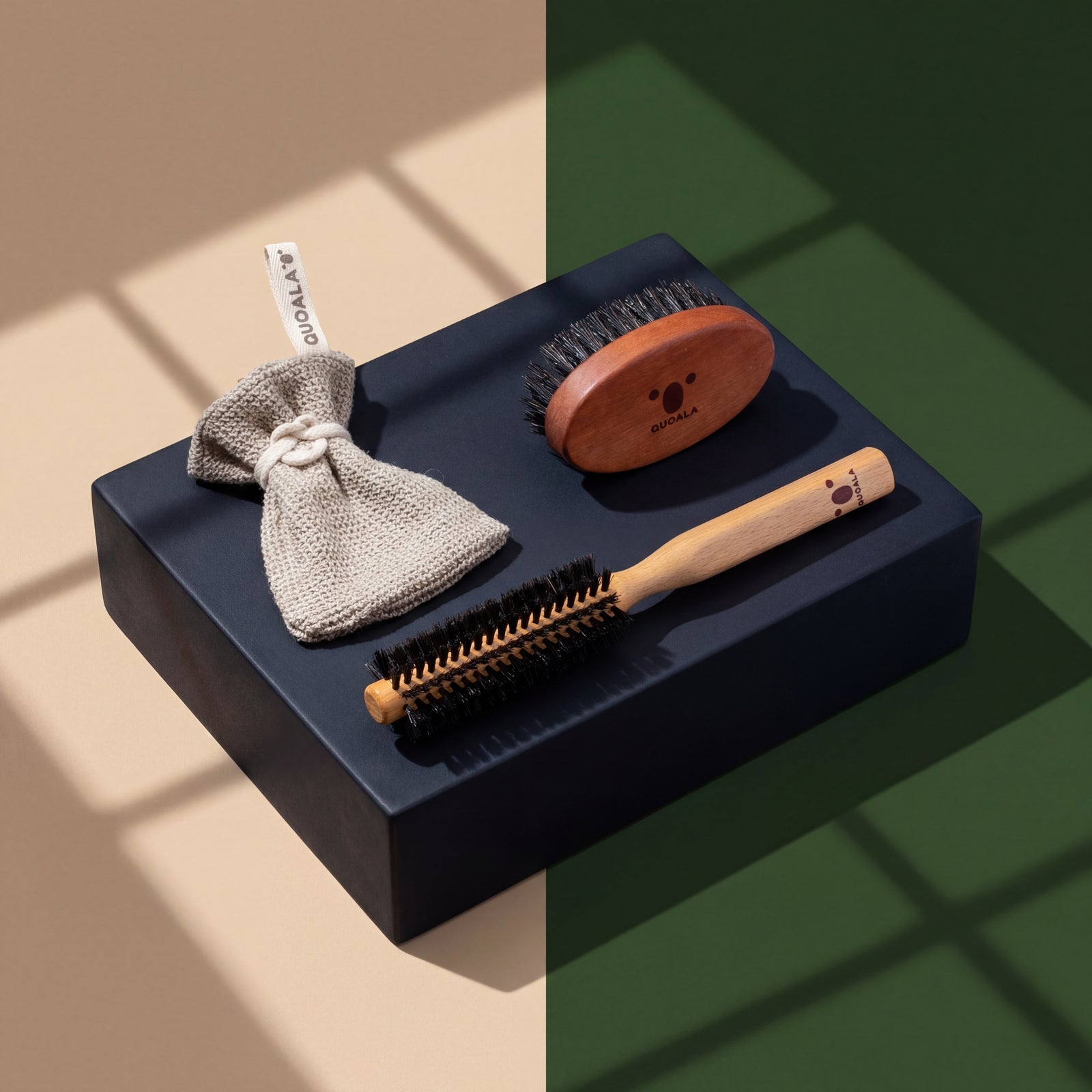
If you want to give your evening ritual a fixed anchor: our hairbrushes have handles made of FSC-certified wood and are made to last for years.
Sources and further reading
Scientific sources
- Fincham et al. (2023), Effect of breathwork on stress and mental health: A meta-analysis of randomised-controlled trials, Scientific Reports. 12 trials, 785 adults; mostly moderate risk of bias. Our assessment S101 · Source
- Yilmaz Balban et al. (2023), Brief structured respiration practices enhance mood and reduce physiological arousal, Cell Reports Medicine. 108 participants, four weeks, online, registered retrospectively. Our assessment S102 · Source
- Zaccaro et al. (2018), How Breath-Control Can Change Your Life: A Systematic Review on Psycho-Physiological Correlates of Slow Breathing, Frontiers in Human Neuroscience. 15 studies in healthy people. Our assessment S103 · Source
- Singh et al. (2023), Effectiveness of physical activity interventions for improving depression, anxiety and distress: an overview of systematic reviews, British Journal of Sports Medicine. 97 reviews, 1,039 trials; many reviews of low quality. Our assessment S104 · Source
- Watson et al. (2015), Recommended Amount of Sleep for a Healthy Adult: A Joint Consensus Statement of the American Academy of Sleep Medicine and Sleep Research Society, Sleep. Consensus: seven hours or more. Our assessment S105 · Source
- Hunter, Gillespie & Chen (2019), Urban Nature Experiences Reduce Stress in the Context of Daily Life Based on Salivary Biomarkers, Frontiers in Psychology. 36 people, eight weeks, no separate control group. Our assessment S106 · Source
- Heinrichs et al. (2003), Social support and oxytocin interact to suppress cortisol and subjective responses to psychosocial stress, Biological Psychiatry. 37 healthy men, lab study. Our assessment S107 · Source
- Khoury et al. (2015), Mindfulness-based stress reduction for healthy individuals: A meta-analysis, Journal of Psychosomatic Research. 29 studies, 2,668 healthy adults; large differences between studies. Our assessment S108 · Source
- Kim et al. (2016), Journal of Physical Therapy Science. Scalp massage by hand, 34 women, 10 weeks. Our assessment S18 · Source
- Perini et al. (2015), Frontiers in Behavioral Neuroscience. Stroking speed and pleasant touch. Our assessment S56 · Source
- Robbins (2012), Chemical and Physical Behavior of Human Hair, Springer; Gao et al. (2019). Animal bristles such as boar bristles distribute sebum along the hair. Our assessment S8 · Source
External literature (further reading)
- World Health Organization: Stress – Questions and answers
- World Health Organization: Physical activity – Fact sheet
- National Center for Complementary and Integrative Health (NCCIH, NIH): Meditation and Mindfulness – Effectiveness and Safety
- Die Dargebotene Hand: contact by phone, chat and email (in German)
- Heart2Heart: the English-language service of Die Dargebotene Hand