















Dry brush or bath brush? The short answer: the bath brush does both, wet in the shower and dry before it. The dry brush, which at QUOALA is the monastery brush / ionic dry brush, is made for dry skin only. Which body brush suits you depends mostly on your skin. Your skin decides the firmness, and firmness matters more than shape.
The key points at a glance
If you want just one body brush, choose the bath brush. It works wet and dry. The monastery brush is the compact tool for dry brushing only. For firmness: soft for more sensitive skin, medium for normal skin, firm for robust skin. What brushing reliably does is exfoliate; there is no evidence for an effect on cellulite [1].
Contents
1. Dry brush or bath brush: the difference
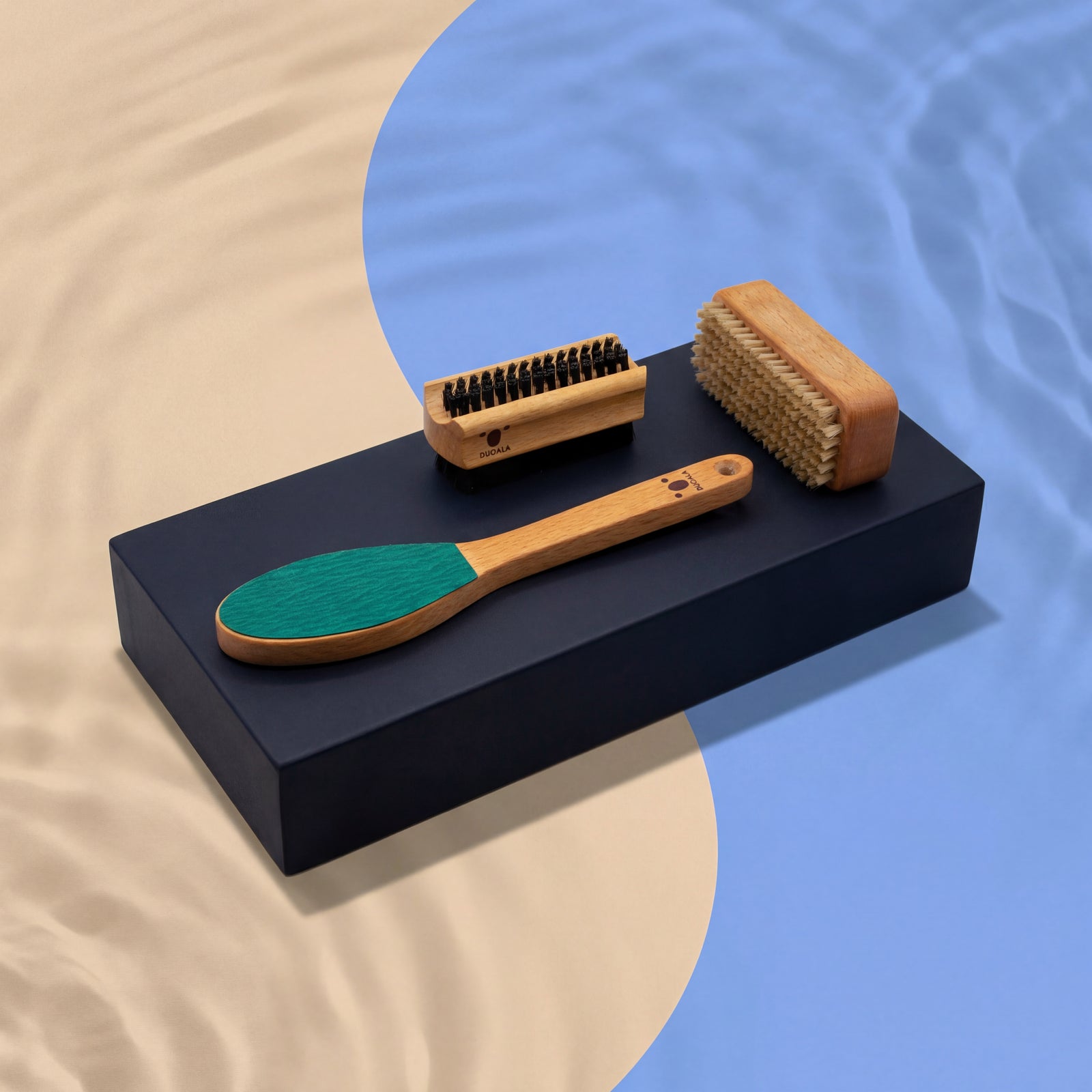
Every bath brush is also a dry brush, but not every dry brush can go in water. The difference lies in the design and the materials.
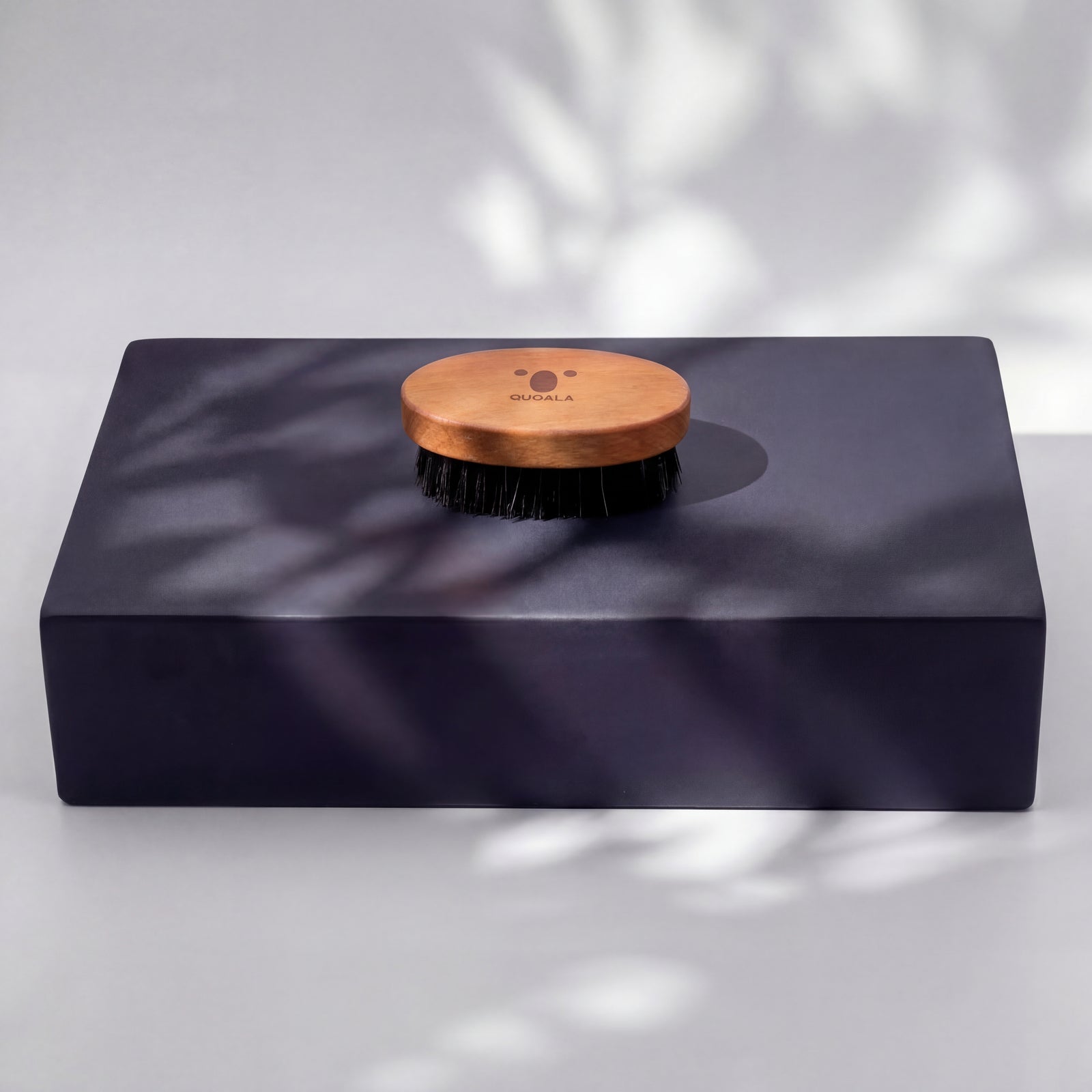
Bath brush
- Wet and dry. In the shower with soap, or dry before you shower.
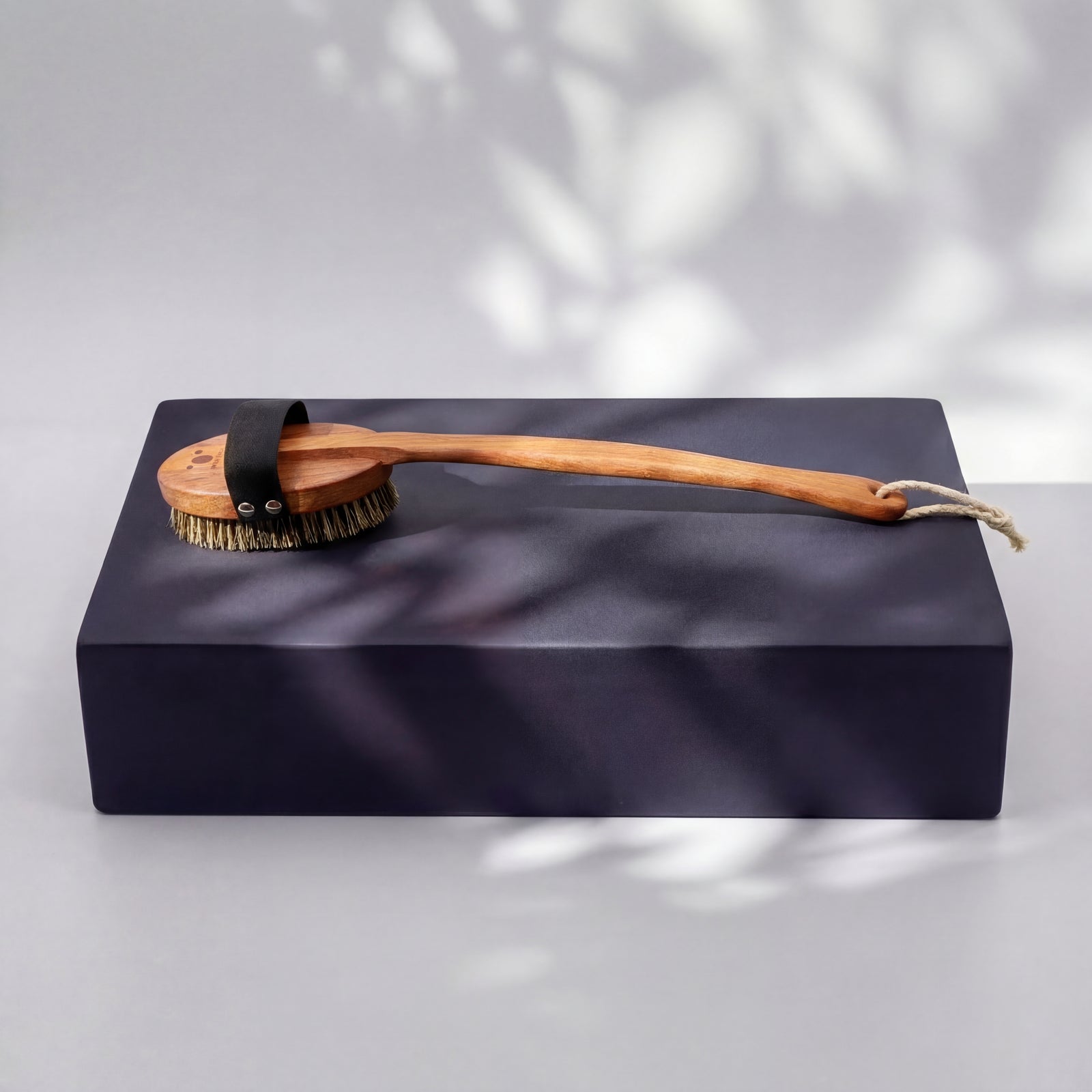
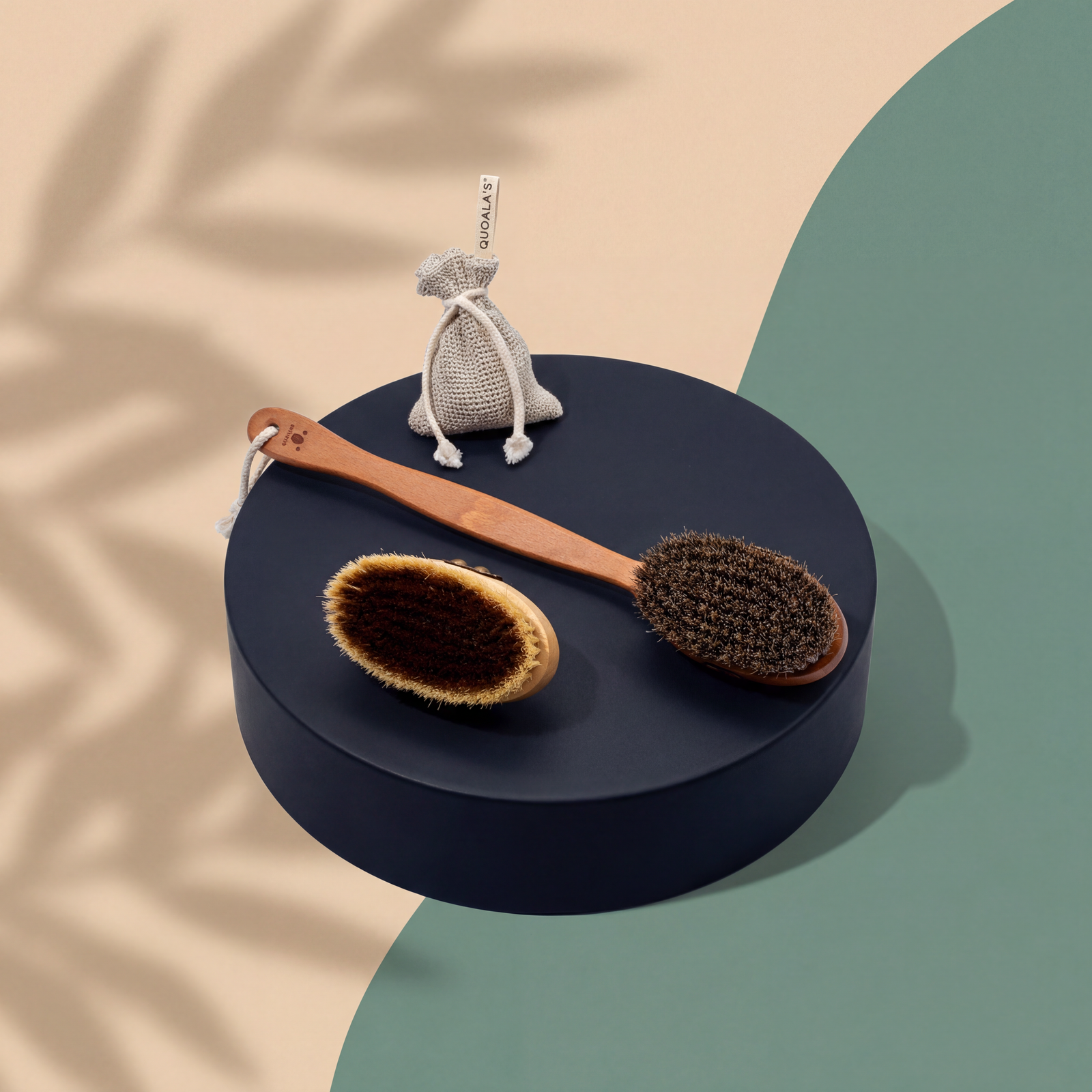
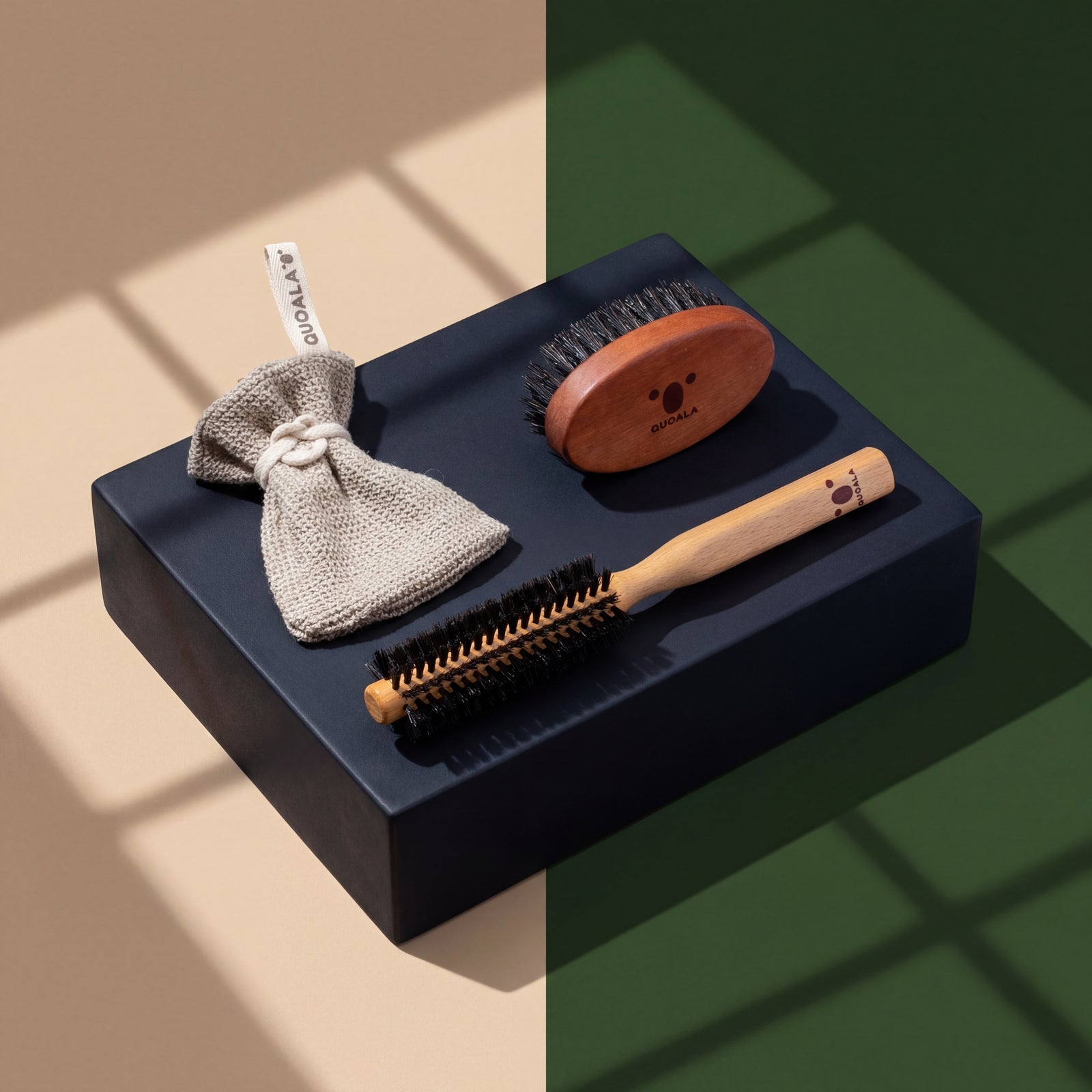
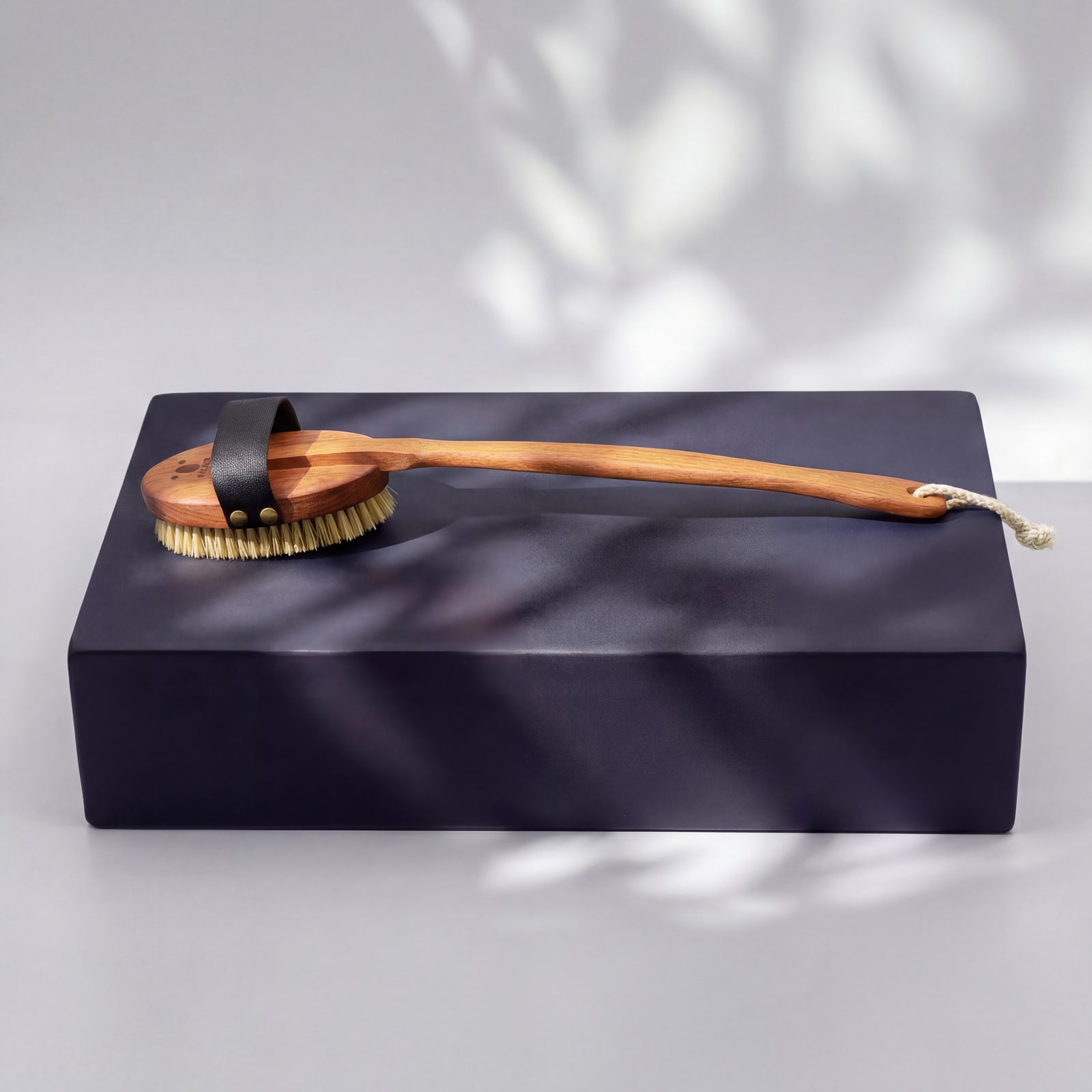
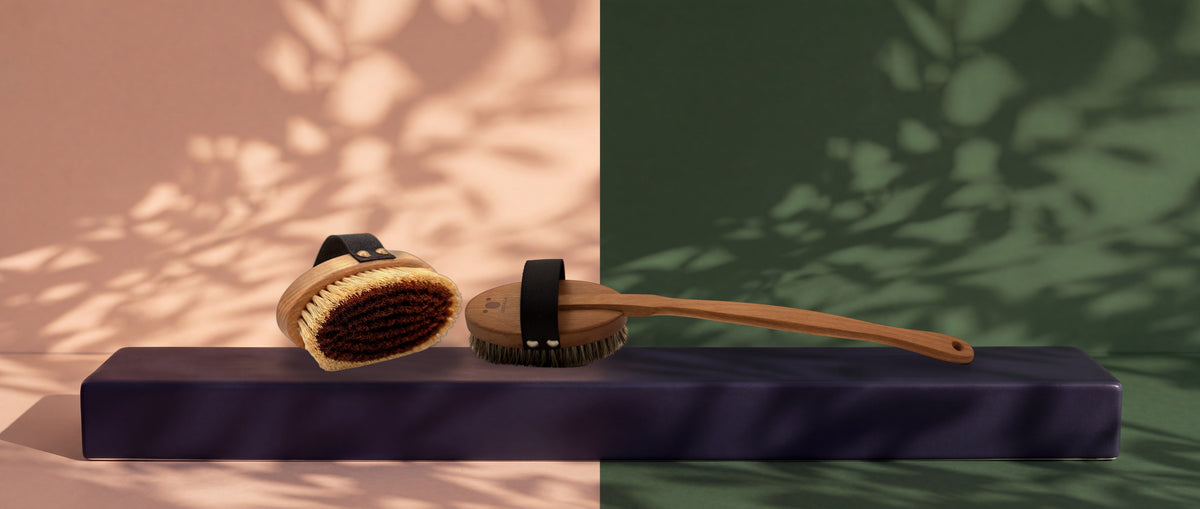
- Long, curved handle in beech wood, 45 cm. It reaches your back and shoulders. The brush head is detachable.
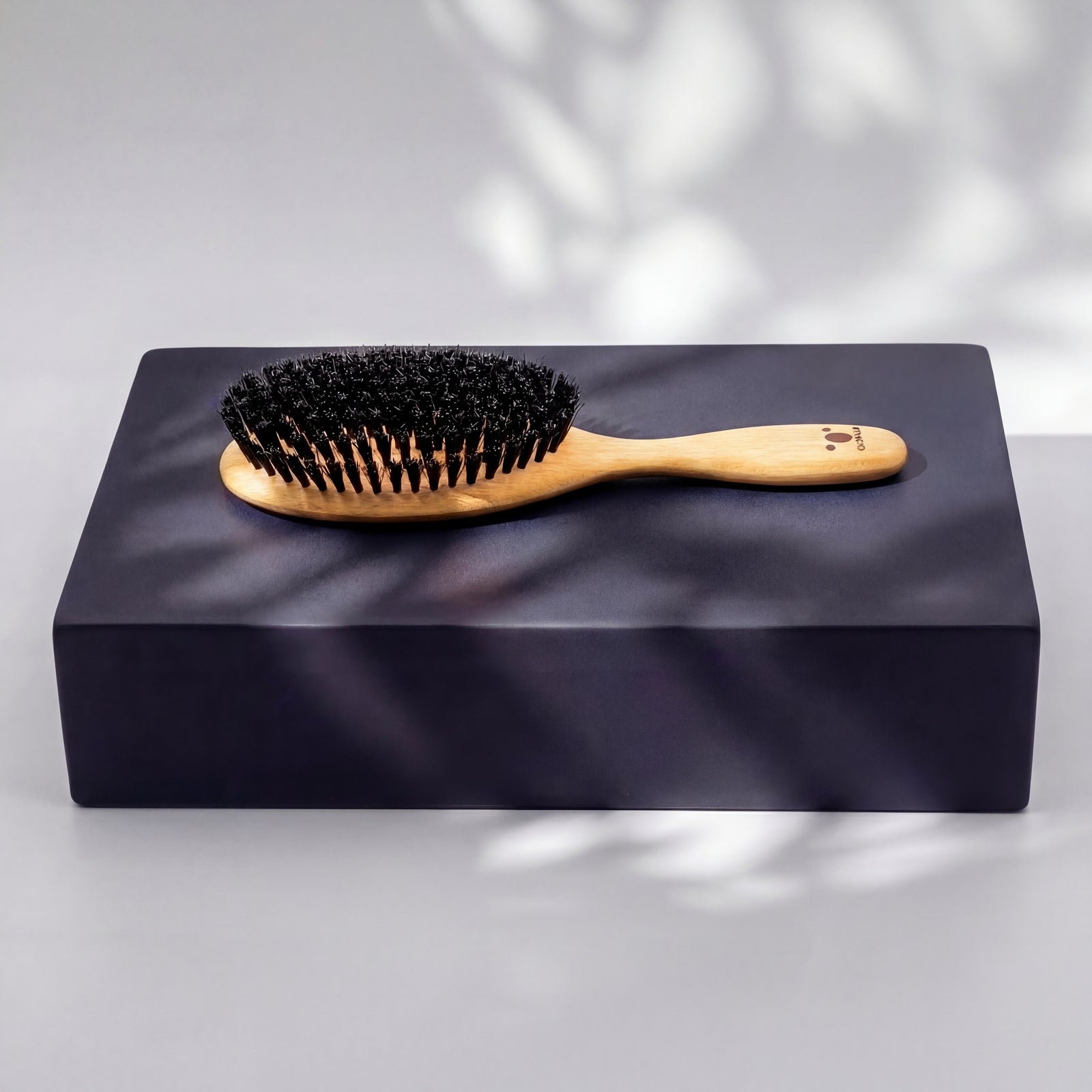
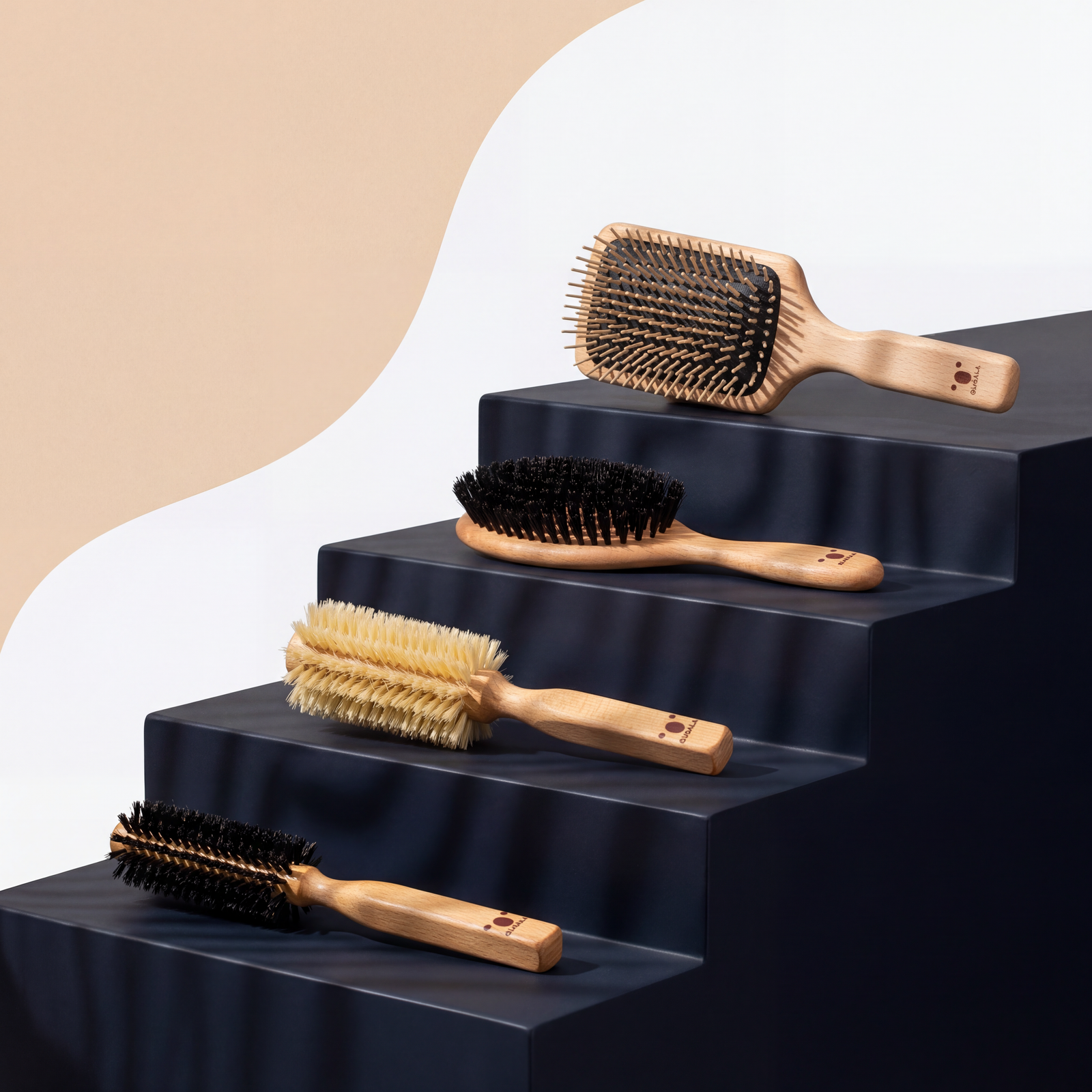
- Pure natural bristles in three firmness levels: soft, medium, firm.
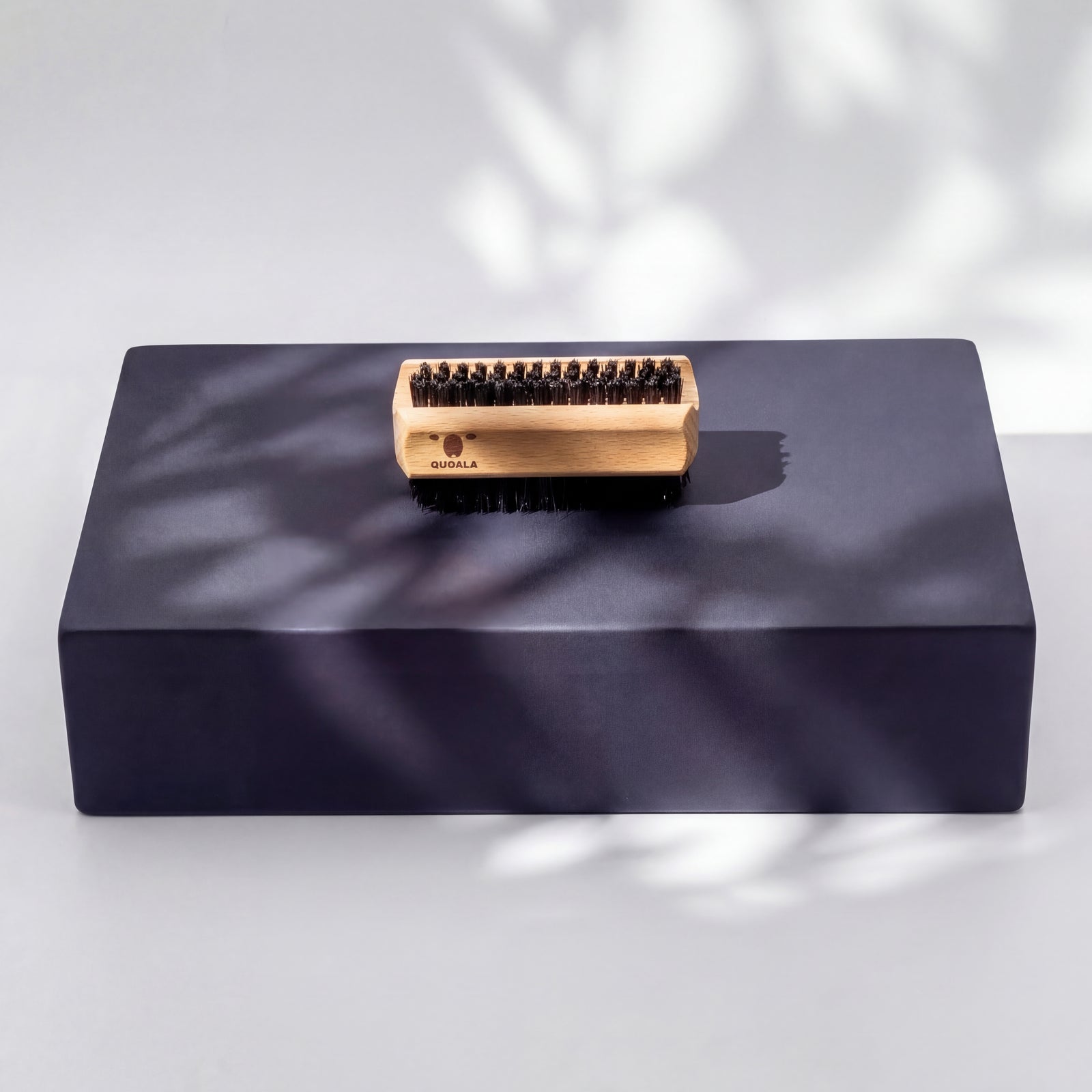
Monastery brush (ionic dry brush)
- Dry only. On dry skin, ideally before the shower or sauna.
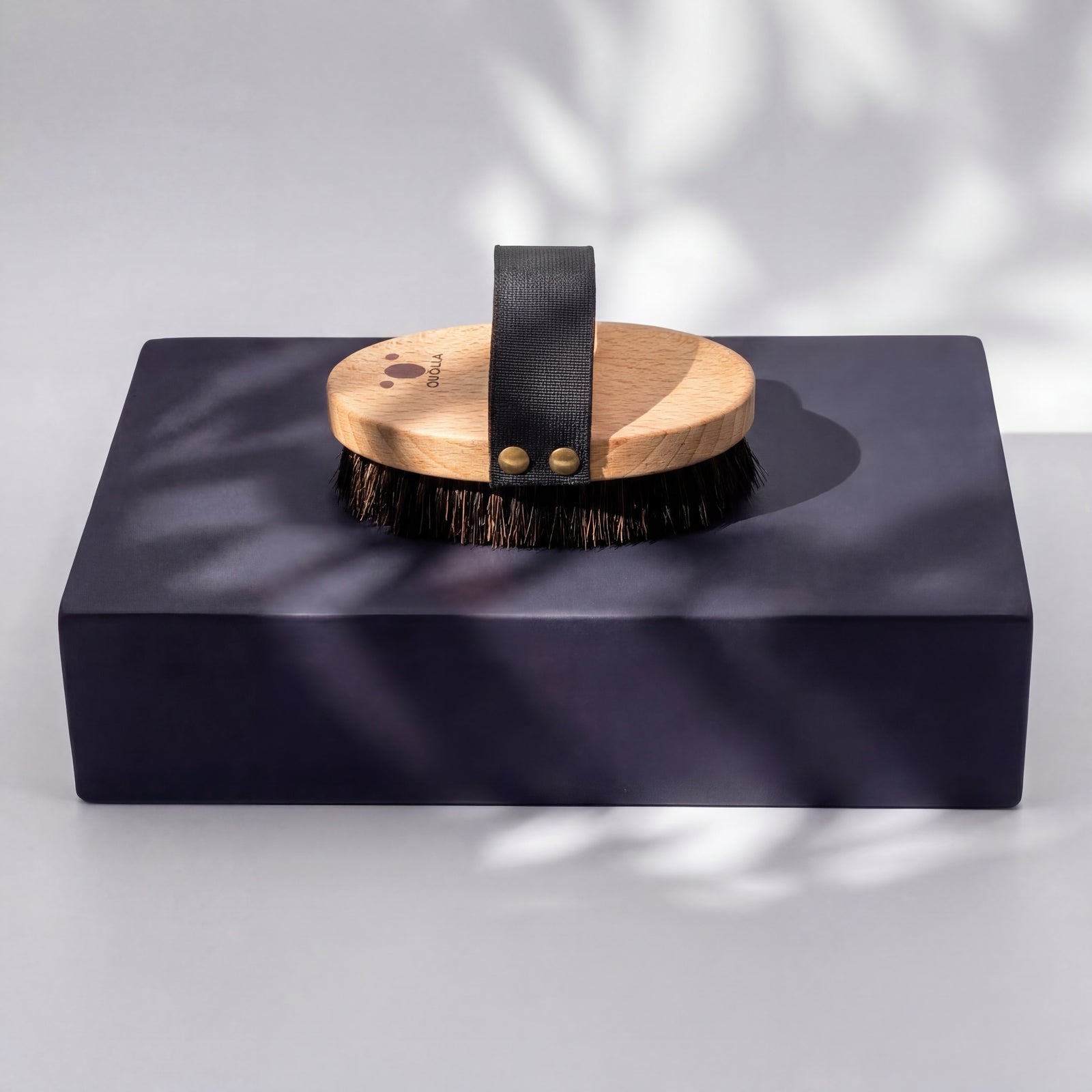
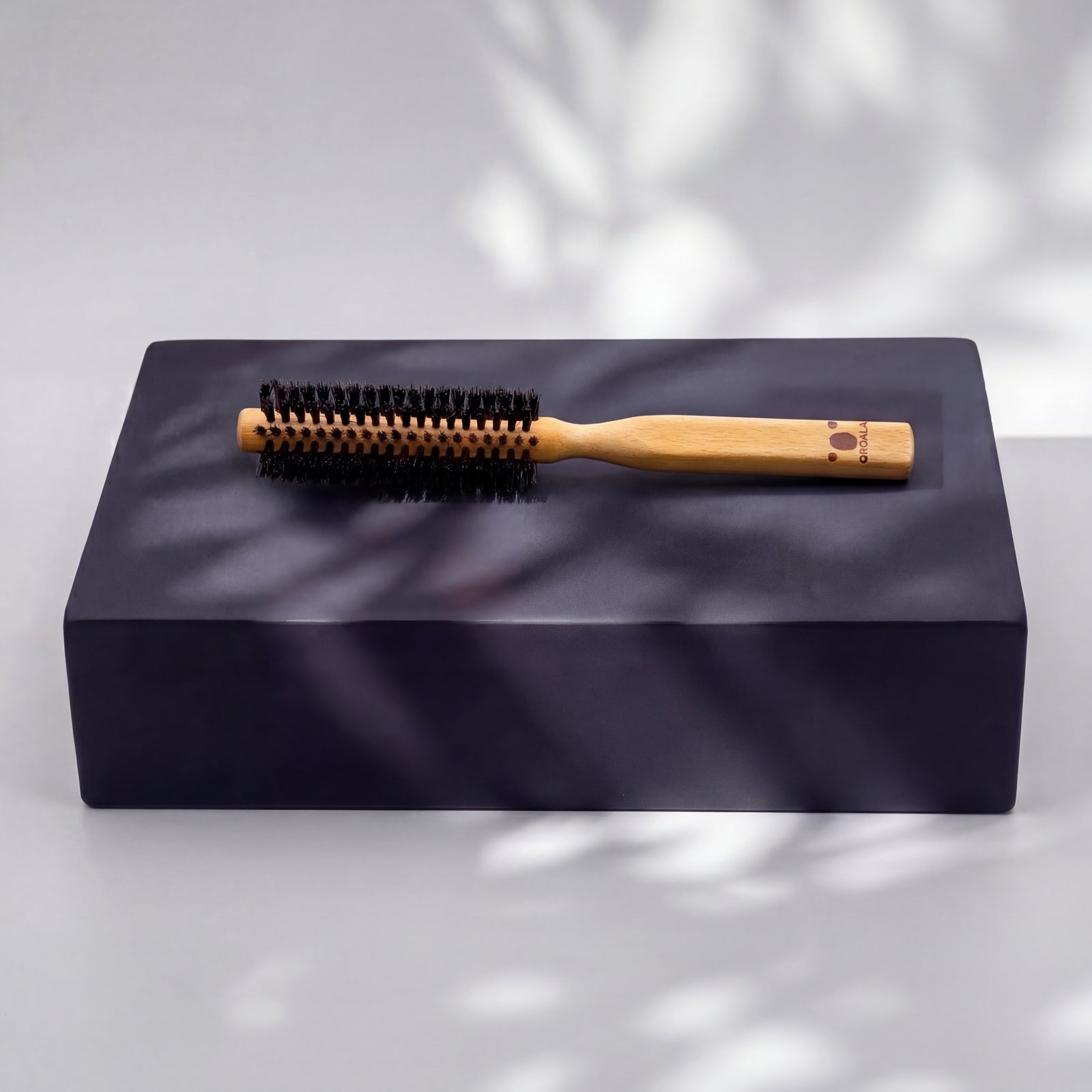
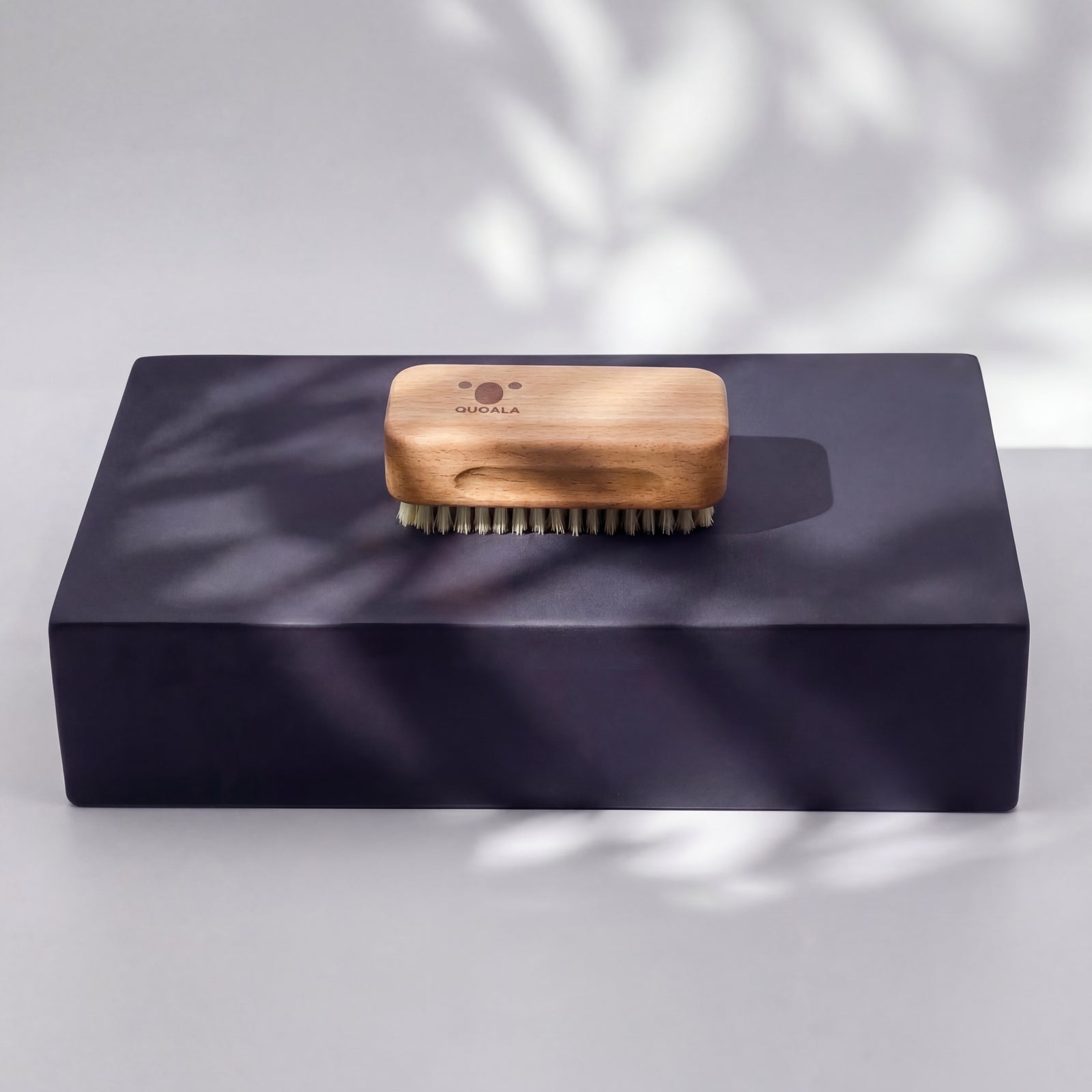
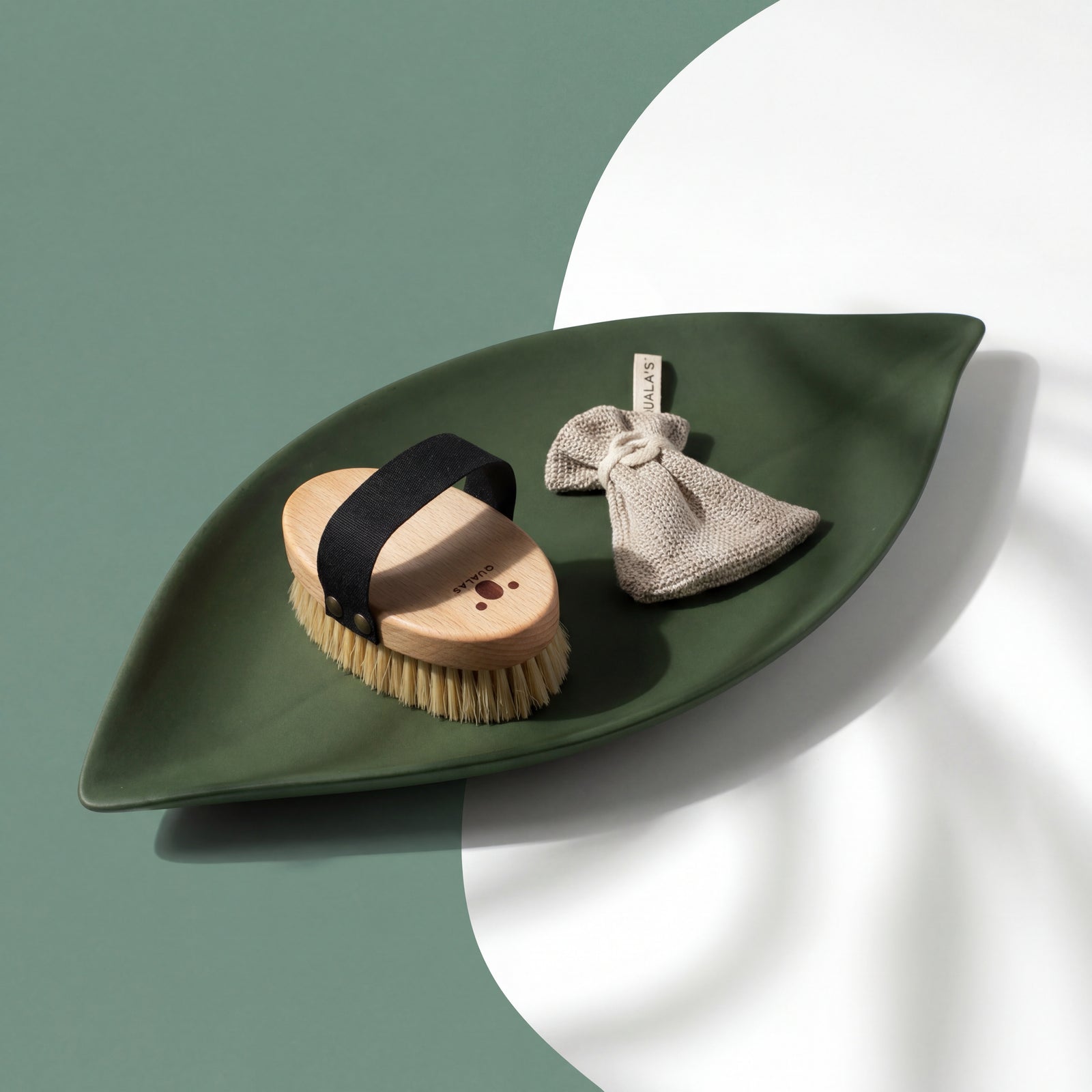
- Compact, 14 cm, with a hand strap. It sits flat in your palm.
- Natural bristles with fine bronze wire, in medium (horsehair) or firm (tampico).
Why the monastery brush must stay dry: the bronze wire tarnishes on contact with water and soap. And why you brush more gently in the shower: damp skin creates more friction than dry skin, clearly more in a study with 22 people [2]. So use less pressure when wet.
Summary: Dry brush or bath brush
The bath brush with its long handle works wet and dry. The compact monastery brush is for dry brushing only. If you want just one brush, choose the bath brush.
2. Which firmness suits your skin?
Your skin decides, not the brush. For noticeable exfoliation when dry brushing, fairly firm natural bristles work best. For sensitive skin, however, the Cleveland Clinic dermatologist advises starting gently, for example with a washcloth [1]. The American Academy of Dermatology recommends choosing method and frequency by skin type: for dry, sensitive or acne-prone skin a brush can be too irritating. And the stronger the method, the less often you use it [3].
At QUOALA, each firmness level has its own material:
Soft: pig bristles
Pig bristles taper to a soft tip and carry a fine scale layer. That is why they glide gently over the skin and pick up dead skin flakes [4]. For more sensitive skin and for beginners.
Medium: horsehair and tampico
Horsehair is an elastic keratin fibre, similar to your own hair. It gives and springs back after every stroke [5]. Combined with tampico, it gives a noticeable but balanced exfoliation. For normal skin.
Firm: tampico
Tampico is the leaf fibre of the Mexican agave and the vegan choice. The fibre is rough and porous; studies suggest this is why it stays grippy when wet and holds water and soap [6]. For robust skin and a strong exfoliation.
Pig bristles and horsehair are animal by-products. If you want to brush vegan, choose tampico: it comes as a bath brush and as a monastery brush.
Summary: Firmness
Soft (pig bristles) for more sensitive skin, medium (horsehair and tampico) for normal skin, firm (tampico, vegan) for robust skin. If in doubt, start one level softer.
3. The monastery brush: what it is and what it isn't
The monastery brush is a compact dry brush with natural bristles and fine bronze wire. At QUOALA it is called the monastery brush / ionic dry brush. Many people know the name; its effect is often described as bigger than the evidence shows.
The bronze wire is made of copper and tin and runs between the bristles. It feels different on the skin than pure natural bristles.
The monastery brush is said to «charge» the skin or release ions through its bronze. We have not found scientific evidence for this – so we don't promise it. What we can show: dry brushing is an effective exfoliation [1]; it loosens dead skin cells and leaves the skin smoother [7].
Good to know: if you are allergic to copper or tin, don't use the monastery brush. Choose a bath brush instead; it has no metal in the bristle field.
Summary: Monastery brush
Natural bristles plus bronze wire, dry use only. Exfoliation is proven. We found no evidence for an effect of ions or bronze, so we don't promise one.
4. What a body brush does
Exfoliation is the core; everything else is honestly smaller. This applies to the bath brush and the monastery brush alike.
What the evidence shows
- Exfoliation. The brush loosens dead cells from the top layer of skin, and the skin feels smoother [7].
- Circulation. Massage over the skin briefly increases blood flow. This was measured with a facial roller, not a brush [8]. It is the slight redness that fades quickly after brushing.
- Skin care absorbs better. After exfoliating, the skin takes up your care products better [9].
- Ingrown hairs. Regular exfoliation can help prevent them [10].
Lymph flow: studies suggest that gentle stimuli on the skin, directed towards the heart, support the natural flow of lymph [11]. This was measured on lymph vessels in animal models and with hand massage. Nobody has yet measured it with a brush on people.
What is not proven: an effect on cellulite [1]. «Detoxing» is not proven either [11]. We promise neither.
Summary: What it does
Proven: exfoliation, a brief boost in circulation and skin care that absorbs better. For lymph flow there are indications, but no measurement with a brush. Nothing is proven against cellulite.
5. How often and how to brush
Gentle and regular beats hard and daily. No study sets a fixed number. The direction is clear, though:
- After a strong exfoliation, take two to three days off. In one study, the skin's water loss peaked on day two after vigorous rubbing and then returned to normal [12].
- Too much weakens the skin barrier. The more of the outer layer is removed, the more moisture the skin loses [13].
- Redness is not a reliable alarm. Skin can be irritated before you see it [14]. So use light pressure and take breaks.
- Sensitive and darker skin less often and more gently [3].
How to do it
- Start dry. On dry skin, before your shower.
- Long strokes towards the heart. From the feet upwards, from the hands to the shoulders [11].
- Light pressure. Even lighter in the shower, because wet skin creates more friction [2].
- Then shower and moisturise. Now your skin care absorbs better [9].
- Let the brush dry. Wood carries germs too if it stays damp [15]. Shake out the bath brush and hang it somewhere airy; only tap the monastery brush out dry and store it dry.
You'll find the full technique in our dry brushing guide.
Summary: How often and how
Gently, with breaks, towards the heart. After a strong session, two to three days off. Then shower, moisturise and let the brush dry.
6. When not to brush
A body brush is for healthy, intact skin. In these cases, skip it or leave the area out:
- Injured, sore or inflamed skin, and not on the face [1]. Don't brush over varicose veins either.
- Sunburn: only brush again once the skin has healed [16].
- Psoriasis: don't brush over plaques. In some people, friction can trigger new ones [17].
- Rosacea: don't brush affected skin [18].
- Diabetes: check with your doctor first, and never brush over cracks or wounds [19].
- Retinoids or benzoyl peroxide: the American Academy of Dermatology advises caution with mechanical exfoliation [3].
- Copper or tin allergy: no monastery brush (bronze wire).
If in doubt, ask your doctor.
Summary: When not to brush
Not over injured or sunburnt skin, not on the face, not over psoriasis plaques or rosacea. With diabetes, check with your doctor first.
7. Which body brush suits you?
Two questions are enough: wet or dry only? And how sensitive is your skin?
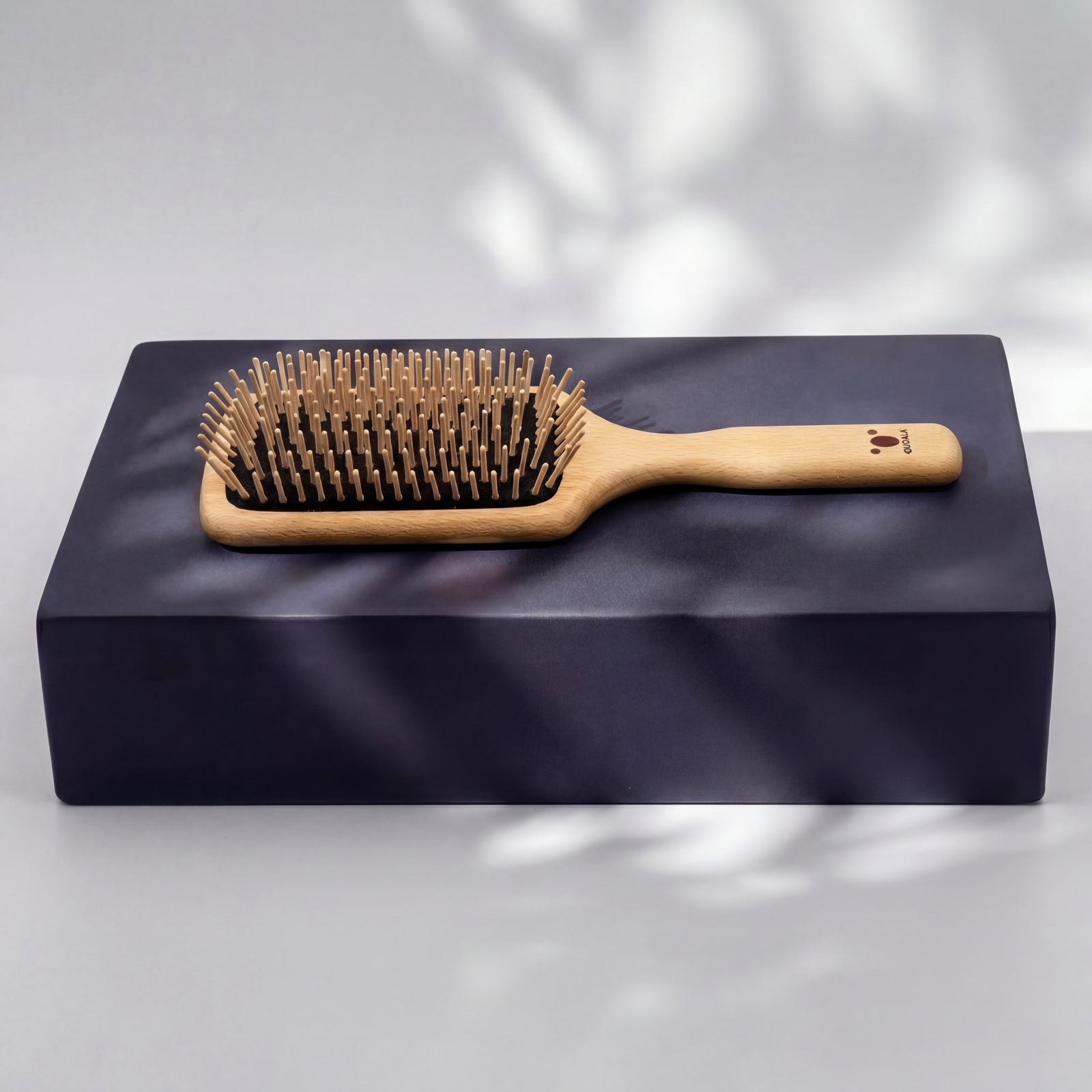
- One brush for wet and dry: a bath brush in the right firmness.
- More sensitive skin: bath brush with soft pig bristles.
- Normal skin: bath brush with horsehair and tampico, medium, or for dry brushing only, the monastery brush with bronze and horsehair.
- Robust skin or vegan: bath brush with tampico, firm, or the monastery brush with bronze and tampico.

Bath brush, pig bristles
Soft. The bristle tapers to a soft tip [4]. For more sensitive skin, wet and dry.
View product
Bath brush, horsehair & tampico
Medium. Elastic horsehair [5] with tampico. For normal skin, wet and dry.
View product
Bath brush, tampico
Firm and vegan. The strongest bath brush, for robust skin, wet and dry.
View productAll three bath brushes also come with a cord for hanging: soft, medium and firm. The cord doesn't change the bristles; it only helps the brush dry.

Monastery brush, bronze & horsehair
Medium, dry use only. Horsehair with fine bronze wire and a hand strap. For normal skin.
View product
Monastery brush, bronze & tampico
Firm and vegan, dry use only. For robust skin and vigorous dry brushing.
View productSummary: The right body brush
One brush for everything: the bath brush. Sensitive: soft. Normal: medium. Robust or vegan: tampico. If you already dry brush, add a monastery brush in the same firmness.
8. Frequently asked questions
What is the difference between a dry brush and a bath brush?
The bath brush has a long handle and works wet and dry. The dry brush, at QUOALA the monastery brush, is compact, has bronze wire in the bristle field and is used on dry skin only.
Which body brush suits sensitive skin?
The bath brush with soft pig bristles. Start with light pressure and brush less often [3]. If your skin still reacts, a washcloth is the gentler choice [1].
What does a monastery brush do?
What is proven is exfoliation: it loosens dead skin cells and the skin feels smoother [1] [7]. We have found no scientific evidence for an effect of ions or bronze, so we don't promise one.
Does dry brushing help with cellulite?
There is no evidence for it [1]. What dry brushing can do: exfoliate, briefly increase circulation [8] and help your skin care absorb better afterwards [9].
How often should I dry brush?
There is no fixed number. Gentle and regular beats vigorous. After a strong session your skin needs two to three days off [12]; brush sensitive skin less often [3].
Can I use the monastery brush in the shower?
No. The bronze wire tarnishes with water and soap. Use a bath brush in the shower and only tap the monastery brush out dry. More in cleaning and caring for your monastery brush.

The brush that suits your skin
Three firmness levels as a bath brush, two as a monastery brush. Natural bristles or tampico, with wood from FSC-certified forests.
Sources and further reading
Scientific sources
- Cleveland Clinic (2021), The Truth About Dry Brushing and What It Does for You, with dermatologist Shilpi Khetarpal. Expert guide: exfoliation proven, cellulite not. Our assessment S77 · Source
- Gerhardt et al. (2008), Influence of epidermal hydration on the friction of human skin against textiles, Journal of The Royal Society Interface. 22 people, forearm against textile, no brush. Our assessment S57 · Source
- American Academy of Dermatology, How to safely exfoliate at home. Expert guide: choose exfoliation by skin type. Our assessment S76 · Source
- Banasaz & Ferraro (2024), Keratin from Animal By-Products: Structure, Characterization, Extraction and Application, Polymers. Review of keratin fibres, no measurements on people. Our assessment S5 · Source
- Yu, Yang & Meyers (2017), Viscoelastic properties of α-keratin fibers in hair, Acta Biomaterialia. Horse and human hair in the lab. Our assessment S20 · Source
- Almohamad et al. (2026), Structural and Mechanical Characterisation of Five Agave Fibres for Sustainable Textile Applications, Fibers. Agave fibres in the lab, no skin effect. Our assessment M6 · Source
- Harvard Health Publishing (2024), Have you exfoliated lately?. Expert guide on mechanical exfoliation. Our assessment S1 · Source
- Miyaji, Sugimori & Hayashi (2018), Short- and long-term effects of using a facial massage roller on facial skin blood flow and vascular reactivity, Complementary Therapies in Medicine. Facial roller, not a body brush. Our assessment S2 · Source
- Peng, Yue & Cong (2025), Enhancing Dermal Absorption of Cosmeceuticals, Journal of Cosmetic Dermatology. Review, no measurement with a brush. Our assessment S10 · Source
- Ogunbiyi (2019), Pseudofolliculitis barbae; current treatment options, Clinical, Cosmetic and Investigational Dermatology. Review, no study with a brush. Our assessment S12 · Source
- Jin et al. (2025), Increased CSF drainage by non-invasive manipulation of cervical lymphatics, Nature; Vairo et al. (2009), Physical Therapy in Sport. Animal model and reviews of hand massage, no brush on people. Our assessment M7 · Source
- Huh et al. (2002), Biophysical changes after mechanical injury of the stratum corneum in normal skin, Contact Dermatitis. 10 and 32 volunteers, rough towel on the forearm, no brush. Our assessment S75 · Source
- van der Valk & Maibach (1990), A functional study of the skin barrier to evaporative water loss by means of repeated cellophane-tape stripping, Clinical and Experimental Dermatology. Lab model with tape, no brush. Our assessment S72 · Source
- Wilhelm, Saunders & Maibach (1990), Increased stratum corneum turnover induced by subclinical irritant dermatitis, British Journal of Dermatology. 18 women, chemical irritation, no brush. Our assessment S74 · Source
- Tomičić et al. (2020), Wood Science and Technology. Germs also adhere to wooden surfaces. Our assessment S60 · Source
- American Academy of Dermatology, How to treat sunburn. Expert guide. Our assessment S81 · Source
- Al Qutaiti, Al Khalili & Shalaby (2025), Psoriasis Presenting as Koebner Phenomena, Sultan Qaboos University Medical Journal. Case report with literature review. Our assessment S78 · Source
- American Academy of Dermatology, 7 rosacea skin care tips dermatologists recommend. Expert guide. Our assessment S79 · Source
- American Academy of Dermatology, Dermatologist-recommended skin care for people with diabetes. Expert guide. Our assessment S80 · Source