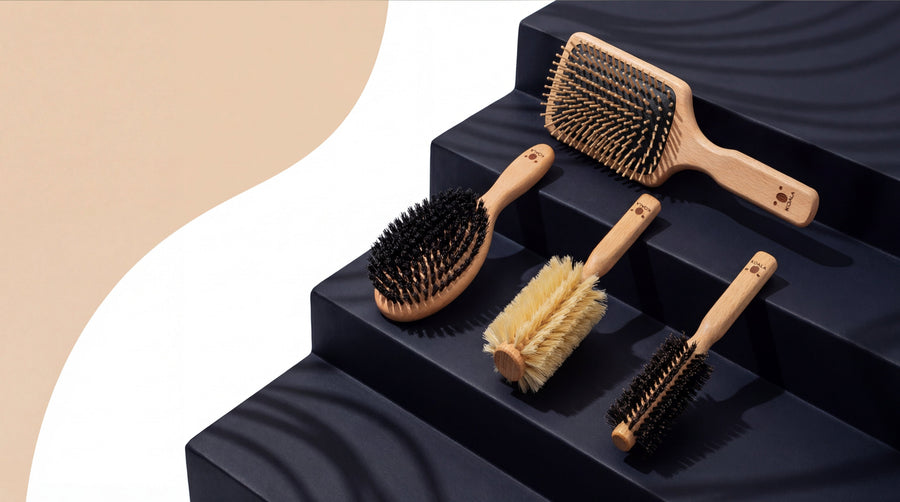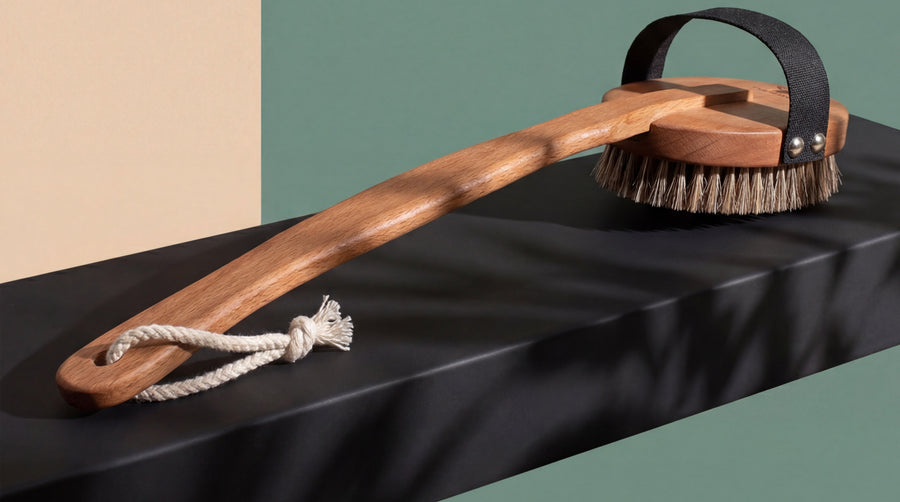

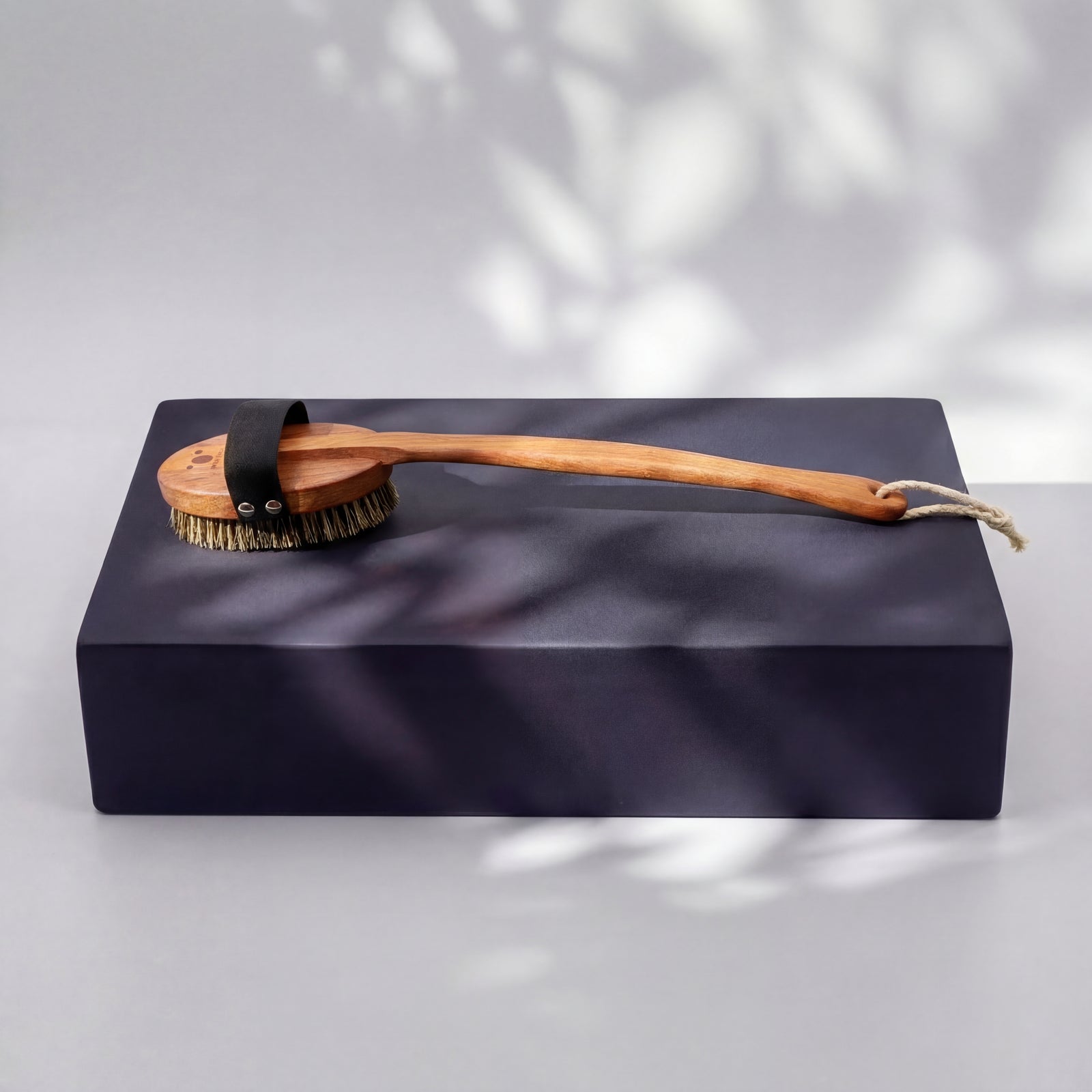

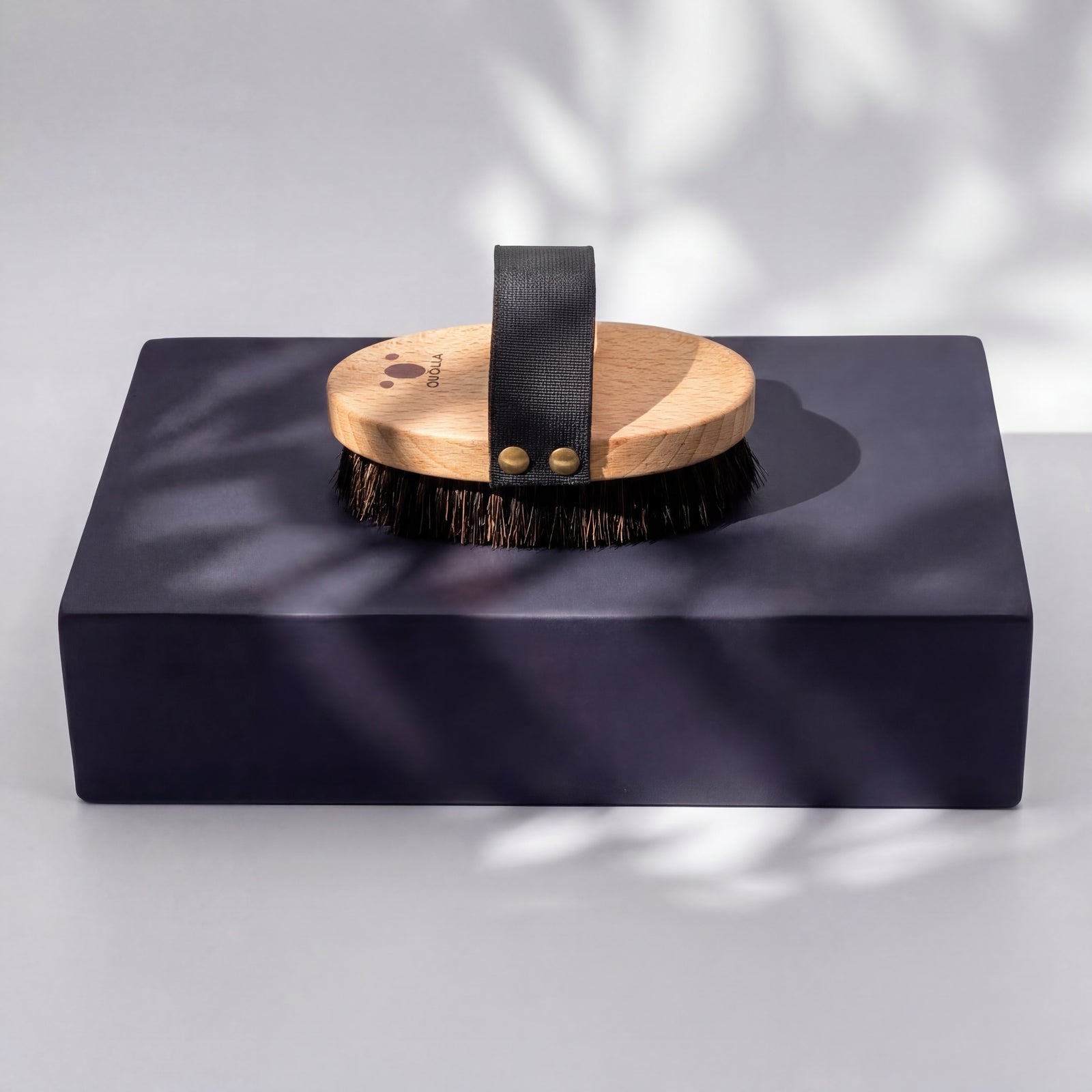

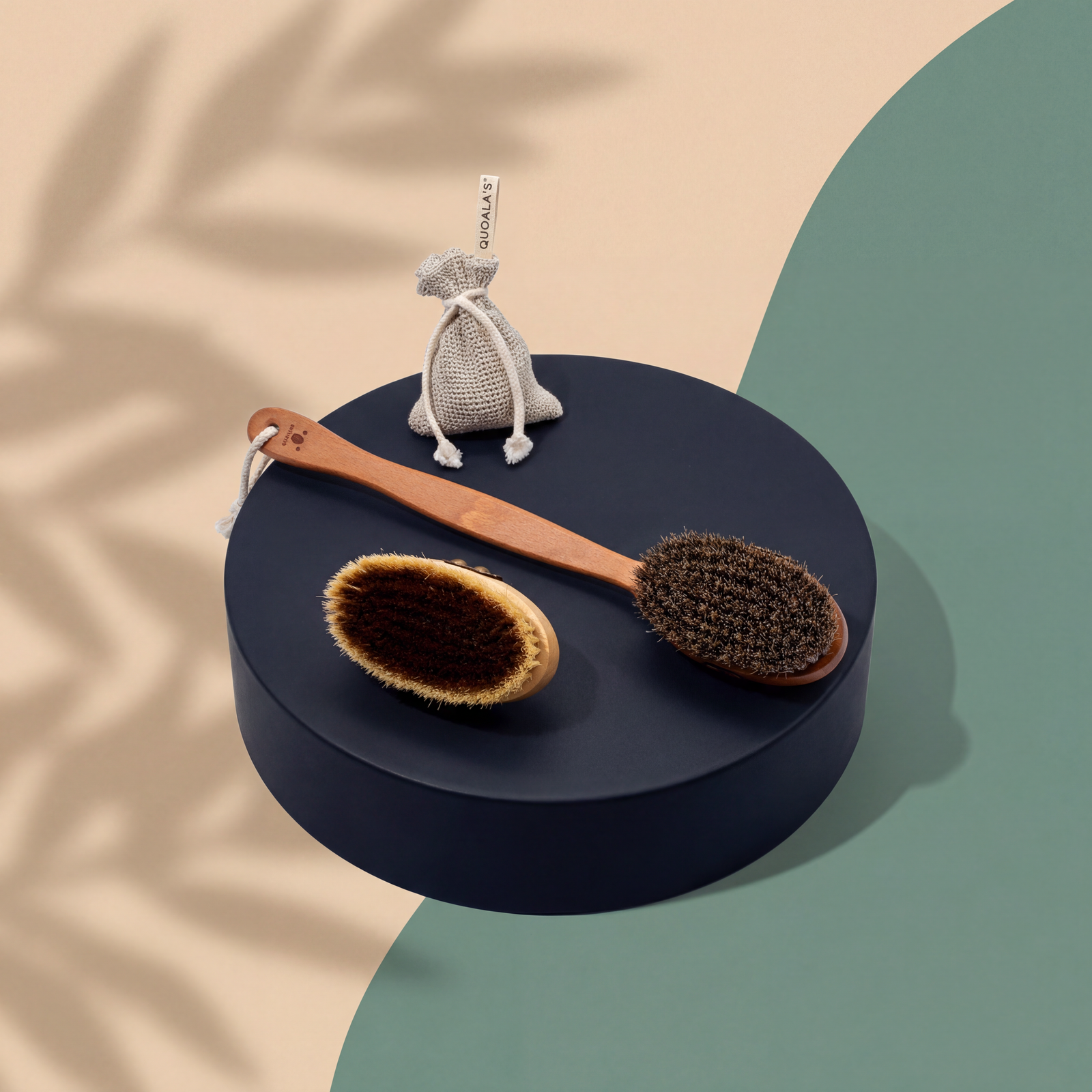

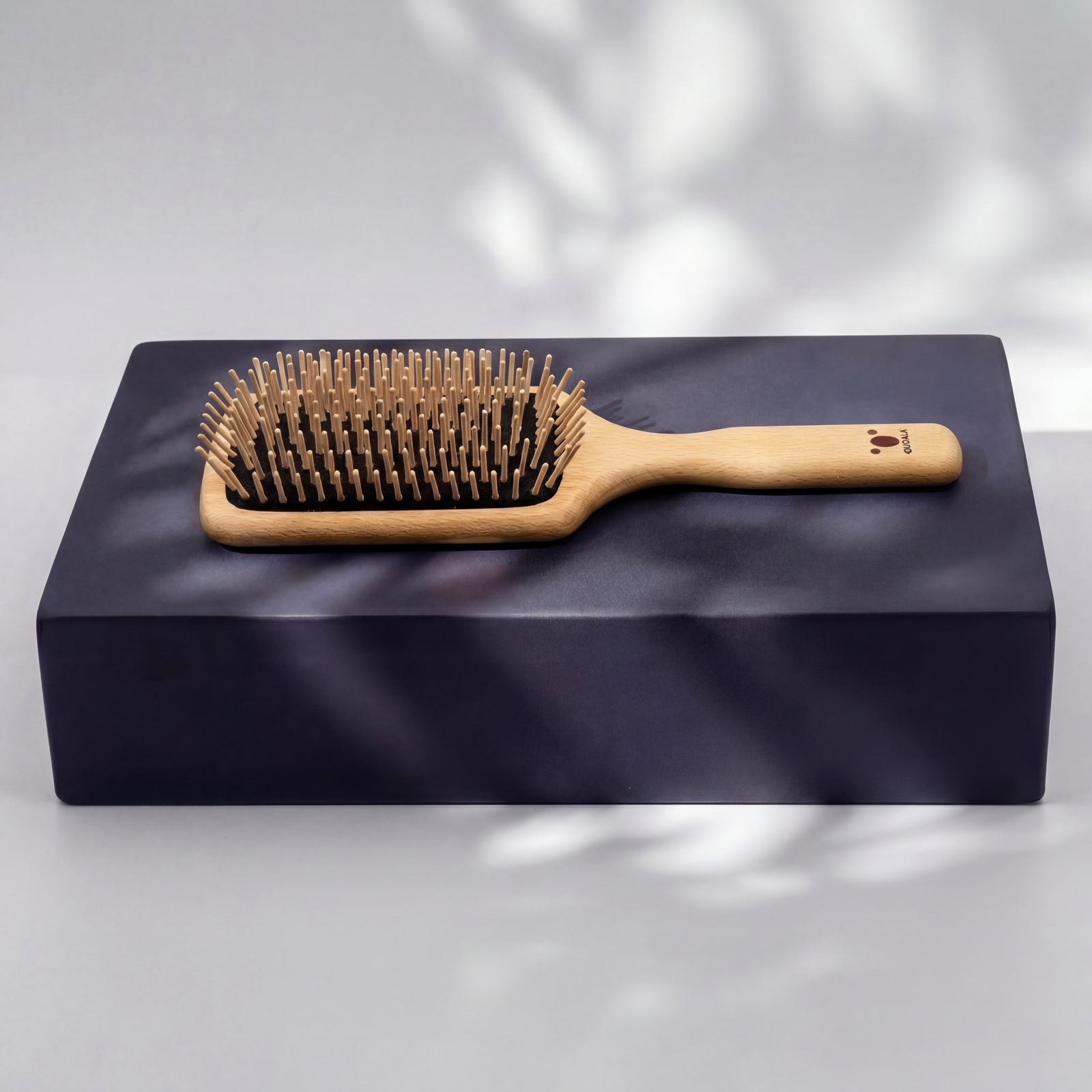

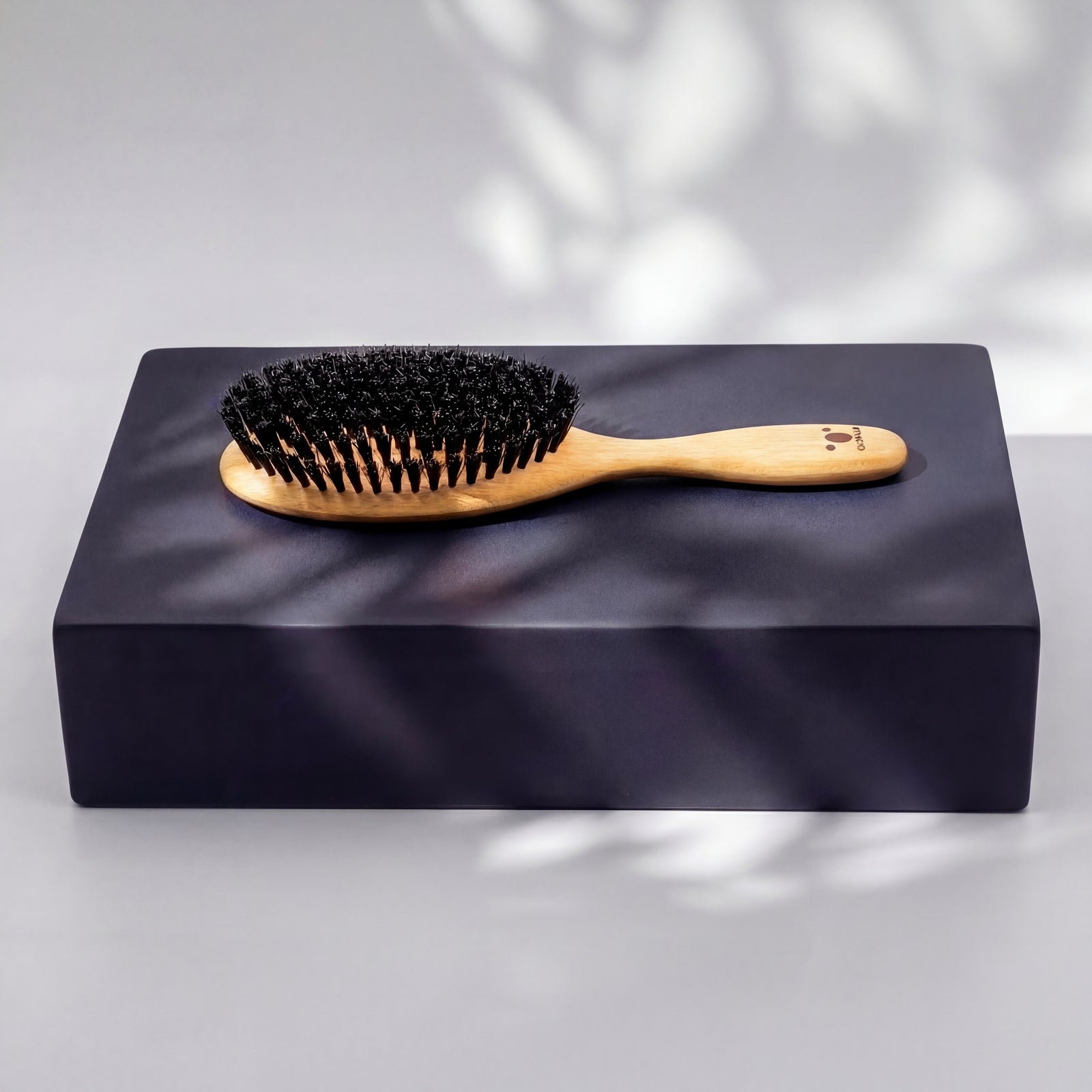

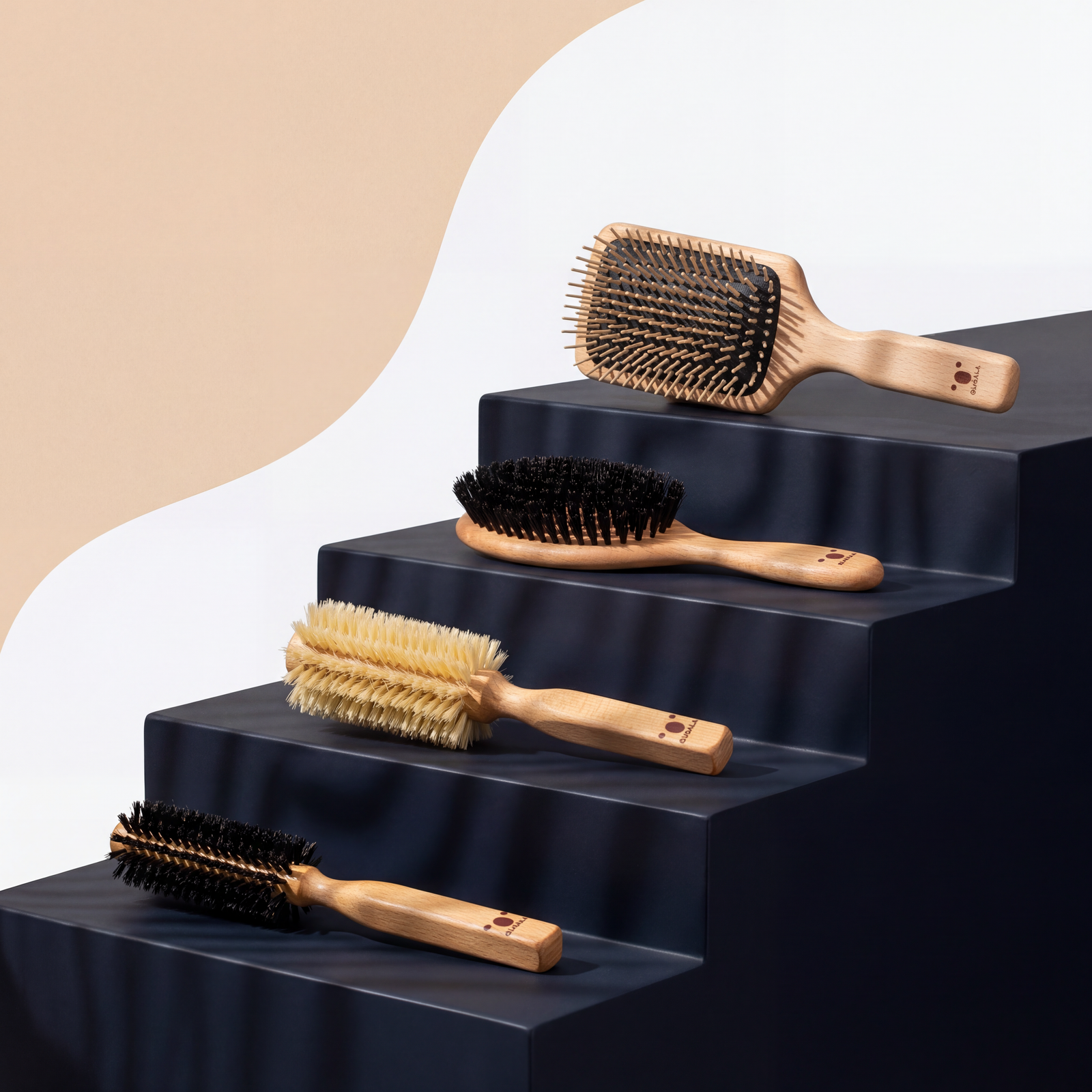

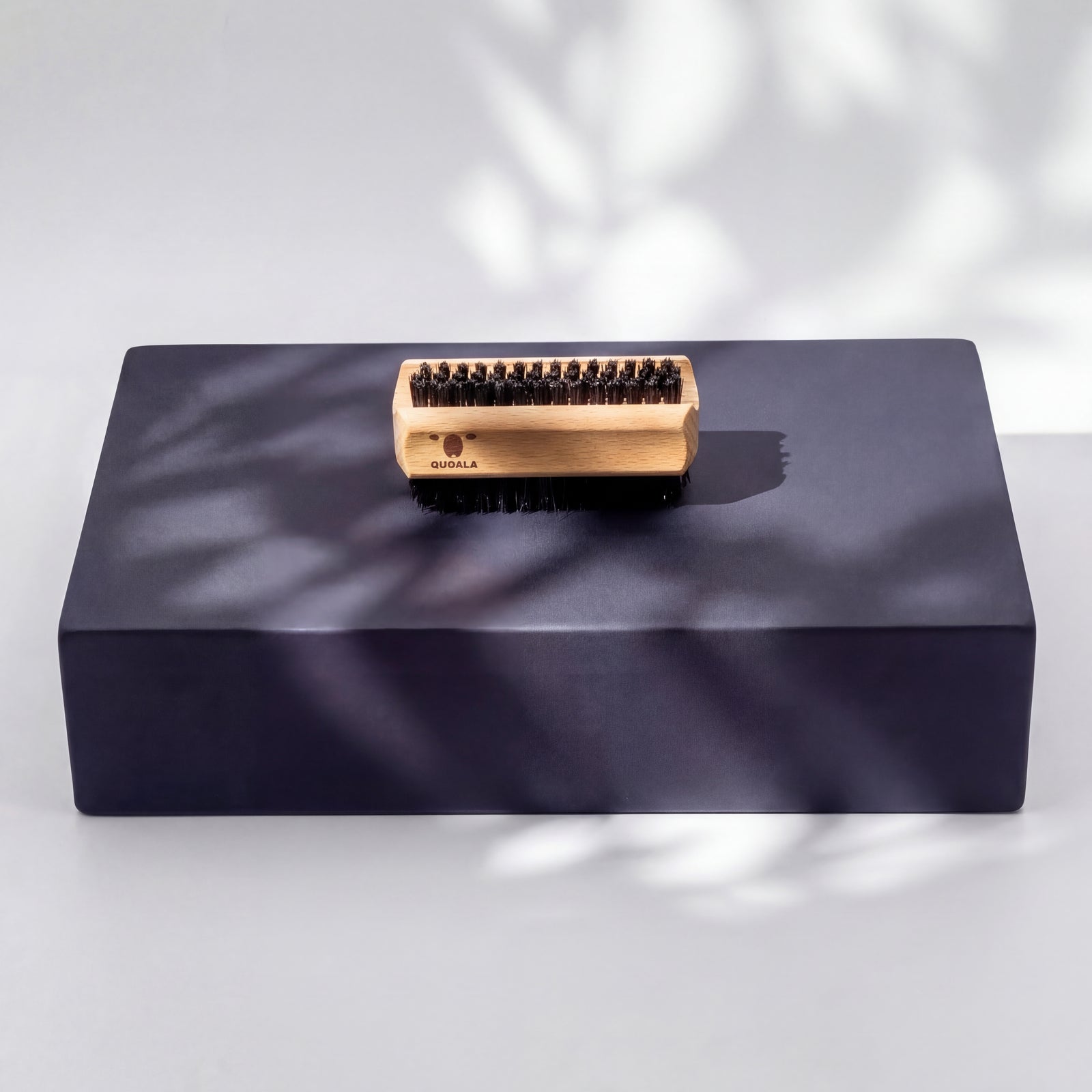


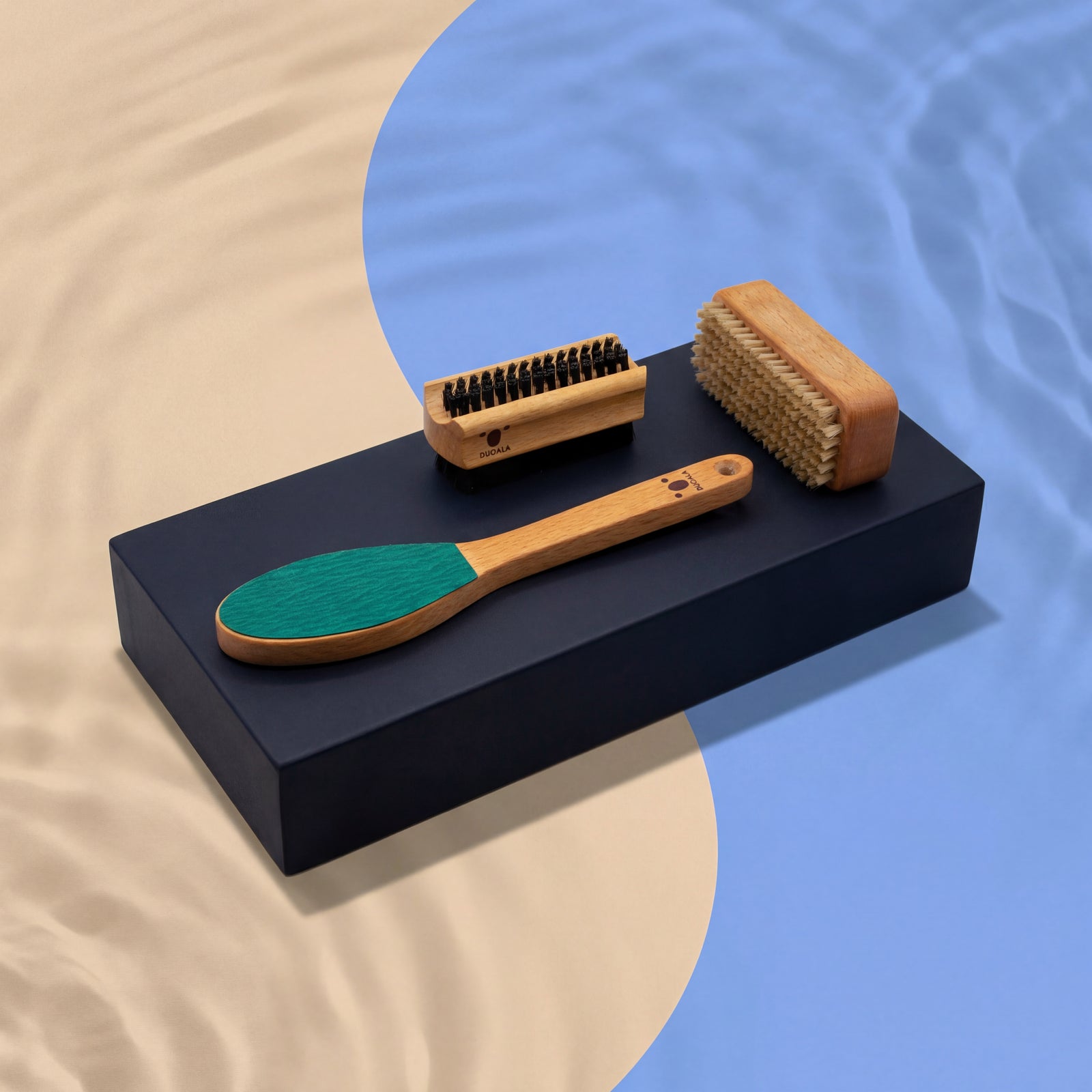

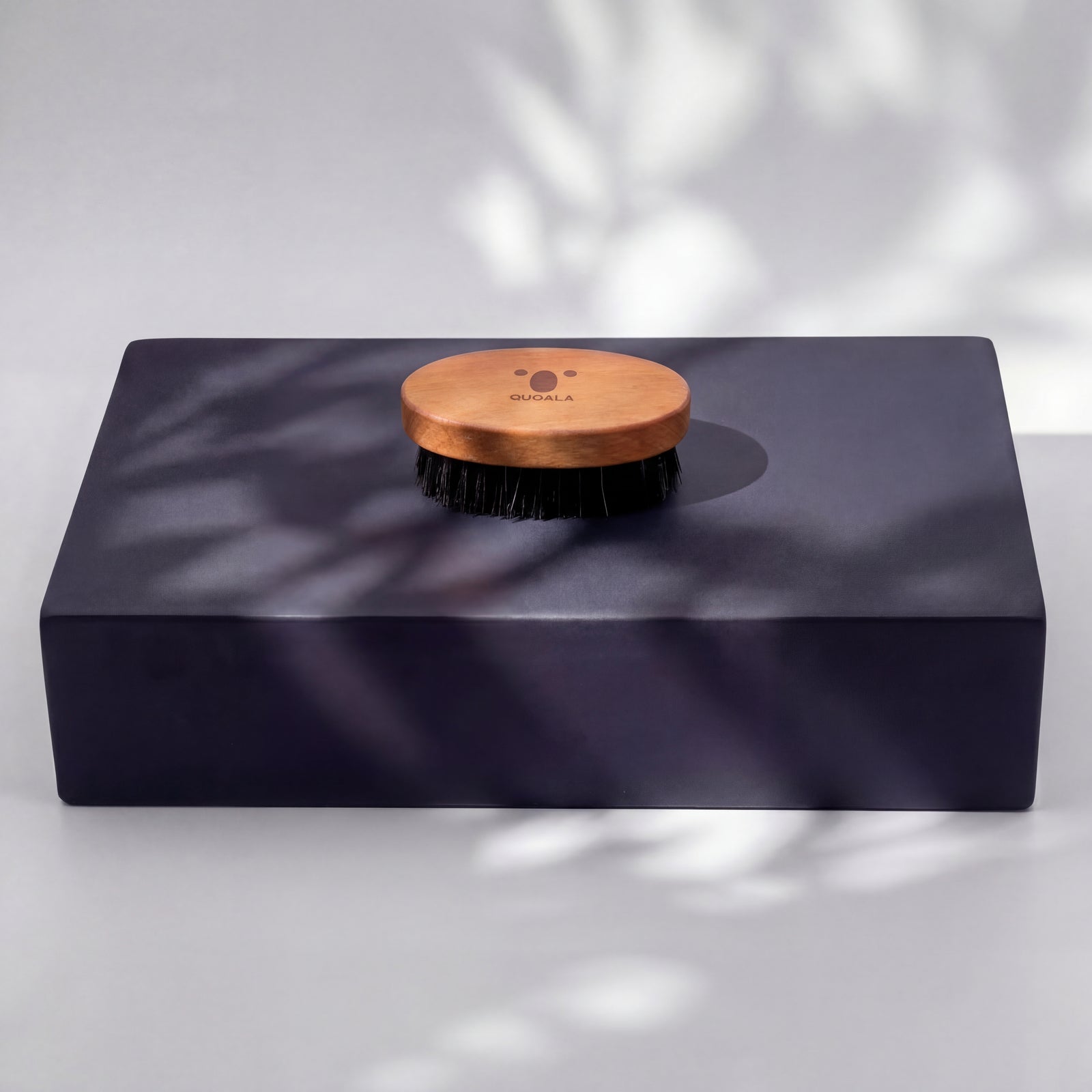

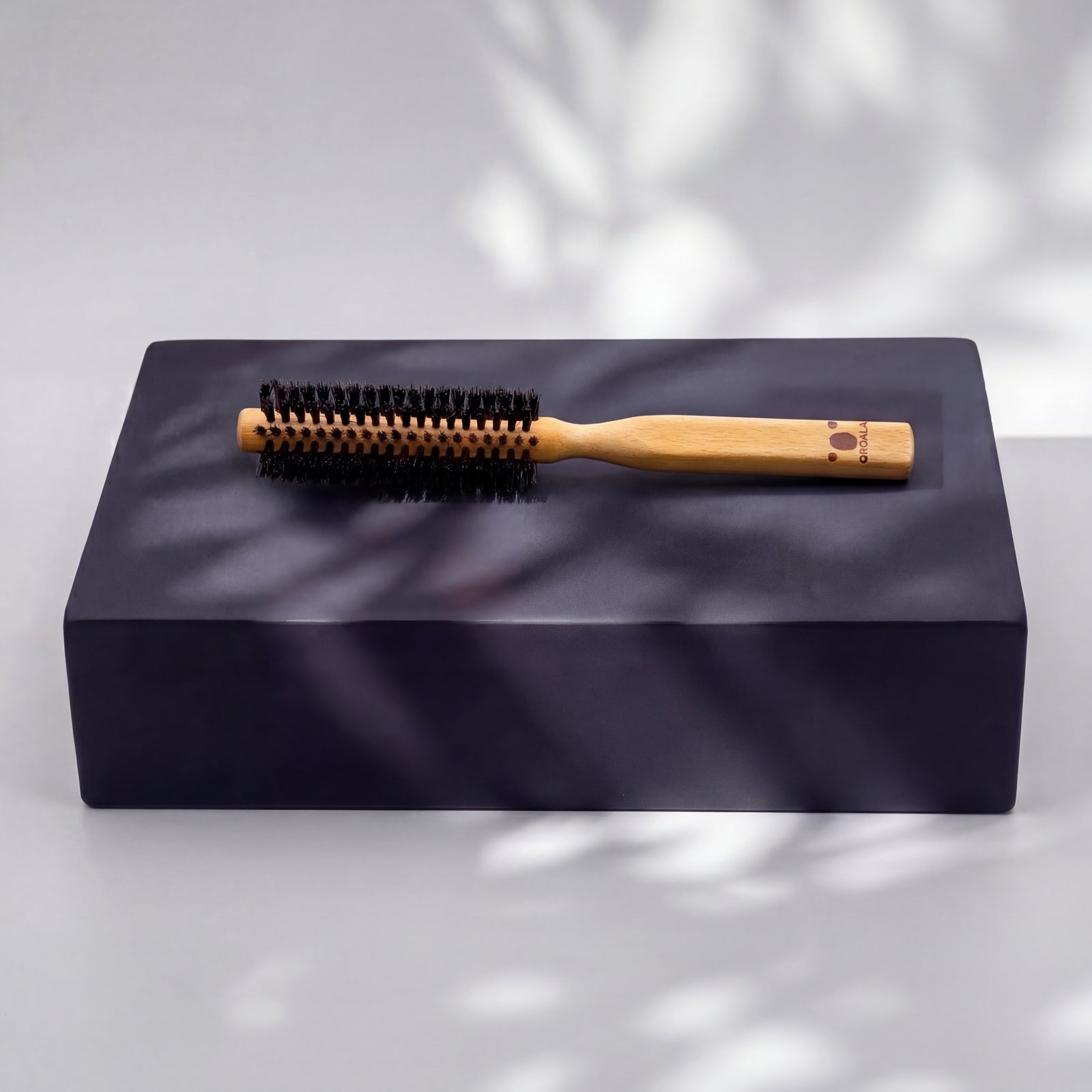

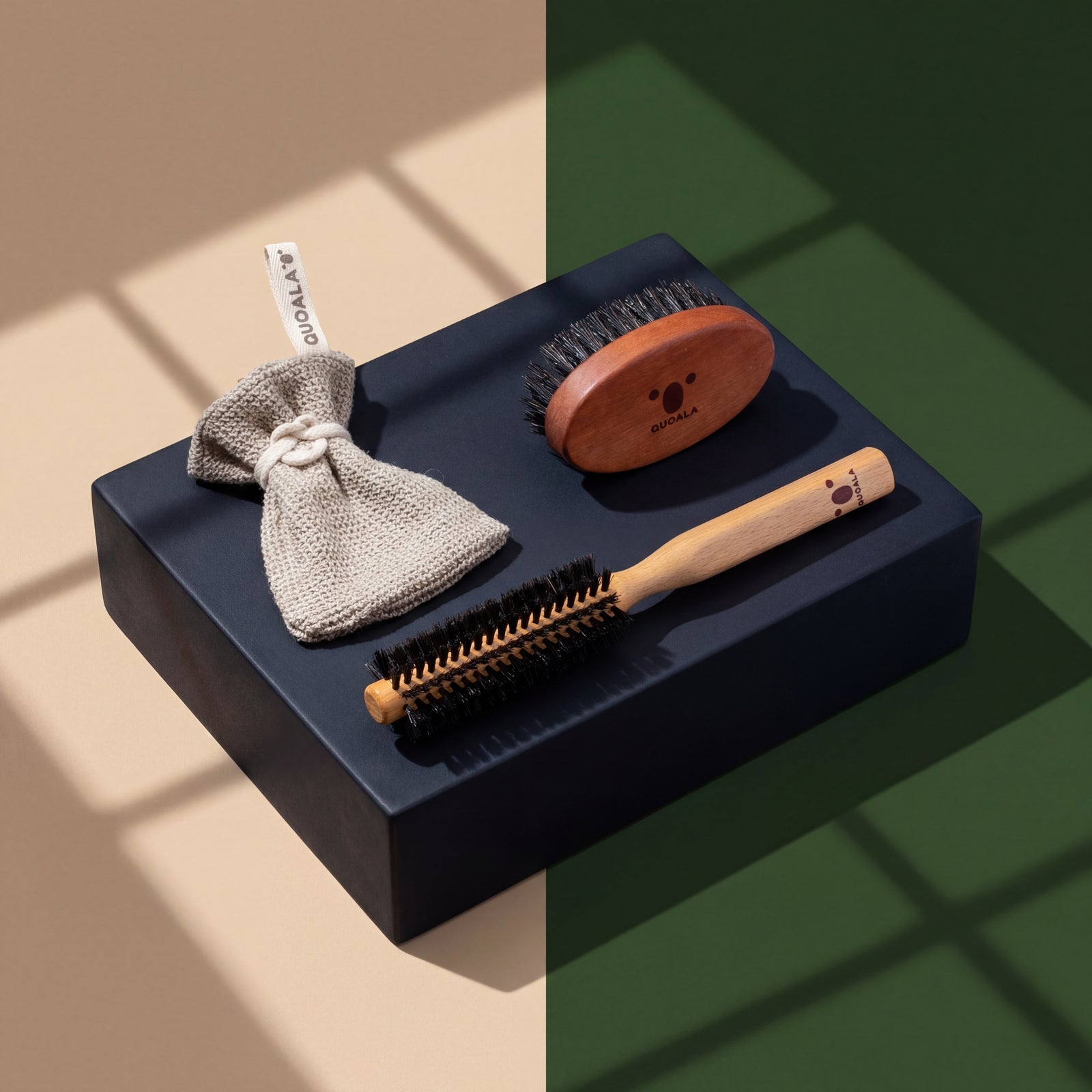

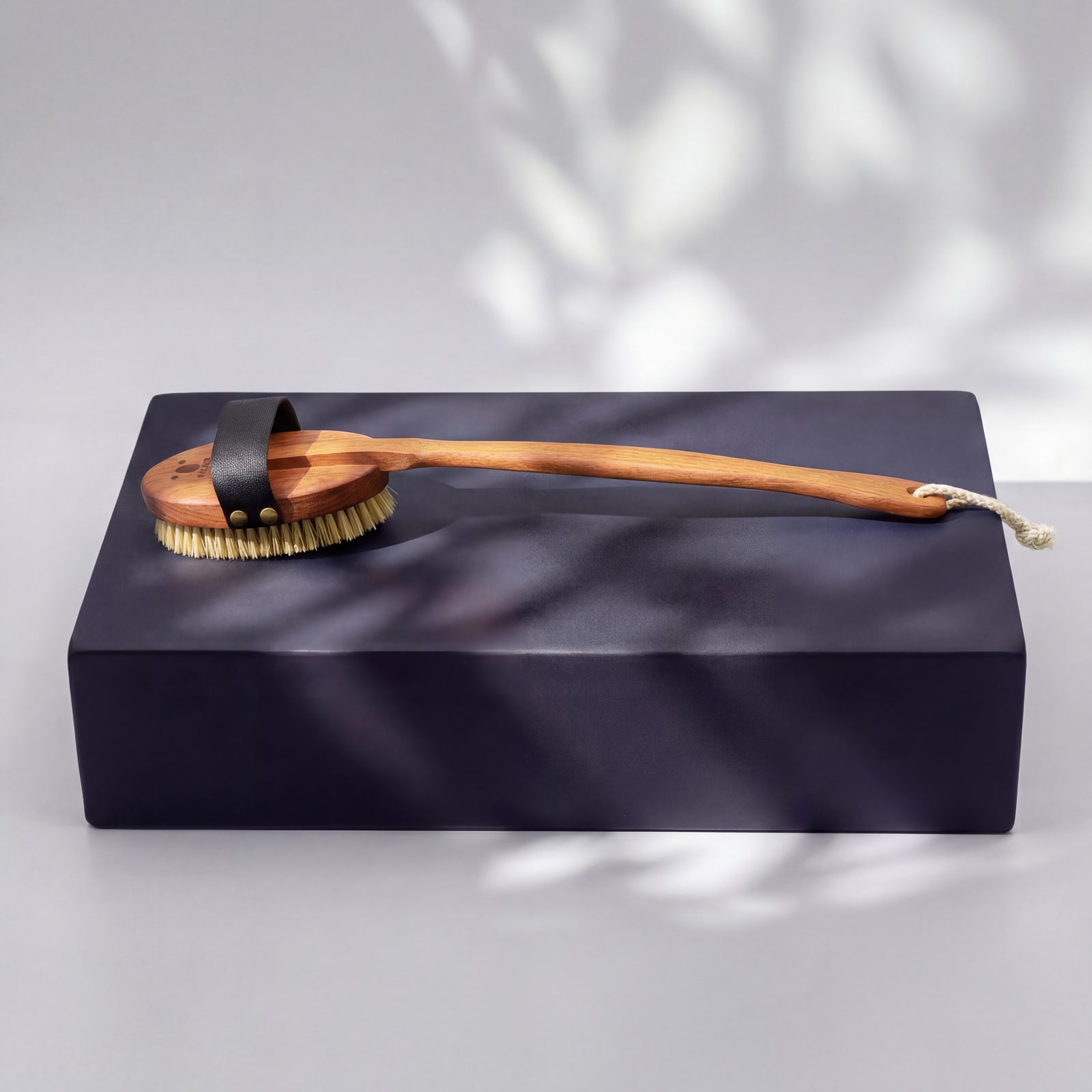

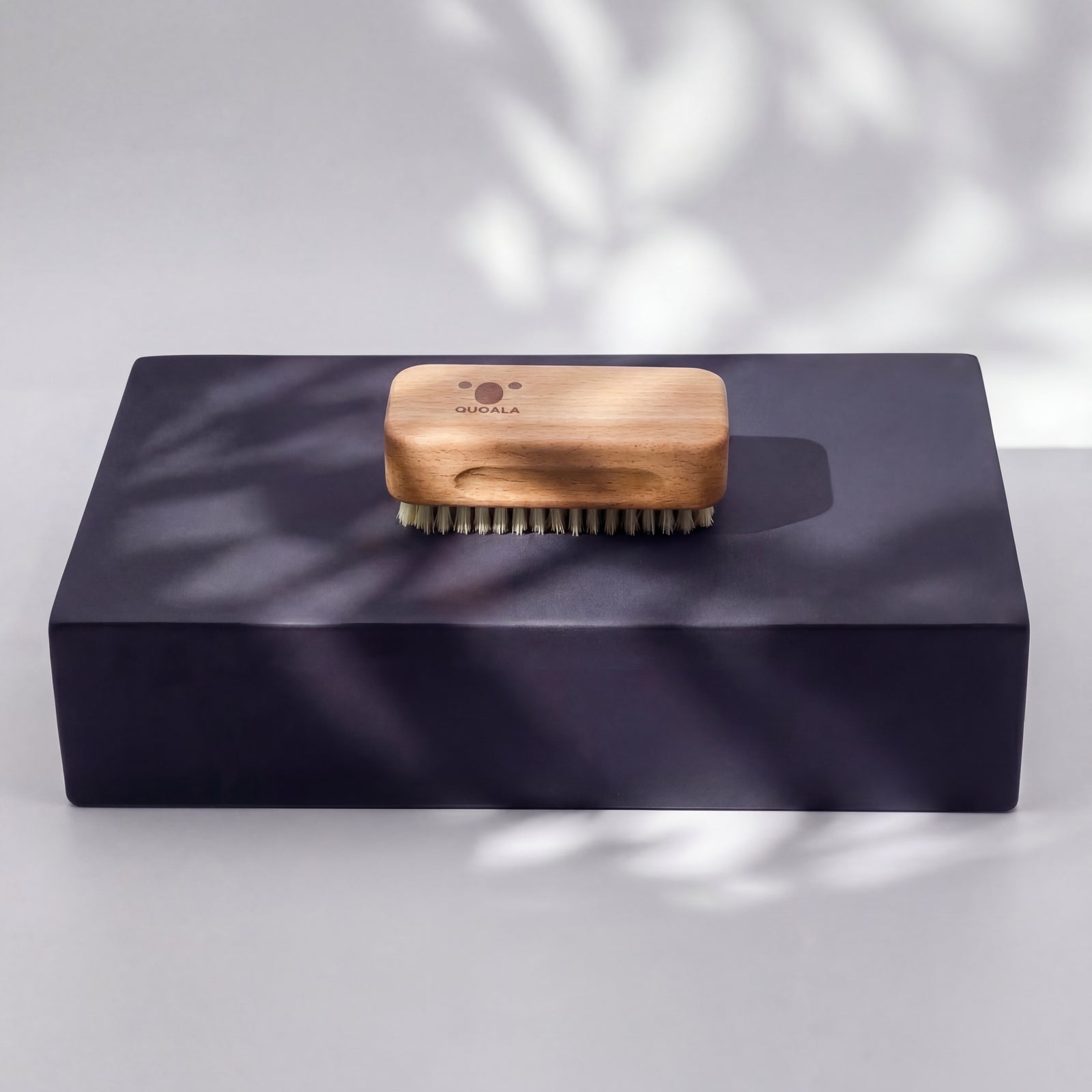

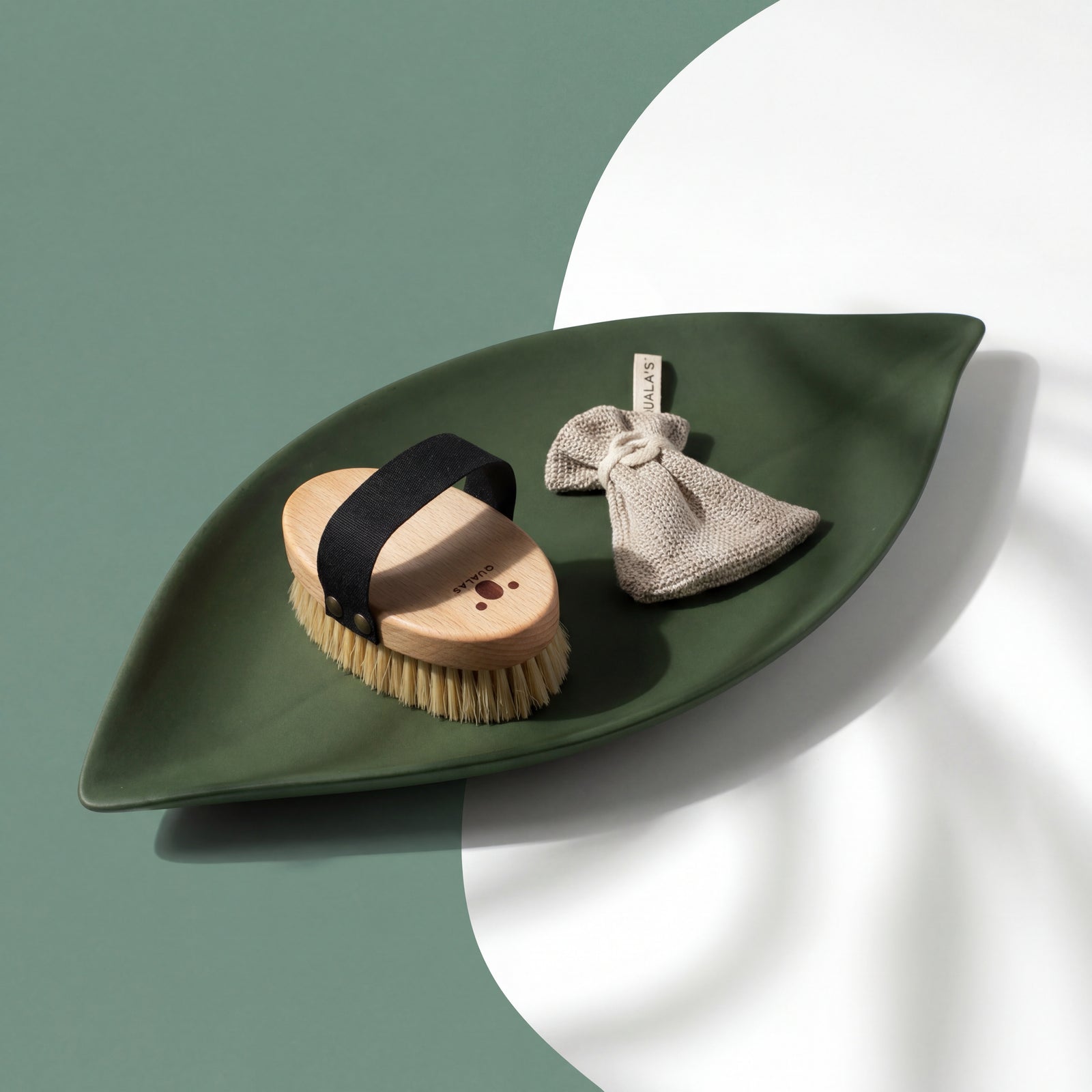

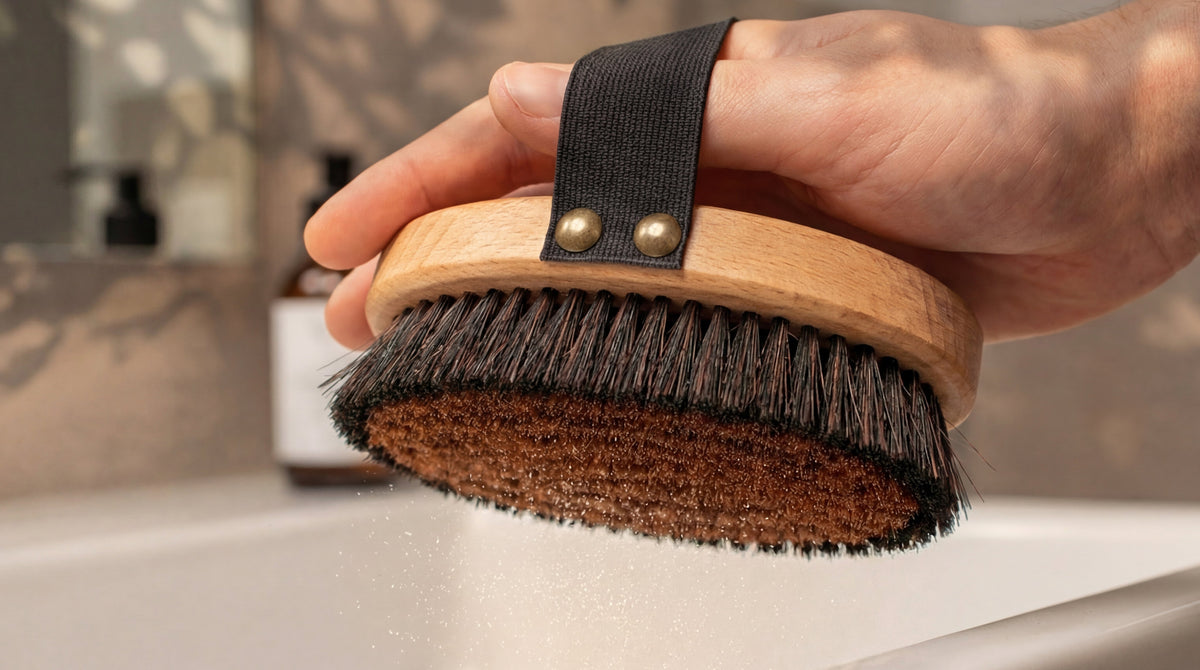
A QUOALA dry brush (monastery brush) is a handcrafted quality tool. The combination of FSC-certified beech wood, fine bronze wire and natural fibres (horsehair or vegan Tampico) makes it a true premium product for your dry brushing ritual.
To keep the bronze wires bright and the bristles supple, it needs special care. The ionic brush follows different rules from a classic bath or hand brush.
In this guide:
1. The most important rule: no water, ever!
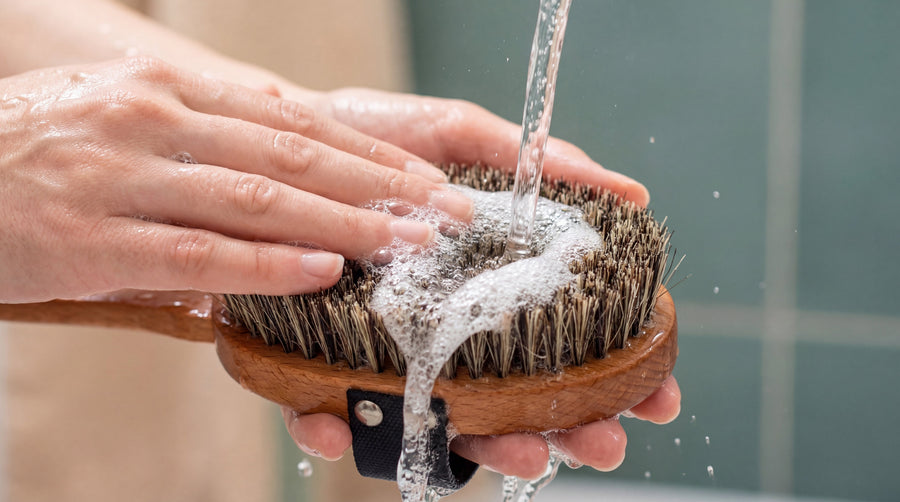
We know it is tempting to simply rinse beauty tools under running water in the bathroom. With the monastery brush, however, that is the biggest mistake you can make.
Why? Our bronze wires are made of real bronze (93% copper, 7% tin). When bronze comes into contact with water or soapy water, the metal oxidises. So-called patina or verdigris forms. This damages the fine wires. So never clean this brush wet!
2. How can you tell your brush needs care?
Because you only ever use the brush dry on your skin, it does not get dirty with sebum and product residue in the classic sense. Still, there are clear signs that it is time for a quick dry clean:
- White dust at the base of the bristles: If you look deep into the bristles and spot fine, pale dust on the wood, these are build-ups of the dead skin flakes removed by exfoliation [1].
- The massage effect fades: Does brushing feel less "tingly"? Then the fine bronze wires are often heavily covered in skin flakes.
- Clumped outer bristles: Even during dry brushing the skin releases a tiny amount of sebum. After weeks of intensive use, the outer natural fibres (horsehair or Tampico) can clump slightly or feel stiff.
3. Cleaning: how to get the brush hygienically clean
To remove the residue mentioned above and refresh the brush, you only need a minute and no water:
- Gentle tapping (after every use): After use, tap the brush gently with the wooden side (or with the bristles facing down) on a hard, flat surface – for example a dry towel on the edge of the washbasin. Most skin flakes will simply fall out on their own.
- Combing through (when dust is visible): If dust has got caught between the bronze and natural fibres, carefully run a clean, dry comb or a fine brush cleaner through the bristles. This loosens deep-seated particles.
- The hygiene factor: Copper surfaces have an antimicrobial effect as a material [2]. Even so: tap the brush out after every use and let it lie dry.
4. Proper storage: dry and airy
The FSC-certified beech wood and the natural bristles are natural products that want to "breathe". Keep these points in mind when storing the brush:
- No standing moisture: Keep the brush in a dry place, ideally in a well-ventilated room and not right next to the steaming shower.
- No extreme heat: Never put the brush on a radiator. Direct, intense heat dries the wood out too much (it can crack) and makes the natural fibres brittle.
- Protect the bristles: The ultra-fine bronze wires are flexible but can bend under constant pressure. It is best to store the brush bristles up, lying on its side or hanging from its strap. Do not put heavy objects on it.
Conclusion: Caring for the ionic brush is wonderfully simple: use it dry, tap it out gently, store it dry. If you follow these simple rules, your QUOALA tool will be a reliable companion for many years.
5. Frequently asked questions
How often should I clean my dry brush?
Tap the brush out after every use. For good hygiene, a thorough dry clean with a clean, dry comb every 2–4 weeks is also recommended. If you brush daily, also wipe the bristles weekly with a dry cloth to remove skin residue.
Can I wash the monastery brush with water?
No. Water is off-limits for the monastery brush – the product care instructions say so too. The bronze wire tarnishes on contact with water and soap (patina), and the beech wood can swell and crack. So only clean the brush dry: tap it out and comb it through with a dry comb.
Do I need a cleaning product for the monastery brush?
No. The monastery brush is only cleaned dry. Shampoo, soap, alcohol or aggressive cleaners would attack the bronze wire and the natural bristles.
How long does a well-cared-for Quoala monastery brush last?
With regular care and correct storage, a high-quality dry brush can last for many years. The bristles should be replaced if they bend noticeably or start to fall out.
Can I also use the brush wet?
No, the dry brush is exclusively designed for dry use. For use in the shower, a bath brush suitable for both wet and dry use is the right choice.

A fresh start to your morning routine
Feel the combination of bronze and natural fibres for yourself. Discover our high-quality monastery and ionic brushes made from FSC-certified wood for your dry brushing.
Sources and further reading
Scientific sources
- Cleveland Clinic (2021), The Truth About Dry Brushing and What It Does for You. Dermatologist: dry brushing is an effective exfoliation; an effect on cellulite is not proven. Our assessment S77 · Source
- Grass, Rensing & Solioz (2011), Metallic Copper as an Antimicrobial Surface, Applied and Environmental Microbiology. Copper surfaces are antimicrobial; measured on copper surfaces, not on the brush. Our assessment S13 · Source