





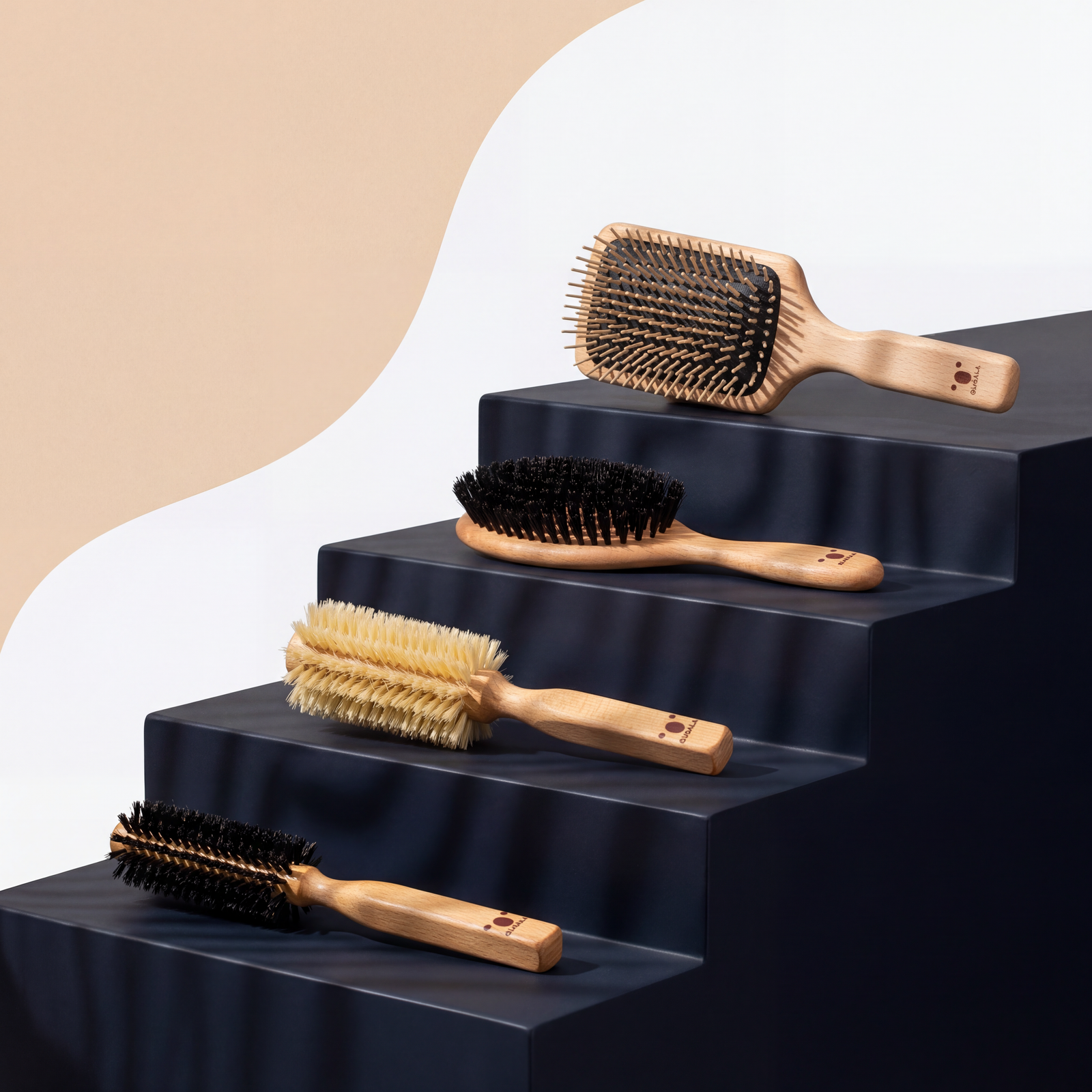










Hundreds of people in Switzerland type “ecological brush” into Google every month. The honest answer is uncomfortable: the word is not a material, a country of origin or a certification mark. In Switzerland, “ecological” has been among the claims that a company must be able to substantiate since January 2026 [1]. In the EU, it has no longer been permitted on a product without recognised evidence since 27 September 2026 [2]. What remains when you remove the word? Six questions you can check against any brush, and our answers for our own, including where the answer is “plastic”.
The key points at a glance
A brush is not “ecological”. It consists of specific parts, comes from a specific place and does specific things after use. Six questions can be checked: What are the bristles made of? Where does the wood come from? Which parts are still plastic? Where is it made, and under which rules? How long does it last, and can it be cared for or repaired? What happens afterwards? Anyone who gets these six answers no longer needs the word.
Contents
- 1. Why “ecological brush” says nothing, and since 2026 is no longer allowed to
- 2. What are the bristles made of? Natural fibre, plastic and the microplastics problem
- 3. Where does the wood come from? What FSC substantiates and what it does not
- 4. Which parts are still plastic? An honest list of parts
- 5. Where and how is it made? Europe, EMAS and why this can be checked
- 6. How long does it last, and what happens afterwards?
- 7. Putting ourselves to the test: four QUOALA products in six answers
- 8. What “ecological brush from Switzerland” honestly means
- 9. Frequently asked questions

Prefer to check the product straight away? Every QUOALA brush comes with details of its materials, wood, parts, manufacture and care, with evidence.
1. Why “ecological brush” says nothing, and since 2026 is no longer allowed to
“Ecological”, “sustainable”, “green”, “environmentally friendly”: these words have no standard, no metric and no testing body. Any brush can carry them as long as no one asks questions. That is exactly what is changing, in two places at once.
In Switzerland, a new clause in the Federal Act against Unfair Competition has applied since 1 January 2025: anyone making claims about the climate impact of their products must be able to substantiate them with objective and verifiable grounds. The burden of proof lies with the company, not with you [1]. The enforcement guidance issued by the Federal Office for the Environment (FOEN) in January 2026 goes a step further and names the vague words: “environmentally friendly”, “ecological”, “green”, “sustainable” and “eco” count as generic climate claims whenever climate impact is a significant part of a product’s environmental impact. The same requirement for evidence then applies to them [1].
In the EU, Directive (EU) 2024/825 has applied since 27 September 2026. It bans generic environmental claims made to consumers unless they are backed by recognised excellent environmental performance, and it bans sustainability labels that are not based on an independent certification scheme [2]. A leaf drawn by the company itself on the packaging is therefore no longer a certification label, but a legal risk.
A survey of over 8,000 consumers in eight countries shows why this was necessary: 76 per cent say sustainable shopping matters to them. At the same time, one in three companies surveyed had already faced accusations of greenwashing, and seven in ten consumers turn away from a brand if they suspect it [3]. The Swiss sustainability study by Promarca and Ipsos describes trust in companies’ environmental promises at the end of 2025 as “still very low” [4].
We think this is right. QUOALA does not use these words itself, including for its own products. Not because we lack the courage, but because they say nothing. What we can say is set out in the next six sections.
Summary: the empty word
“Ecological” is not a certification mark. In Switzerland, it has had to be substantiated since 2026; in the EU, it is banned without evidence. Check parts, origin, manufacture, lifespan and end of life instead.
2. What are the bristles made of? Natural fibre, plastic and the microplastics problem
The first question is the most important, because the bristles are the part that does the work, wears down and touches you. There are three possible answers: animal hair, plant fibre or plastic.
Natural fibre
- Boar bristle, pig bristle and horsehair consist of keratin, the same protein as your hair [7].
- Tampico is the fibre of the Lechuguilla agave from Mexico. It is rough and porous, which is why it holds water and soap [8].
- Both are broken down by microorganisms. In the seawater test, wool, a keratin material like bristles, lost a significant amount of mass, while nylon and polyester remained unchanged [6].
Plastic bristle
- Usually nylon (polyamide) or PBT, made from petroleum.
- Releases particles during brushing. Measurements on toothbrushes showed that every brush tested released microplastics, with the cheapest releasing the most [5]; hard plastic bristles release more particles than soft ones [5b].
- Does not break down in the sea or soil [6].
A word on honesty: the microplastics measurements come from toothbrushes, not body or hair brushes. There is no study measuring abrasion from a bath brush, including ours. What we can state is the principle: plastic bristles lose material through friction and water, and that material remains [5].
And a trap that is often overlooked: “Vegan” does not automatically mean ecological. A brush with nylon bristles is vegan. It is still made from petroleum, releases particles and persists. Animal welfare and the environment are two different questions. If you want both, you end up with plant fibres such as Tampico, wherever they can fulfil the function. Read more in the article Boar bristle vs. Tampico.
Summary: bristles
Ask about the material, not the adjective. Keratin and plant fibre break down; nylon does not. “Vegan” says nothing about petroleum.
3. Where does the wood come from? What FSC substantiates and what it does not
Wood is not automatically the better choice. It depends on which forest it comes from and how long the handle lasts.
The label of the Forest Stewardship Council (FSC) confirms that the wood comes from a forest managed according to fixed rules: no conversion of natural forest, protection of water and soil, the rights of local people, and independent checks along the supply chain [9]. That is a lot. But it is not everything. A systematic review of 98 studies from 1993 to 2021 shows that certification has a positive effect on forest degradation in most studies, while research on deforestation is limited and divided. Many studies are designed in ways that make it impossible to attribute the effect clearly to certification [10]. FSC therefore substantiates management at the source. It does not substantiate every outcome in the forest.
At QUOALA, the handles are made of beech wood, and the beard brush handle is made of pear wood, both native hardwoods with a dense, even structure [11], from FSC-certified forests [9]. What wood means compared with plastic over its life cycle has been studied most thoroughly in pallets, not brushes: there, the wooden version had a CO₂ footprint 72 to 80 per cent lower than plastic over the entire life cycle [12]. We have no such life cycle assessment for a brush, so we give no figure for our products. More on wood in the article FSC wood at QUOALA.
Summary: wood
FSC substantiates origin and the rules in the forest, not every outcome. Ask about the wood species and the label, and do not expect a CO₂ figure without a life cycle assessment.
4. Which parts are still plastic? An honest list of parts
Almost every brush has more parts than you can see: a strap, cord, cushion, bristle anchors, a nail or pin. The word “plastic-free” is only true if every one of these parts has been checked.
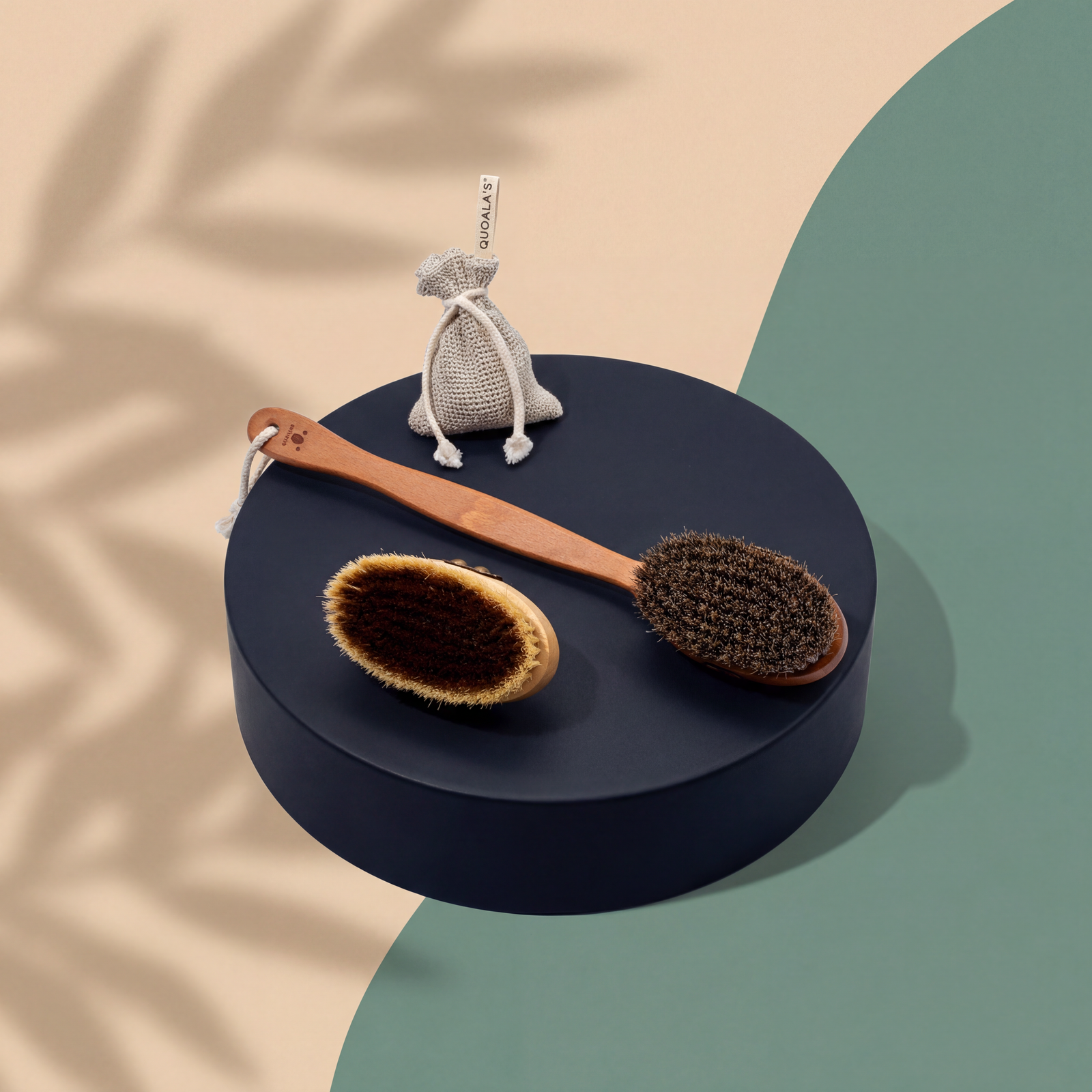
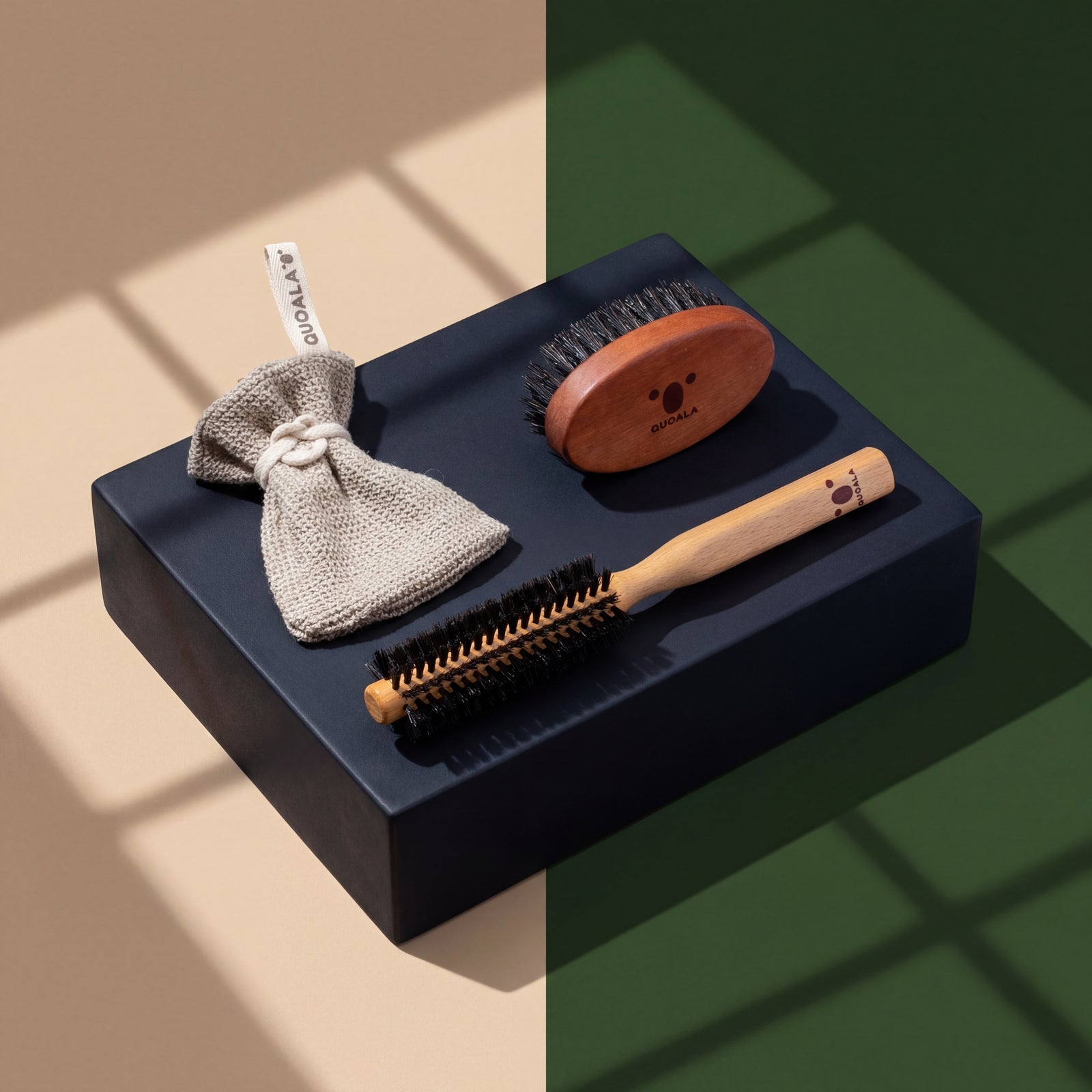
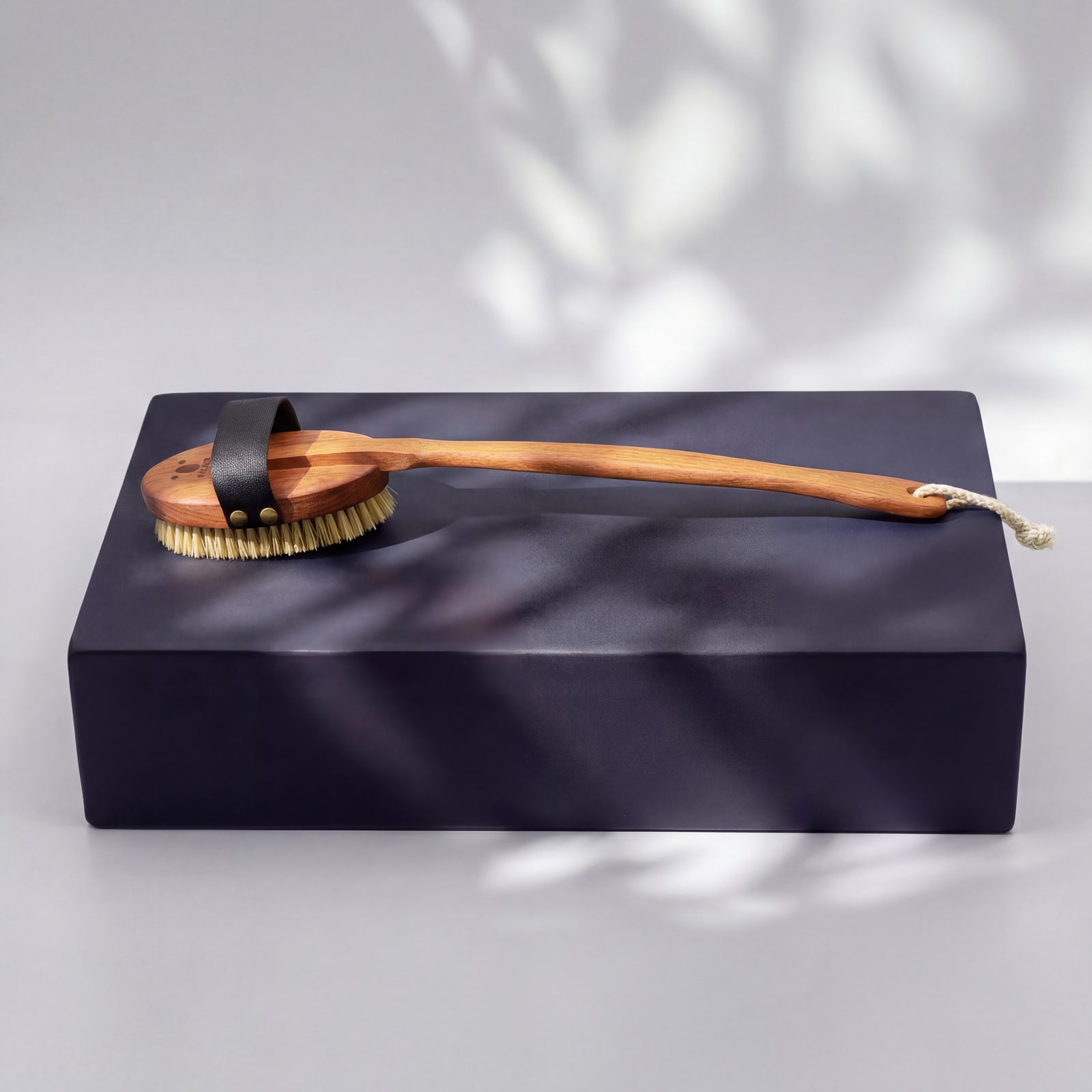
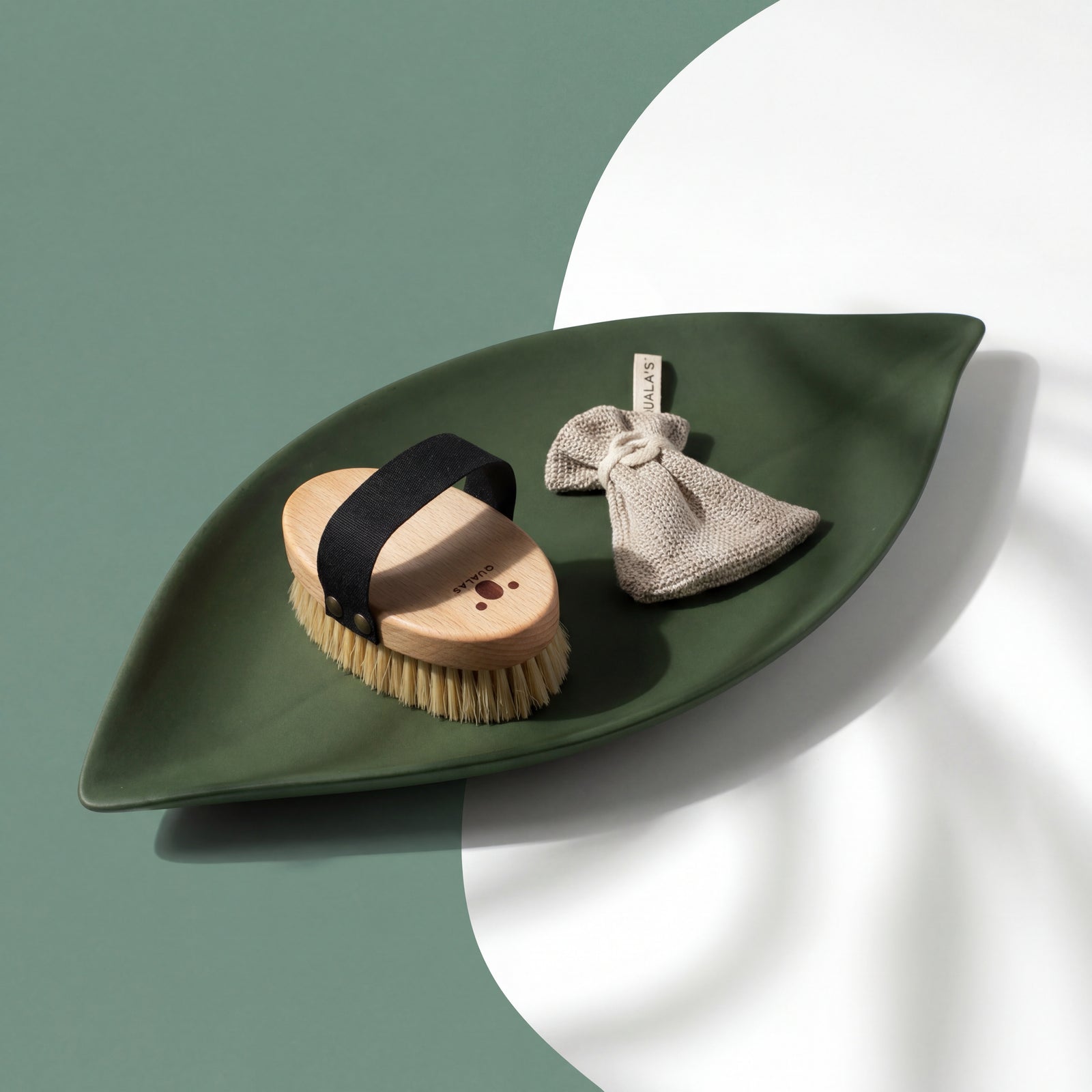
At QUOALA, this means the following: the hand straps on our bath and Kloster brushes are made of an elastane-blend fabric. This is a plastic. We chose it because it holds wet and dry, does not tear and lets you hang the brush on a hook for years. A cotton tape would not have managed that. The soap bag consists of 70 per cent organic linen, 20 per cent cotton and 10 per cent elastane, so that it stretches around the soap. This, too, is stated on every product page.
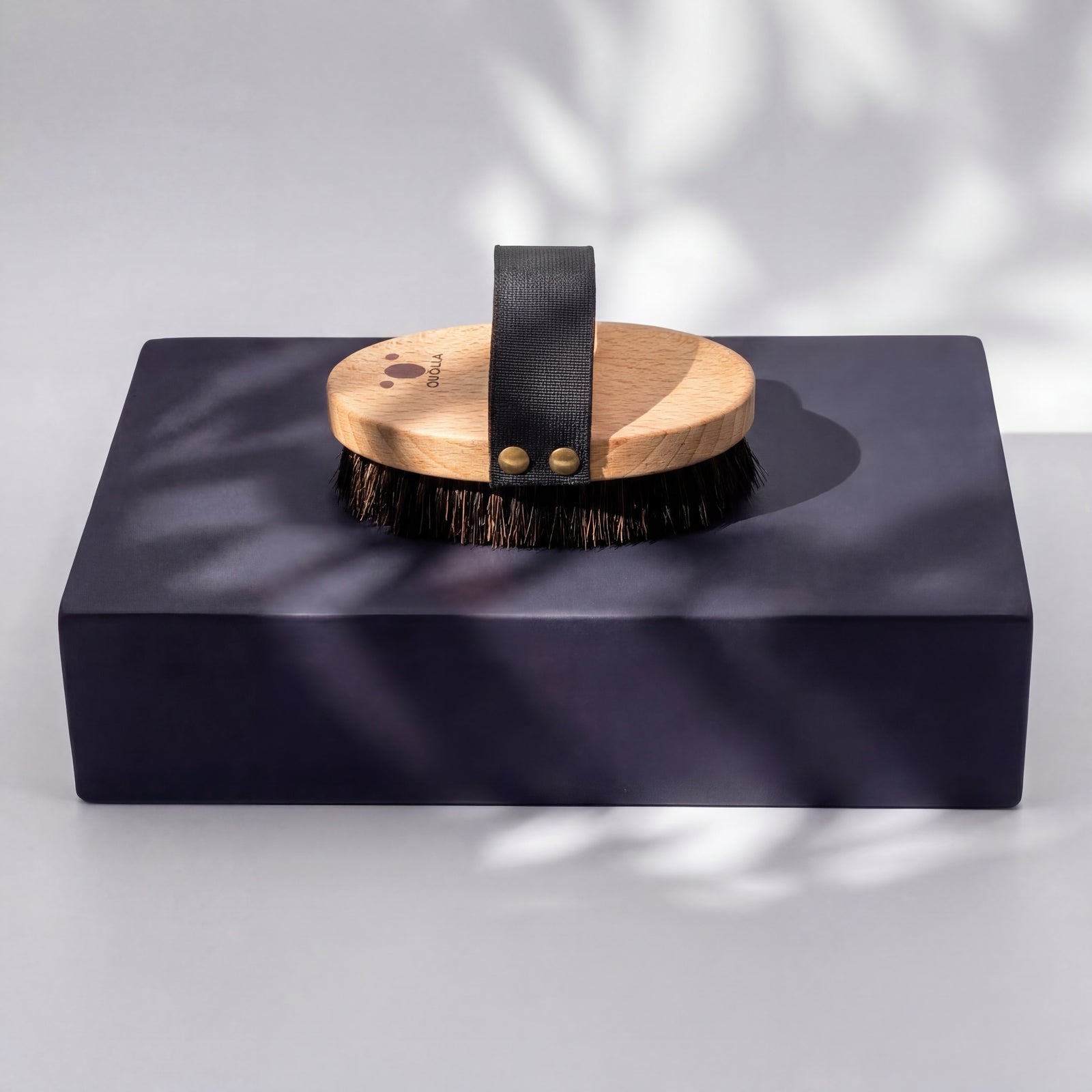
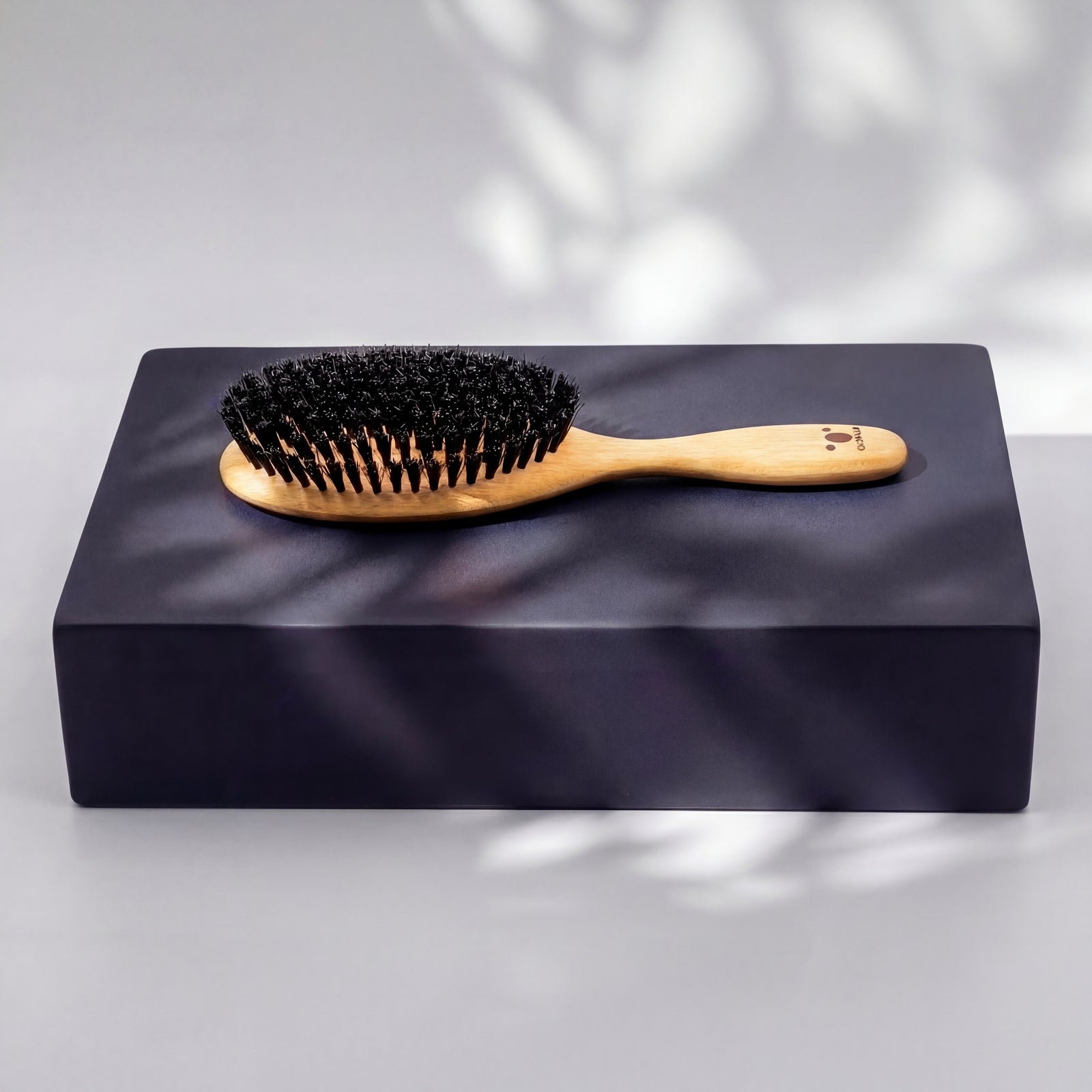
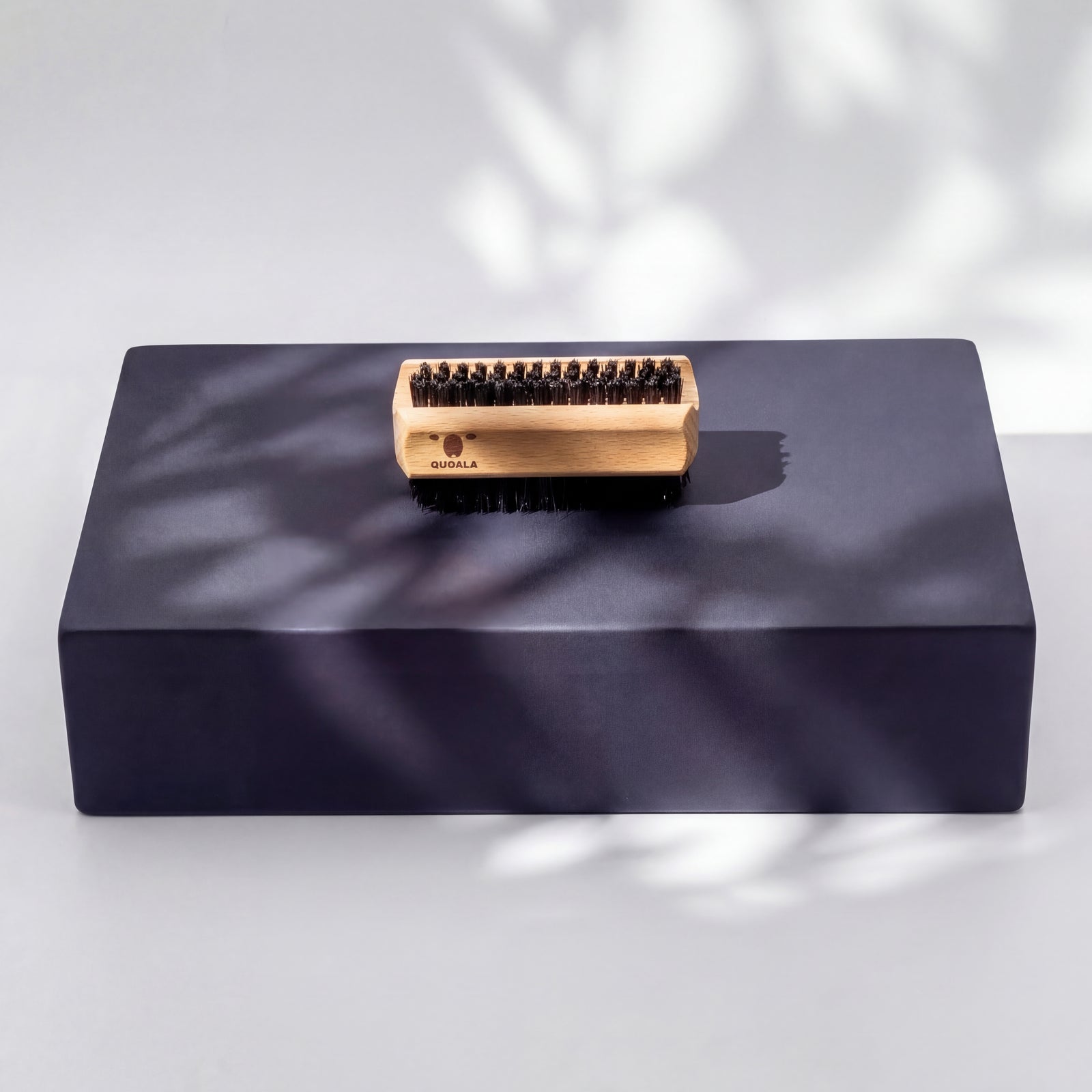
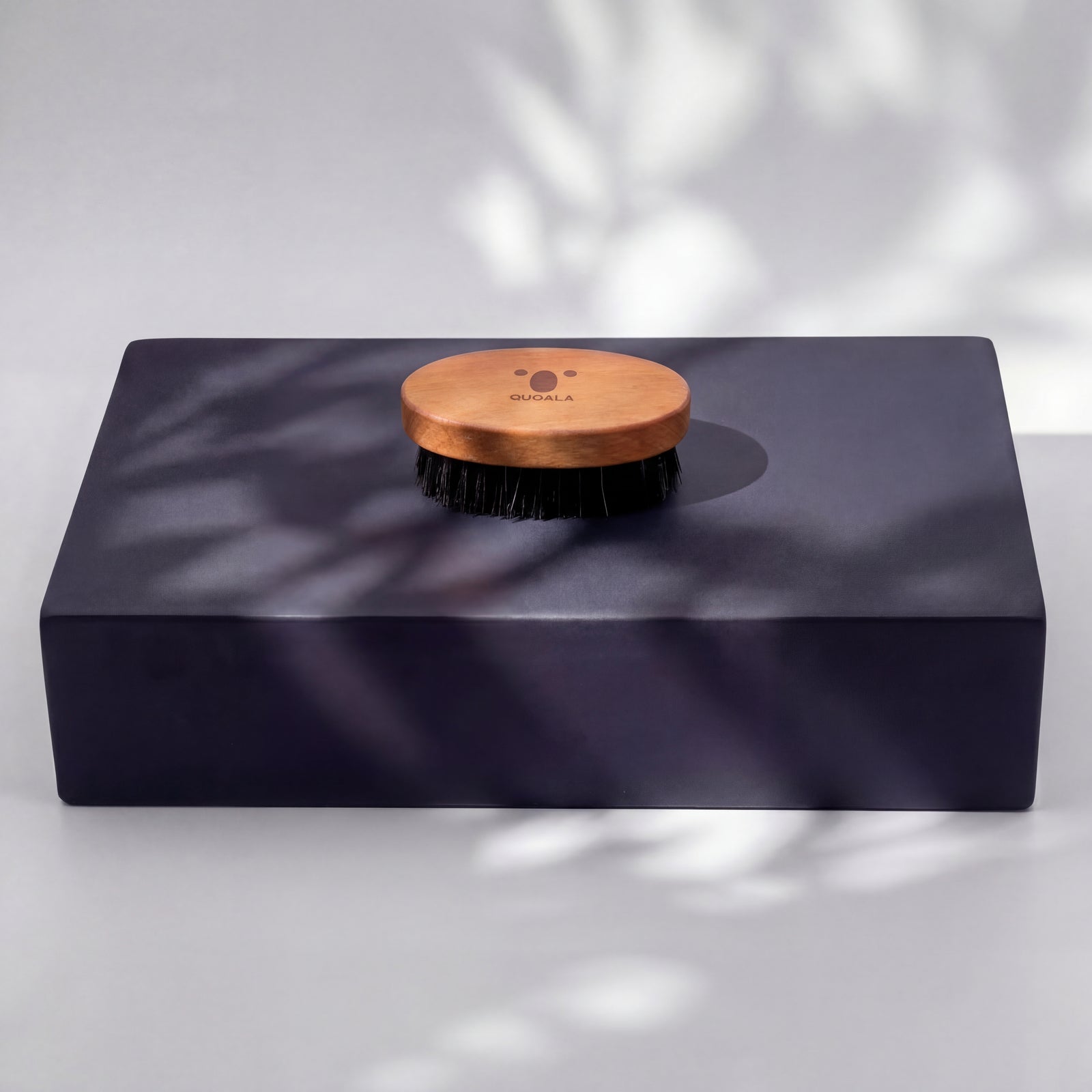
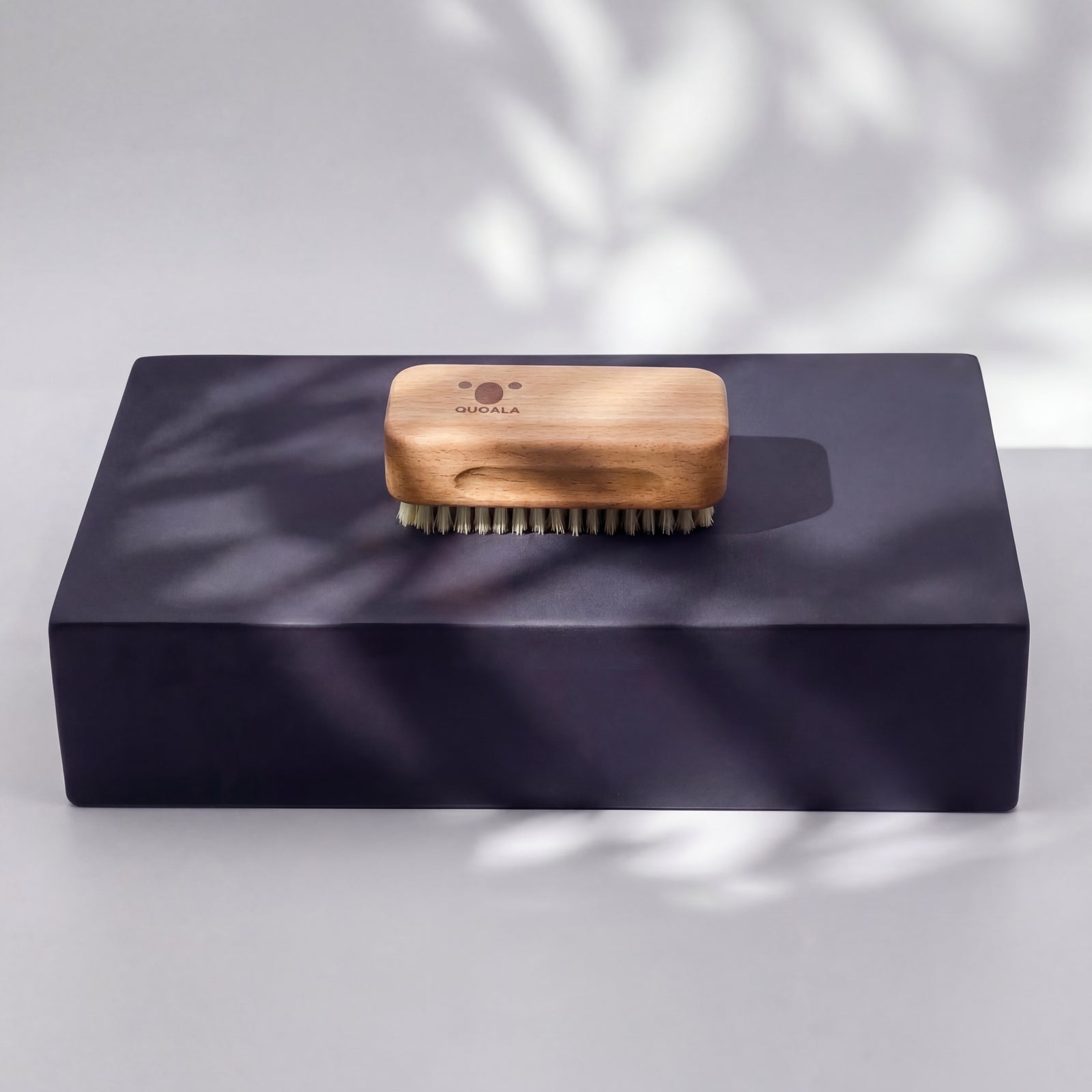
That is why we do not call the brand “plastic-free”. We only say it where it is true: the Hand & Nail Brush, Boar Bristles, Double-Sided, Medium-Firm consists of beech wood and bristles, without a single plastic part. It can carry the word. The others cannot.
Checking tip: If a brush promises to be “100% plastic-free”, look at the strap and the underside of the bristle field. A plastic part is not a scandal. An undisclosed one is.
Summary: list of parts
Name every part, including the plastic one. Only say “plastic-free” once everything has been checked. For us, that applies to just one brush.
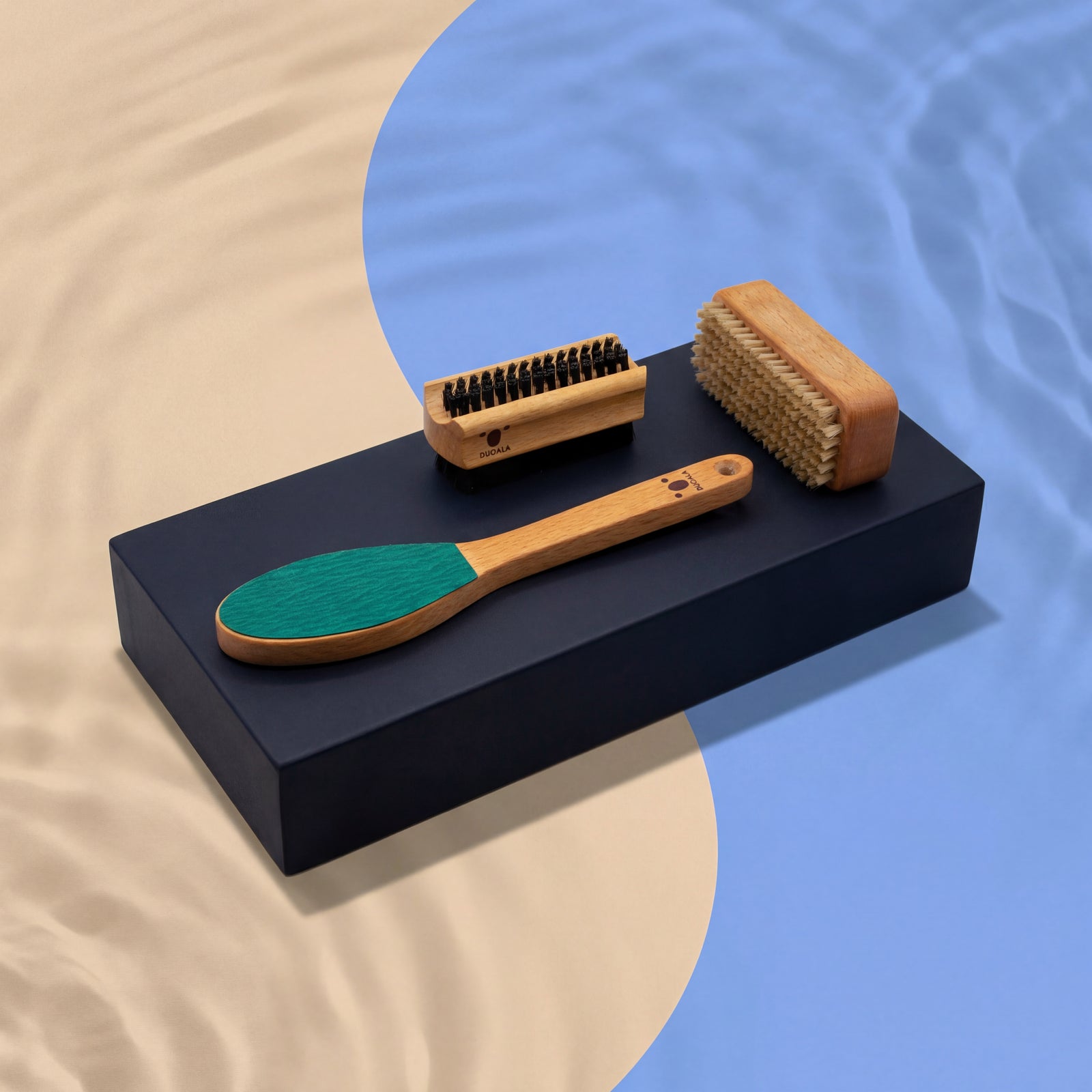
Three products you can check against the questions straight away

Hand & Nail Brush, Boar Bristles, Double-Sided, Medium-Firm
Beech wood and boar bristle, no plastic parts. The only brush we can call “plastic-free”.
View product
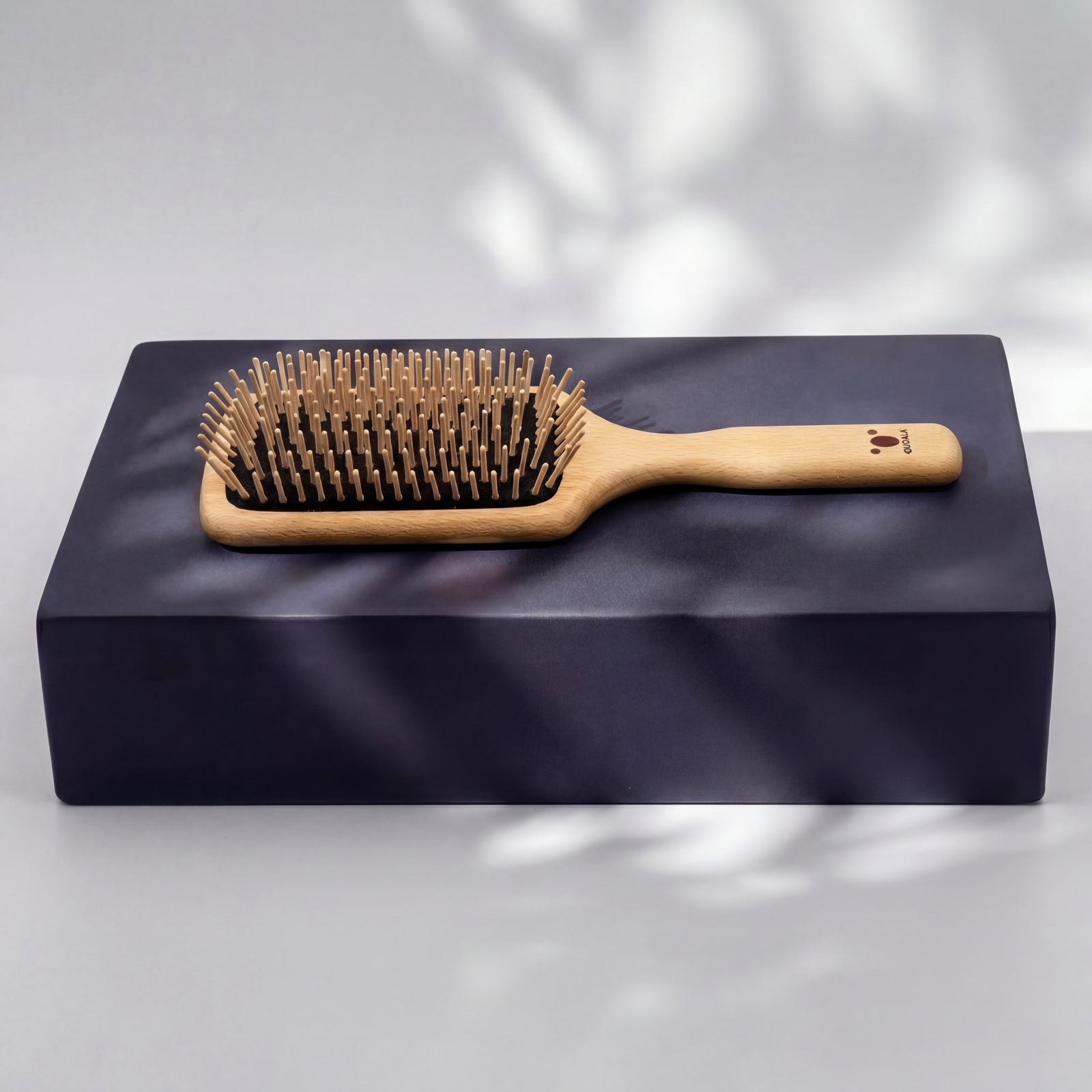
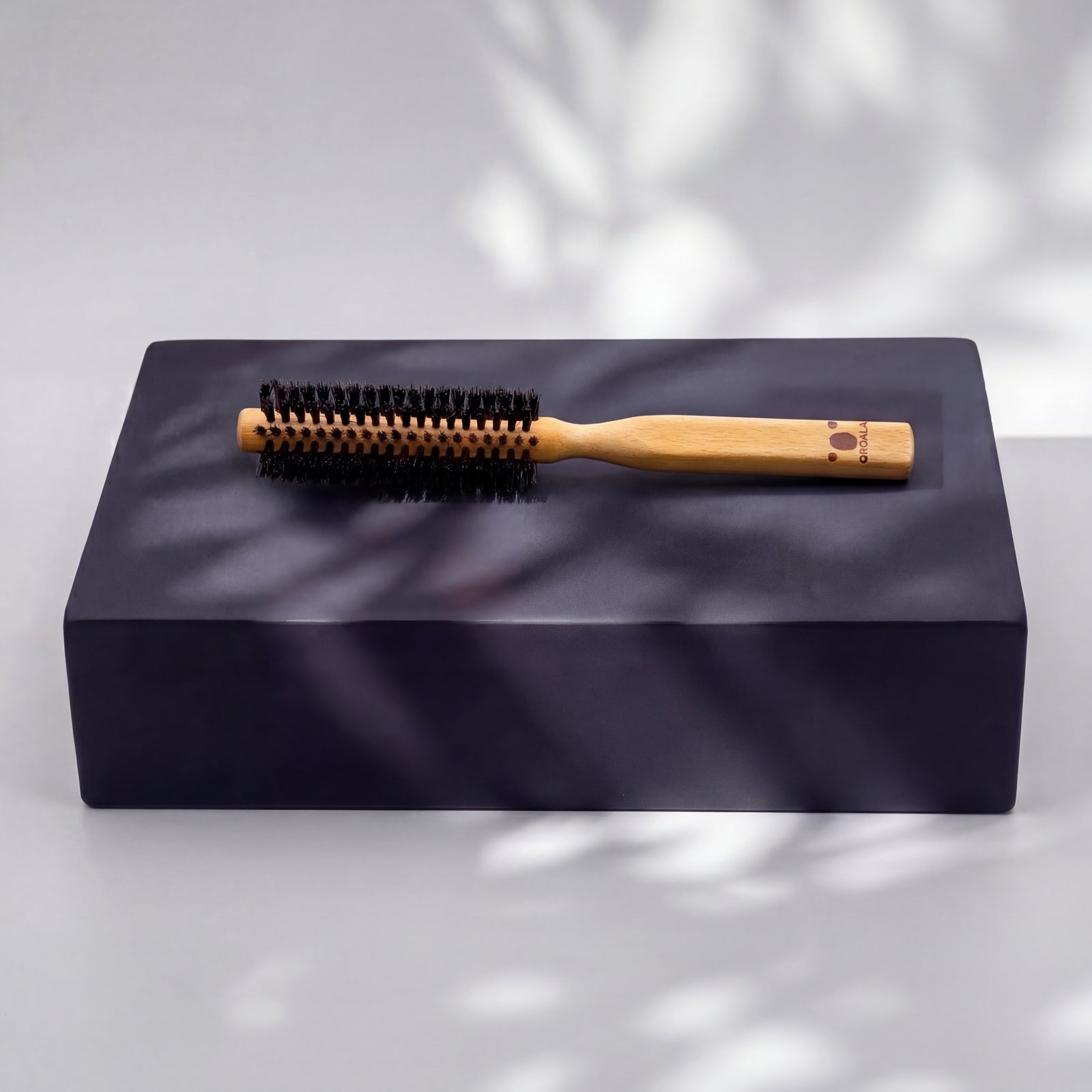
Hair Brush, Tampico, Large, Firm, Vegan
Vegan through plant fibre, not nylon. Beech wood from FSC-certified forests.
View product
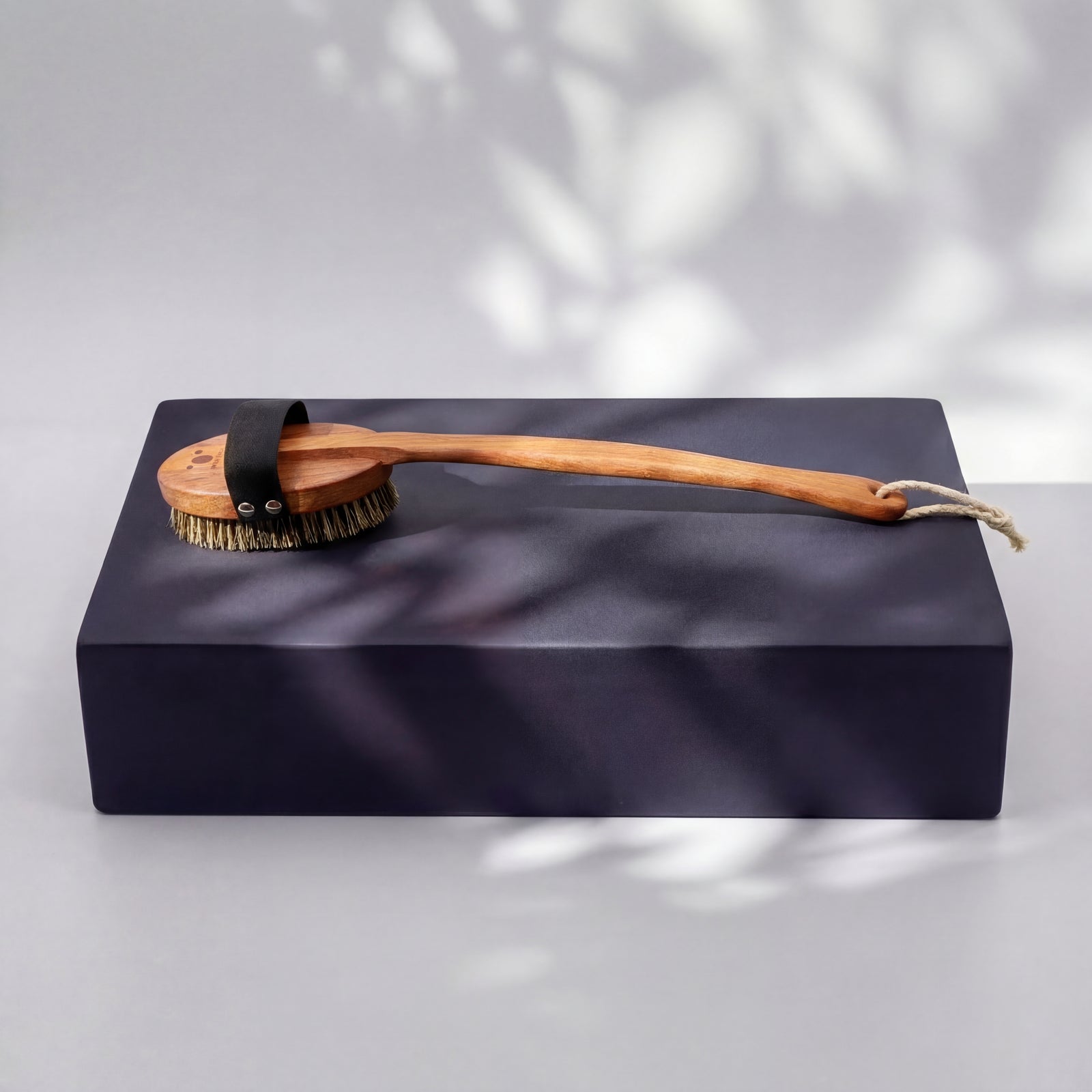
Bath Brush, Horsehair & Tampico, Medium, with Cord
Detachable head; the handle stays. The hand strap is made of an elastane-blend fabric, and the description says so.
View product5. Where and how is it made? Europe, EMAS and why this can be checked
The place of manufacture determines whether the rules under which a product is made can be checked at all. Where no one can look, every statement remains a claim.
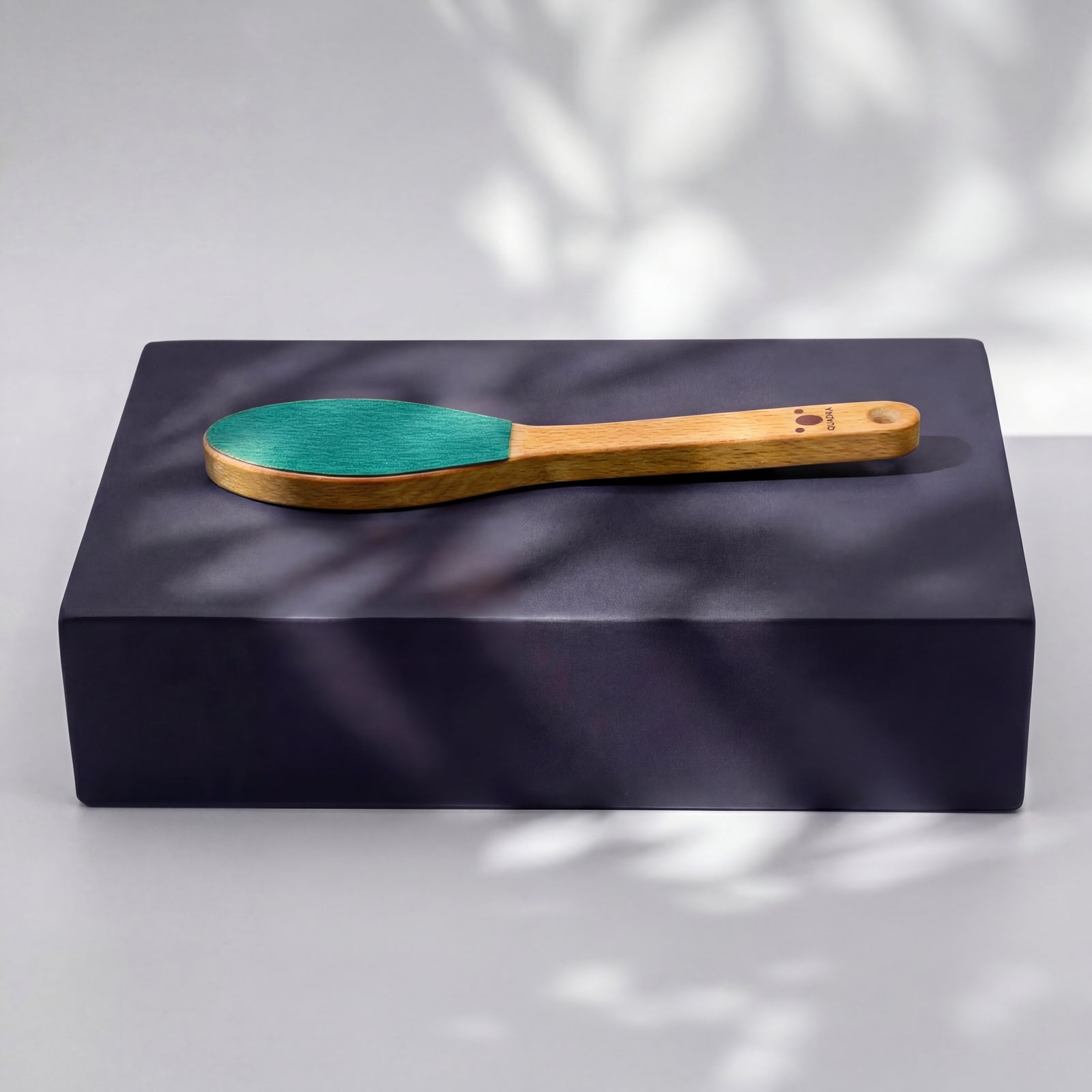
Our brushes, foot files and wooden tools are made by a family business in Germany, as they have been for generations. The business holds EMAS registration, under the EU environmental management scheme under Regulation (EC) 1221/2009. EMAS requires an annual environmental statement with figures on energy, water, waste and emissions, verified by independent auditors and published [13]. The soap bag is made by a GOTS-certified family business in Italy; GOTS checks not only the fibre but every processing stage, including chemicals, wastewater and social criteria [15].
And the animal bristles? Boar bristle and horsehair are by-products of existing uses. No animal is kept for a brush. Their route into the EU is governed by Regulation (EC) 1069/2009 on animal by-products, with proof of origin and hygiene rules [14].
Why do we not name the business? Because it also supplies other brands, and our role is not to own a workbench but to select, explain and take responsibility. The origin can still be checked: through the country, the environmental management scheme and the labels. Read more in the article The EMAS label.
Summary: manufacture
Ask about the country and an independently audited scheme (EMAS, GOTS). A manufacturer’s name is worth less than a published, verified environmental statement.
6. How long does it last, and what happens afterwards?
The most environmentally friendly brush is the one you do not have to replace. Two things determine this: whether it can be cared for and repaired, and what happens to it when it really has reached the end of its life.
Caring for natural materials is simple, but there are rules: never soak wood, let brushes dry with the bristles pointing downwards, and oil the handle occasionally. Oil makes the wood water-repellent [16], and dry surfaces harbour fewer germs [16b]. The bath brush has a detachable brush head; the handle stays when the head eventually wears out. No one has measured how long a natural brush lasts in everyday use in a study, so we do not promise a number of years. The instructions are in the Care guide.
At the end of its life: wood and keratin are broken down by microorganisms. Wool fabric, chemically the same material as bristles, showed significant degradation after just weeks in soil tests [17]; in the seawater test, wool broke down but nylon did not [6]. This does not amount to a promise for the whole brush. A bath brush with an elastane strap does not belong on the compost heap. Take it apart for disposal: wood and bristles go into general waste or, where possible, green waste; the strap goes into general waste. In 2023, the EU banned intentionally added microplastics in cosmetics on the grounds that they do not break down [18]. Brush bristles are not covered by this. The underlying principle is the same.
Summary: lifespan and end of life
Can be cared for, repaired and taken apart. Biodegradability applies to each material, not to each brush. Anyone promising you years has not measured them.
7. Putting ourselves to the test: four QUOALA products in six answers
A checking framework that only applies to others is no framework at all. Here are the six questions applied to four of our products, including everything that is plastic and everything we do not know.
| Question | Hand & Nail Brush, Boar Bristles, Double-Sided, Medium-Firm | Hair Brush, Tampico, Large, Firm, Vegan | Bath Brush, Horsehair & Tampico, Medium, with Cord | Organic Linen Soap Bag |
|---|---|---|---|---|
| Bristles / fibre | Boar bristle (keratin) | Tampico from agave, vegan | Horsehair and Tampico | 70% organic linen, 20% cotton |
| Wood | Beech, FSC-certified | Beech, FSC-certified | Beech, FSC-certified, detachable head | No wood |
| Plastic parts | None; can be called “plastic-free” | None in the materials list; we still do not say “plastic-free” until every part has been checked | Hand strap made of elastane-blend fabric | 10% elastane in the fabric |
| Manufacture | Family business in Germany, EMAS-registered | Family business in Germany, EMAS-registered | Family business in Germany, EMAS-registered | GOTS-certified family business in Italy |
| Care / repair | Rinse, dry, oil | Comb out, store dry | Hang up, dry; head can be replaced separately | Washable at up to 30 °C |
| Afterwards | Wood and bristles are biodegradable | Wood and fibre are biodegradable; we have not checked the harvesting of wild agave in Mexico | Take apart: strap goes into general waste | Elastane content is not biodegradable: general waste |
Two entries in this table are uncomfortable, and they stay in it anyway. With Tampico, we know that the fibre comes from wild Lechuguilla agave; we have not checked whether our supplier’s harvesting protects the plant populations. We are asking and will add the answer here. And in the soap bag, the elastane is what makes it work, and what means it does not belong on the compost heap at the end of its life. Both are true. Every item of evidence for this table is on our Evidence page.
→ Our standard: Integrity
Every claim has evidence, and where none exists, we say so. A plastic part is named, not explained away.
8. What “ecological brush from Switzerland” honestly means
QUOALA is a Swiss brand. Manufacturing takes place in Europe. Both in one sentence, because both are true and because the order matters.
Development, material selection, responsibility for every claim and customer service are based in Switzerland. The workbench is in Germany, and in Italy for the soap bag. There is no Swiss brush manufacturer that could make our entire range to this quality, and we do not claim there is. So anyone searching for “brush Switzerland” gets no flag from us, but an address, a line stating the origin of each product, and delivery only within Switzerland and Liechtenstein.
What this means for you: short distances, rules that apply here and are checked here, and someone you can ask. More about our choice of materials in the article Every material has a reason.
The six questions to take away
- Bristles: Animal hair, plant fibre or plastic? And is “vegan” just another word for nylon here?
- Wood: Which species, from which forest, with which label?
- Plastic: Which parts are still plastic, and is that stated anywhere?
- Manufacture: Which country, which independently audited scheme?
- Lifespan: Can it be cared for, repaired and taken apart?
- Afterwards: What is biodegradable, what is not, and does the manufacturer tell you?
9. Frequently asked questions
Is a wooden brush more ecological than a plastic one?
Usually yes, but not because of the word. Wood from certified forests grows back and breaks down; plastic persists. The life cycle advantage has been substantiated for pallets, not brushes. What matters is the wood species, the label and the parts that are still made of plastic.
Are natural bristles compostable?
Keratin and plant fibres are broken down by microorganisms, as soil and seawater tests with wool show. A whole brush with a strap or metal parts still does not belong on the compost heap; it should be taken apart and disposed of appropriately.
Is a vegan brush automatically ecological?
No. Vegan only means it contains no animal material. Nylon bristles are vegan and still made from petroleum. Plant fibres such as Tampico are vegan and biodegradable.
What does FSC mean for a brush?
The wood comes from a forest managed according to FSC rules and independently checked. It says nothing about the bristles, the strap or the manufacturing process.
How do I recognise greenwashing in brushes?
By words with no material behind them: “eco”, “green”, “sustainable”, “climate-neutral” without evidence, and labels drawn by the company itself. Anyone who gets answers to the six questions does not need the words. In Switzerland, companies have had to be able to substantiate climate claims since 2025; greenwashing can be reported to SECO and the Stiftung für Konsumentenschutz.
Can QUOALA call its brushes “ecological”?
We do not. We state the materials, origin, manufacture and labels for each product and disclose the evidence. That is more precise and, since 2026, also on the safer side of the law.

Six answers instead of one word
Materials, wood, parts, manufacture, care and end of life are listed for every product. With evidence you can read for yourself.
Sources and further reading
Sources
- Federal Act against Unfair Competition (UWG, SR 241), Art. 3 para. 1 let. x, in force since 1 January 2025; Federal Office for the Environment (FOEN) (2026), Enforcement guidance for assessing climate-related claims under the UWG, UV-2561, version 01/2026. Legislation and official guidance. Context S117 · Source
- Directive (EU) 2024/825 of the European Parliament and of the Council of 28 February 2024 on empowering consumers for the green transition, applicable from 27 September 2026. EU legal act. Context S116 · Source
- Biró T., Neus A. (2023), Greenwashing vs. Greenacting, NIMpulse 2023-4, Nürnberg Institut für Marktentscheidungen. Survey of 8,008 consumers and 805 companies in eight countries, excluding Switzerland; market research, not a study. Context S118 · Source
- Promarca / Ipsos Switzerland (2025), Sustainability: bridging the gap between the intentions and reality of Swiss consumers, 15 December 2025. Industry association study, qualitative statement, no figure used. Context S123 · Source
- Öztürk Aytulun Ç. et al. (2025), Preliminary results on microplastic release from commercial toothbrushes during simulated brushing, Microchemical Journal 216, 114680. Toothbrushes, 7-day simulation, not a body brush. Context S68 · Source
- Wang S. et al. (2025), Patterns and risks of microplastic release during primary oral care in Chinese residents, Ecotoxicology and Environmental Safety 302, 118694. Toothbrushes, simulation and use. Context S70 · Source
- Collie S., Brorens P., Hassan M. M., Fowler I. (2024), Marine Biodegradation Behavior of Wool and Other Textile Fibers, Water, Air, & Soil Pollution 235(5), 283. Fibres in seawater, standardised test; wool as a keratin analogue for bristles. Context S53 · Source
- Banasaz S., Ferraro V. (2024), Keratin from Animal By-Products: Structure, Characterization, Extraction and Application. A Review, Polymers 16(14), 1999. Review of keratin fibres. Context S5 · Source
- Almohamad R., Drean J.-Y., Peschel L., Harzallah O. (2026), Structural and Mechanical Characterisation of Five Agave Fibres for Sustainable Textile Applications, Fibers 14(2), 24. Agave fibres in the laboratory. Context M6 · Source
- FSC International (2024), FSC standards for certified wood and product labelling, Forest Stewardship Council, Bonn. Standard, no study data. Context S14 · Source
- Wolff S., Schweinle J. (2022), Effectiveness and Economic Viability of Forest Certification: A Systematic Review, Forests 13(5), 798. 98 empirical studies from 1993 to 2021. Context S120 · Source
- Wagenführ R. (2007), Holzatlas, 6th edition, Carl Hanser Verlag, Munich. Reference work on beech and pear wood. Context S58
- Anil S. K., Ma J., Kremer G. E., Ray C. D., Shahidi S. M. (2020), Life cycle assessment comparison of wooden and plastic pallets in the grocery industry, Journal of Industrial Ecology 24(4), 871–886. Life cycle assessment of pallets, not brushes. Context S119 · Source
- European Commission, EMAS, Eco-Management and Audit Scheme, Regulation (EC) No 1221/2009. EU regulation, no study data. Context S15 · Source
- Regulation (EC) No 1069/2009 of the European Parliament and of the Council laying down health rules as regards animal by-products not intended for human consumption. EU regulation. Context S122 · Source
- Global Organic Textile Standard (2023), GOTS Version 7.0, Global Standard gGmbH, Stuttgart. Standard, no study data. Context S16 · Source
- Janesch J., Gusenbauer C., Mautner A., Gindl-Altmutter W., Hansmann C. (2021), Efficient Wood Hydrophobization Exploiting Natural Roughness Using Minimum Amounts of Surfactant-Free Plant Oil Emulsions, ACS Omega 6(34). Wood samples in the laboratory. Context S35 · Source
- Tomičić R., Tomičić Z., Thaler N., Humar M., Raspor P. (2020), Factors influencing adhesion of bacteria to wooden surfaces, Wood Science and Technology. Four wood species, four microorganisms in the laboratory. Context S60 · Source
- Solazzo C., Dyer J. M., Clerens S., Plowman J., Peacock E. E., Collins M. J. (2013), Proteomic evaluation of the biodegradation of wool fabrics in experimental burials, International Biodeterioration & Biodegradation 80, 48–59. Wool fabric in soil; keratin analogue for bristles. Context S121 · Source
- European Commission (2023), Regulation (EU) 2023/2055 restricting synthetic polymer microparticles (REACH, Annex XVII). Covers intentionally added microplastics, not brush bristles. Context S67 · Source