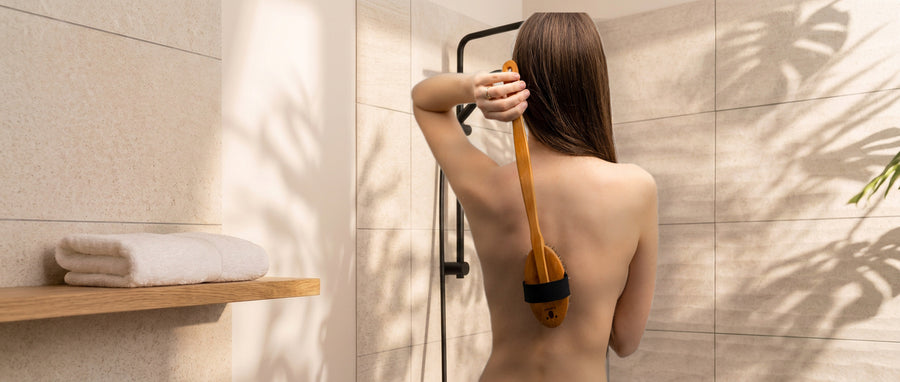












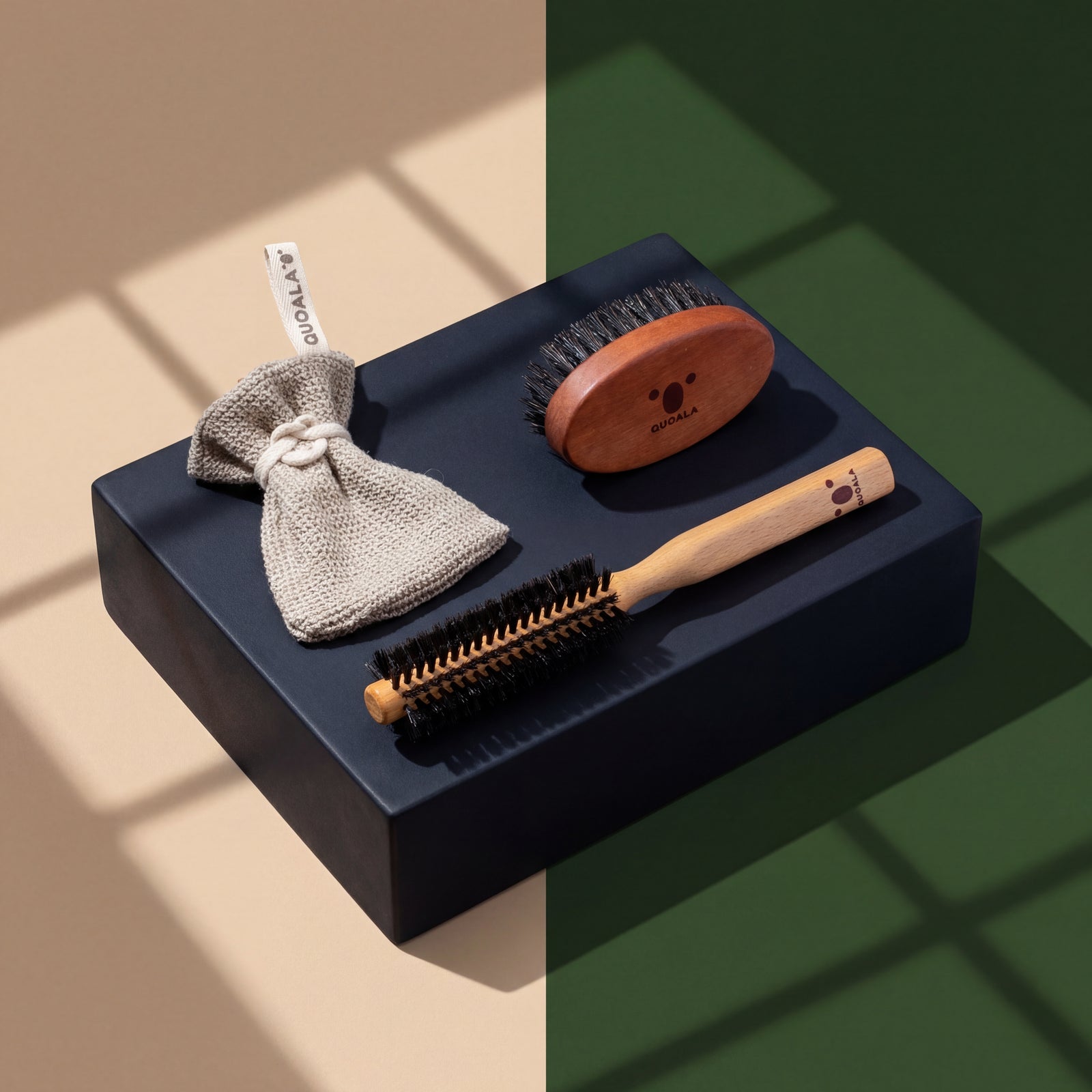




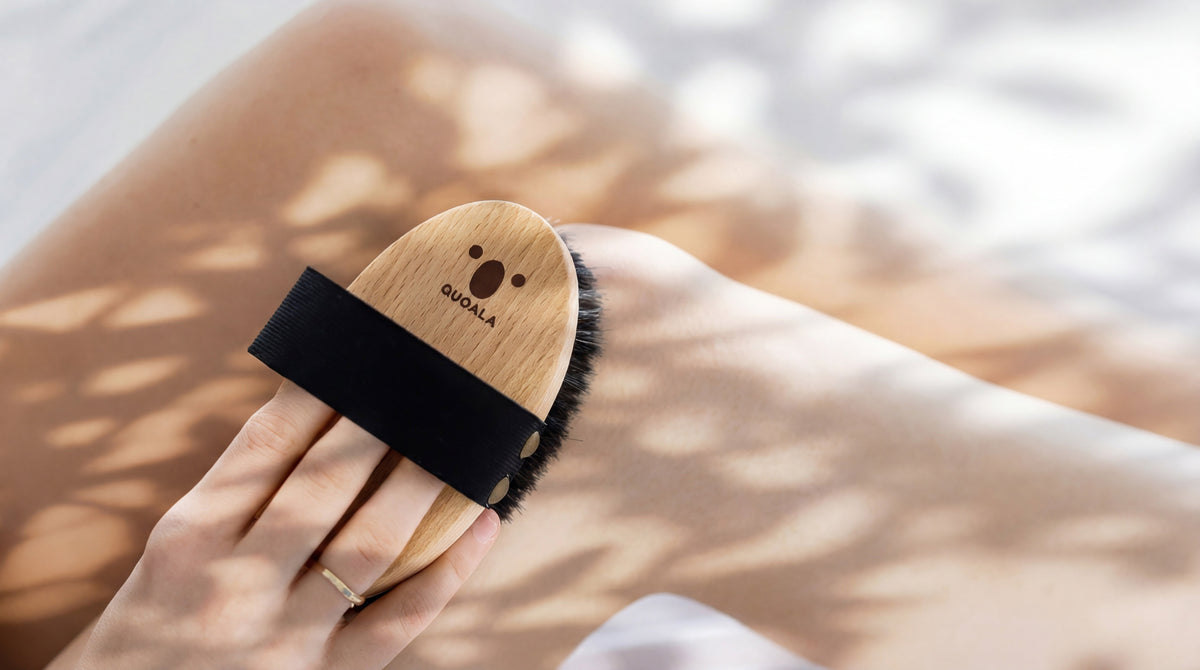
Mechanical exfoliation with a natural bristle brush removes dead horny cells (corneocytes) through friction [1] – without scrub grains, without chemicals. This improves skin texture, boosts circulation and prepares the skin for skincare products. For best results: 1–3 minutes of dry use before showering, always brushing towards the heart, 2–3 times a week. This guide explains the physiology behind it and shows the exact technique for every area of the body.
In this guide:
1. The basics: what happens during mechanical exfoliation?
Our skin renews itself in a constant cycle of around 28 days. New cells form continuously in the lowest layer of the outer skin (epidermis). They move upwards, die and finally form the outermost protective barrier of the skin as horny flakes (the stratum corneum).
Often, however, these dead flakes do not come off quickly enough on their own. The result: the skin looks dull, pores clog, skincare products no longer absorb and body hair can become ingrown. This is exactly where mechanical exfoliation comes in:
Through the gentle, physical friction of a natural bristle brush or textured fibre, these loose horny flakes are removed by hand. Unlike chemical acid peels (such as AHA or BHA), which intervene deeply in the skin's pH, mechanical exfoliation uses pure texture and touch to clear the top layer safely without disturbing the skin's chemistry.
2. The 6 biological benefits: what exfoliation does
2.1 Cell renewal through gentle exfoliation
While synthetic nylon brushes often have sharp edges, our animal natural bristles have a fine, microscopic scale structure. They remove dead skin cells (keratinocytes) very effectively yet gently. This clears the pores [2] [3].
2.2 Increased circulation
Massage temporarily increases local blood flow and gives the skin a rosy, healthy look [4].
2.3 Supporting the lymphatic system
Rhythmic brushing – always towards the heart – applies gentle mechanical pressure to the tissue. This can support the natural lymph flow [5].
2.4 Better absorption of skincare & moisture
Once the outermost barrier of dead skin flakes has been removed, your skin is like a sponge after exfoliating. Quality body oils or moisturisers can now absorb better instead of just sitting on the surface [6].
2.5 More even self-tan
An insider tip: if you apply self-tanner without exfoliating first, rough, thickened areas such as elbows, knees and ankles take up more product – the tan turns out patchy. Exfoliating thoroughly beforehand gives a more even result.
2.6 The dry brush: bronze and tradition
For dry exfoliation, there is the monastery brush (dry brush). It is said of the monastery brush that its bronze wires "charge" the skin through friction. We have found no scientific evidence for this – so we do not promise it. What we can back up: brushing increases local blood flow [4].
3. Bristle firmness: how often and with what should you exfoliate?
The exfoliating effect depends largely on the firmness and structure of the fibres. A firmer material removes more skin flakes and stimulates circulation more strongly, but also requires more recovery time for the skin barrier. This is how to choose your rhythm:
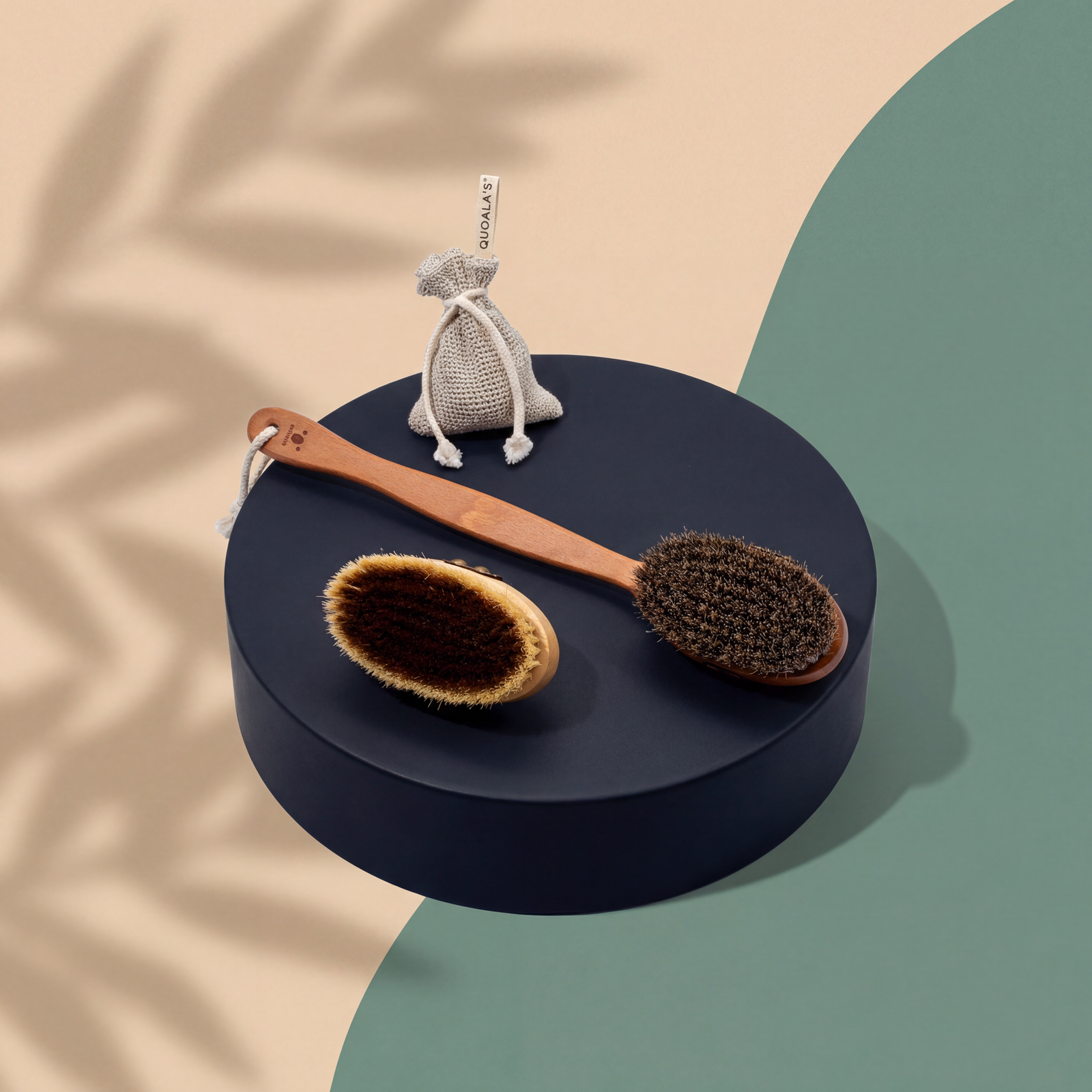
Tampico (firm) – the intensive exfoliation
- Effect: Removes skin flakes very effectively, ideal for helping to prevent ingrown hairs on the legs.
- For whom: Robust, non-sensitive skin.
- How often: 1 to a maximum of 2 times a week, as the skin needs time to recover.
Horsehair-Tampico mix (medium) – the all-rounder
- Effect: Noticeable stimulation, but a much gentler glide thanks to the horsehair content.
- For whom: Normal skin types looking for a balance of cleansing and massage.
- How often: 2 to 3 times a week.
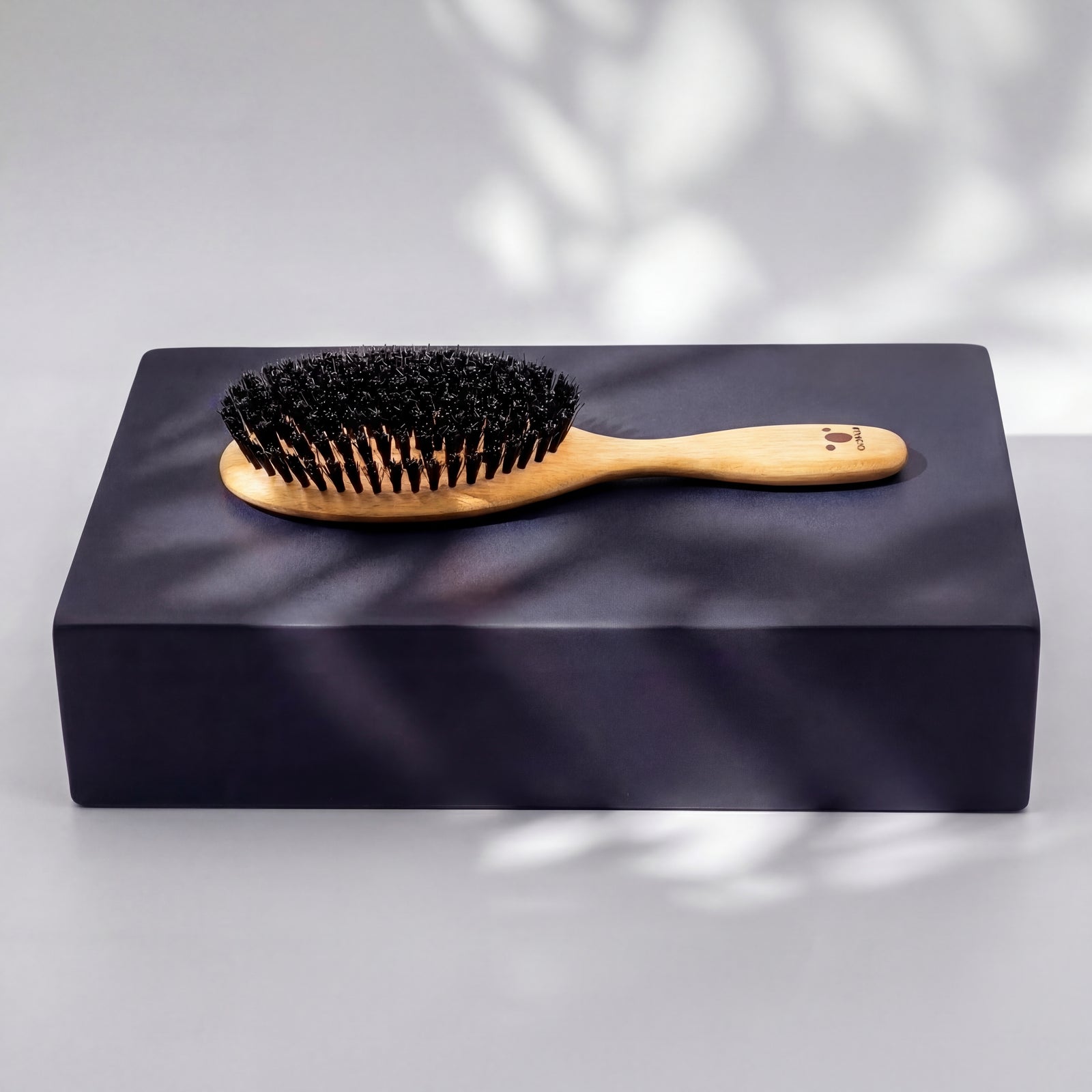
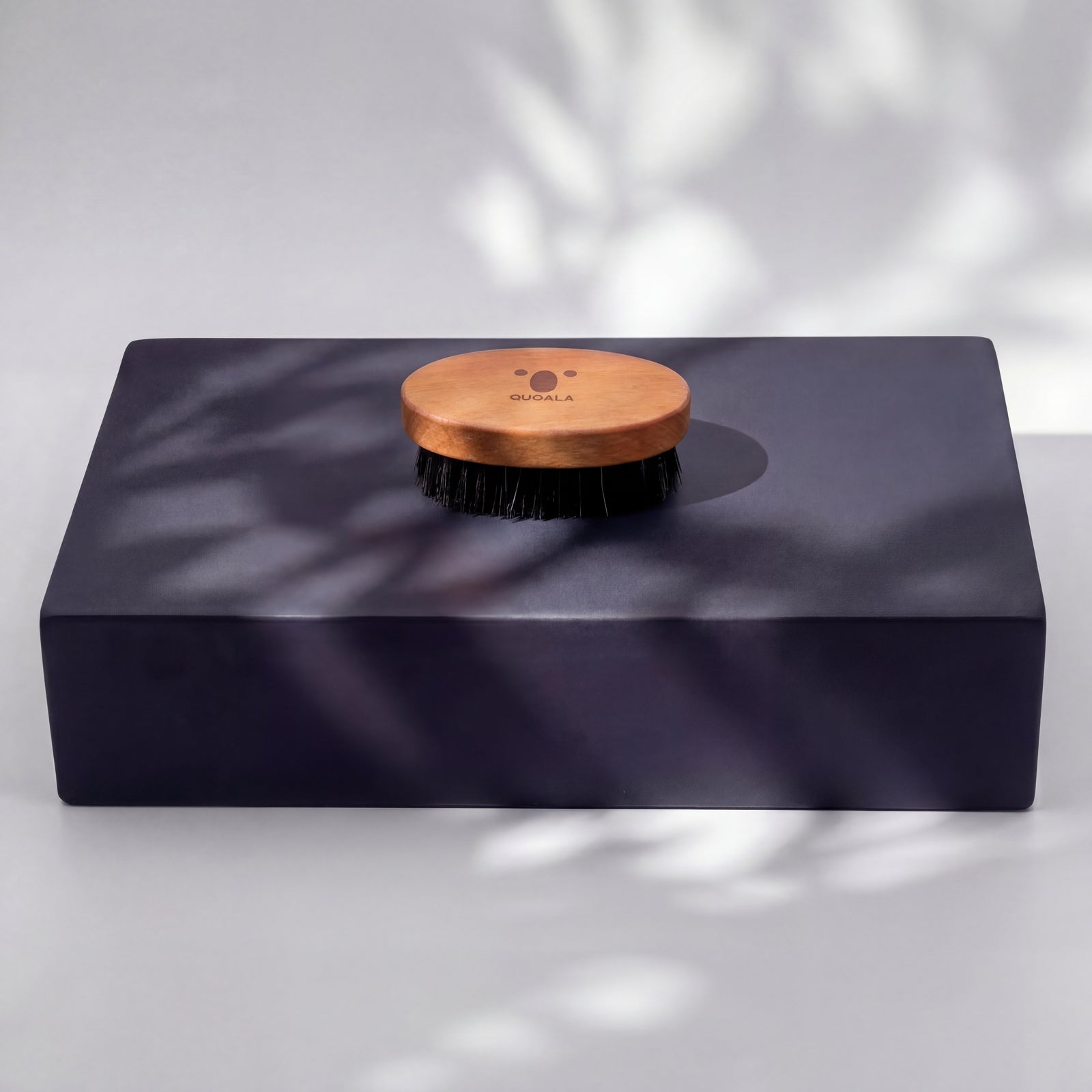
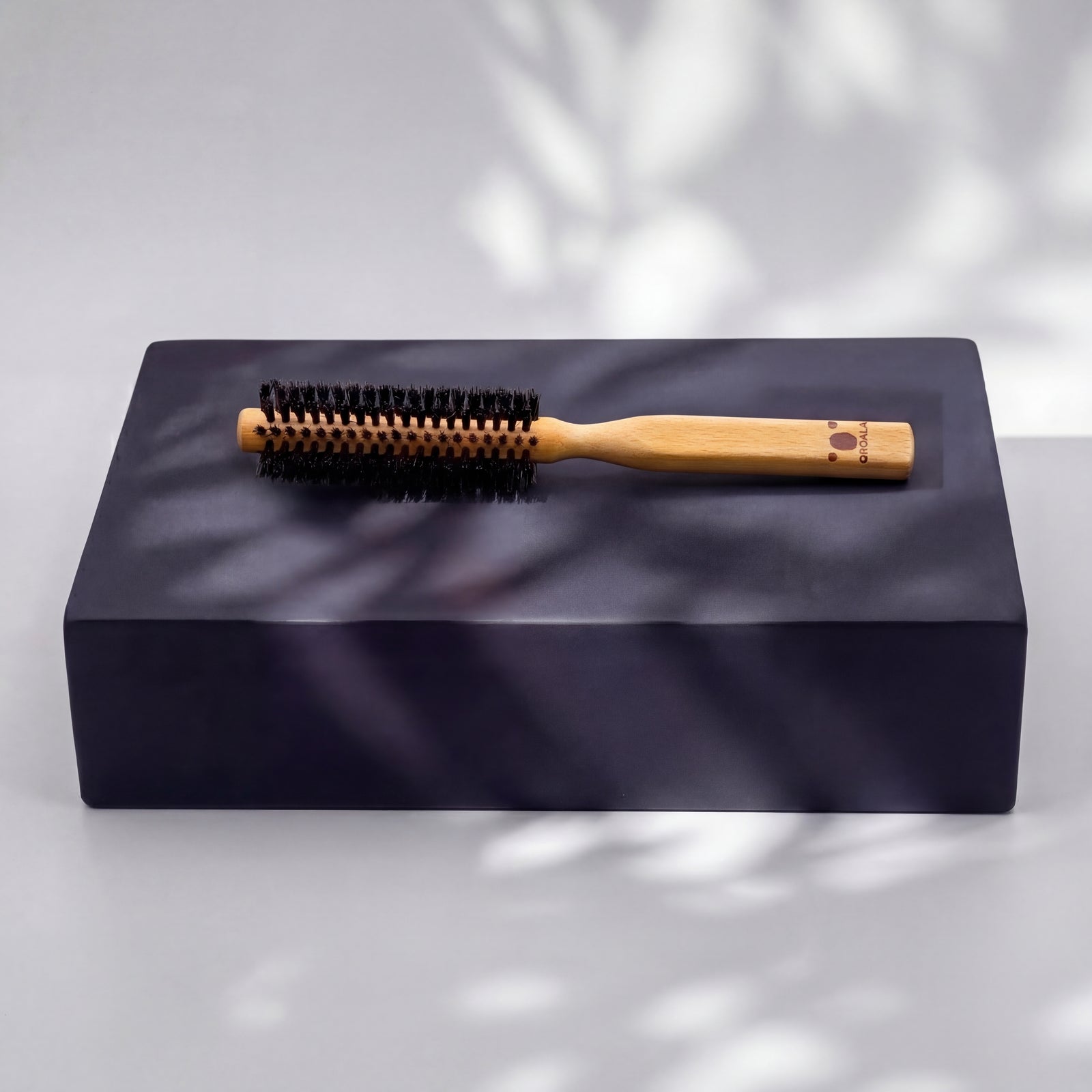
Pig bristle (soft) – the gentle ritual
- Effect: Very gentle exfoliation that barely irritates the skin barrier but still activates circulation.
- For whom: Sensitive skin, beginners or more delicate areas of the body (e.g. the décolleté).
- How often: On non-sensitive skin, even suitable for daily use as a morning dry brushing (dry massage) routine.
Ionic brush (bronze) – the dry exfoliation
- Effect: Together with the natural fibres, the fine bronze wires provide effective mechanical exfoliation. (Use only when completely dry!)
- For whom: All skin types looking for a fresh, wide-awake start to the morning.
- How often: 2 to 3 times a week or as a short daily morning ritual.
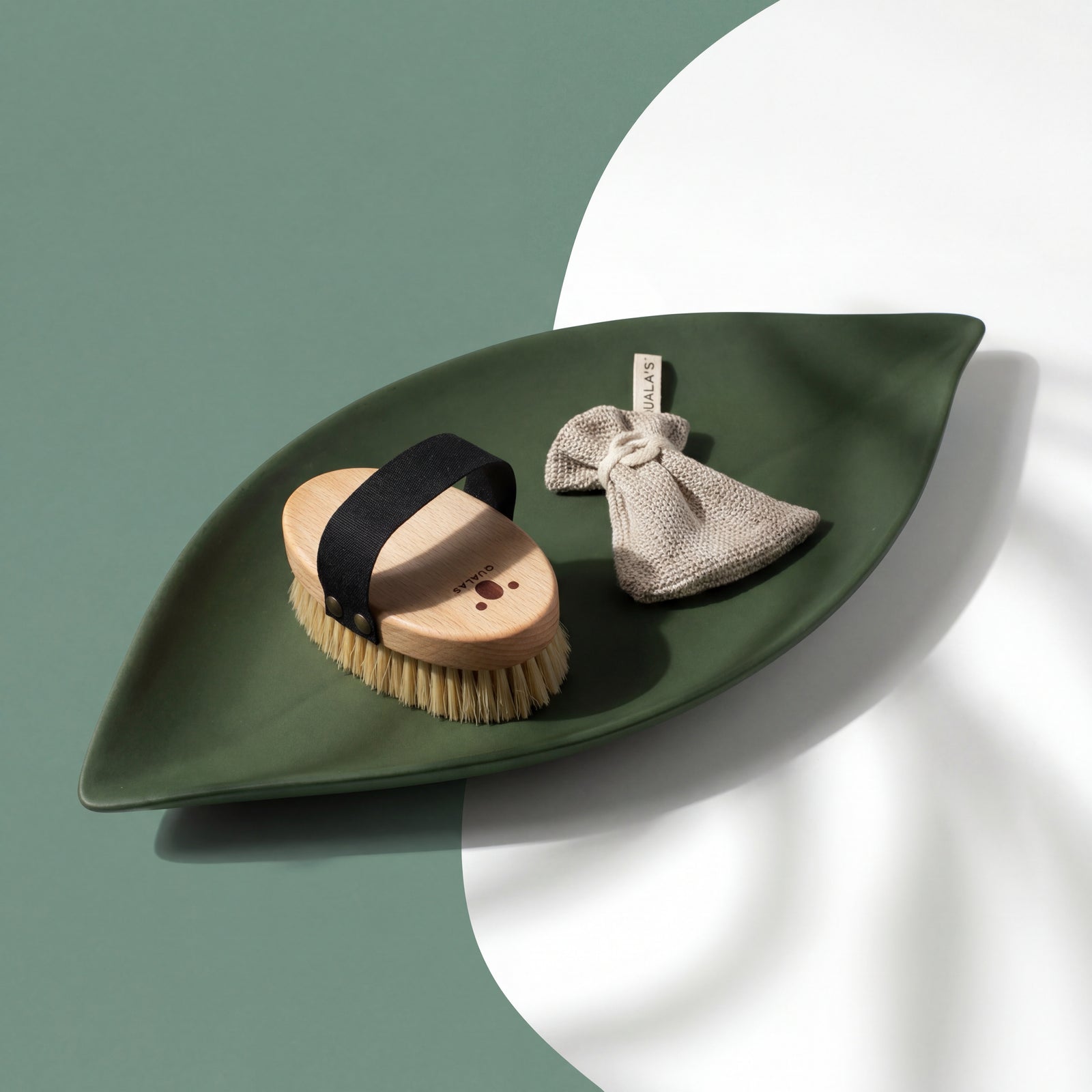
GOTS soap bag (natural fibre) – the foaming shower exfoliation
- Effect: The textured surface made of an organic linen blend gently massages the skin and loosens flakes as you lather up in the shower.
- For whom: Every skin type, as an easy 2-in-1 ritual.
- How often: With gentle pressure, it can be used safely in every shower.
4. Safety: when you should skip exfoliation
However effective mechanical exfoliation is for healthy skin, there are situations in which you should pause the brush or the soap bag so as not to over-irritate or damage your skin barrier. Skip exfoliation if you have:
- Sunburn: The skin is highly inflamed and needs rest and moisture, not mechanical friction.
- Acute skin conditions: During flare-ups of eczema, rosacea or psoriasis, strictly avoid the affected areas.
- Active acne & inflammation: Brushing over inflamed spots can spread bacteria and make the inflammation worse.
- Fresh wounds, scars or tattoos: Always give your skin time to heal completely before stimulating it mechanically again.
5. Which QUOALA tool suits you?
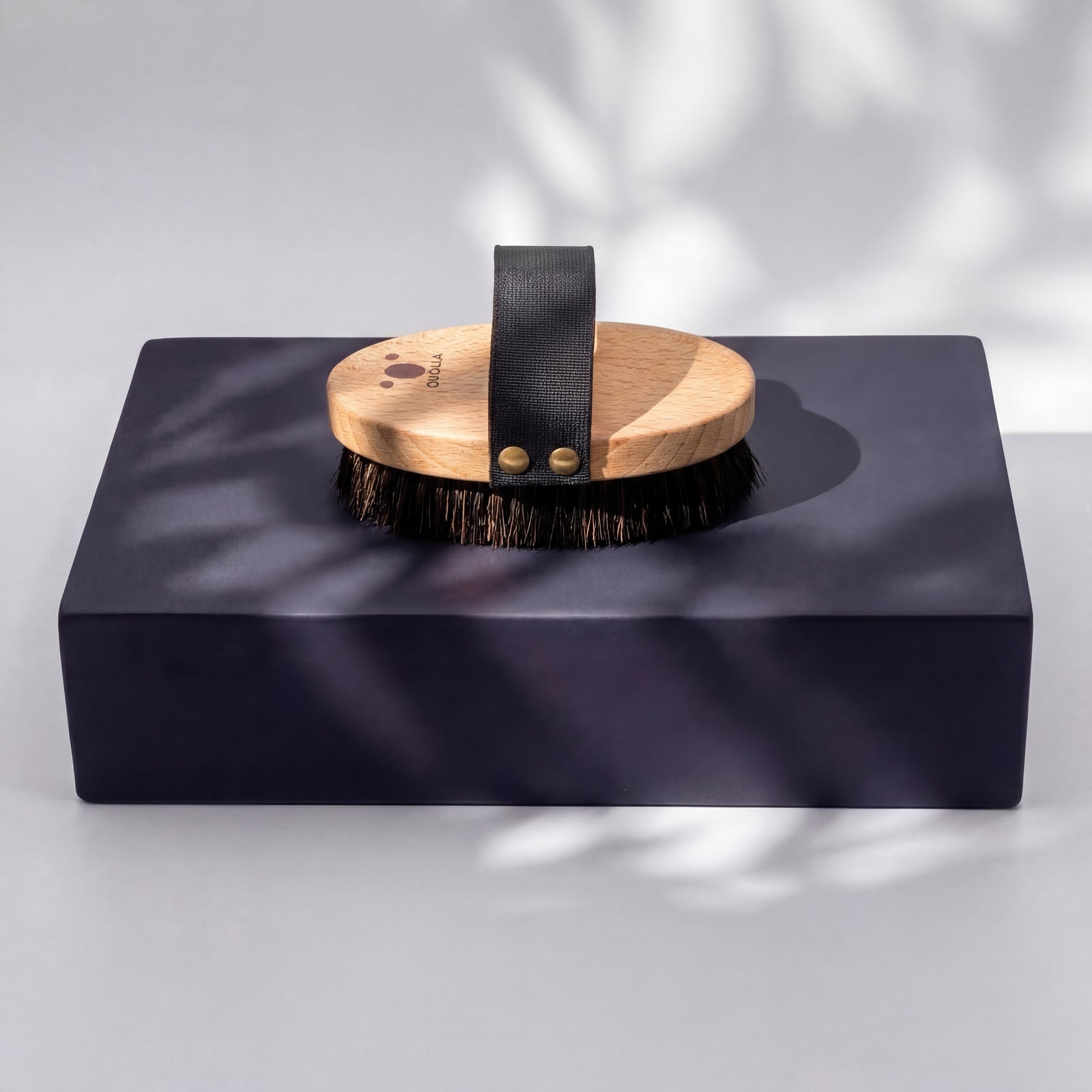
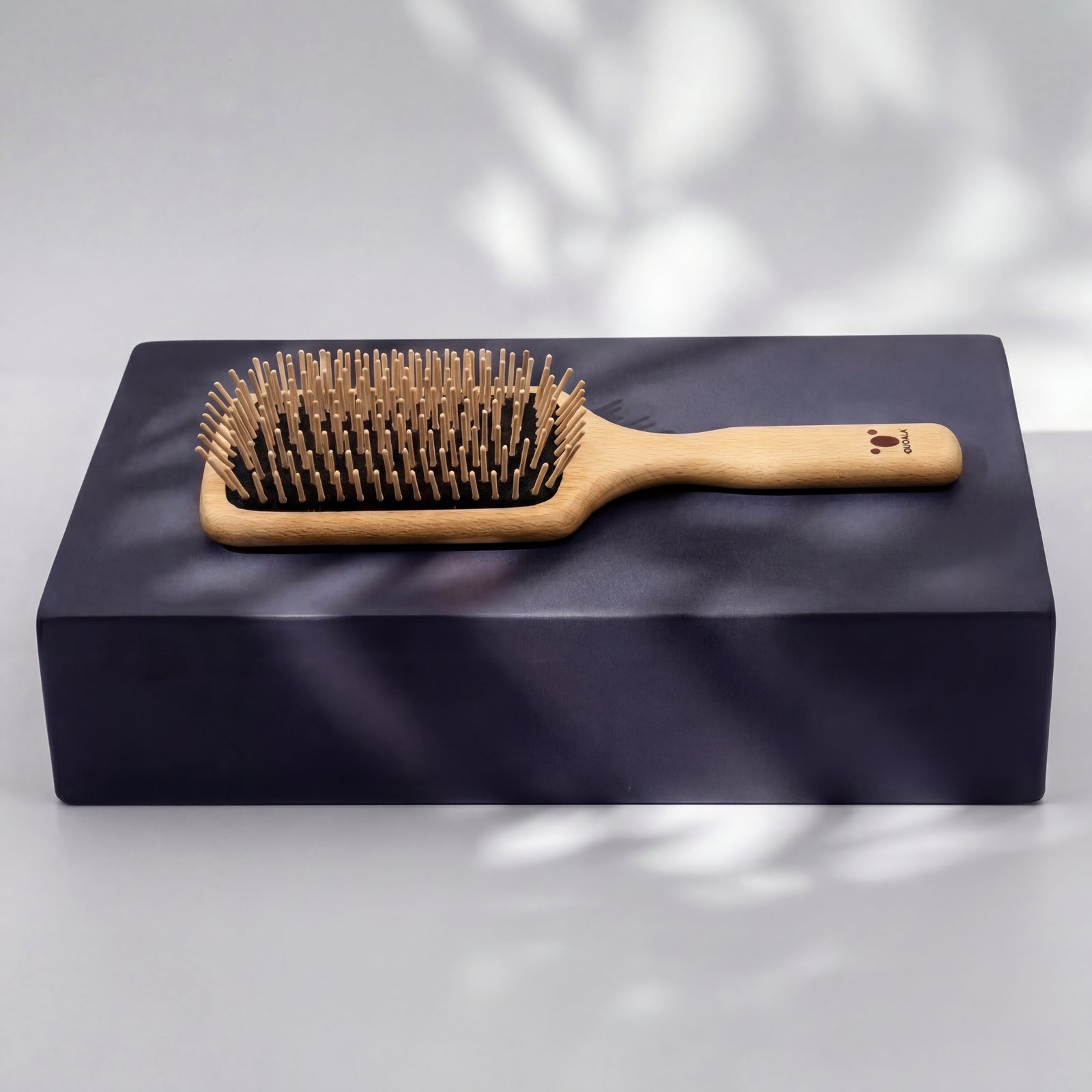
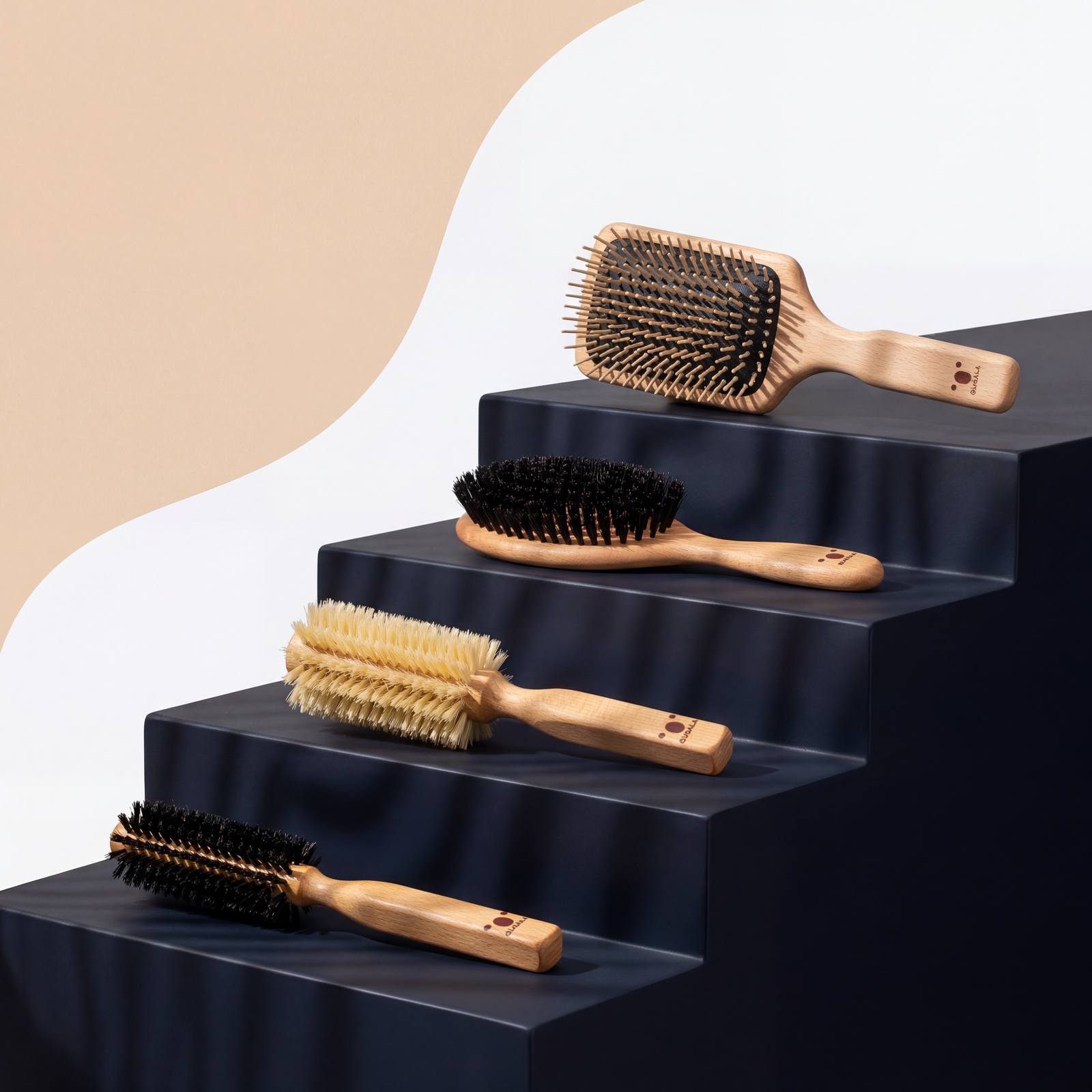
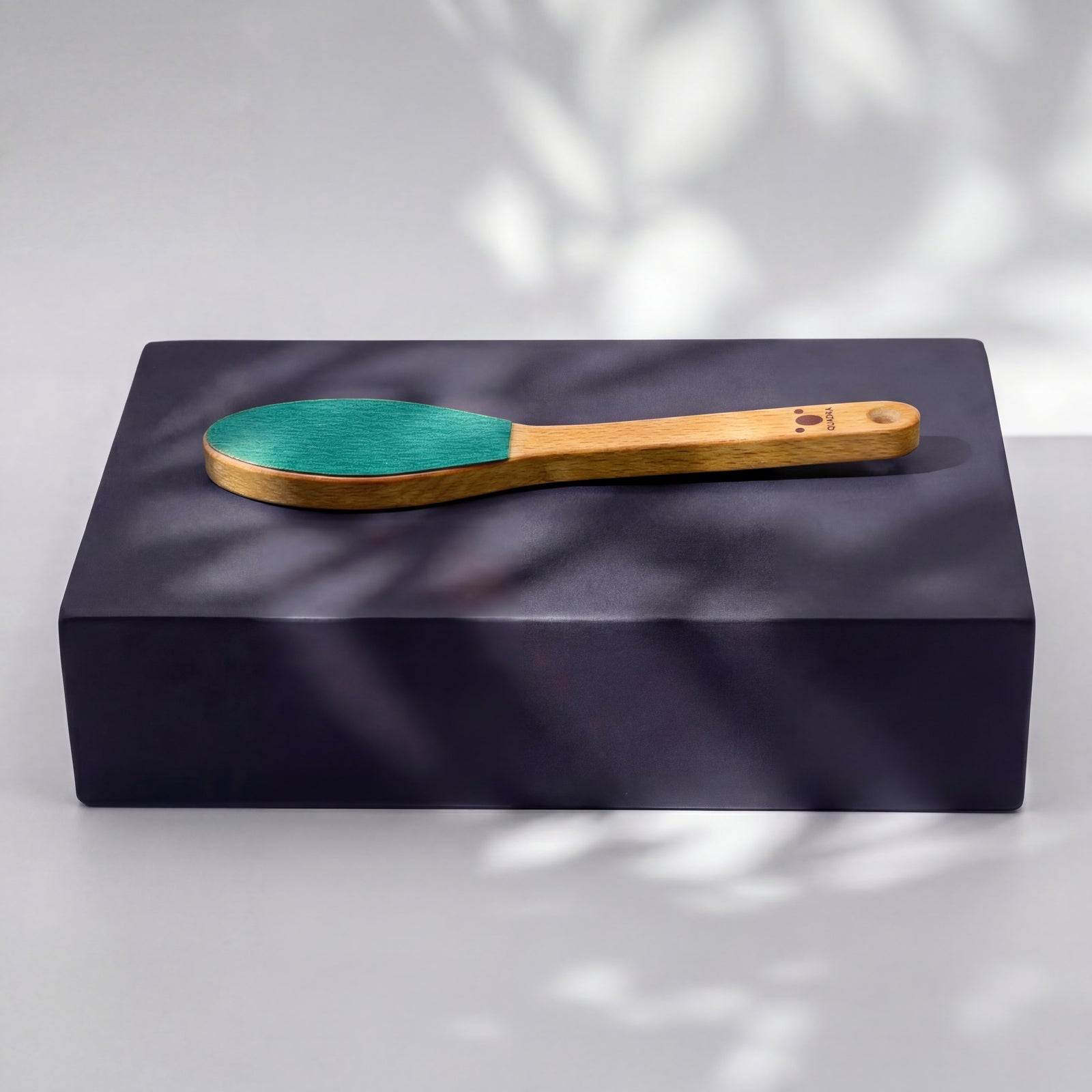
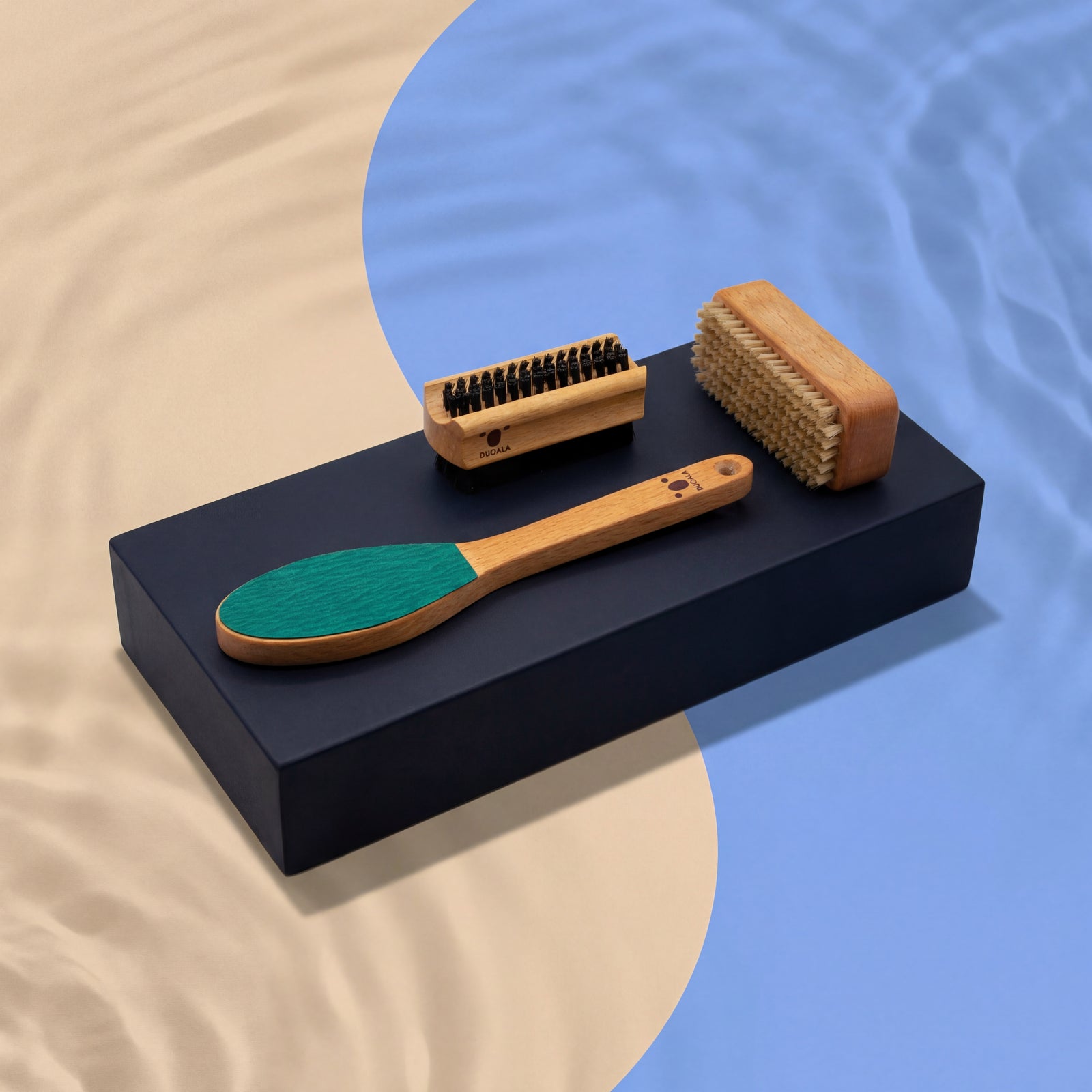
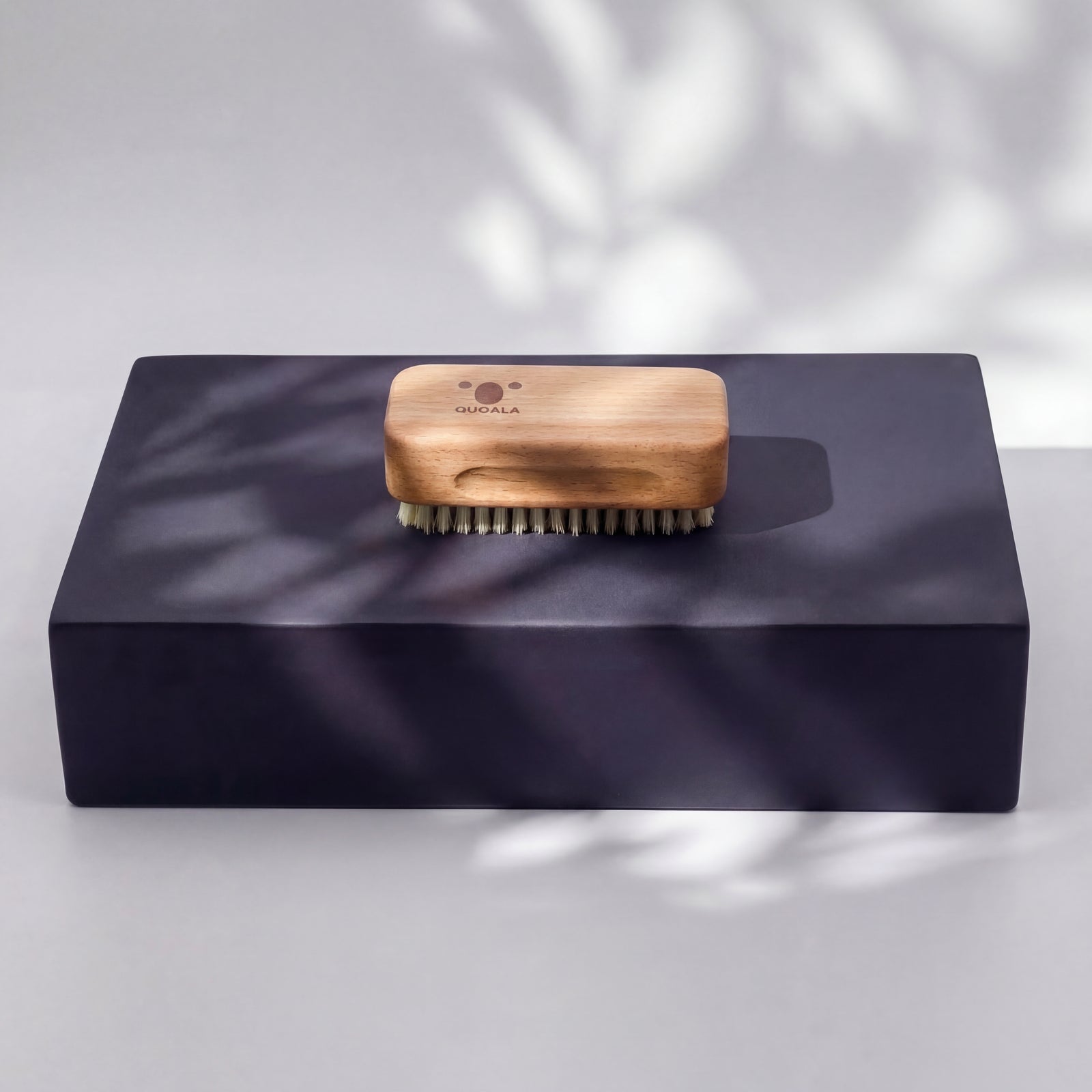
Besides the type of bristle, the shape of your tool also shapes the experience. All our brush bodies are made of FSC-certified beech wood [7] and stand for cruelty-free materials and full transparency.
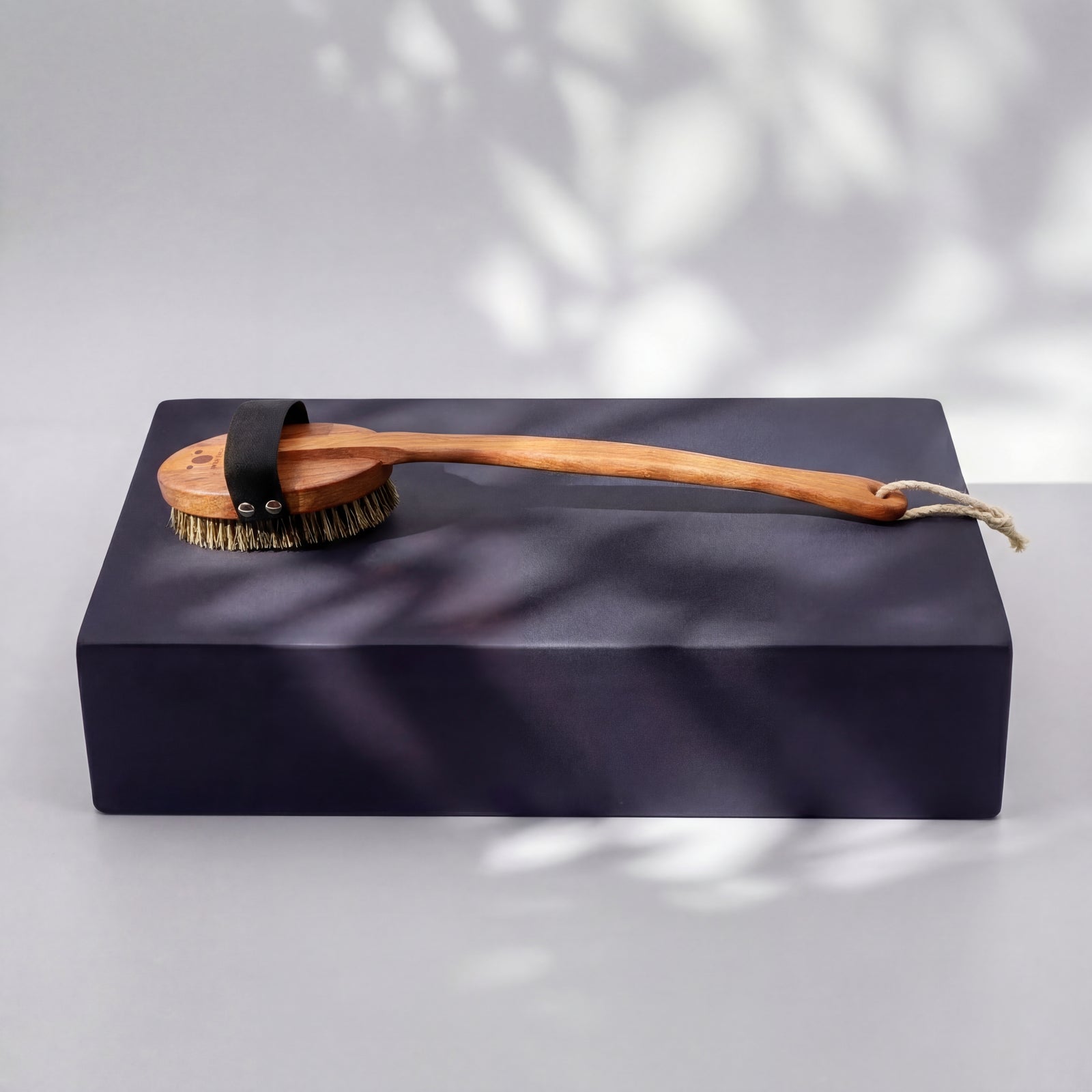
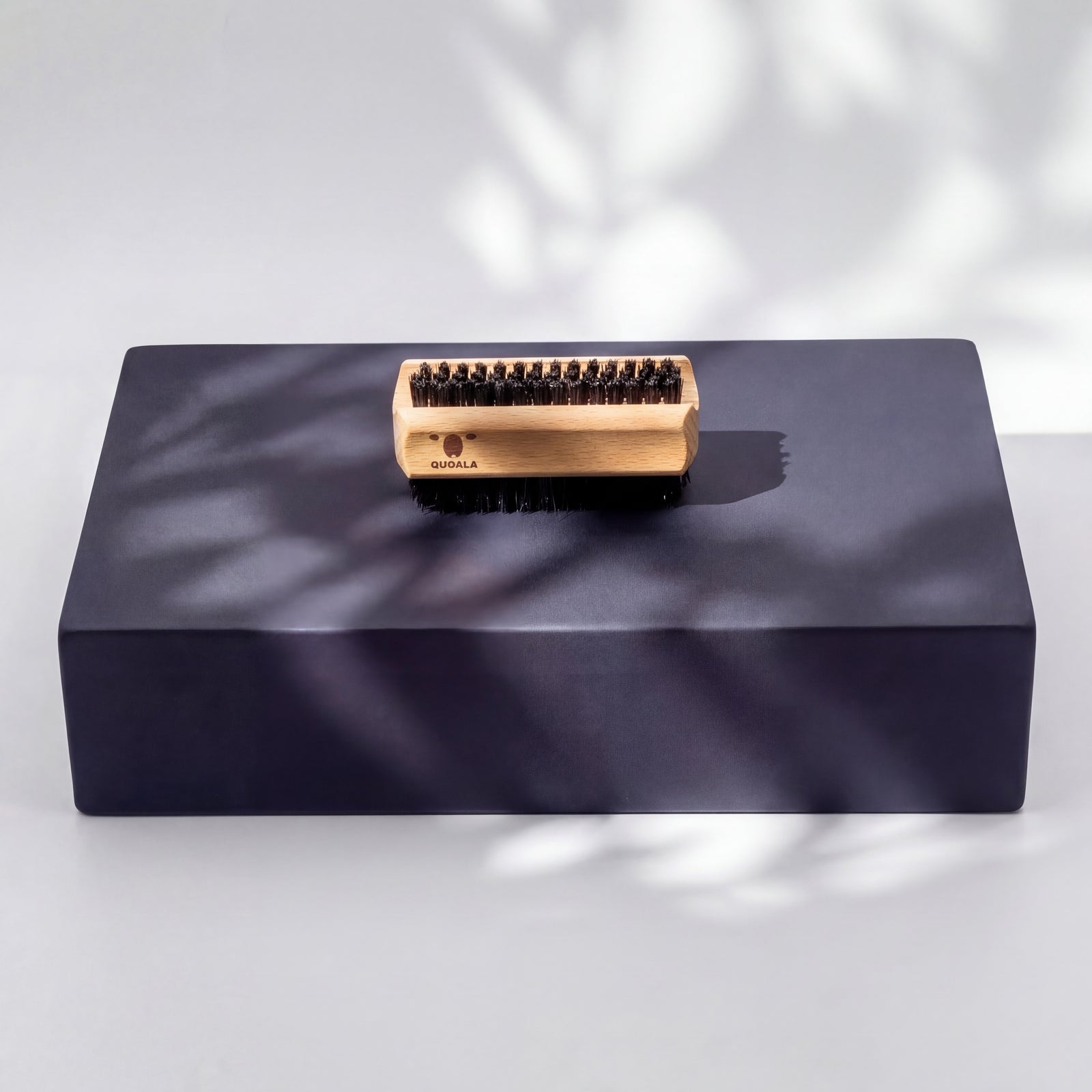
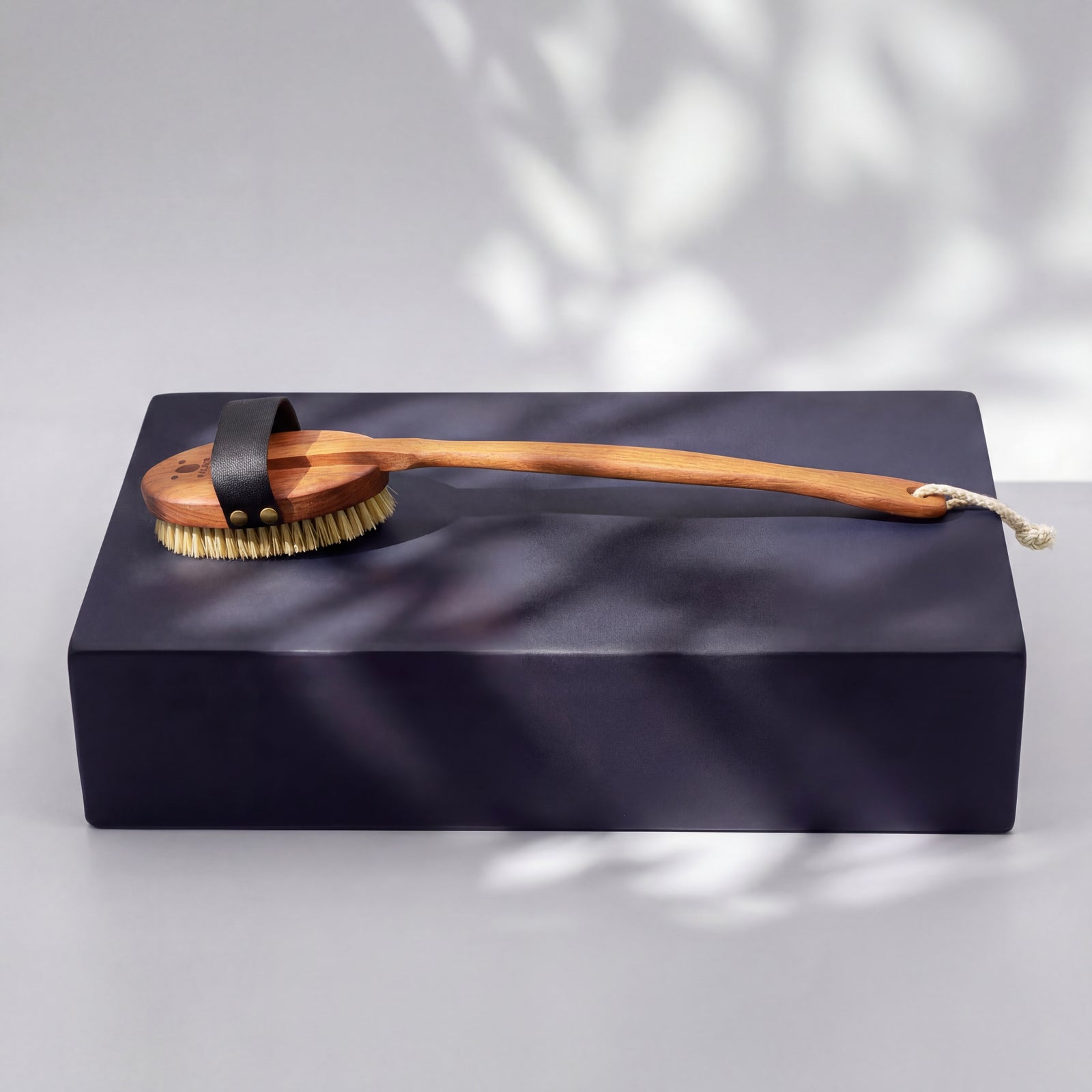
- For the shower & bath: Our classic long-handled bath brushes (for wet & dry use) are ideal for reaching your back. For quick exfoliation directly with your shower soap, the GOTS soap bag is perfect.
- For morning dry brushing: Our handy dry brushes with bronze wire (dry use only) are compact tools for quick exfoliation without water.
6. Frequently asked questions
Should I moisturise my skin after brushing?
Definitely! As explained in point 2.4, your skin is very receptive after exfoliating. Use this moment to apply quality body oils (such as jojoba or almond oil) or rich natural creams to lock moisture into the skin.
What should I do about redness?
A light, rosy colour after exfoliating is exactly what you want – it is a sign of active circulation. But if your skin itches, burns or turns deep red, you have either used too much pressure or chosen a bristle that is too firm for your skin type.

Ready for your care ritual?
Find the exfoliating tool that suits your skin, your preferred bristle firmness and your values. Invest in quality that is built to last.
Sources and further reading
Scientific sources
- Harvard Health Publishing (2024), Have you exfoliated lately?, Harvard Medical School. Mechanical exfoliation removes dead cells from the top layer of the skin. Our assessment S1 · Source
- American Academy of Dermatology: How to safely exfoliate at home. Advice on exfoliating gently at home. Our assessment S76 · Source
- Cleveland Clinic (2021), The Truth About Dry Brushing and What It Does for You. Dermatologist: dry brushing is an effective exfoliation; an effect on cellulite is not proven. Our assessment S77 · Source
- Miyaji, Sugimori & Hayashi (2018), Short- and long-term effects of using a facial massage roller on facial blood flow and vascular reactivity, Complementary Therapies in Medicine. A facial massage roller increases local blood flow; not measured with a body brush. Our assessment S2 · Source
- Vairo et al. (2009), Systematic Review of Efficacy for Manual Lymphatic Drainage Techniques in Sports Medicine and Rehabilitation, Journal of Manual & Manipulative Therapy. Review of manual techniques; no brush was measured on people. Our assessment M7 · Source
- Peng, Yue & Cong (2025), Enhancing Dermal Absorption of Cosmeceuticals: Innovations and Techniques for Targeted Skin Delivery, Journal of Cosmetic Dermatology. Once the horny layer is freed of dead cells, the skin absorbs skincare better. Not measured with a brush. Our assessment S10 · Source
- FSC International (2024), What the FSC labels mean, Forest Stewardship Council. What the FSC labels mean and how the chain of custody is controlled. Our assessment S14 · Source