























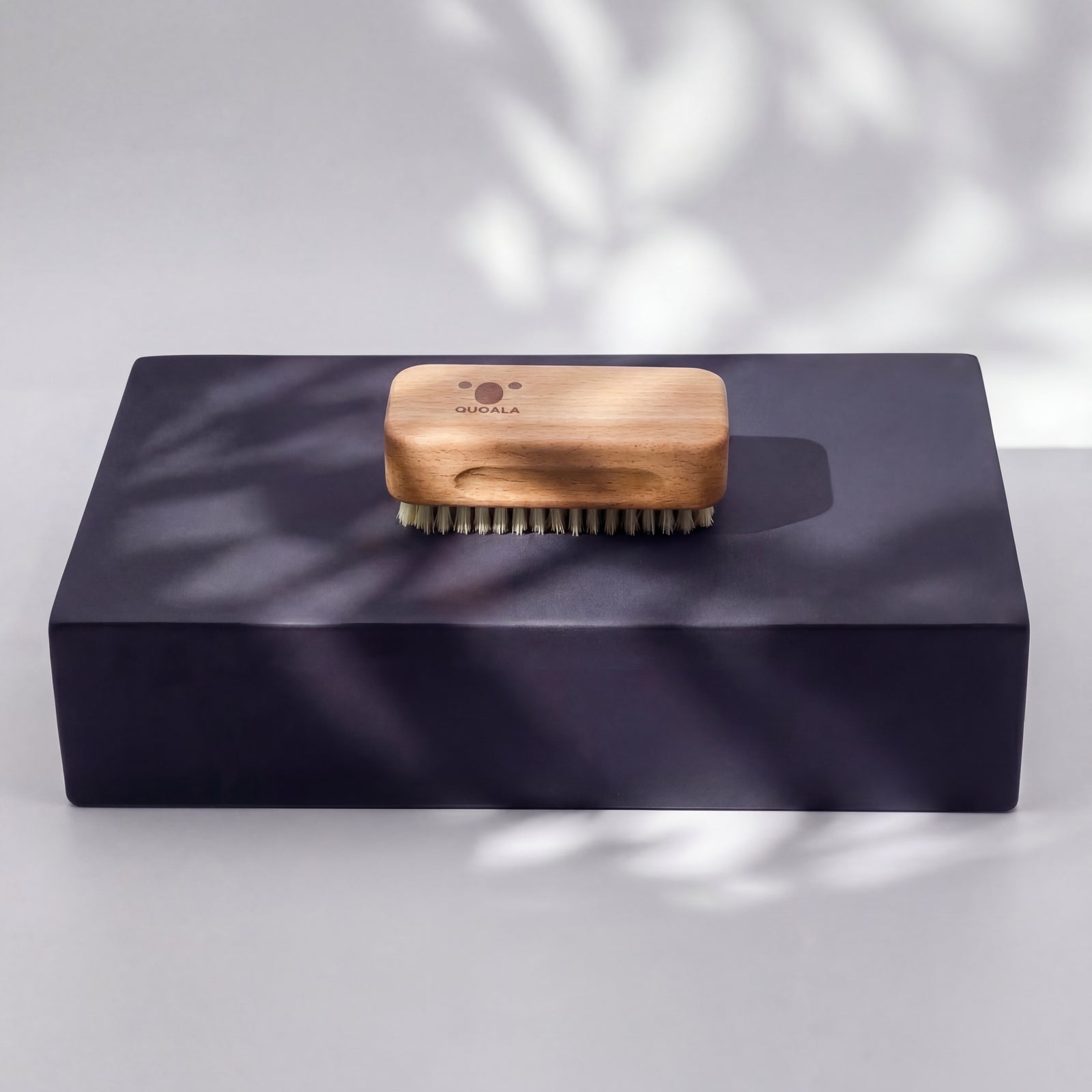



When I, Gregory Basmadjian, founded QUOALA as a one-man show, I faced a big question: how do I build a brand that doesn't just claim to act responsibly but can credibly prove it? If you sell care tools made of wood, it is no longer enough to simply write "all natural" on the packaging.
That is why today every single QUOALA wooden product is FSC®-certified. But the road there also showed me that environmental responsibility is rarely black and white. Let's talk openly about why we chose European FSC wood – and why even the best certificate is not perfect.
Key points at a glance
- FSC® guarantees a complete chain of custody from the forest to the finished brush – protecting biodiversity, fair wages and a ban on hazardous pesticides are an integral part of the standard.
- QUOALA uses European hardwoods (hornbeam, beech, pear) instead of Asian bamboo – shorter supply chains, a sturdier feel and direct support for regional forestry.
- The FSC system has real weaknesses for small local producers – Gregory communicates this openly, because honest trade-offs are part of QUOALA's attitude.
In this article:
1. Plastic, bamboo and the search for the right material
The cosmetics industry is full of quick fixes. When it comes to brushes, materials often dominate for which we deliberately chose a different, longer-lasting alternative:
Focus on longevity instead of short-lived plastic
Instead of petroleum-based plastic (nylon & acrylic), we rely on natural materials. Our natural bristles and wooden pins offer a higher-quality feel and are biodegradable at the end of their life, while also bringing a more refined look to your bathroom.
Local wood instead of global bamboo
Bamboo grows extremely fast and is often celebrated as an environmental solution. But since bamboo usually comes from Asia, this often means long transport routes. For QUOALA it was clear: we want durable, solid wood from Europe (such as beech, hornbeam or pear wood). That means short supply chains, a grounding feel and direct support for local forestry.
But wood is only good if the forest does not suffer for it.
In short: Petroleum-based plastic and Asian bamboo were ruled out for QUOALA – European solid wood combines longevity, short supply chains and a high-quality look.
2. Why FSC wood is better than "ordinary" wood
Illegal logging and overexploitation are global problems. If you buy wood without proof of origin, you simply don't know whether an ecosystem worth protecting was destroyed for it. The Forest Stewardship Council (FSC) offers the strictest and most credible system here.
External environmental organisations such as WWF repeatedly stress the importance of FSC. Compared with conventional wood, FSC wood offers decisive advantages:
2.1 Protecting biodiversity
Rare animal and plant species in the forest are protected and clear-cutting is prohibited [1].
2.2 No hazardous pesticides
The use of highly hazardous chemicals in the forest is strictly prohibited [1].
2.3 Social fairness
Forest workers receive fair wages and safe working conditions, and the rights of Indigenous peoples are respected [1].
2.4 Chain of custody
The path of the wood is checked without gaps from the forest to the finished brush. This is the only way to keep illegal wood out of the supply chain [1].
In short: FSC protects biodiversity, prohibits clear-cutting and hazardous pesticides, ensures fair wages and makes the entire supply chain from forest to brush fully traceable.
3. The unvarnished truth: the weaknesses of the FSC system
Real transparency also means naming the downsides. FSC is not free from criticism and is extremely demanding administratively. This strict control of the chain of custody creates real difficulties in practice for small, local businesses.
An example from practice: Imagine a small, local producer who has trees on their own land. One of these trees dies a natural death. The producer fells it and wants to use the wood for exceptional, resource-saving products. That in itself is the very definition of responsible use of resources! But because this single tree and the small business have not gone through the expensive and complex FSC certification process, the product can never carry the FSC label.
The system is rigid and sometimes excludes exactly the small, hyper-local and extremely resource-saving cycles, because they cannot afford the bureaucratic effort. FSC is also occasionally criticised internationally because implementation is patchy in some countries.
In short: FSC sometimes excludes the most resource-saving small local cycles because they cannot afford the bureaucratic effort – Gregory communicates this weakness openly.
4. Why QUOALA takes this path anyway
So why do I, as the founder, still rely 100 % on FSC? Because at a global and scalable level, it is currently the best and most reliable tool we have for using resources carefully and making supply chains traceable. It is the only way I can credibly assure you as a customer: no overexploitation took place for this brush.
Building such a certified supply chain is a huge effort for a start-up and a one-man show. At this point I would like to say a big thank you to FSC Switzerland [2]. The support and advice I received there as a small founder were outstanding and made QUOALA possible in the first place.
When you choose a QUOALA wooden brush, you are not just buying a care tool. You are supporting an honest, transparent path that tries to make things a little better – step by step.
In short: Despite its limits, FSC remains the most reliable tool for scalable, credible supply-chain responsibility – the only proof Gregory can credibly give you as a customer.
5. Frequently asked questions
What does FSC certification mean and why does it matter?
FSC® (Forest Stewardship Council) is an international standard for responsible forest management. Certified wood comes from forests managed according to environmental and social criteria. Every QUOALA wooden product is FSC-certified so that the raw material is traceable and credibly verified.
Why does QUOALA use European wood instead of bamboo?
Bamboo grows fast but mostly comes from Asia – which means long transport routes. QUOALA relies on hornbeam, beech and pear wood from Europe: short supply chains, a sturdy feel and direct support for regional forestry. European solid wood is also more durable than chipboard or bamboo-fibre products.
Does the FSC system have weaknesses too?
Yes. The FSC system is not flawless: there are documented cases in which certification was not fully complied with. QUOALA therefore deliberately chooses European suppliers with shorter and more transparent supply chains, to add its own sourcing judgement to the certificate.
Why does QUOALA avoid plastic bristles and handles?
Plastics such as nylon and acrylic are petroleum-based and break down into microplastics at the end of their life. For bristles and handles, QUOALA therefore uses natural bristles, plant fibres and wood. One exception is the hand strap on the bath and monastery brushes: it is deliberately made of an elastane blend so that it holds securely even when wet.
Are QUOALA wooden products more durable than plastic products?
With proper care, solid European hardwood is considerably more durable than thin-walled plastic handles. Wood can be re-oiled when needed and stays attractive for years. Simple care tips – e.g. not leaving it submerged in water – extend its life further.
Which QUOALA products use FSC wood?
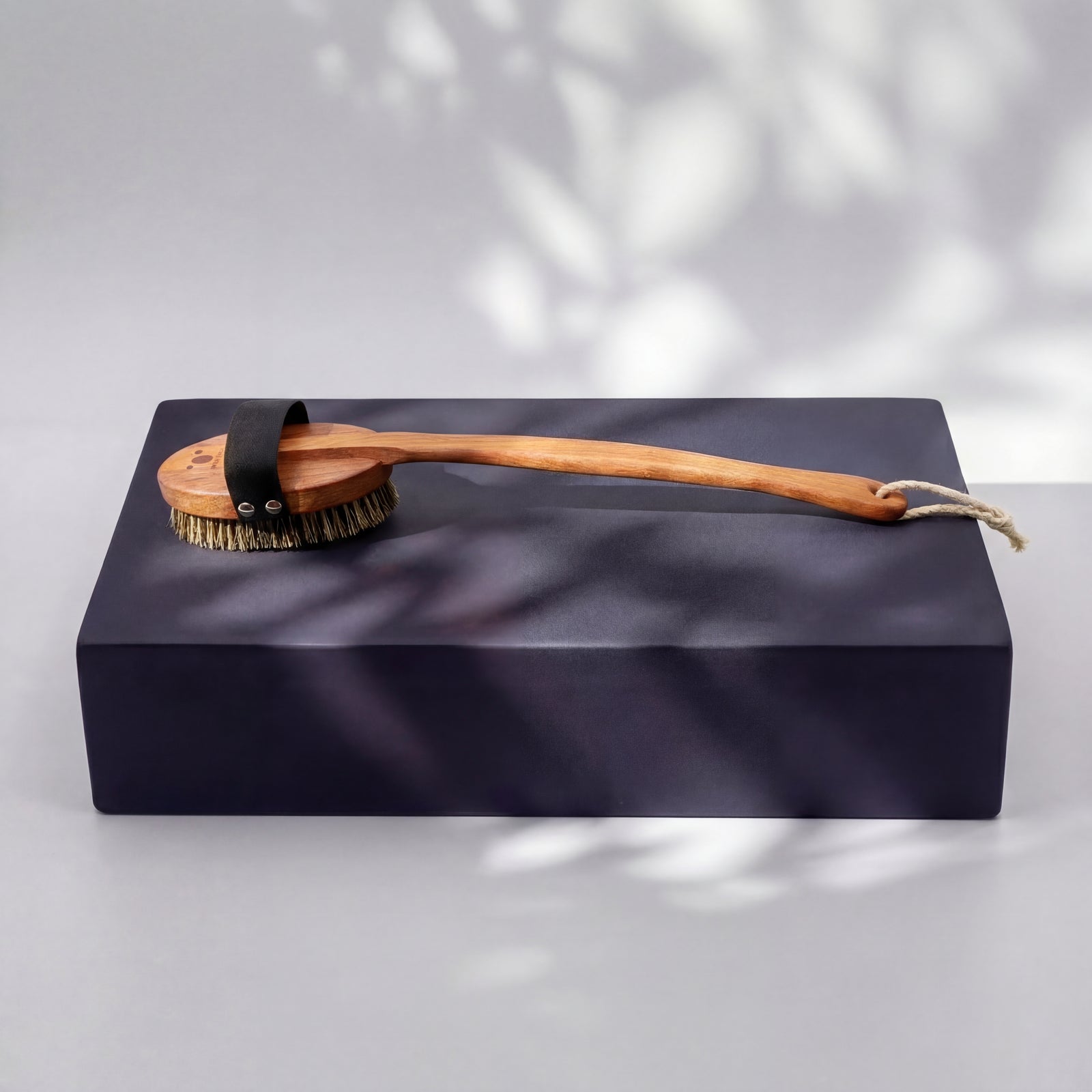
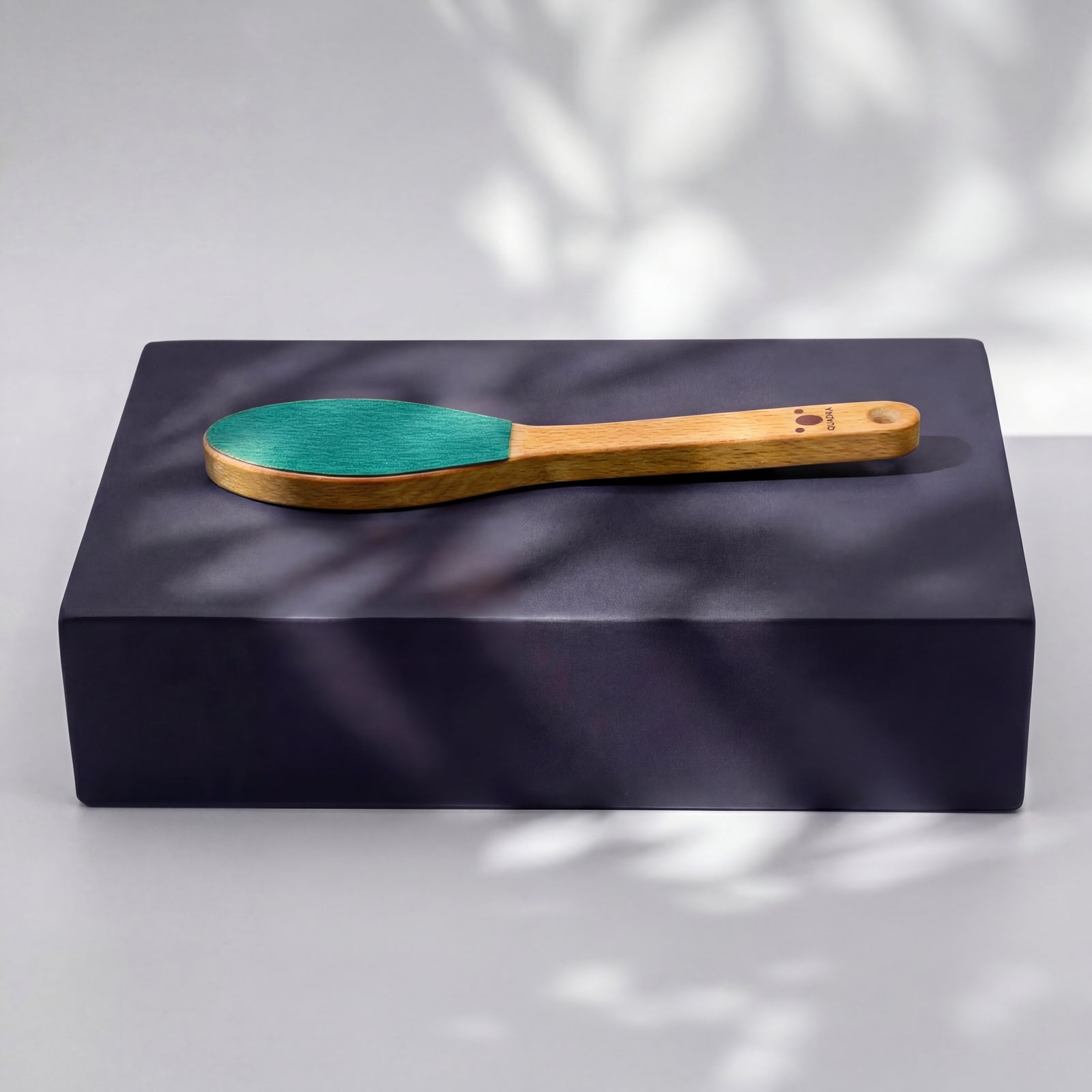
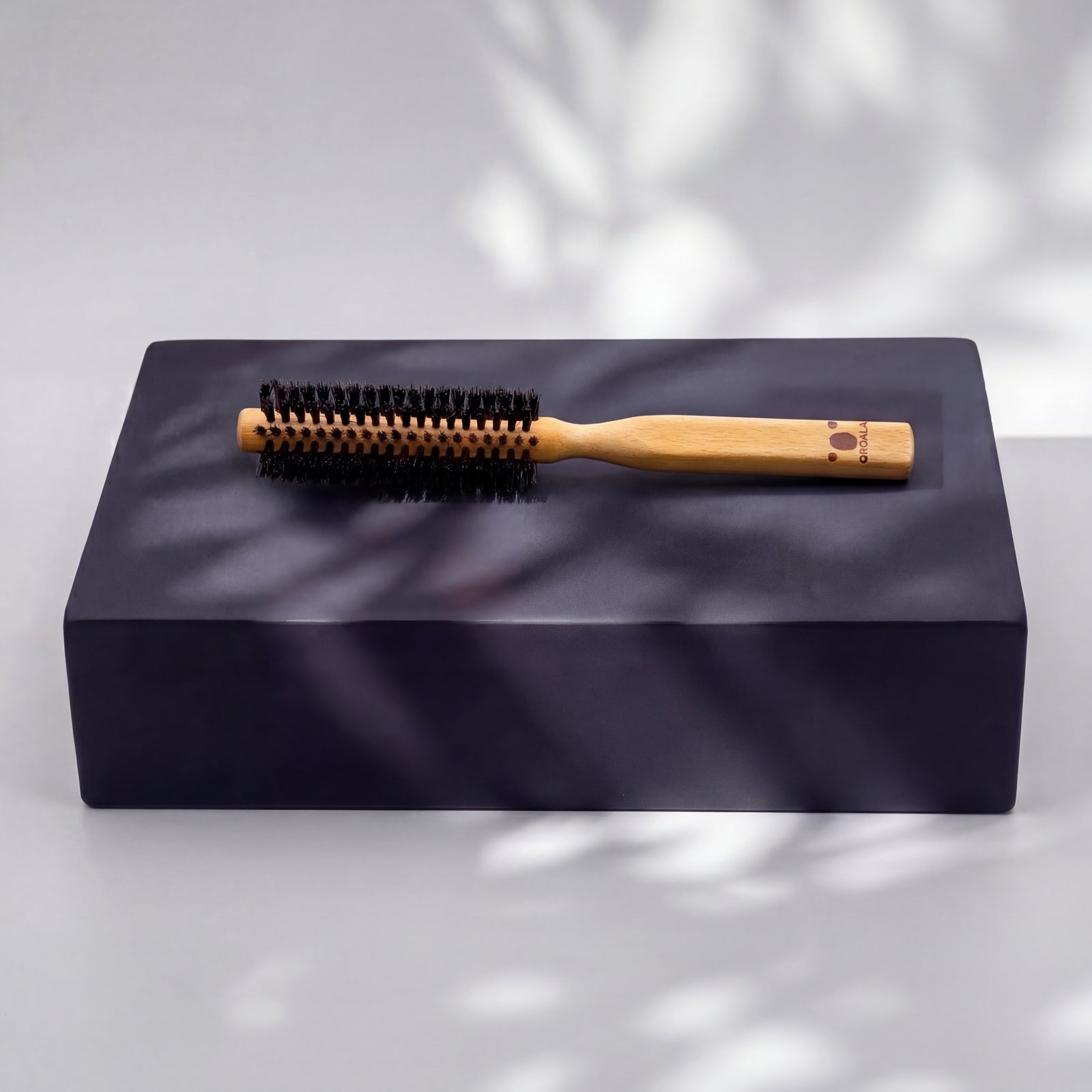
All QUOALA wooden products – hairbrushes, body brushes, bath brushes and monastery brushes – use exclusively FSC-certified wood from Europe. This applies both to the handles and to the wooden pins in the cushioned pads.

Support responsible forestry
Learn more about the work of FSC Switzerland and discover our certified brushes, made from European wood in a family-run business in Germany.
Sources and further reading
Scientific sources
- FSC International (2024), What the FSC labels mean, Forest Stewardship Council. What the FSC labels mean and how the chain of custody is controlled. Our assessment S14 · Source
- FSC Switzerland (2026), Drei Fragen an QUOALA (Three questions for QUOALA), interview. Interview with the founder on the role of FSC wood. Context, not evidence of an effect. Our assessment Z8 · Source