



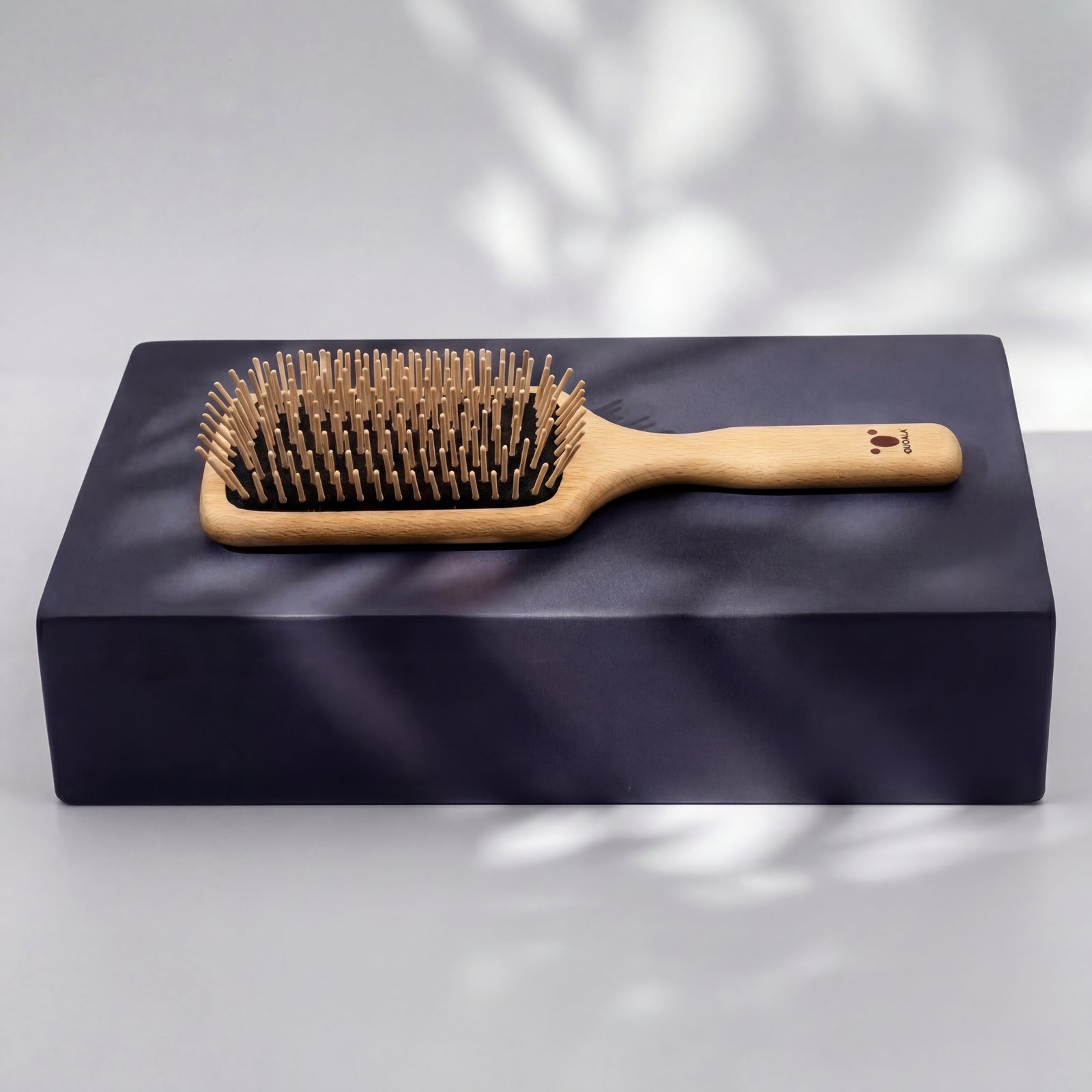

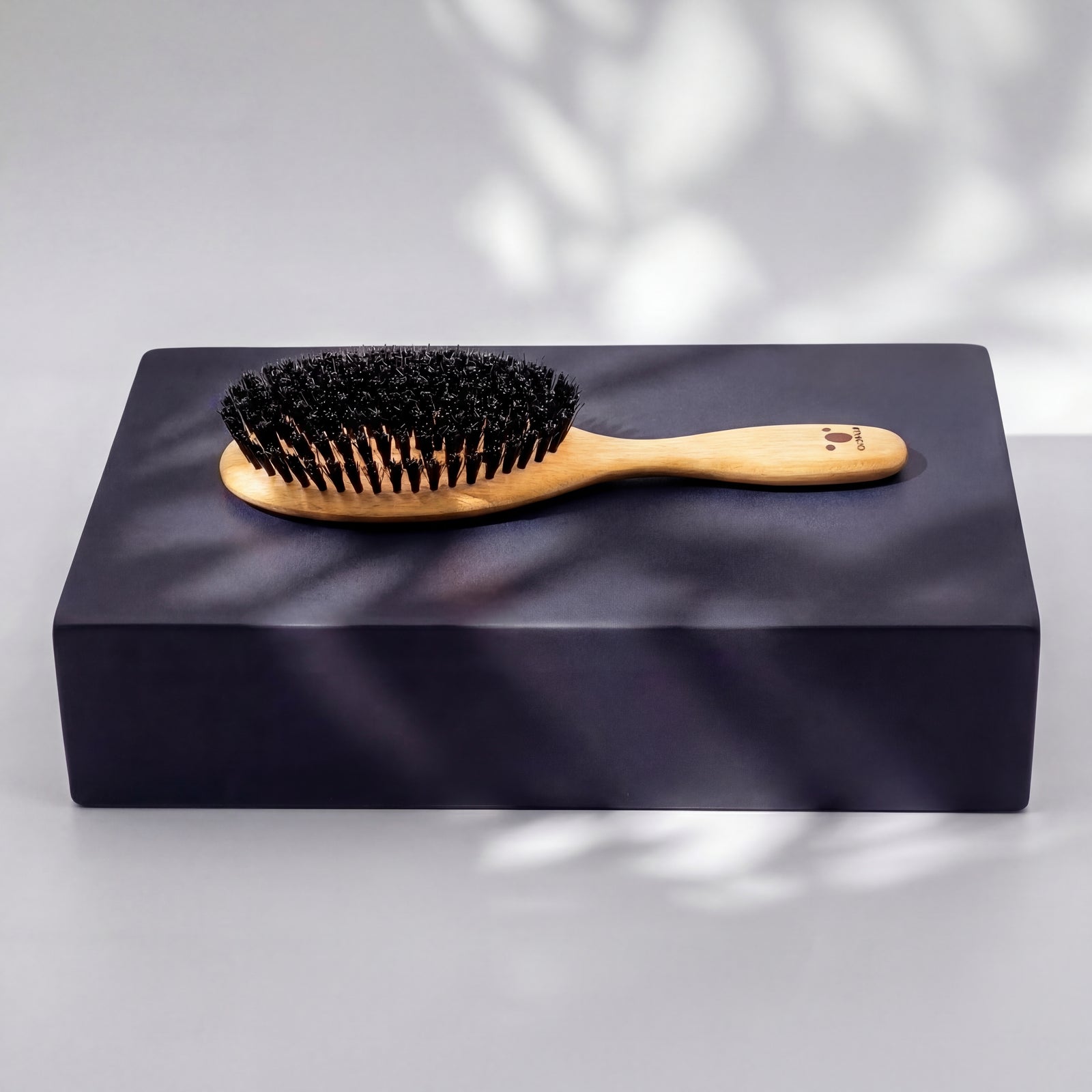

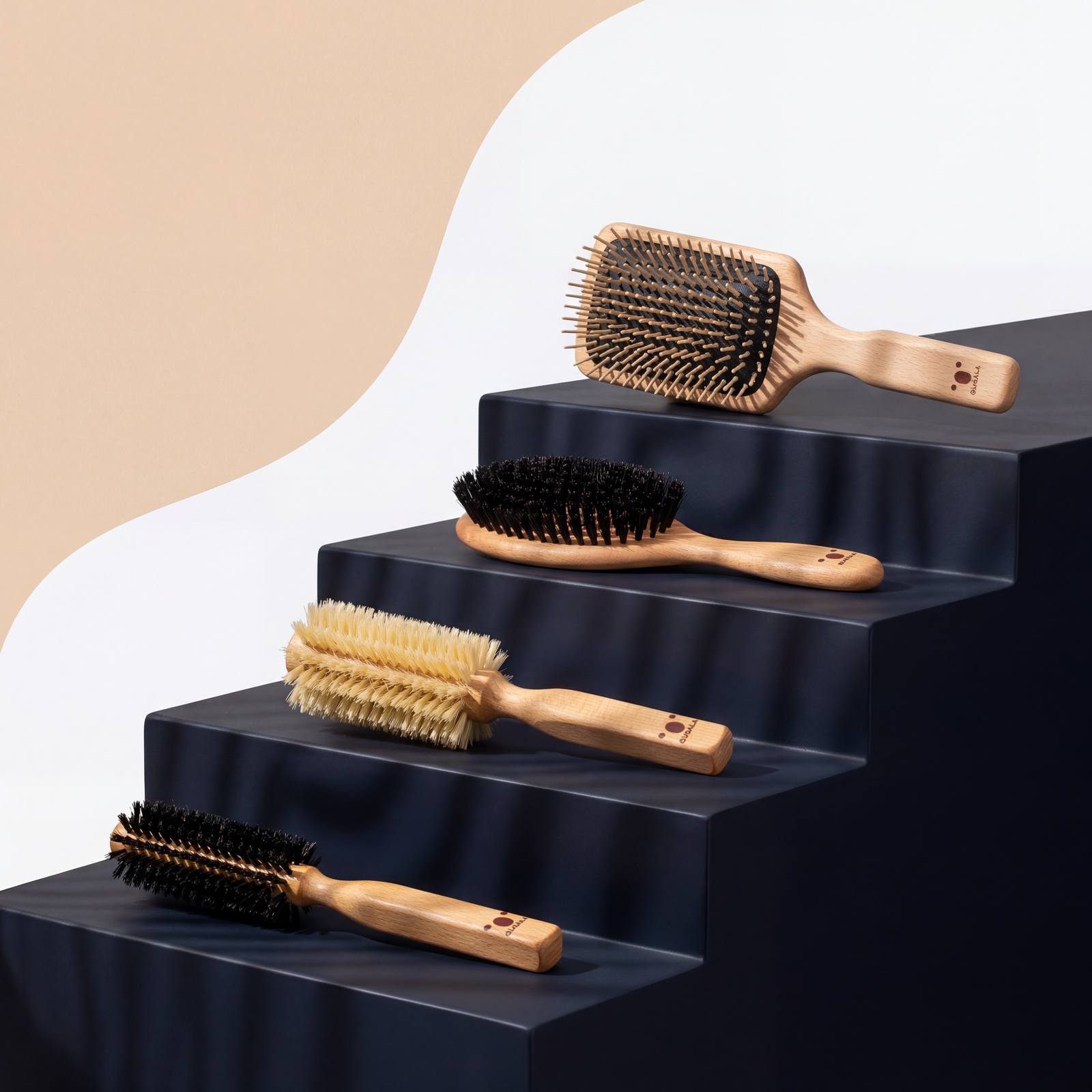











The science of beard care: why real wood and natural hair make the difference.
When it comes to men's grooming, the quick, pragmatic grab from the supermarket shelf often wins. Synthetic bristles and basic materials are widespread. Genuine materials-science quality is unfortunately still often the exception in this segment.
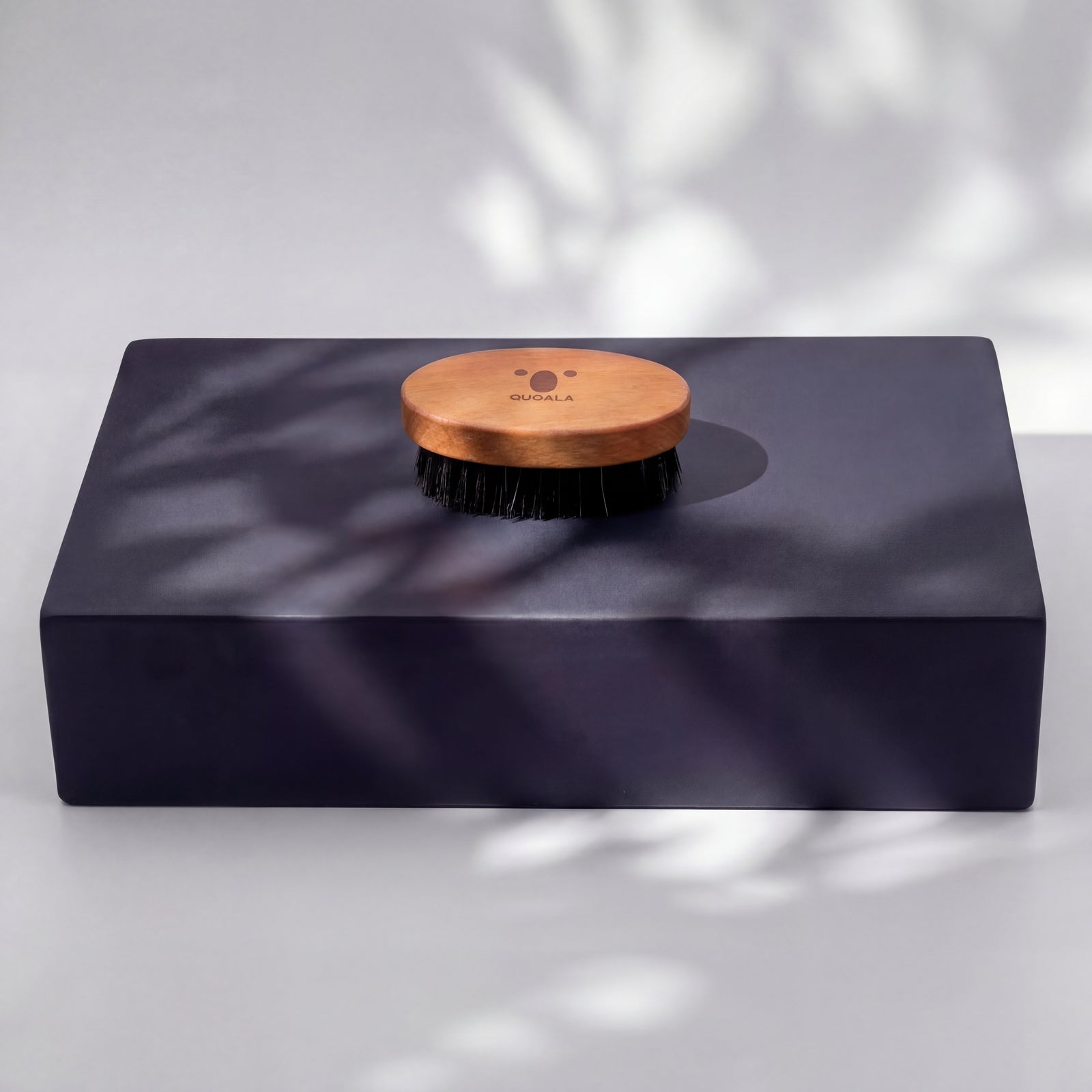
At QUOALA we see it differently. A beard is not just hair growing on your face – it is what is known as androgenic hair. It is thicker, wirier and, because of its structure, dries out much faster than the hair on your head. That is why it is not enough to use just any tool. We explain the science behind the QUOALA beard brush made from FSC pear wood and why it will become your most important grooming tool.
Natural grooming 2026: why the beard brush is becoming the standard
In 2026 the trade press is covering the renaissance of honest beard care: Barber Trends World 2026 points clearly in one direction — away from synthetics, towards natural grooming, with natural materials and real skin health in focus. At the centre is the boar bristle beard brush: not a niche tool for beard fanatics, but the scientifically grounded standard for modern beard grooming.
Why this trend has substance: Boar bristles and beard hair share the same basic keratin structure and overlapping cuticle scales, which support the natural transport of sebum. That is the materials science of the natural bristle [1] [2]. Nobody has measured whether nylon brushes distribute sebum in a similar way – so we don't claim it.
Contents of this guide:
1. The material: FSC pear wood meets pure function
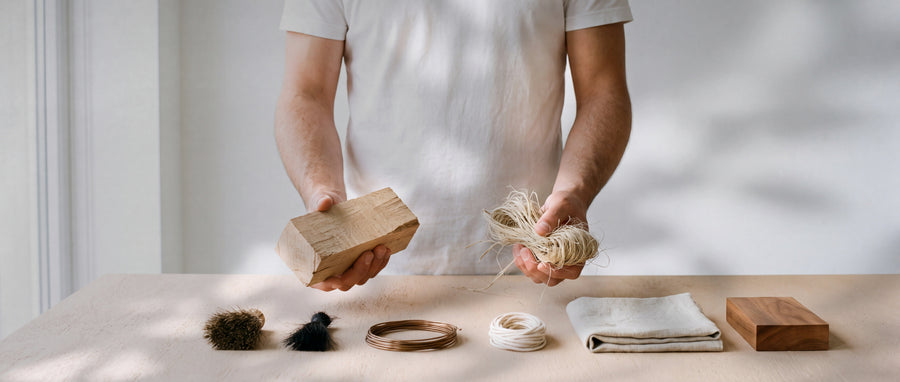
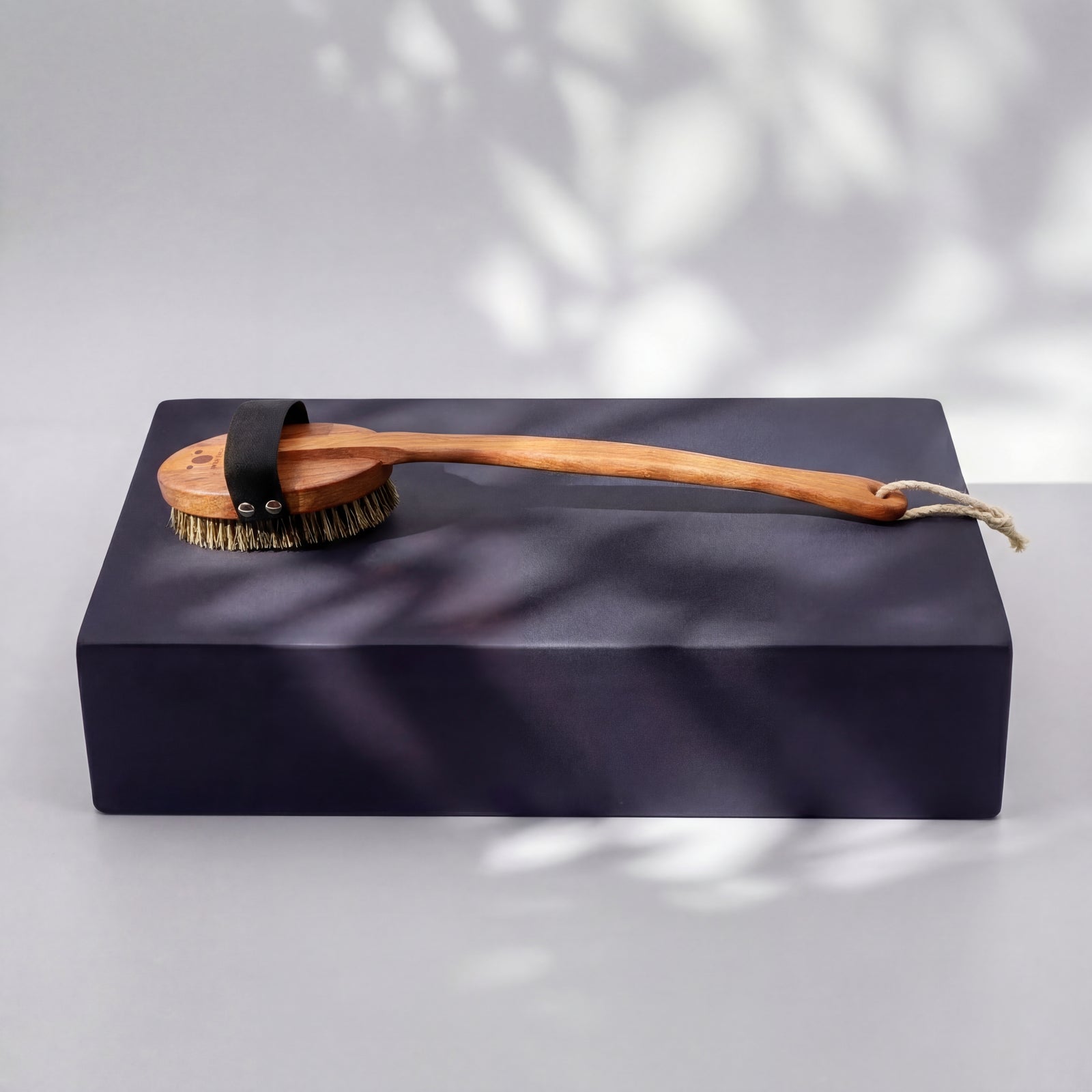
For our beard brush we deliberately chose pear wood. It is not only extremely durable and water-repellent (perfect for a humid bathroom), it also has a wonderfully refined, fine feel in the hand.
Transparency check: It is 100 % FSC-certified. It matters to us that a men's grooming tool is made transparently and sustainably from European wood. Read here why we make no compromises: Our FSC strategy.
2. Natural hair vs. synthetics: the biological necessity
A common approach in beard care is to use conventional nylon bristles. These are the key differences:

Macro shot: cuticle scale structure of the boar bristle – carries the skin's own sebum through the beard
The scale structure (cuticle) of real boar bristles is clearly visible under the microscope – and it is the key reason why this bristle works so well in a beard: it engages with the hair structure of the beard, picks up sebum and distributes it evenly from root to tip.

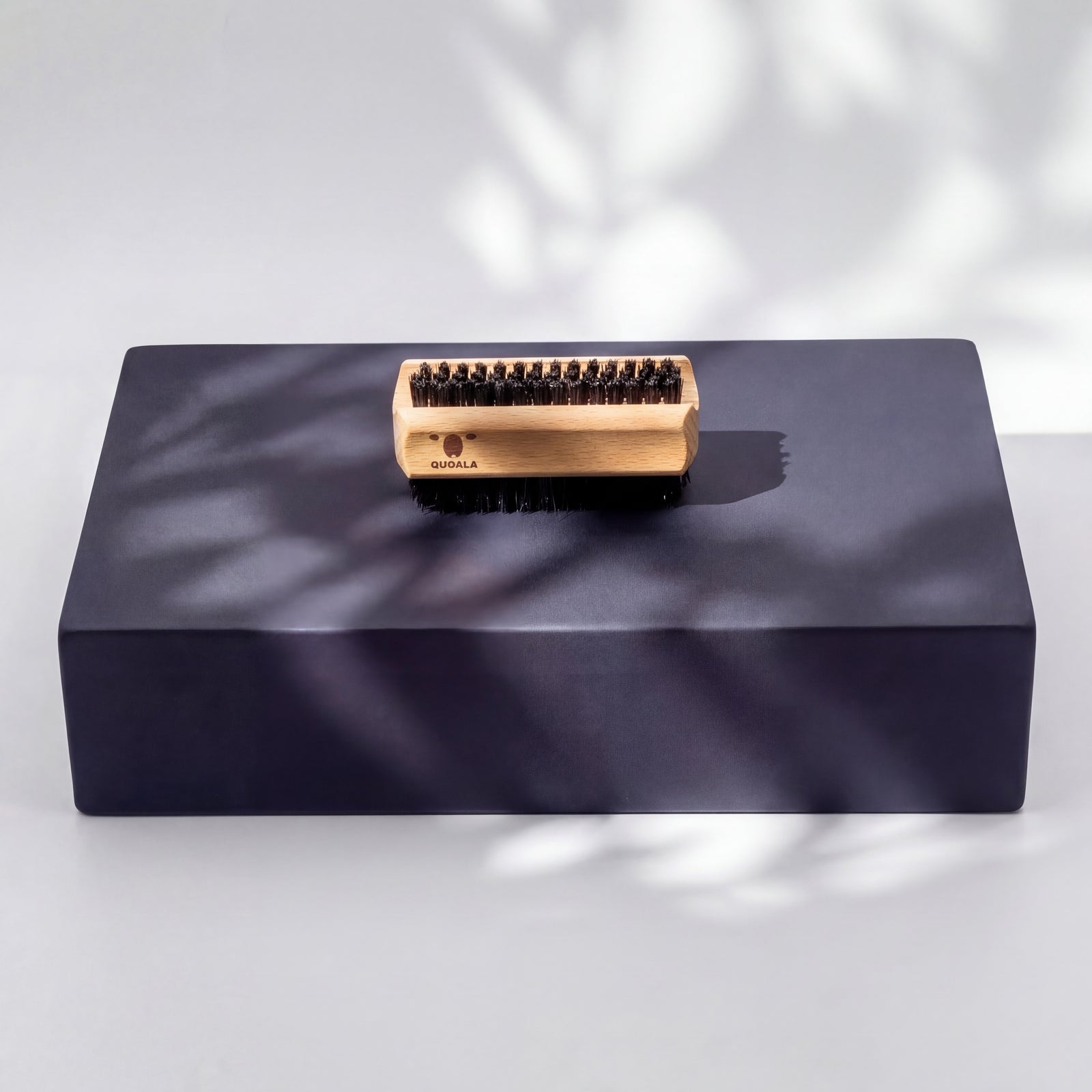
3. The on-the-go format: compact and uncompromising
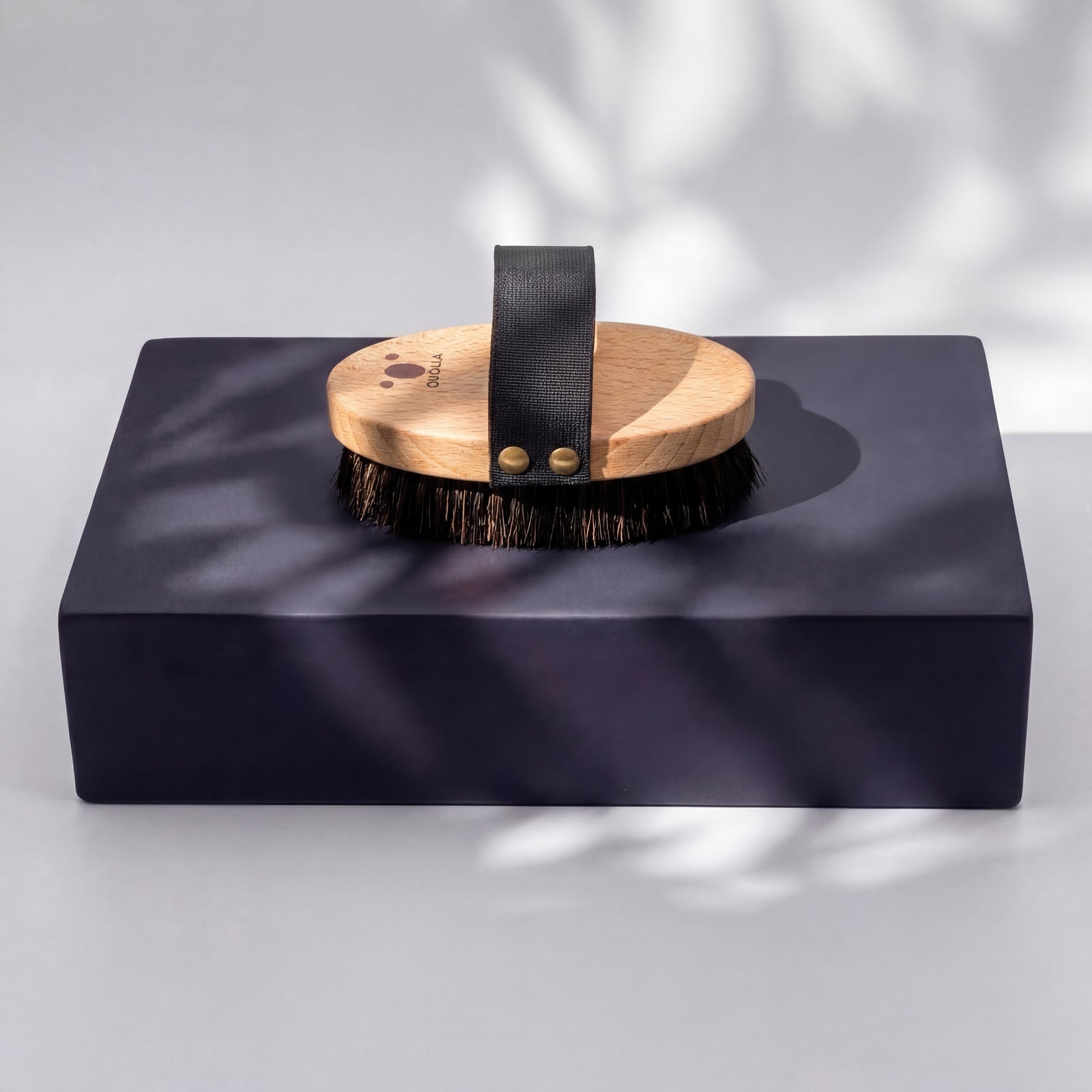
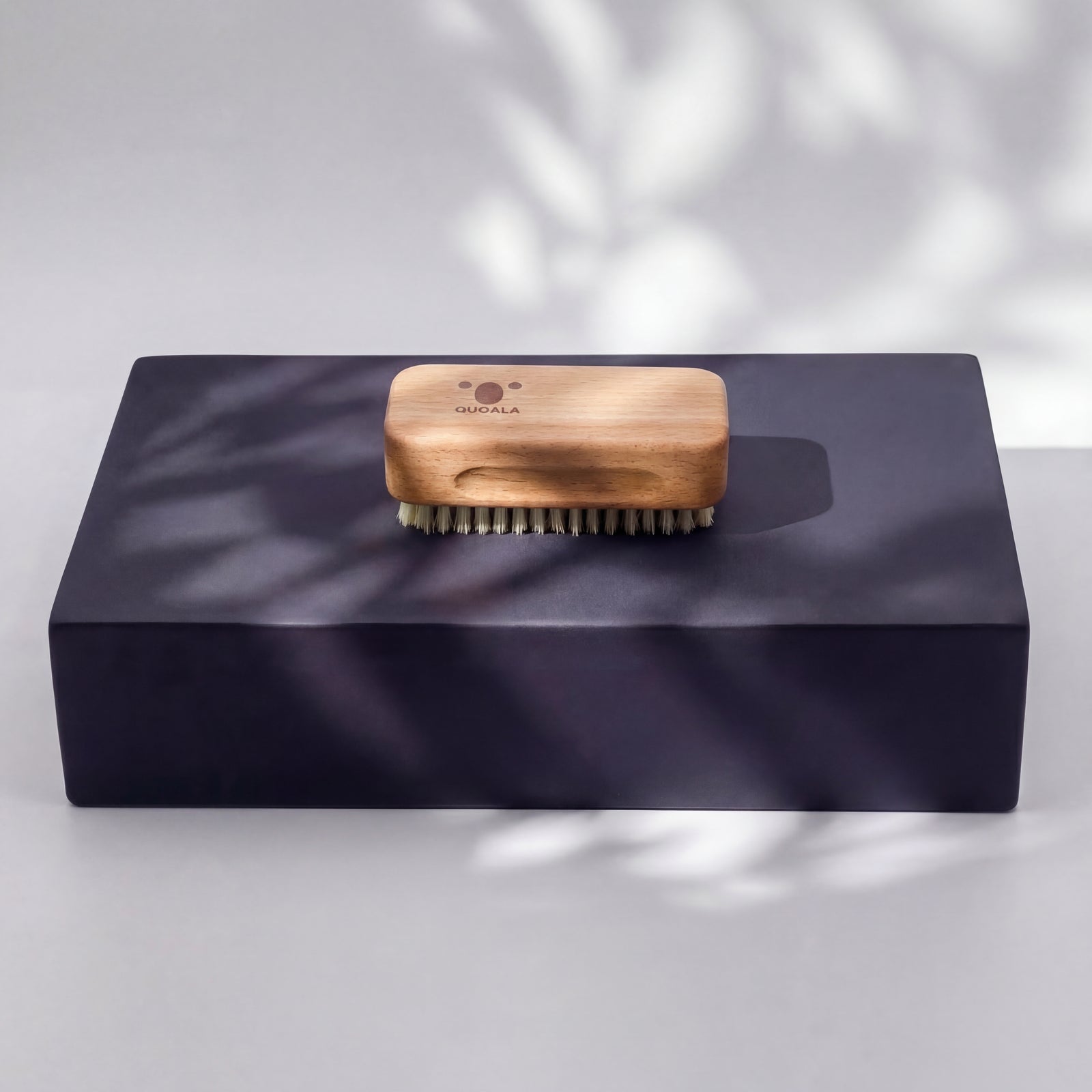
The QUOALA beard brush is sized to fit perfectly in the palm of your hand – an unobtrusive daily companion for your wash bag, rucksack or glove compartment.

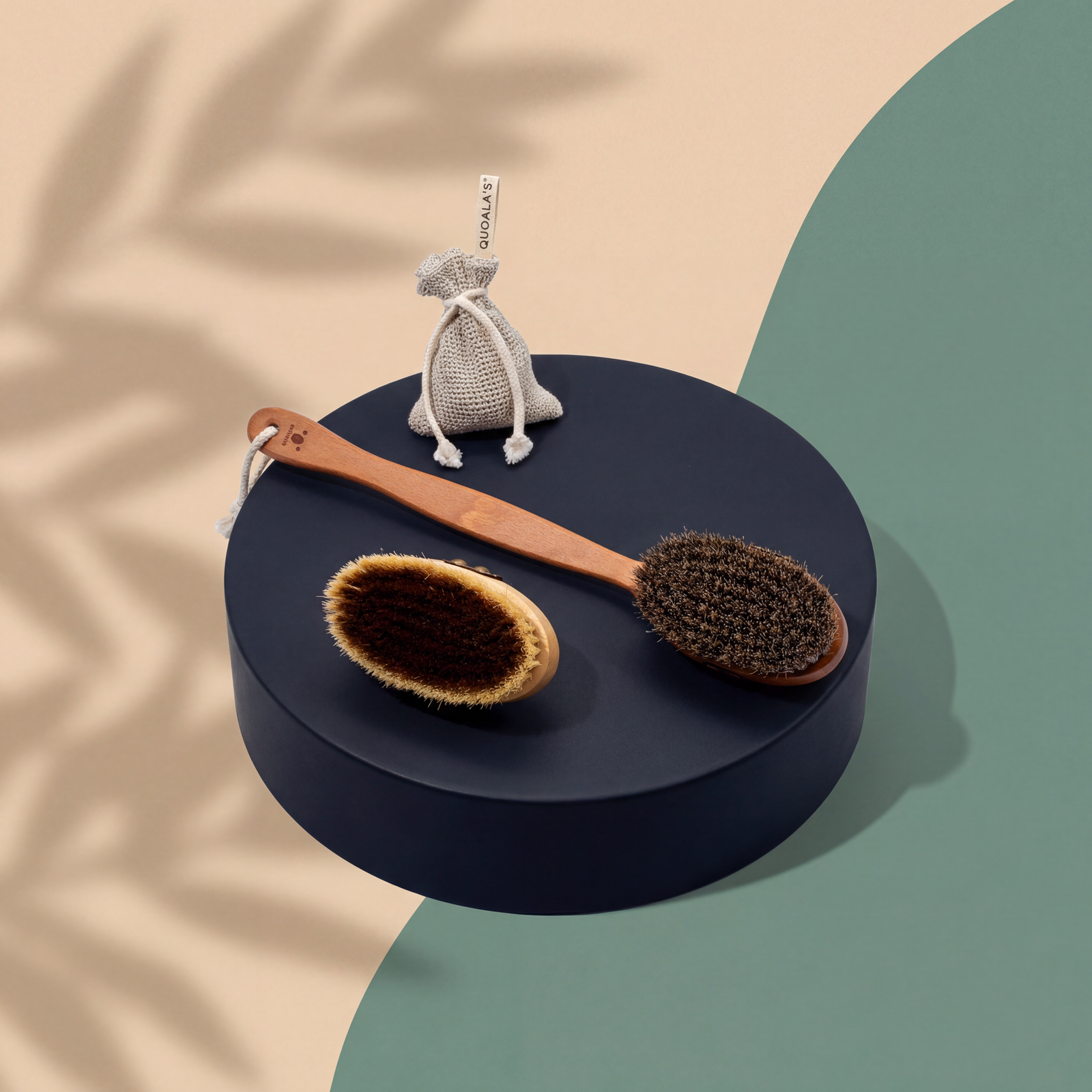
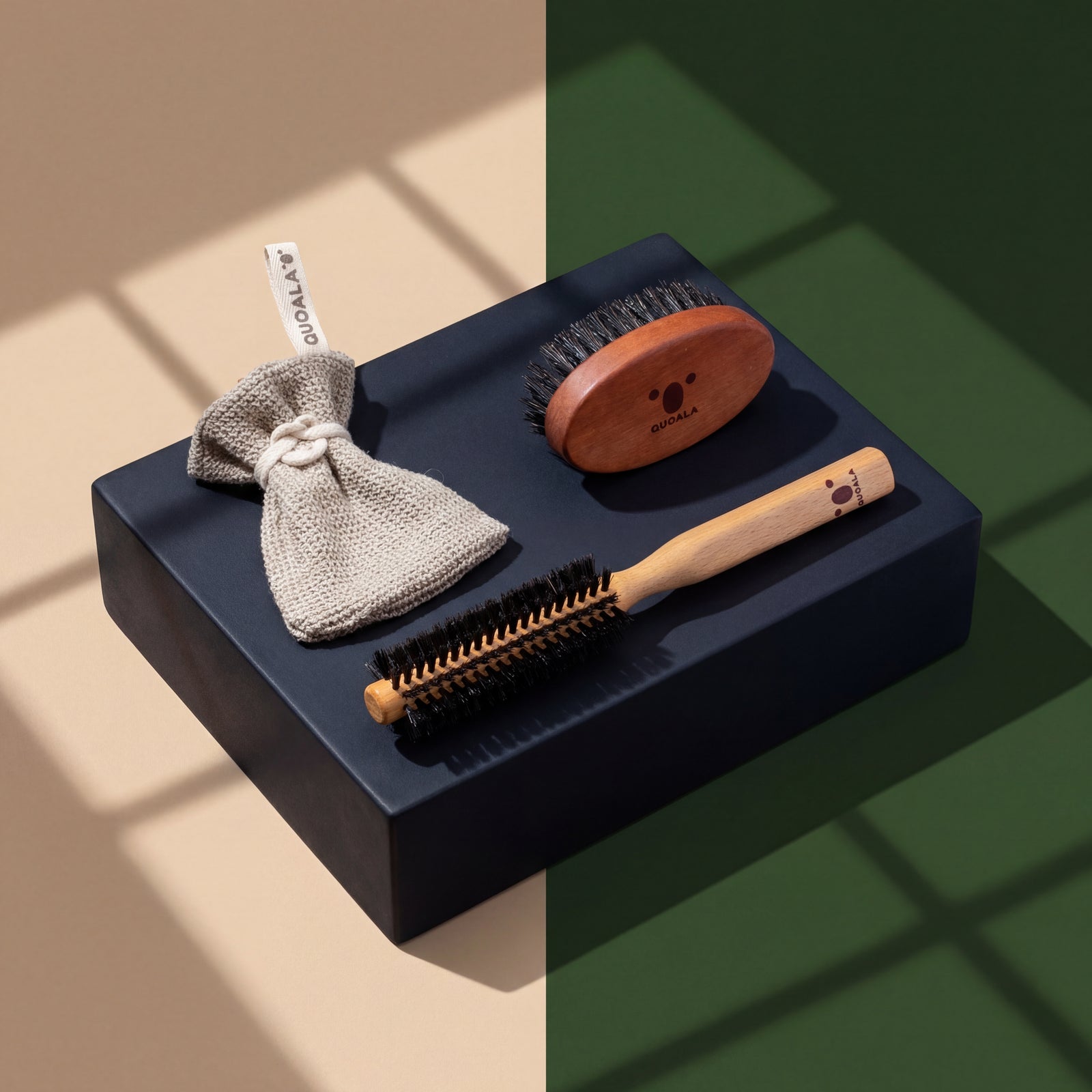
4. The 2-in-1 insider tip: the small blow-dry brush
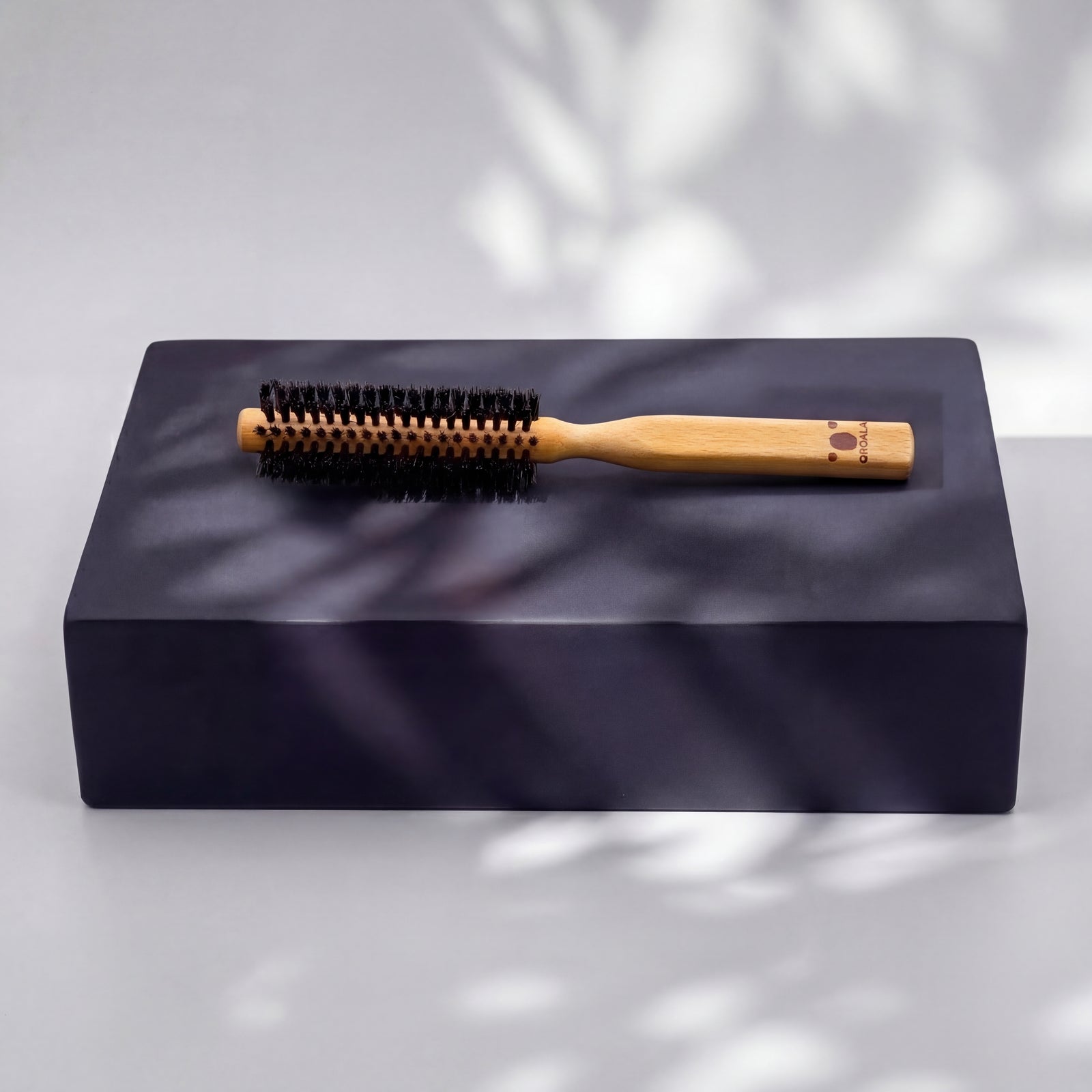
The QUOALA small blow-dry brush is an excellent hybrid for minimalists: style the hair on your head in the morning, then brush in beard oil – all with a single tool.
5. The perfect brushing routine: step by step
- The right time: In the morning after washing your face, on a dry beard.
- Working with beard oil: Massage in 2–3 drops, then brush – the bristles distribute it very finely.
- The technique: First against the direction of growth (to loosen), then with the direction of growth (to shape).
- Caring for the brush: Clean dry with a comb; do not soak in water, as pear wood will swell.
Conclusion: With real wood and genuine boar bristles, you are investing not only in your look but in the health of the skin underneath.
6. Frequently asked questions
Why are boar bristles better than synthetics?
Boar bristles have a scale-like surface that distributes beard oil evenly and conditions the hair.
How often should I brush?
Every morning; with a short beard, once is enough. Longer beards also in the evening.
Is the beard brush suitable for short beards?
Yes – it helps with ingrown hairs, cares for the skin and keeps the beard in shape.
How do I clean the beard brush?
Regularly remove hair and beard residue dry using a comb. Avoid running water and soap, as pear wood will otherwise swell.

Uncompromising care for beard, hair and body
Discover our Man Care collection made from FSC wood and natural fibres.
Sources and further reading
Scientific sources
- Banasaz & Ferraro (2024), Keratin from Animal By-Products: Structure, Characterization, Extraction and Application — A Review, Polymers. Structure of animal keratin fibres. Our assessment S5 · Source
- Robbins (2012), Chemical and Physical Behavior of Human Hair, Springer; Gao et al. (2019). Animal bristles spread sebum along the hair. Our assessment S8 · Source
- Morton & Hearle (2008), Physical Properties of Textile Fibres, Woodhead Publishing. Natural fibres absorb moisture, nylon hardly at all. Our assessment S51 · Source